





Resource Recycling
  • The Latest
  • Analysis
    • All
    • Certification Scorecard
    • Industry Announcements
    • Opinion
    ESG

    Foreign equity is moving into North America’s e-scrap origination

    From claims to custody: PCR procurement grows up

    Certification Scorecard — Week of August 17, 2026

    Sorted: Country roads, take my recycling

    State program revamp proposal advances in Oregon

    Oregon EPR ruling looms: what legal experts think

    Triple-digit revenue gains propel ABTC’s expansion

    LFP batteries gain acceptance. Can they be recycled?

    May pricing bullish for most bales

    August pricing bearish for plastic bales

  • Conferences
    • Resource Recycling Conference
    • Plastics Recycling Conference
    • E-Scrap: The Longevity Conference
    • Textiles Recovery Summit
  • Publications
    • E-Scrap News
    • Plastics Recycling Update
    • Policy Now
    • Resource Recycling
    • Other Topics
      • All Topics
      • Brand Owners
      • Critical Minerals
      • Glass
      • Grant Watch / RFPs
      • Markets
      • Organics
      • Packaging
      • Research
      • Technology
      • Textiles
Subscribe
No Result
View All Result
Resource Recycling
  • The Latest
  • Analysis
    • All
    • Certification Scorecard
    • Industry Announcements
    • Opinion
    ESG

    Foreign equity is moving into North America’s e-scrap origination

    From claims to custody: PCR procurement grows up

    Certification Scorecard — Week of August 17, 2026

    Sorted: Country roads, take my recycling

    State program revamp proposal advances in Oregon

    Oregon EPR ruling looms: what legal experts think

    Triple-digit revenue gains propel ABTC’s expansion

    LFP batteries gain acceptance. Can they be recycled?

    May pricing bullish for most bales

    August pricing bearish for plastic bales

  • Conferences
    • Resource Recycling Conference
    • Plastics Recycling Conference
    • E-Scrap: The Longevity Conference
    • Textiles Recovery Summit
  • Publications
    • E-Scrap News
    • Plastics Recycling Update
    • Policy Now
    • Resource Recycling
    • Other Topics
      • All Topics
      • Brand Owners
      • Critical Minerals
      • Glass
      • Grant Watch / RFPs
      • Markets
      • Organics
      • Packaging
      • Research
      • Technology
      • Textiles
Subscribe
No Result
View All Result
Resource Recycling
No Result
View All Result
Home Plastics

California CRV rulemaking touches on labels, PCR

Marissa HeffernanbyMarissa Heffernan
October 30, 2024
in Plastics
California CRV rulemaking touches on labels, PCR
Wine and distilled spirits in bottles, boxes, bladders, pouches or similar containers were added to the California redemption system in 2022, and the state is working through rulemaking and implementation. | Monticello/Shutterstock

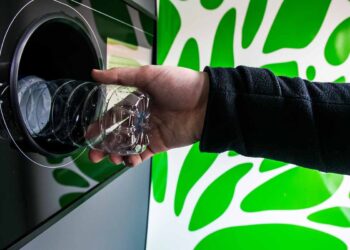
Industry representatives shared concerns about PCR requirements, wine bottle labeling rules and how to handle plastic bladder bags inside beverage boxes during an Oct. 29 informal rulemaking workshop on California’s SB 1013. 

The law, signed in 2022, brought wine and liquor bottles into the California Refund Value system along with wine and spirits in a box, bladder, pouch or similar container. It also added market development incentives. 

The workshop, held by the California Department of Resources Recycling and Recovery, is the second and final informal rulemaking the agency will hold before moving into formal rulemaking starting in January. Final regulations are slated to be adopted in early 2026 after several rounds of formal public comment and revision. 

Jeanette Barnard, a CalRecycle senior staff attorney, discussed some of the requested changes from the last informal hearing and why – or why not – the agency acted on them. 

One that received many comments was the current requirement that each “bag in box” in a load of containers “shall be intact for the load to be eligible for the refund value,” when delivered both to a recycling center and to the processor. “Intact” means that the plastic bag inside the box is still inside and remains connected to the pouring valve. 

Commenters had previously asked for that “intact” requirement to be removed, but Barnard said CalRecycle didn’t change the requirement because it would affect the payment rate, which is based on the full weight of the container. 

Tim Schmelzer, vice president of California state relations at the Wine Institute, commented again that his organization believes that allowing the bags to be separated from the box would be a boon to both recyclers and consumers. He suggested printing the CRV information on the plastic bladder itself, then instructing consumers to separate the bag from the box at home so the box can go into curbside recycling. 

“Spacewise, we think this will be helpful to the recycling centers and also more convenient for the consumer as well,” he said. 

Other changes included a clarification that plastic portions of the newly added container types are indeed subject to PCR requirements set out in AB 793, even if they are not formally classified as a plastic beverage container – for example, the plastic bags in boxes will be subject to the PCR requirements. 

And for consumer payments based on hand counts, the draft rules note that consumers can be paid based on count for up to 25 of the new container types, as opposed to the 50-container limit for beverage containers already in the program. 

In addition, the draft clarifies that those caps are per transaction, not per day, though “a recycling center is not required to process more than one consecutive transaction for an individual consumer redeeming by count if there is one or more other consumers waiting to redeem empty beverage containers at the recycling center.” 

Labeling, especially machine readable labeling such as QR codes, also received a significant amount of attention. 

The draft rules first allowed more flexibility about where the CRV mark can be placed. Now it can be added to the bottom of metal cans. For glass or plastic containers, metal bottles and all of the newly added containers, the mark can be on the container body or on the label. 

Barnard noted that because this flexibility is new, CalRecycle is very open to revising it and is specifically seeking comments around the labeling. The section on machine readable labeling was “substantially revised” between drafts, Barnard said, as the agency received a lot of public comment on it. 

The first draft of rules allowed a QR code to be used in place of traditional labeling, and many commenters asked for that to be changed to “in addition to,” not “in replacement of.” However, CalRecycle decided not to make that change, Barnard said. 

“The purpose of the machine readable labeling is to allow beverage containers to use a standardized label across states,” she said. 

Changes the agency made include deleting a provision that made containers with a broken machine readable indicia ineligible for the refund value, because of concerns that recycling center employees would have to hand-scan each code. That raised questions of equity for rural centers, which may not have strong internet access or would have to provide all employees with smart devices to scan with. 

Instead, employees would just have to complete a “visual inspection” to confirm that a QR code was present. Veronica Pardo, who is also a member of the SB 54 advisory board, spoke for the Resource Recovery Coalition of California and noted that she appreciated the adjustment. 

Finally, the required size for QR code was increased to three-fourths of an inch instead of half, and the requirement to have a chasing arrows symbol in the QR was replaced with a requirement to have the word “deposit” visible near the code.  

Tags: Container DepositsLegislation & Enforcement
TweetShare
Marissa Heffernan

Marissa Heffernan

Marissa Heffernan worked at Resource Recycling from January 2022 through June 2025, first as staff reporter and then as associate editor. Marissa Heffernan started working for Resource Recycling in January 2022 after spending several years as a reporter at a daily newspaper in Southwest Washington. After developing a special focus on recycling policy, they were also the editor of the monthly newsletter Policy Now.

Related Posts

Lawsuits hover days after SB 54 approval

NAW-backed coalition seeks SB 54 injunction

byStefanie Valentic
August 21, 2026

NAW says SB 54's 2032 recyclability mandate leans on the same standard a federal judge already froze in the SB...

The Maine state capitol building.

No bidders respond to Maine’s EPR RFP

byStefanie Valentic
August 20, 2026

Following CAA's announcement that it would not submit a bid for Maine's EPR program, the state's DEP announced that no...

The Maine state capitol in Augusta.

Circular Action Alliance won’t bid on Maine’s PRO contract

byStefanie Valentic
August 19, 2026

Circular Action Alliance announced it will not submit an RFP to implement Maine's EPR packaging program.

Landfill seen from above with equipment moving materials.

PFAS, EPR reshape waste and recycling policy

byStefanie Valentic
August 19, 2026

David Biderman, industry veteran and consultant, provided a regulatory update to attendees at WR Expo.

State program revamp proposal advances in Oregon

Oregon EPR ruling looms: what legal experts think

byStefanie Valentic
August 17, 2026

A ruling in NAW v. Feldon is expected by the end of August. Here's what legal experts think will happen.

End markets, policy key to RPET viability

PET in focus: Is help on the way?

byAntoinette Smith
August 17, 2026

California market payments progress State-level PCR mandates too new to evaluate India may provide look at future  The past few...

Load More
Next Post

Retailer-led changes can shift single-use bag behavior

2026 Buyers’ Guide

Equipment, services and technology suppliers serving the recycling industry.

Browse the Guide

More Posts

The Maine state capitol in Augusta.

Circular Action Alliance won’t bid on Maine’s PRO contract

August 19, 2026
The Maine state capitol building.

No bidders respond to Maine’s EPR RFP

August 20, 2026
Company debuts battery-containing device shredder

New battery shredding system debuts stateside

August 20, 2026
State program revamp proposal advances in Oregon

Oregon EPR ruling looms: what legal experts think

August 17, 2026
ESG

Foreign equity is moving into North America’s e-scrap origination

August 19, 2026
Google explores how to capture 4.5 billion tons of plastic

Bale pricing diverges for August

August 18, 2026
PureCycle sees easing headwinds to R-PP adoption

PureCycle says H2 outlook already playing out 

August 13, 2026

Sorted: Country roads, take my recycling

August 18, 2026
Triple-digit revenue gains propel ABTC’s expansion

LFP batteries gain acceptance. Can they be recycled?

August 17, 2026
End markets, policy key to RPET viability

PET in focus: Is help on the way?

August 17, 2026
Load More

About & Publications

About Us

Staff

Archive

Magazine

Work With Us

Advertise
Jobs
Contact
Terms and Privacy

Newsletter

Get the latest recycling news and analysis delivered to your inbox every week. Stay ahead on industry trends, policy updates, and insights from programs, processors, and innovators.

Subscribe

Welcome Back!

Login to your account below

Forgotten Password?

Retrieve your password

Please enter your username or email address to reset your password.

Log In

Add New Playlist

No Result
View All Result
  • The Latest
  • Analysis
  • Recycling
  • E-Scrap
  • Plastics
  • Policy Now
  • Conferences
    • E-Scrap Conference
    • Plastics Recycling Conference
    • Resource Recycling Conference
    • Textiles Recovery Summit
  • Magazine
  • About Us
  • Advertise
  • Archive
  • Jobs
  • Staff
Subscribe
This website uses cookies. By continuing to use this website you are giving consent to cookies being used. Visit our Privacy and Cookie Policy.