





Resource Recycling
  • The Latest
  • Analysis
    • All
    • Certification Scorecard
    • Industry Announcements
    • Opinion
    Apple Watch on product box.

    Wearables are coming and ITAD isn’t ready

    Certification Scorecard — Week of April 13, 2026

    EV Battery Pack - Sergii Chernov-Shutterstock

    Redwood, Rivian deal fuels US infrastructure plans

    Bloom ESG and e-Stewards roll out critical metals metric

    Colorado regulators suggest mid-range EPR scenario

    Why collaboration on plastic waste still matters

    Battery recycler Ascend Elements files for bankruptcy

    Battery recycler Ascend Elements files for bankruptcy

    EPR fees are a market signal. Here’s what they’re telling you.

    EPR fees are a market signal. Here’s what they’re telling you.

    Wolframite ore, the primary ore of tungsten from Altai, Russia

    Tungsten scrap export controls draw industry attention

    Certification Scorecard — Week of April 6, 2026

  • Conferences
  • Publications

    Other Topics

    Textiles
    Organics
    Packaging
    Glass
    Brand Owners

    Metals
    Technology
    Research
    Markets
    Grant Watch

    All Topics

Subscribe
No Result
View All Result
Resource Recycling
  • The Latest
  • Analysis
    • All
    • Certification Scorecard
    • Industry Announcements
    • Opinion
    Apple Watch on product box.

    Wearables are coming and ITAD isn’t ready

    Certification Scorecard — Week of April 13, 2026

    EV Battery Pack - Sergii Chernov-Shutterstock

    Redwood, Rivian deal fuels US infrastructure plans

    Bloom ESG and e-Stewards roll out critical metals metric

    Colorado regulators suggest mid-range EPR scenario

    Why collaboration on plastic waste still matters

    Battery recycler Ascend Elements files for bankruptcy

    Battery recycler Ascend Elements files for bankruptcy

    EPR fees are a market signal. Here’s what they’re telling you.

    EPR fees are a market signal. Here’s what they’re telling you.

    Wolframite ore, the primary ore of tungsten from Altai, Russia

    Tungsten scrap export controls draw industry attention

    Certification Scorecard — Week of April 6, 2026

  • Conferences
  • Publications

    Other Topics

    Textiles
    Organics
    Packaging
    Glass
    Brand Owners

    Metals
    Technology
    Research
    Markets
    Grant Watch

    All Topics

Subscribe
No Result
View All Result
Resource Recycling
No Result
View All Result
Home Plastics

Greenpeace claims recycling complicates plastics toxicity

Marissa HeffernanbyMarissa Heffernan
May 23, 2023
in Plastics
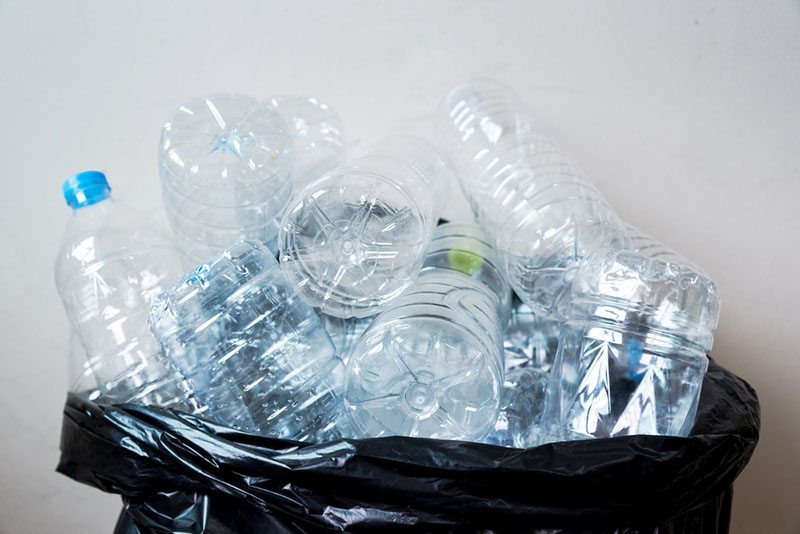
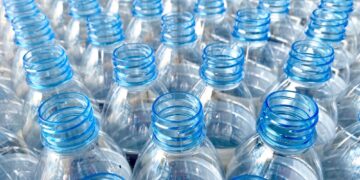
The latest report from Greenpeace says recycled plastics are more toxic than their virgin counterparts. | RecycleMan/Shutterstock
Greenpeace is spotlighting what it calls toxic chemicals in recycled plastics. The group is also calling for global plastics agreement negotiators to focus on reduction.

The environmental organization’s “Forever Toxic” report, released today, brings together peer-reviewed studies from around the world to make claims about how chemicals in plastics, especially recycled plastics, affect human health and the environment.  

The release comes roughly seven months after a separate Greenpeace report that alleged no plastics in the U.S. meet the definition of “recyclable.” That study garnered extensive mainstream media attention, though its methodology was criticized by Plastics Recycling Update. 

A Greenpeace press release said the studies referenced in the toxicity report all point to the same conclusion: recycling increases the toxicity of plastics and that the upcoming global plastics agreement negotiations in Paris should focus on capping and phasing down plastic production, as well as regulating chemical additives. 

“Plastics contain more than 13,000 chemicals, with more than 3,200 of them known to be hazardous to human health,” the study noted. “Moreover, many of the other chemicals in plastics have never been assessed and may also be toxic.”

The American Chemistry Council (ACC) issued a response to the study, noting the benefits plastics bring to society.

“If Greenpeace had its way, modern life would be dramatically different,” Joshua Baca, vice president of plastics at the American Chemistry Council, stated. “People across the world, particularly in developing countries, would have less access to clean drinking water, safe food supplies, sanitary medical and personal care products, and renewable energy.”

‘Don’t simply go away’

There are three main ways recycled plastics accumulate potentially hazardous chemicals, according to the Greenpeace report: direct contamination (that is, when the virgin plastic being recycled also contained the chemical), leaching and heating during the recycling process.

“For example, brominated dioxins are created when plastics containing brominated flame retardants are recycled, and a stabilizer used in plastic recycling can degrade to a highly toxic substance found in recycled plastics,” the report noted. “Sorting challenges and the presence of certain packaging components in sorted materials can also lead to toxicity in recycled plastic.” 

While single-use food and beverage packaging does not contain brominated flame retardants, the report argues that such chemicals can be introduced into the recycling stream and end up in the resin. 

Therese Karlsson, science advisor with the International Pollutants Elimination Network (IPEN), said in the press release that “plastics are made with toxic chemicals, and these chemicals don’t simply go away when plastics are recycled.” 

“Real solutions to the plastics crisis will require global controls on chemicals in plastics and significant reductions in plastic production,” Karlsson added.

Greenpeace is calling on stakeholders that are part of the Intergovernmental Negotiating Committee on Plastic Pollution, which is set to meet later this week in Paris, to accelerate refill- and reuse-based systems without plastic.

Greenpeace also wants to see a cap on plastic production paired with a reduction of production and a just transition for workers in the plastics industry.

Remaining plastic stockpiles should be handled with non-combustion technologies , Greenpeace noted, and there should be extended producer responsibility on a wider scale. The agreement should also include stronger regulations on recycling facilities, require transparency about what chemicals are in plastics and push companies to eliminate all toxic additives and chemicals from plastics. 

Baca from ACC disputed some of those strategies.

“The proposals in [Greenpeace] report would disrupt global supply chains, hinder sustainable development, and substitute plastics with materials that have a much higher carbon footprint in critical uses,” Baca noted.

Struktol

Tags: EPRResearch
TweetShare
Marissa Heffernan

Marissa Heffernan

Marissa Heffernan worked at Resource Recycling from January 2022 through June 2025, first as staff reporter and then as associate editor. Marissa Heffernan started working for Resource Recycling in January 2022 after spending several years as a reporter at a daily newspaper in Southwest Washington. After developing a special focus on recycling policy, they were also the editor of the monthly newsletter Policy Now.

Related Posts

Amazon, DOE partner on critical materials recovery

byScott Snowden
April 13, 2026

DOE and Amazon will study recovery of graphite from textiles and gallium from IT hardware, aiming to strengthen US supply...

Oregon’s battery EPR bill officially charged for implementation

byStefanie Valentic
April 10, 2026

Oregon Governor Tina Kotek signed HB 4144 into law on April 7, setting into motion the mechanics for an extended...

EPR fees are a market signal. Here’s what they’re telling you.

EPR fees are a market signal. Here’s what they’re telling you.

byChristine Yeager
April 10, 2026

EPR is not asking companies to be perfect, but rather to be honest about what their packaging costs the system,...

Bill to update New Jersey e-scrap program heads to governor

New Jersey recyclers talk EPR

byBrian Clark Howard
April 9, 2026

At the Association of New Jersey Recyclers’ spring meeting industry representatives discussed the state and future of the sector.

Rice researchers use lemon juice to boost battery recycling

byScott Snowden
April 9, 2026

Rice researchers reported a battery recycling process that uses plasma and mild solvents to recover most metals from black mass...

AF&PA states disappointment over Oregon EPR decision

byStefanie Valentic
April 8, 2026

The American Forest & Paper Association is responding after a federal judge blocked the trade group's bid to intervene in...

Load More
Next Post

Certification Scorecard: May 24, 2023

Leading the Charge in Safe Battery Recycling
Sponsored

Leading the Charge in Safe Battery Recycling

byThe Battery Network
April 13, 2026

We’re connecting people, brands, and communities through one nationwide network built to make battery recycling safer, simpler, and more accessible...

Read moreDetails

More Posts

EPR fees are a market signal. Here’s what they’re telling you.

EPR fees are a market signal. Here’s what they’re telling you.

April 10, 2026

Recycling Partnership CEO stepping down

April 15, 2026
Battery recycler Ascend Elements files for bankruptcy

Battery recycler Ascend Elements files for bankruptcy

April 13, 2026
Wolframite ore, the primary ore of tungsten from Altai, Russia

Tungsten scrap export controls draw industry attention

April 9, 2026

WM opens new $60m MRF in Indy

April 10, 2026

GFL acquires SECURE Waste for $6.4bn

April 13, 2026
Industry group: Help us find the plastic bale volumes we need

PET bales sink further as other grades firm 

April 15, 2026
Colorado regulators suggest mid-range EPR scenario

Why collaboration on plastic waste still matters

April 13, 2026
Solarcycle starts up Georgia recycling plant

S3399 signals a shift in how states are tackling solar panel waste

April 6, 2026
Bill to update New Jersey e-scrap program heads to governor

New Jersey recyclers talk EPR

April 9, 2026
Load More

About & Publications

About Us

Staff

Archive

Magazine

Work With Us

Advertise
Jobs
Contact
Terms and Privacy

Newsletter

Get the latest recycling news and analysis delivered to your inbox every week. Stay ahead on industry trends, policy updates, and insights from programs, processors, and innovators.

Subscribe

Welcome Back!

Login to your account below

Forgotten Password?

Retrieve your password

Please enter your username or email address to reset your password.

Log In

Add New Playlist

No Result
View All Result
  • The Latest
  • Analysis
  • Recycling
  • E-Scrap
  • Plastics
  • Policy Now
  • Conferences
    • E-Scrap Conference
    • Plastics Recycling Conference
    • Resource Recycling Conference
    • Textiles Recovery Summit
  • Magazine
  • About Us
  • Advertise
  • Archive
  • Jobs
  • Staff
Subscribe
This website uses cookies. By continuing to use this website you are giving consent to cookies being used. Visit our Privacy and Cookie Policy.