




Resource Recycling
  • The Latest
  • Podcast
  • Analysis
    • All
    • Certification Scorecard
    • Industry Announcements
    • Opinion
    A five star ranking with one under a microscope

    Certification scorecard — week of Nov. 9

    Data centers and AI combine to create ITAD ‘growth engine’

    Component shortages drive demand for data center hardware

    Ingram Micro again files to take company public

    Ingram Micro sees lifecycle services rise 35%

    Inside the Circle: Will we lose our shirts over CA textile EPR?

    Inside the Circle: Will we lose our shirts over CA textile EPR?

    Rhode Island bill would make brands pay for recycling

    Midterms put e-scrap legislation in focus

    Google supports right-to-repair policy in Oregon

    Alphabet’s AI spending, processor sales broaden ITAD outlook

  • Conferences
    • Resource Recycling Conference
    • Plastics Recycling Conference
    • E-Scrap: The Longevity Conference
    • Textiles Recovery Summit
  • Publications
    • E-Scrap News
    • Plastics Recycling Update
    • Policy Now
    • Resource Recycling
    • Other Topics
      • All Topics
      • Brand Owners
      • Critical Minerals
      • Glass
      • Grant Watch / RFPs
      • Markets
      • Organics
      • Packaging
      • Research
      • Technology
      • Textiles
Subscribe
No Result
View All Result
Resource Recycling
No Result
View All Result
Home Plastics

California’s carpet stewardship fees to consider recycled content

byJared Paben
November 3, 2021
in Plastics
California’s carpet stewardship fees to consider recycled content
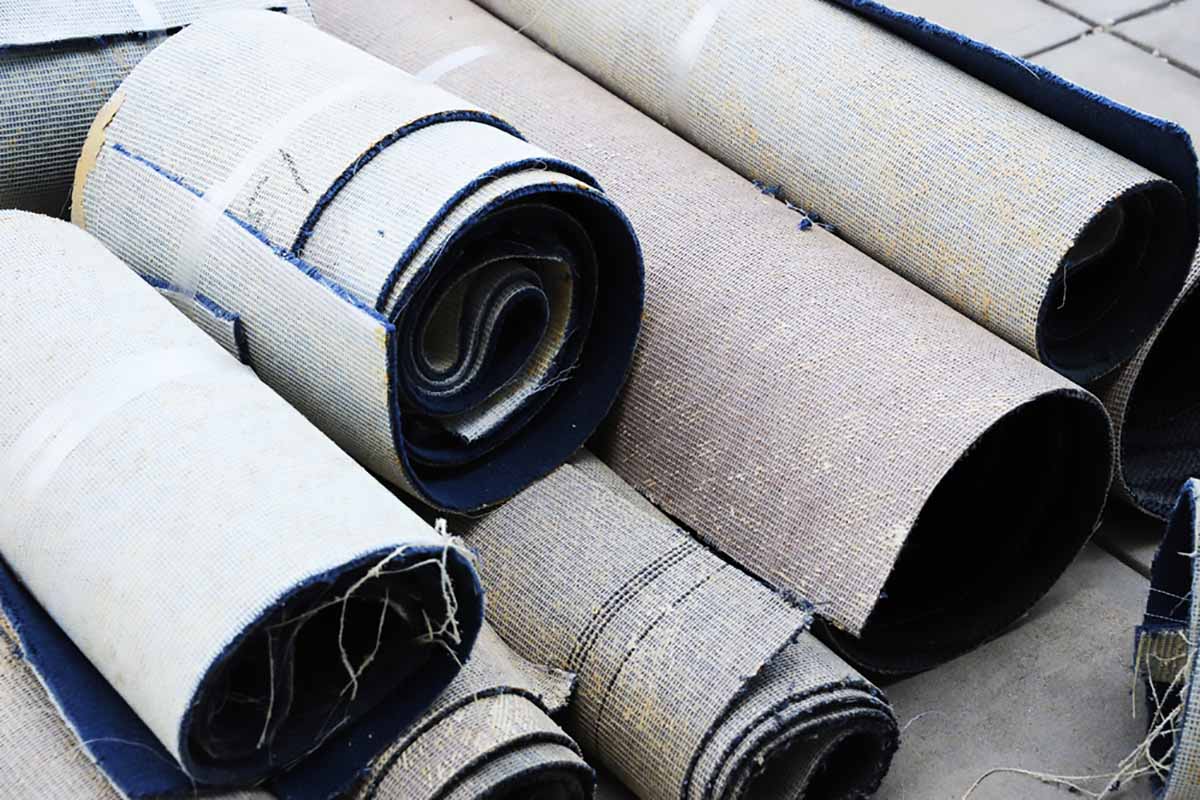
One goal of the differential fee schedule, to be implemented next year, will be to provide a financial incentive to consumers to buy recycled-content carpet. | ND700/Shutterstock

If carpet has at least 10% recycled content, then California consumers will pay a lower recycling system fee at the cash register starting next April.

Under the current extended producer responsibility (EPR) plan in the Golden State, consumers pay 35 cents per square yard for all carpet types, and stewardship group Carpet America Recovery Effort (CARE) uses that money to fund the collection and recycling system. 

On Oct. 28, CARE announced it has received conditional approval from state regulators to implement a differential fee plan in California. Under the new fee schedule, consumers will pay 33 cents per square yard for broadloom carpet containing 10% or more recycled content and 35 cents for carpet with lower percentages of recycled content. They’ll pay 48 cents per square yard for carpet tile containing 10% or more recycled content and 50 cents for carpet tile with less recycled content (carpet tile is more expensive for CARE to recycle than broadloom carpet). 

The differential fee approach is in line with the concept of eco-modulation. The idea is EPR programs charge producers higher fees to fund the collection and recycling systems if their products have larger environmental impacts and/or are more expensive to collect and recycle. For example, a packaging company may pay a higher per-package fee for its multi-layer flexible packages, which generally cannot be recycled curbside and have a low commodity value, than a company would for aluminum beverage cans, which have among the highest curbside commodity values. 

Packaging EPR bills signed into law in Maine and Oregon both include modulated-fee requirements, according to the Sustainable Packaging Coalition’s Guide to EPR Proposals. In addition, last year, three experts in EPR programs wrote in-depth for Resource Recycling about important considerations when using eco-modulation. 

In the case of California’s carpet program, of course consumers are paying the fees, not producers. A goal of the fee will be to provide a financial incentive to buy recycled-content carpet. PET bottles, for example, are recycled to produce polyester-fiber carpet. 

The differential assessments, which are to go into effect April 1, 2022, were required by legislation signed in 2019. Assembly Bill 729 made a number of changes to the EPR program, including requiring a differential-fee approach. CARE recently submitted its differential assessment plan to the California Department of Resources Recycling and Recovery (CalRecycle), which gave it conditional approval. 

In 2020, CARE achieved a 21% recycling rate for carpet in California, up from 19% the year before but still short of the legally mandated target of 24%.

 

Tags: EPRHard-to-Recycle Materials
TweetShare
Jared Paben

Jared Paben

Related Posts

Textile EPR needs end markets, not just collection

Textile EPR needs end markets, not just collection

byStefanie Valentic
November 10, 2026

Reju CEO Patrik Frisk said textile EPR programs will fall short unless they also create demand for recycled material.

Inside the Circle: Will we lose our shirts over CA textile EPR?

Inside the Circle: Will we lose our shirts over CA textile EPR?

byBill Shireman
November 9, 2026

Some advocates have worked to block chemical recycling under the packaging law, but their strategy is going to backfire.

New CAA chief talks markets, industry support

New CAA chief talks markets, industry support

byAntoinette Smith
November 4, 2026

Interim CEO Jeff Meyers outlined the producer responsibility organization's strategy for navigating state EPR rollouts, building recycling markets and supporting...

Electronics recycling legislation evolves with devices

byStefanie Valentic
November 2, 2026

Wisconsin adds wearables, Oregon moves to a PRO model and Illinois and Hawaii broaden scope as states retool electronics EPR...

California seeks input on embedded batteries

California to cut embedded battery fee cap

byStefanie Valentic
November 2, 2026

CalRecycle has logged 64,000 product line items and collected more than it expected. Recyclers say the smallest devices still don't...

NJ solar panel recycling rules face legal review

byStefanie Valentic
November 2, 2026

With no federal rule in sight, New Jersey, Washington, North Carolina and Texas are each taking a different approach to...

Load More
Next Post
Companies plan Texas chemical recycling facility

Companies plan Texas chemical recycling facility

2026 Buyers’ Guide

Equipment, services and technology suppliers serving the recycling industry.

Browse the Guide

More Posts

NexPoint Materials to shutter Alabama plastics plant

NexPoint Materials to shutter Alabama plastics plant

November 4, 2026
Blancco acquired by tech-focused investors

ITAD investors pursue capacity, services

October 30, 2026
The missing link in e-plastic recycling

The missing link in e-plastic recycling

October 28, 2026
Inside the Circle: Will we lose our shirts over CA textile EPR?

Inside the Circle: Will we lose our shirts over CA textile EPR?

November 9, 2026
PureCycle sees easing headwinds to R-PP adoption

PureCycle shifts focus, secures feedstock

November 5, 2026
Google supports right-to-repair policy in Oregon

Alphabet’s AI spending, processor sales broaden ITAD outlook

November 5, 2026
New CAA chief talks markets, industry support

New CAA chief talks markets, industry support

November 4, 2026
UC Riverside expands reusable takeout program

UC Riverside expands reusable takeout program

November 6, 2026
Textile EPR needs end markets, not just collection

Textile EPR needs end markets, not just collection

November 10, 2026
DOE reinstates $375m Eastman recycling grant

DOE reinstates $375m Eastman recycling grant

October 30, 2026
Load More

About & Publications

About Us

Staff
Job Listings

Archive

Magazines

Work With Us

Advertise
Contact
Terms and Privacy

Newsletters

Get the latest recycling news and analysis delivered to your inbox every week. Stay ahead on industry trends, policy updates, and insights from programs, processors, and innovators.

Subscribe

Welcome Back!

Login to your account below

Forgotten Password?

Retrieve your password

Please enter your username or email address to reset your password.

Log In

Add New Playlist

No Result
View All Result
  • The Latest
  • Podcast
  • Analysis
  • Recycling
  • E-Scrap
  • Plastics
  • Policy Now
  • Conferences
    • E-Scrap Conference
    • Plastics Recycling Conference
    • Resource Recycling Conference
    • Textiles Recovery Summit
  • Magazines – Old
  • About Us
  • Advertise
  • Archive
  • Job Listings
  • Staff
Subscribe
This website uses cookies. By continuing to use this website you are giving consent to cookies being used. Visit our Privacy and Cookie Policy.