


Chemical recycling has been at the center of recycling debates recently, a focus that has been mirrored in state legislatures.
In the past several years, 24 states have passed bills regulating chemical recycling as manufacturing rather than waste management. That distinction is important because waste management facilities are subject to more stringent environmental regulations.
Several more have tried to pass laws clarifying that chemical recycling should be regulated as waste management, even if materials handled by the process do not count toward recycling goals as defined by each state.
Those in the chemical recycling industry say this lowers the barrier for a new technology and better fits the description of the processes happening in the facilities. Environmentalists opposed to the classification say they prefer such facilities to have to prove themselves to higher environmental standards.
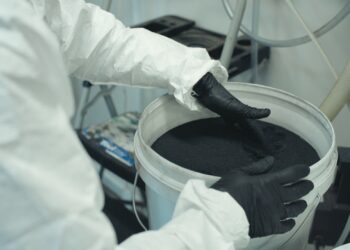
“Chemical recycling” is also called “advanced recycling” and both generally refer to a wide array of processes that use heat, pressure and solvents to break down the molecular chains of polymers into liquids or gasses that can then be processed into fuels, oils, waxes, new plastics or other chemical products.
Craig Cookson, senior director of plastics sustainability at the American Chemistry Council (ACC), said he believes more states will classify chemical recycling as a form of manufacturing in the coming years.
“Policymakers all across the country – in their communities and in their states – want to see greater amounts and more types of plastics recycled,” he said. “They’re going to need advanced recycling to complement mechanical recycling to be able to do that, especially with higher goals around packaging like pouches and films.”
Kate Donovan, a senior attorney with the Natural Resource Defense Council, said she would rather see a reduction in plastic usage and other kinds of reuse instead of chemically recycling material into fuel or more plastic. In New York, her organization is trying to stop chemical recycling facilities from setting up shop at all, but if they do, she said they should be regulated to a high degree and as waste management.
“They use and produce a lot of toxic and hazardous substances in the process of chemical recycling and they are often sited in environmental justice communities, communities that have continually faced the burden of pollution, so this is just another industry source that is wreaking havoc on communities,” she said.
Anja Brandon, associate director of U.S. plastics policy at Ocean Conservancy, has said in the past that the push by the industry to classify chemical recycling as manufacturing rather than waste management is intended to “skirt environmental permitting.”
Ocean Conservancy does not support any kind of chemical recycling, according to its position platform, because “in its current form, chemical recycling does not contribute to a circular plastics economy because it is not plastics-to-plastics recycling and creates environmental and social harms that are inconsistent with our goal of a healthier ocean supported by a more just world.”
The 2023 legislative session
In 2023, 15 bills touching on chemical recycling were introduced in states across the nation. Of those, 13 sought to define chemical recycling as manufacturing, and the other two, in Maine and New Hampshire, aimed to do the opposite.
New Hampshire previously passed legislation regulating chemical recycling as manufacturing in 2022, and this year’s bill sought to reverse that.
In Maine, LD 1660 did not leave the Committee on Environmental and Natural Resources. It would have made chemical recycling facilities subject to solid waste regulation and specified that chemical recycling “does not constitute recycling.”
SB 267 in New Hampshire was retained in a House committee in May after passing the Senate. It originally called for rules specifically for chemical recycling facilities, “given the emerging and untested nature” of such facilities and their potential to produce pollutants, but was amended by the Senate to instead require the Commissioner of the Department of Environmental Services to consider a “cumulative impacts analysis” in all of its rules and statutes moving forward.
Five bills were signed into law. Three were to regulate chemical recycling as manufacturing, in Indiana (SB 472), Kansas (SB 114) and Utah (HB 493), with nearly identical language. Two bills, one in Texas (HB 3060) and the other in Louisiana (SB 100), built on previous laws regulating chemical recycling by adding that the products of chemical recycling would count toward any future recycled-content mandates. These bills also classified chemical recycling as a form of recycling.
“We saw some good momentum this year,” Cookson said.
Another seven bills failed to advance, one of them Maine’s. The others were in Alabama (HB 36), Alaska (AB 143), Nebraska (LB 599), Nevada (SB 361), New York (AB 4744) and Virginia (SB 1365).
Cookson said ACC is countering pushback against the regulations with “good research and information that demonstrates that these facilities have lower emissions, that they comply with all state and local and federal regulations around air and water and waste.”
“We also work to get lawmakers and others out to see the facilities so they can see firsthand what is actually happening,” he added. “I think that is an important part of it.”
The remaining three, including New Hampshire’s bill, are still active. New Jersey and North Carolina also still have bills in play to regulate chemical recycling as manufacturing.
Advancing legislation
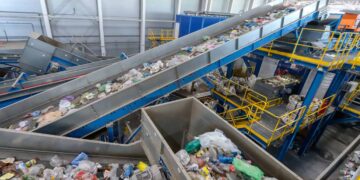
Cookson said ACC works with policymakers across the country and testifies in favor of chemical recycling bills, explaining that classifying the process as manufacturing “makes sense because these facilities are not receiving solid waste, they’re receiving sorted plastics.”
“They are also putting them through a process that breaks them back down to their basic chemical components and then have a product to sell, a liquid commodity to sell, that’s an alternative to raw material, to oil and gas, to go back into plastics again,” he said. “That is, by definition, manufacturing. So a manufacturing regulation is the most appropriate for these facilities.”
ACC is also working in favor of bills such as those in Texas and Louisiana, to put in statute that chemical recycling counts toward recycling goals and targets.
“A lot of states are now looking at extended producer responsibility and recycled content mandates. So making sure that these technologies, when plastics and other materials go to an advanced recycling facility, that that counts as recycling,” Cookson said.
He’s also anticipating similar movement at a federal level in the future, to create a national regulatory framework “to really make the United States the best place in the world to invest in advanced recycling, and mechanical recycling too.”
Pushing back
There has also been federal legislation to put limits on chemical recycling. The Break Free From Plastic Pollution Act has been introduced in different forms several times and would add more permitting requirements for chemical recycling facilities. It does not classify the technology as “recycling.”
And in a July 2022 letter to the U.S. EPA, 35 members of Congress urged the department to continue regulating chemical recycling as combustion, not manufacturing, under the Clean Air Act. The EPA in May 2023 decided to continue applying the current Clean Air Act requirements for pyrolysis.
It pointed to toxic emissions from facilities and said that the plastic and petrochemical industry “has lobbied at the state level to eliminate emission control requirements for incinerators using these technologies, exposing vulnerable fenceline communities to toxic emissions from these processes.”
Lynn Hoffman, co-president of Eureka Recycling, said “the confusing part is if these facilities are being built the way they’re being sold – taking separated plastics and using them to make something new – they are manufacturing by any definition. So why does it need to be codified under state law?”
Hoffman said she is not anti-innovation, but the term “chemical recycling” is a wide umbrella covering many different technologies that have not yet been proven at scale, and she would rather see innovations that improve mechanical recycling, such as removing toxic chemicals or handling the microplastics in effluent.