





Resource Recycling
  • The Latest
  • Analysis
    • All
    • Certification Scorecard
    • Industry Announcements
    • Opinion
    Apple store

    Apple leads on inputs, faces questions on ITAD

    Unlocking the power of source reduction in US EPR

    Unlocking the power of source reduction in US EPR

    Following petition, Microsoft extends Windows 10 support

    Windows AI Recall is pushing data destruction upstream

    Certification Scorecard — Week of April 27, 2026

    Five trends shaping PCR packaging to 2031

    Intel sign on company building with blue sky and trees.

    Intel boosts margins by selling what it used to scrap

  • Conferences
    • Resource Recycling Conference
    • Plastics Recycling Conference
    • E-Scrap: The Longevity Conference
    • Textiles Recovery Summit
  • Publications
    • E-Scrap News
    • Plastics Recycling Update
    • Policy Now
    • Resource Recycling
    • Other Topics
      • Brand Owners
      • Critical Minerals
      • Glass
      • Grant Watch
      • Markets
      • Organics
      • Packaging
      • Research
      • Technology
      • Textiles
      • All Topics
Subscribe
No Result
View All Result
Resource Recycling
  • The Latest
  • Analysis
    • All
    • Certification Scorecard
    • Industry Announcements
    • Opinion
    Apple store

    Apple leads on inputs, faces questions on ITAD

    Unlocking the power of source reduction in US EPR

    Unlocking the power of source reduction in US EPR

    Following petition, Microsoft extends Windows 10 support

    Windows AI Recall is pushing data destruction upstream

    Certification Scorecard — Week of April 27, 2026

    Five trends shaping PCR packaging to 2031

    Intel sign on company building with blue sky and trees.

    Intel boosts margins by selling what it used to scrap

  • Conferences
    • Resource Recycling Conference
    • Plastics Recycling Conference
    • E-Scrap: The Longevity Conference
    • Textiles Recovery Summit
  • Publications
    • E-Scrap News
    • Plastics Recycling Update
    • Policy Now
    • Resource Recycling
    • Other Topics
      • Brand Owners
      • Critical Minerals
      • Glass
      • Grant Watch
      • Markets
      • Organics
      • Packaging
      • Research
      • Technology
      • Textiles
      • All Topics
Subscribe
No Result
View All Result
Resource Recycling
No Result
View All Result
Home Recycling

Lessons from France: Eco-modulated fees not used effectively

Marissa HeffernanbyMarissa Heffernan
May 30, 2023
in Recycling
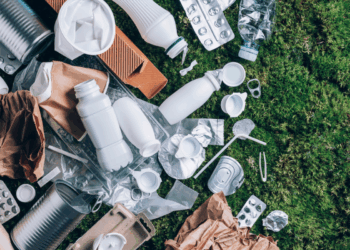
Analysts speaking in a recent GAIA webinar said eco-modulated fees on packaging fail to incentivize reduction and reuse. | Photoeu/Shutterstock

As extended producer responsibility programs for packaging start to take hold in the U.S., many are looking to Europe for ideas. Several stakeholders in the decades-old French system shared some lessons they’ve learned, including that eco-modulated fees have not achieved their desired effect.  

In a May Global Alliance for Incinerator Alternatives (GAIA) webinar, four experts focused on eco-modulated fees and how they affect the success of reuse and eco-design in extended producer responsibility (EPR) systems. 

The organizations represented were environmental group Zero Waste France, which advocates for reducing waste generation; Rejoué, which coordinates reuse of children’s toys; and Amorce, a nonprofit that represents and aids local governments in crafting EPR and other environmental laws. GAIA is a global environmental justice organization. 

Eco-modulating means lowering the yearly fees on packaging that brands pay if they use eco-friendly options, such as more recyclable design or more recyclable materials. On the other side of the coin, fees are raised for brands that make less eco-friendly packaging choices. 

Alice Elfassi, a legal affairs supervisor with Zero Waste France, said EPR “creates a lot of fantasies around the world, but it has a lot of limitations, even though it works along the ‘polluter pays’ principle.” 

Problems with eco-modulation 

Elfassi said that the French packaging EPR system, which was passed in 1992, has not managed to increase reuse options. While it was recently amended to add specific reuse targets, she noted, the given budget is too small to get anything running on a large scale.

That’s the same hurdle Claire Tournefier, founder and development director of Rejoué, is running into. Her company reuses toys, and she said despite a recent amendment to the EPR law to cover toys, the level of funding is not adequate.

Flore Berlingen, an EPR author and consultant, moderated the webinar. She pointed out that eco-modulated fees account for a very small percentage of EPR fees. Even then, the vast majority of fees are bonuses paid out to companies that are making eco-friendly choices, rather than penalties for companies that are not.  

She said she’s found that 95% of the eco-modulation payments are bonuses and 5% are penalties, an “overuse of rewards and underuse of penalties.” 

Further, 93% of the penalties are related to paper, she said, not plastics. That can give the false impression that there are no issues with plastics, Berlingen said, when redesigning plastics should be a larger focus. 

French eco-modulated fees also tend to focus on recyclability but not reduction, Tournefier added, and an overall lack of data makes it hard to say whether the fee structure has proven effective. 

As a principle, eco-modulation as a lever “seems weak,” Berlingen said, perhaps because it is designed by an industry-run producer responsibility organization (PRO) that wants to avoid such penalties.

Nicolas Garnier, director of Amorce, noted that while EPR “does lead to a certain awareness among the the producers that wouldn’t happen without EPR,” it does not lead to waste prevention. 

Instead, it reinforces “a certain way of consuming something, just circular,” Garnier said. That’s why the French EPR for packaging law was amended to add more explicit reuse targets.   

In addition, many PROs do not achieve their targets, he said, but there are weak or no sanctions imposed on them. 

Possible solutions 

When looking to fix those problems, Garnier said the state needs to come down harder on those who are not complying and also be more systematic about penalties. He also suggested making PROs responsible for funding street sweeping and cleaning up illegal dumping. 

Tournefier said her experience is that those looking to promote reuse need to work together in a purposeful and organized way to be able to succeed against huge producer lobbyists. 

Elfassi suggested changing the funding mechanisms. Eco-modulated fees can be part of it, she said, but they are not providing enough funding. She proposed a true tax on single-use plastics (on top of other EPR fees), and regional and national investment plans for reuse infrastructure.

“Without the proper tax instruments, this will not work,” she said. “It will not be developed at the right scale.” 
 

Tags: EPREuropePolicy Now
TweetShare
Marissa Heffernan

Marissa Heffernan

Marissa Heffernan worked at Resource Recycling from January 2022 through June 2025, first as staff reporter and then as associate editor. Marissa Heffernan started working for Resource Recycling in January 2022 after spending several years as a reporter at a daily newspaper in Southwest Washington. After developing a special focus on recycling policy, they were also the editor of the monthly newsletter Policy Now.

Related Posts

Recycling analysis pinpoints gaps in New York data

New York packaging EPR bill gets nearly 150 amendments

byStefanie Valentic
May 1, 2026

State lawmakers backing New York's Packaging Reduction and Recycling Infrastructure Act introduced nearly 150 amendments, aligning the bill's definitions and...

Unlocking the power of source reduction in US EPR

Unlocking the power of source reduction in US EPR

byMichael Wassermanand1 others
May 1, 2026

EPR is evolving to include mechanisms to encourage reuse and promote design changes to enable recycling and reduce the amount...

What is EPR and why it matters

What is EPR and why it matters

byScott Snowden
April 22, 2026

Extended producer responsibility is reshaping recycling by shifting costs to manufacturers and driving changes in product design, repairability and end-of-life...

EPR fees are a market signal. Here’s what they’re telling you.

Oregon DEQ flags 250 producers for RMA noncompliance

byStefanie Valentic
April 21, 2026

Oregon DEQ released its first quarterly producer status list under the Recycling Modernization Act on April 9, flagging 250 companies...

CPG Henkel raises PCR targets for 2030

byAntoinette Smith
April 16, 2026

Despite falling slightly short of 2025 goals, the Germany-based consumer brand aims to increase the share of recycled plastic in...

Oregon’s battery EPR bill officially charged for implementation

byStefanie Valentic
April 10, 2026

Oregon Governor Tina Kotek signed HB 4144 into law on April 7, setting into motion the mechanics for an extended...

Load More
Next Post

Carton robot boosts capture, reduces MRF residue

More Posts

What Netflix’s ‘Plastic Detox’ gets wrong – and right

April 23, 2026
EPR fees are a market signal. Here’s what they’re telling you.

Oregon DEQ flags 250 producers for RMA noncompliance

April 21, 2026
Intel sign on company building with blue sky and trees.

Intel boosts margins by selling what it used to scrap

April 29, 2026
Birch Plastics gets FDA green-light for post-industrial PP

LyondellBasell upgrade to PreZero assets on hold

April 23, 2026

PCA keeping focus on virgin fiber products

April 27, 2026
Intel sign outside of company building.

What Intel’s blockbuster quarter means for ITAD

April 27, 2026
Float-sink technology at the Quantum Lifecycle Partners facility in Toronto, Canada enables the processing of e-plastics.

E-plastics recovery line opens in Canada

April 28, 2026
Our top stories from April 2022

Peters-Michaud named CEO, Houghton chair of Sage Sustainable Electronics

April 28, 2026
Plastic Ingenuity to use PureCycle PP for coffee lids

Plastic Ingenuity to use PureCycle PP for coffee lids

April 30, 2026
Dow touts US PE advantage amid Iran war

Dow touts US PE advantage amid Iran war

April 24, 2026
Load More

About & Publications

About Us

Staff

Archive

Magazine

Work With Us

Advertise
Jobs
Contact
Terms and Privacy

Newsletter

Get the latest recycling news and analysis delivered to your inbox every week. Stay ahead on industry trends, policy updates, and insights from programs, processors, and innovators.

Subscribe

Welcome Back!

Login to your account below

Forgotten Password?

Retrieve your password

Please enter your username or email address to reset your password.

Log In

Add New Playlist

No Result
View All Result
  • The Latest
  • Analysis
  • Recycling
  • E-Scrap
  • Plastics
  • Policy Now
  • Conferences
    • E-Scrap Conference
    • Plastics Recycling Conference
    • Resource Recycling Conference
    • Textiles Recovery Summit
  • Magazine
  • About Us
  • Advertise
  • Archive
  • Jobs
  • Staff
Subscribe
This website uses cookies. By continuing to use this website you are giving consent to cookies being used. Visit our Privacy and Cookie Policy.