




At Waste Expo last month, executives from several MRF operators and private-sector recyclers detailed concerns about material ownership and “stranded assets” as recycling policy evolves. At the same time, some MRF leaders voiced clear support for EPR frameworks.
During sessions at Waste Expo, held in New Orleans May 1-4, several facility operators said they fear losing control of the material they collect under producer-backed recycling systems in various states.
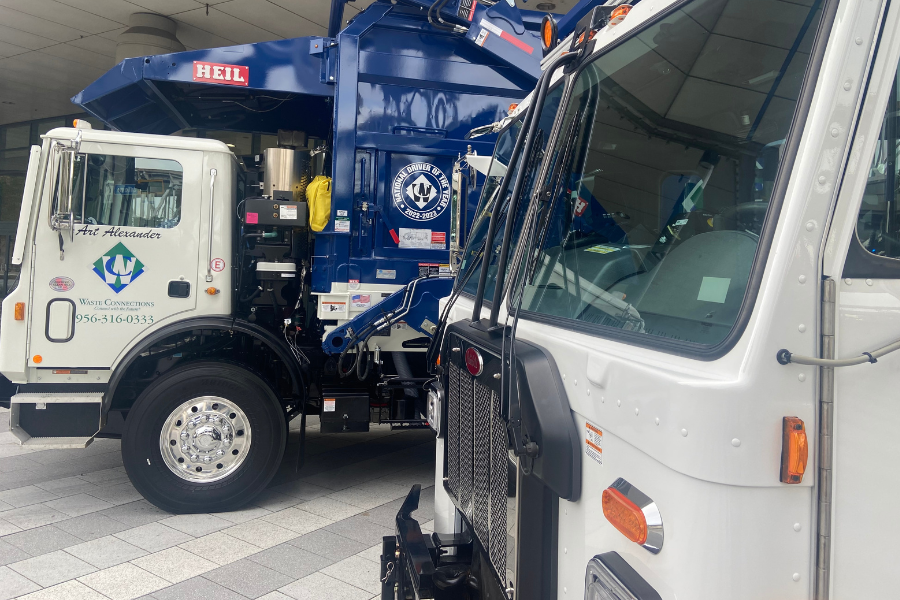
“[Producers] will be spending all this money, but at the end of the day who owns the commodity?” asked Andy Moss, government affairs manager for Waste Connections in New York. “They are going to say, ‘We do.’ At the same time, we collect it and have put millions [of dollars] into infrastructure, so we want it.
“Will the program push us to the side after we’ve put all this money into it?” Moss added.
Anxieties arise as rubber hits the road
Since 2021, extended producer responsibility (EPR) for paper and packaging has passed in four states and been proposed in a number of others.
Several Canadian provinces, including Ontario, are also in the process of ushering in paper and packaging EPR, a framework in which paper and packaging producers are mandated to help fund and manage municipal materials recovery networks.
More details are now starting to come into focus on how paper and packaging EPR will be implemented in the U.S., with Colorado recently becoming the first state to name a producer responsibility organization (PRO), the group coordinating brands to meet requirements under the state’s policy.
These recent developments – along with the introduction of a fresh wave of bills in 2023 – have sparked a new level of industry discourse around EPR, as decisions begin to be made about how funds and material will actually move and who will have the ultimate say on those points.
At Waste Expo, the concerns about material ownership voiced by Moss were echoed by other processors.
In a conference session focused on material markets, Hendrik Dullinger of plastics reclaimer EFS-plastics said he is not fully on board with the way the Ontario EPR system is approaching the material ownership question.
He noted that though final details are still to be determined, it appears to him that brands funding the system will have the “first right of refusal” for collected recyclables and will be relying on brokers to move that material to market.
Dullinger, the vice president of business development at EFS, said that as a processor based in Ontario, his company would like to engage in long-term contracts to receive plastics recovered there. “The way some of the EPR schemes are playing out is not necessarily beneficial for the market,” he said.
In another Waste Expo session, Shannon Crawford Gay, director of recycling and environmental policy at WM, said her company and other processors have worked for many years helping to develop a variety of markets for processed material. They want those material pipelines to manufacturers to stay intact.
Crawford Gay gave the example of durable goods such as plastic pipes being an important end use for some plastics – if brands control where recyclables go, that type of market might not see the same volume of feedstock.
“Directing the flow of materials is something that could be handled outside EPR,” said Crawford Gay, citing strategies such as long-term contracts or floor pricing for different commodities.
She added that more industry stakeholders might show greater support for paper and packaging EPR if the proposals were more narrowly focused on increasing recycling rates and didn’t also try to tackle many other elements, such as refill/reuse and material toxicity.
“That might be a reason the Washington bill did not pass,” Crawford Gay said. “It proposed a brand new bottle bill and EPR at the same time, which is very complex. When these bills are trying to be about everything, it weighs down what can be accomplished.”
Whose voice gets heard?
Another significant point of concern for processors is the level of industry expertise at the top of EPR program decision-making as implementation moves forward.
Most of the North American systems coming on-line or being proposed include an industry advisory group, composed of processors and a variety of stakeholders, to help guide the PRO and state regulators on program specifics.
But it remains to be seen how influential those industry perspectives will actually be.
“In any great partnership, there has to be a balance so one entity doesn’t have all the power to make all the decisions,” said Nicole Willett, vice president of resource recovery at GFL Environmental. “As we start to look at the U.S., that is my one big concern.”
Bill Keegan of Minnesota MRF operator Dem-Con said that if facility operators and other recycling professionals in covered jurisdictions don’t have enough say in how programs roll out, the unintended consequences could be significant.
“My concern specifically with EPR is that you don’t have the experts in the industry really making those decisions and potentially leaving stranded assets in what has been a successful industry,” he said. “In Minnesota, we were a stakeholder at the table to talk about what this looks like, but there was really a minor, if any, sense of input from industry.”
Haulers and processor representatives said they would also feel better about how program decisions were made if a comprehensive needs assessment was completed before other pieces were put into place.
“My concern specifically with EPR is that you don’t have the experts in the industry really making those decisions and potentially leaving stranded assets in what has been a successful industry.” –Bill Keegan, president, Dem-Con Companies
In Maryland this year, legislation that started as a full paper and packaging EPR program ended up being passed in a form that simply requires a study on the current recycling realities in the state.
“That’s a great way to start it,” said Barrett Jensen, government affairs manager at Waste Connections of Colorado (he has been active on the EPR advisory group in that state). “Let’s find the data we need and know what we’re getting into before we pass this large legislation. That’s something we looked at in Colorado that we didn’t necessarily get.”
Not all negative
Despite the various concerns outlined by processors, plenty of dialogue during Waste Expo sessions pointed to agreement among stakeholders on the positive possibilities of packaging EPR in North America.
The opportunity to lift data overall is one area where processors and others seem to be finding common ground in EPR discussions right now.
“Typically everyone in an EPR system reports,” said Resa Dimino, managing partner at the Signalfire consultancy and the moderator of one EPR-focused session at Waste Expo. “Producers report on how much material goes into the market, MRFs on how much gets processed. Just think for a minute if we actually had a consistent data set across the nation.”
A major upshot of this reporting would be recycling rates, contamination totals and more that everyone would be able to access and discuss openly.
“We can then really have some honest conversations, instead of one person saying ‘it’s 10 percent’ and another saying ‘no it’s 15 percent,’” said Jonathan Levy, director of government relations at AMP Robotics, which manufactures sortation tools and also runs plastics processing sites.
“The biggest opportunity is the influx of capital that will come into the recycling system.” –Shannon Crawford Gay, director of recycling and environmental policy, WM
In addition, processors said it’s clear to them that as producers are asked to bring significant dollars to materials capture and wider recycling infrastructure development, cities, MRFs and others stand to benefit.
“The biggest opportunity is the influx of capital that will come into the recycling system,” said Crawford Gay of WM, the largest hauler and MRF operator in North America. “There are municipalities that haven’t been able to invest in recycling. We see it as an opportunity to go into some of these communities and help them grow their recycling footprint.”