




Resource Recycling
  • The Latest
  • Analysis
    • All
    • Certification Scorecard
    • Industry Announcements
    • Opinion
    Following petition, Microsoft extends Windows 10 support

    Windows AI Recall is pushing data destruction upstream

    Certification Scorecard — Week of April 27, 2026

    Five trends shaping PCR packaging to 2031

    Intel sign on company building with blue sky and trees.

    Intel boosts margins by selling what it used to scrap

    Our top stories from April 2022

    Peters-Michaud named CEO, Houghton chair of Sage Sustainable Electronics

    Closeup of a printed circuitboard

    Can modular metals recovery challenge the smelter model?

  • Conferences
    • Resource Recycling Conference
    • Plastics Recycling Conference
    • E-Scrap: The Longevity Conference
    • Textiles Recovery Summit
  • Publications
    • E-Scrap News
    • Plastics Recycling Update
    • Policy Now
    • Resource Recycling
    • Other Topics
      • Brand Owners
      • Critical Minerals
      • Glass
      • Grant Watch
      • Markets
      • Organics
      • Packaging
      • Research
      • Technology
      • Textiles
      • All Topics
Subscribe
No Result
View All Result
Resource Recycling
  • The Latest
  • Analysis
    • All
    • Certification Scorecard
    • Industry Announcements
    • Opinion
    Following petition, Microsoft extends Windows 10 support

    Windows AI Recall is pushing data destruction upstream

    Certification Scorecard — Week of April 27, 2026

    Five trends shaping PCR packaging to 2031

    Intel sign on company building with blue sky and trees.

    Intel boosts margins by selling what it used to scrap

    Our top stories from April 2022

    Peters-Michaud named CEO, Houghton chair of Sage Sustainable Electronics

    Closeup of a printed circuitboard

    Can modular metals recovery challenge the smelter model?

  • Conferences
    • Resource Recycling Conference
    • Plastics Recycling Conference
    • E-Scrap: The Longevity Conference
    • Textiles Recovery Summit
  • Publications
    • E-Scrap News
    • Plastics Recycling Update
    • Policy Now
    • Resource Recycling
    • Other Topics
      • Brand Owners
      • Critical Minerals
      • Glass
      • Grant Watch
      • Markets
      • Organics
      • Packaging
      • Research
      • Technology
      • Textiles
      • All Topics
Subscribe
No Result
View All Result
Resource Recycling
No Result
View All Result
Home Recycling

Editor’s perspective: An Asian giant pushing global ambitions

Dan LeifbyDan Leif
August 8, 2017
in Recycling

The news that China is aiming to roll out an outright ban on some grades of recovered material jolted the U.S. recycling industry last month.

The basic reaction can be summed up by the Scooby-Doo-inspired words of one reader who posted the following to our LinkedIn page the day the story broke: “Ruh-roh.”

Ruh-roh is right. Clearly, we’re about to enter the next stage in recycling market uncertainty. And it could be spooky. Recycling companies and programs are scrambling to figure out how to best respond. It might make sense to take a step back and understand how the move fits into the Asian behemoth’s expansive, evolving economic strategy.

A buyer like no other

In detailing the ban, Chinese leaders noted “unsorted” paper and a host of key recovered plastic resins would be prohibited from import starting in late 2017.

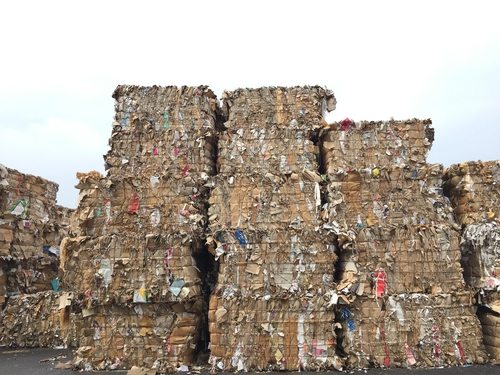
If China closes the door completely on those materials, the repercussions will be astounding. According to recycled fiber market analyst Bill Moore, the U.S. industry exported around 4 million tons of materials in the mixed-paper grade in 2016 and roughly 60 percent of that total headed to Chinese buyers.

China is equally important on the plastics side. According to U.S. export statistics, China has been the largest overseas consumer of recovered PE, PS, PVC and PET every month this year. And all of those resins are included in the list of 24 segments of “solid wastes” outlined in the ban.

Given how much material heads to the country, it’s natural to wonder whether the action will actually come to pass. China has been taking in enormous tonnages of recyclables from the U.S. and elsewhere for decades for a reason: The nation needs feedstock to keep its manufacturing engine humming, and recovered paper, plastic and other materials have emerged as a cost-effective cog in that machine.

That’s why some recycling insiders aren’t exactly taking the ban language at face value.

“The real losers [from the ban] in addition to the recycling programs in the West are the Chinese mill companies,” Moore said. “They’re going to have real problems competitively in terms of their packaging and making boxes. And for that reason I don’t think China will go all the way on a mixed-paper ban.”

Sally Houghton of the PET-focused Plastics Recycling Corporation of California expressed similar sentiments in an interview. “I find it hard to believe that China is going to cut all imports,” she said, “because they rely so heavily on it and they manufacture so much of the plastic in the world.”

It’s also worth noting that plenty of questions remain about what Chinese authorities really mean by the different materials terms they noted in the ban announcement. One large materials recovery facility operator we spoke with had the impression that on the fiber side, the Chinese action would only affect paper that hadn’t been sorted at all and that the type of bale we in the U.S. refer to as “mixed paper” would actually continue to flow to Chinese mills without issue.

‘They keep on pushing’

What does seem clear, however, is that China is serious about leveraging its power in the global marketplace.

When China’s Green Fence import initiative was implemented in 2013, the U.S. recycling industry wondered whether it would just be a short-term effort on the part of customs inspectors. But the quality bar seems to have slowly and steadily raised since then.

The proposed ban is in many ways the next logical step for China to indicate to the world it wants us to deliver higher quality product. “They keep on pushing,” Moore said. “You can trace this all the way back to Green Fence.”

And in fact, China’s most recent play might be about more than guaranteeing clean feedstock for its mills and manufacturers. It also seems to be about shifting global perceptions of the country.

In an English-language statement regarding the import ban proposal, China’s government set out a target of growing domestic collection of recyclables to 350 million metric tons annually by 2020. That number is 42 percent higher than what China collected in 2015, according to the government document.

China sees its economic future as one of pushing outward, of not being merely a colossal consumer.

No longer is Beijing satisfied to just take in the rest of the world’s scrap. It wants to leverage its own resources. And it’s not far-fetched to imagine a time when the country starts exporting significant tonnages to other nations.

Recycling is not the only area where China is looking to rewrite its role in the global economic order. The New York Times this weekend ran an analysis on how Chinese authorities have strategically fostered partnerships between Qualcomm and other U.S. tech players to help ensure that more of the development of boundary-pushing computer chip technology happens within Chinese companies. This step would allow China to move away from simply being the place where electronics are assembled and instead help it drive the evolution of computing.

Similarly, China continues to push its hugely ambitious “One Belt, One Road” initiative, which is looking to infuse up to $1 trillion in infrastructure projects in dozens of countries across the world.

The takeaway from these developments is that China sees its economic future as one of pushing outward, of not being merely a colossal consumer. That makes perfect sense. The United States and other economic heavyweights of the last half century have all grown using that same approach – when a country shapes the development of any global industry, that country stands to gain considerably.

To be sure, in the near term, China will remain a large buyer of the materials collected and processed by U.S. recycling stakeholders. But companies and programs here should also expect the economic relationship with China to continue to morph as Beijing puts more global ambitions into action.

Colin Staub contributed reporting for this article.

 

Machinex

Tags: AsiaPaper FiberPlasticsTrade & Tariffs
TweetShare
Dan Leif

Dan Leif

Dan Leif is the managing editor at Resource Recycling, Inc., which publishes Resource Recycling, Plastics Recycling Update and E-Scrap News. He has been with the company since 2013 and has edited different trade publications since 2006. He can be contacted at [email protected].

Related Posts

California extends compostable labeling law

Report finds path forward for compostable packaging

byKeith Loria
April 28, 2026

A new report by Closed Loop Partners’ Composting Consortium examined five years of research, field testing and cross-industry collaboration and...

Waste Connections sees Q1 recycled commodity rise

byStefanie Valentic
April 27, 2026

Waste Connections reported Q1 2026 revenue of $2.371 billion, up 6.4% year over year, with recycled commodity revenue posting its...

PCA keeping focus on virgin fiber products

byAntoinette Smith
April 27, 2026

Despite recent recycled paper acquisitions, Packaging Corporation of America will still lean on strength and flexibility of its virgin paper...

Q1 containerboard exports drop by 19%

Q1 containerboard exports drop by 19%

byAntoinette Smith
April 24, 2026

A quarterly report from the American Forest & Paper Association attributed the drop to "evolving trade dynamics," while production increased...

Volatility reshapes outlook for US metals businesses

byScott Snowden
April 15, 2026

Panelists at the ReMA conference in Las Vegas said tariffs, reshoring and geopolitical tension are remaking trade flows, lifting US...

Industry group: Help us find the plastic bale volumes we need

PET bales sink further as other grades firm 

byRecyclingMarkets.net Staff
April 15, 2026

Pricing for HDPE and PP bales rose again, while PET bales remained low, film grades have steadied, and paper and...

Load More
Next Post

Solar-powered receptacles targeted in patent lawsuit

More Posts

What Netflix’s ‘Plastic Detox’ gets wrong – and right

April 23, 2026
EPR fees are a market signal. Here’s what they’re telling you.

Oregon DEQ flags 250 producers for RMA noncompliance

April 21, 2026
Birch Plastics gets FDA green-light for post-industrial PP

LyondellBasell upgrade to PreZero assets on hold

April 23, 2026

PCA keeping focus on virgin fiber products

April 27, 2026
Dow touts US PE advantage amid Iran war

Dow touts US PE advantage amid Iran war

April 24, 2026
Intel sign on company building with blue sky and trees.

Intel boosts margins by selling what it used to scrap

April 29, 2026
The independent ITAD at a crossroads

The independent ITAD at a crossroads

April 22, 2026
AT&T, Compudopt expand e-recycling program

AT&T, Compudopt expand e-recycling program

April 23, 2026
Float-sink technology at the Quantum Lifecycle Partners facility in Toronto, Canada enables the processing of e-plastics.

E-plastics recovery line opens in Canada

April 28, 2026
Intel sign outside of company building.

What Intel’s blockbuster quarter means for ITAD

April 27, 2026
Load More

About & Publications

About Us

Staff

Archive

Magazine

Work With Us

Advertise
Jobs
Contact
Terms and Privacy

Newsletter

Get the latest recycling news and analysis delivered to your inbox every week. Stay ahead on industry trends, policy updates, and insights from programs, processors, and innovators.

Subscribe

Welcome Back!

Login to your account below

Forgotten Password?

Retrieve your password

Please enter your username or email address to reset your password.

Log In

Add New Playlist

No Result
View All Result
  • The Latest
  • Analysis
  • Recycling
  • E-Scrap
  • Plastics
  • Policy Now
  • Conferences
    • E-Scrap Conference
    • Plastics Recycling Conference
    • Resource Recycling Conference
    • Textiles Recovery Summit
  • Magazine
  • About Us
  • Advertise
  • Archive
  • Jobs
  • Staff
Subscribe
This website uses cookies. By continuing to use this website you are giving consent to cookies being used. Visit our Privacy and Cookie Policy.