





Resource Recycling
  • The Latest
  • Analysis
    • All
    • Certification Scorecard
    • Industry Announcements
    • Opinion
    Dell expects PC refresh to extend into next year

    Dell, HP show enterprise PC spending separating from unit volume

    Update of e-Stewards to be released for comment

    Certification scorecard for the week of Aug. 31

    HP receives ocean plastics certification

    How HP’s strategy shift affects ITAD

    Industry announcements for January 2026

    Industry announcements for September 2026

    APR adds PCR content verification to cert program

    Certification Scorecard — Week of August 24, 2026

    Top stories from July 2024

    ITAD global regulation and compliance this summer

  • Conferences
    • Resource Recycling Conference
    • Plastics Recycling Conference
    • E-Scrap: The Longevity Conference
    • Textiles Recovery Summit
  • Publications
    • E-Scrap News
    • Plastics Recycling Update
    • Policy Now
    • Resource Recycling
    • Other Topics
      • All Topics
      • Brand Owners
      • Critical Minerals
      • Glass
      • Grant Watch / RFPs
      • Markets
      • Organics
      • Packaging
      • Research
      • Technology
      • Textiles
Subscribe
No Result
View All Result
Resource Recycling
  • The Latest
  • Analysis
    • All
    • Certification Scorecard
    • Industry Announcements
    • Opinion
    Dell expects PC refresh to extend into next year

    Dell, HP show enterprise PC spending separating from unit volume

    Update of e-Stewards to be released for comment

    Certification scorecard for the week of Aug. 31

    HP receives ocean plastics certification

    How HP’s strategy shift affects ITAD

    Industry announcements for January 2026

    Industry announcements for September 2026

    APR adds PCR content verification to cert program

    Certification Scorecard — Week of August 24, 2026

    Top stories from July 2024

    ITAD global regulation and compliance this summer

  • Conferences
    • Resource Recycling Conference
    • Plastics Recycling Conference
    • E-Scrap: The Longevity Conference
    • Textiles Recovery Summit
  • Publications
    • E-Scrap News
    • Plastics Recycling Update
    • Policy Now
    • Resource Recycling
    • Other Topics
      • All Topics
      • Brand Owners
      • Critical Minerals
      • Glass
      • Grant Watch / RFPs
      • Markets
      • Organics
      • Packaging
      • Research
      • Technology
      • Textiles
Subscribe
No Result
View All Result
Resource Recycling
No Result
View All Result
Home Resource Recycling Magazine

Community Spotlight: Asking residents to sort? One city’s done it for decades

Colin StaubbyColin Staub
May 3, 2017
in Resource Recycling Magazine
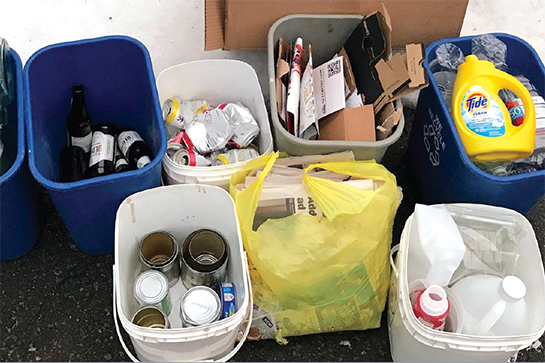
Clifton residents separate materials into more than 10 different categories.

As more and more communities switch to single-stream recycling collection to increase participation and material volumes, a New Jersey city is holding on strong to its source-separation system.

And the municipality’s recycling coordinator believes the approach is the key to community-wide sustainability.

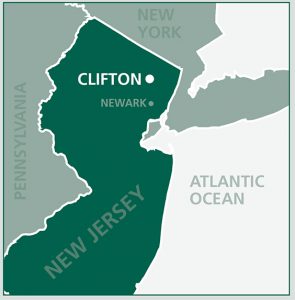
Clifton, N.J., like all municipalities in the state, was required to offer recycling services after state-level legislation passed in 1987. State guidelines asked each municipality to shoot for 15 percent diversion in 1989 and to hit 25 percent by 1990.

“Which maybe sounded [like] a lot to many communities, but where we were in North Jersey, there was a lot of recycling already going on,” said Al DuBois, Clifton’s recycling coordinator.
Quickly surpassing diversion target

To attain its goals, the state mandated that each city begin either a curbside collection or drop-off recycling program. Clifton ended up with both, and by 1990, largely due to recycling efforts that were happening previously but hadn’t been tabulated, Clifton hit 34 percent diversion, substantially surpassing its target rate.

“It was a matter of mailing out letters to businesses and telling them, ‘It’s mandatory, start reporting your tonnage to us,’” DuBois said.

Also in 1990, James Florio became New Jersey’s governor, and his administration raised the diversion target to an ambitious 60 percent by 1995. Through a separate executive order, Florio, a Democrat, also postponed all waste-to-energy incinerator construction.

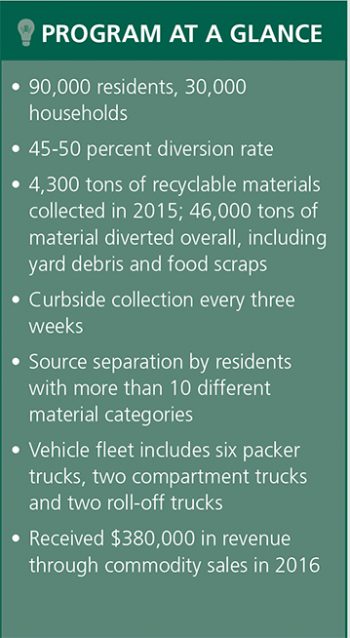
Clifton has taken that recycling message to heart. With nearly 90,000 residents making up 30,000 households, Clifton in 2015 collected more than 46,000 tons of materials, a figure that includes recyclable items, yard debris and food scraps.

Recyclable materials made up about 4,300 tons of that figure. DuBois estimates Clifton holds an overall diversion rate of between 45 and 50 percent, although he said he doesn’t put much stock in percentage figures. He noted they vary based on how the metric is defined so it can be misleading to compare communities using rate figures.
Committed citizenry

Unlike most municipalities that pick up recyclables weekly or every-other-week, Clifton’s curbside program has collection once every three weeks. And residents are required to source-separate their materials.

DuBois points to the source separation, and the commitment of Clifton citizens to put in the work required, as a large factor in the city’s recycling success.

The city’s Department of Public Works provides collection service, and garbage is picked up twice per week by a private hauler. Using a fleet that includes six packer trucks, two compartment trucks and two roll-off vehicles, city crews take the collected materials back to the public works yard.

The clean supply of materials from source separation means the city has a marketable product, without much further processing necessary.

“It’s all separated, and we receive revenues for each commodity,” DuBois said.

The city collects more than 10 different materials separately, all of which are either marketed or composted, DuBois said. Finished compost is made available to residents for free.

Curbside cash

Clifton is well-positioned by its proximity to local markets, although DuBois noted market geography has shifted. When the program started three decades ago, there were more than a dozen nearby processors and MRFs, DuBois said. Now there are only a few, despite a push in the 1980s to increase local end markets for materials. Still, through its sales of recycled materials over the years, combined with recycling grant money from the state, Clifton has grossed about $10 million since launching its program.

The state grant money comes through what’s known as a municipal recycling tonnage grant. Funded by a $3 per ton tax on all solid waste accepted for disposal or transfer at New Jersey solid waste facilities, the program makes available grant funds for cities based on how much they recycle each year. Last year Clifton received about $180,000 through the grant program, and $380,000 in revenue from the commodity sales.
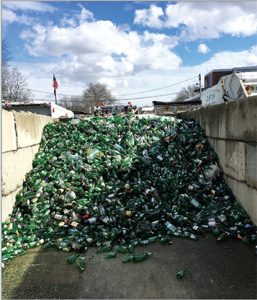
Source separation enables Clifton to market loads of color-specific glass.

That grant money goes into recycling education programs, replacing parts on vehicles and similar efforts. The revenues go straight into the city’s general fund.

Attaining sustainability

DuBois describes Clifton as a truly sustainable community due to its recycling program. Because the city is collecting and marketing each commodity separately, he can show exactly where materials end up.

“Those 11 to 15 items at the curb are all going back into the proper recycling or sustainable method it’s supposed to go into,” he said.

As for the future? DuBois thinks the state needs to look to the past to ensure progress in recycling. He pointed to Gov. Florio’s ambitious goals in 1990. “His document is fantastic,” DuBois said. “Let’s go revisit it.”


This article originally appeared in the April 2017 issue of Resource Recycling. Subscribe today for access to all print content.
Tags: Local Programs
TweetShare
Colin Staub

Colin Staub

Colin Staub was a reporter and associate editor at Resource Recycling until August 2025.

Related Posts

Recology CEO Sal Coniglio in front of one of the hauler's trucks

Recology’s Sal Coniglio on business and policy working together

byBrian Clark Howard
August 31, 2026

The CEO of the West Coast hauler and recycler shares his thoughts on EPR, organics and what keeps him up...

New Compudopt CEO hopes to nurture agency’s growth

byPaul Lane
August 14, 2026

Allison Kotarski assumed the organization’s top spot after several years as COO.

Bags of collected agricultural twine for Cleanfarms twine recycling contest

News in Brief: August 10, 2026

byIsabella Burke
August 10, 2026

An Alberta twine recycling contest, Pellitteri expands waste and recycling services into the Milwaukee area and the Canadian government awards...

A Republic Services truck picks up a recycling cart in Fort Collins, Colorado.

Fort Collins, CO builds a roadmap to zero waste

byKeith Loria
August 6, 2026

The midsize city has big ambitions on waste reduction and is working with partners to advance its goals.

The most important decision in tire recycling happens before the shredder

Oregon wash hub looks to slash single-use plastic

byPaul Lane
August 4, 2026

Planners hope to remove 250,000 single-use serviceware items from the waste stream within the first year of operation.

Compudopt names new CEO

Compudopt names new CEO

byPaul Lane
July 24, 2026

Allison Kotarski will lead the Texas-based nonprofit, which gets refurbished electronics into new hands.

Load More
Next Post

April 2017

2026 Buyers’ Guide

Equipment, services and technology suppliers serving the recycling industry.

Browse the Guide

More Posts

Alpek closing Pennsylvania RPET plant

Alpek seizing on war-related opportunity 

July 27, 2026
Recology CEO Sal Coniglio in front of one of the hauler's trucks

Recology’s Sal Coniglio on business and policy working together

August 31, 2026
Bipartisan reps introduce bill on recycling claims

House subcommittee advances PACK Act

September 1, 2026
Minnesota EPR program advances in budget bill

Oregon’s EPR law survives first constitutional test

August 28, 2026
EFS-plastics invests as EPR takes shape

EFS-plastics invests as EPR takes shape

August 31, 2026
Mich. sortation project shows shifting MRF role

Mich. sortation project shows shifting MRF role

August 26, 2026
Live selling presents pathway to ITAD sales

Live selling presents pathway to ITAD sales

September 3, 2026
AF&PA reports steady US paper recycling

AF&PA reports steady US paper recycling

September 1, 2026
ERI’s Asian expansion continues with move into India

ERI’s Asian expansion continues with move into India

August 31, 2026
Removing an eBike battery pack.

California battery EPR bill heads to Newsom’s desk

September 1, 2026
Load More

About & Publications

About Us

Staff

Archive

Magazine

Work With Us

Advertise
Jobs
Contact
Terms and Privacy

Newsletter

Get the latest recycling news and analysis delivered to your inbox every week. Stay ahead on industry trends, policy updates, and insights from programs, processors, and innovators.

Subscribe

Welcome Back!

Login to your account below

Forgotten Password?

Retrieve your password

Please enter your username or email address to reset your password.

Log In

Add New Playlist

No Result
View All Result
  • The Latest
  • Analysis
  • Recycling
  • E-Scrap
  • Plastics
  • Policy Now
  • Conferences
    • E-Scrap Conference
    • Plastics Recycling Conference
    • Resource Recycling Conference
    • Textiles Recovery Summit
  • Magazine
  • About Us
  • Advertise
  • Archive
  • Jobs
  • Staff
Subscribe
This website uses cookies. By continuing to use this website you are giving consent to cookies being used. Visit our Privacy and Cookie Policy.