Resource Recycling
  • The Latest
  • Analysis
    • All
    • Certification Scorecard
    • Industry Announcements
    • Opinion
    Following petition, Microsoft extends Windows 10 support

    Windows AI Recall is pushing data destruction upstream

    Certification Scorecard — Week of April 27, 2026

    Five trends shaping PCR packaging to 2031

    Intel sign on company building with blue sky and trees.

    Intel boosts margins by selling what it used to scrap

    Our top stories from April 2022

    Peters-Michaud named CEO, Houghton chair of Sage Sustainable Electronics

    Closeup of a printed circuitboard

    Can modular metals recovery challenge the smelter model?

  • Conferences
    • Resource Recycling Conference
    • Plastics Recycling Conference
    • E-Scrap: The Longevity Conference
    • Textiles Recovery Summit
  • Publications
    • E-Scrap News
    • Plastics Recycling Update
    • Policy Now
    • Resource Recycling
    • Other Topics
      • Brand Owners
      • Critical Minerals
      • Glass
      • Grant Watch
      • Markets
      • Organics
      • Packaging
      • Research
      • Technology
      • Textiles
      • All Topics
Subscribe
No Result
View All Result
Resource Recycling
  • The Latest
  • Analysis
    • All
    • Certification Scorecard
    • Industry Announcements
    • Opinion
    Following petition, Microsoft extends Windows 10 support

    Windows AI Recall is pushing data destruction upstream

    Certification Scorecard — Week of April 27, 2026

    Five trends shaping PCR packaging to 2031

    Intel sign on company building with blue sky and trees.

    Intel boosts margins by selling what it used to scrap

    Our top stories from April 2022

    Peters-Michaud named CEO, Houghton chair of Sage Sustainable Electronics

    Closeup of a printed circuitboard

    Can modular metals recovery challenge the smelter model?

  • Conferences
    • Resource Recycling Conference
    • Plastics Recycling Conference
    • E-Scrap: The Longevity Conference
    • Textiles Recovery Summit
  • Publications
    • E-Scrap News
    • Plastics Recycling Update
    • Policy Now
    • Resource Recycling
    • Other Topics
      • Brand Owners
      • Critical Minerals
      • Glass
      • Grant Watch
      • Markets
      • Organics
      • Packaging
      • Research
      • Technology
      • Textiles
      • All Topics
Subscribe
No Result
View All Result
Resource Recycling
No Result
View All Result
Home Resource Recycling Magazine

Community Spotlight: Asking residents to sort? One city’s done it for decades

Colin StaubbyColin Staub
May 3, 2017
in Resource Recycling Magazine
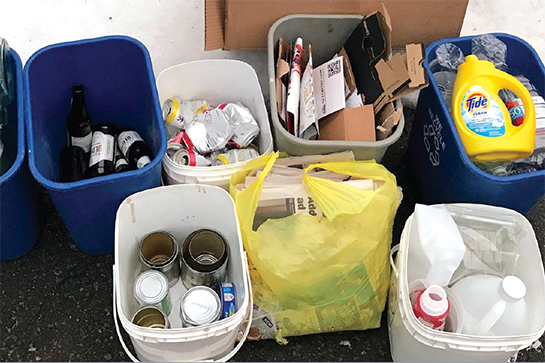
Clifton residents separate materials into more than 10 different categories.

As more and more communities switch to single-stream recycling collection to increase participation and material volumes, a New Jersey city is holding on strong to its source-separation system.

And the municipality’s recycling coordinator believes the approach is the key to community-wide sustainability.

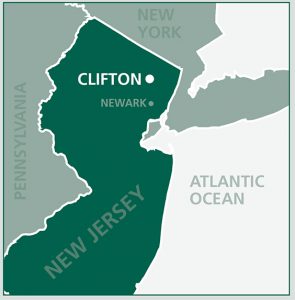
Clifton, N.J., like all municipalities in the state, was required to offer recycling services after state-level legislation passed in 1987. State guidelines asked each municipality to shoot for 15 percent diversion in 1989 and to hit 25 percent by 1990.

“Which maybe sounded [like] a lot to many communities, but where we were in North Jersey, there was a lot of recycling already going on,” said Al DuBois, Clifton’s recycling coordinator.
Quickly surpassing diversion target

To attain its goals, the state mandated that each city begin either a curbside collection or drop-off recycling program. Clifton ended up with both, and by 1990, largely due to recycling efforts that were happening previously but hadn’t been tabulated, Clifton hit 34 percent diversion, substantially surpassing its target rate.

“It was a matter of mailing out letters to businesses and telling them, ‘It’s mandatory, start reporting your tonnage to us,’” DuBois said.

Also in 1990, James Florio became New Jersey’s governor, and his administration raised the diversion target to an ambitious 60 percent by 1995. Through a separate executive order, Florio, a Democrat, also postponed all waste-to-energy incinerator construction.

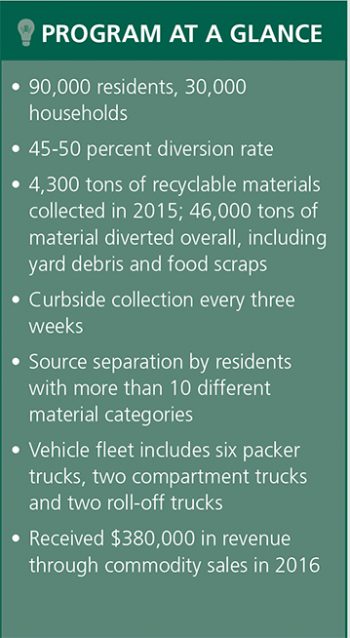
Clifton has taken that recycling message to heart. With nearly 90,000 residents making up 30,000 households, Clifton in 2015 collected more than 46,000 tons of materials, a figure that includes recyclable items, yard debris and food scraps.

Recyclable materials made up about 4,300 tons of that figure. DuBois estimates Clifton holds an overall diversion rate of between 45 and 50 percent, although he said he doesn’t put much stock in percentage figures. He noted they vary based on how the metric is defined so it can be misleading to compare communities using rate figures.
Committed citizenry

Unlike most municipalities that pick up recyclables weekly or every-other-week, Clifton’s curbside program has collection once every three weeks. And residents are required to source-separate their materials.

DuBois points to the source separation, and the commitment of Clifton citizens to put in the work required, as a large factor in the city’s recycling success.

The city’s Department of Public Works provides collection service, and garbage is picked up twice per week by a private hauler. Using a fleet that includes six packer trucks, two compartment trucks and two roll-off vehicles, city crews take the collected materials back to the public works yard.

The clean supply of materials from source separation means the city has a marketable product, without much further processing necessary.

“It’s all separated, and we receive revenues for each commodity,” DuBois said.

The city collects more than 10 different materials separately, all of which are either marketed or composted, DuBois said. Finished compost is made available to residents for free.

Curbside cash

Clifton is well-positioned by its proximity to local markets, although DuBois noted market geography has shifted. When the program started three decades ago, there were more than a dozen nearby processors and MRFs, DuBois said. Now there are only a few, despite a push in the 1980s to increase local end markets for materials. Still, through its sales of recycled materials over the years, combined with recycling grant money from the state, Clifton has grossed about $10 million since launching its program.

The state grant money comes through what’s known as a municipal recycling tonnage grant. Funded by a $3 per ton tax on all solid waste accepted for disposal or transfer at New Jersey solid waste facilities, the program makes available grant funds for cities based on how much they recycle each year. Last year Clifton received about $180,000 through the grant program, and $380,000 in revenue from the commodity sales.
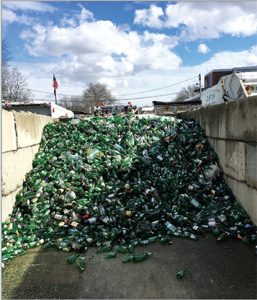
Source separation enables Clifton to market loads of color-specific glass.

That grant money goes into recycling education programs, replacing parts on vehicles and similar efforts. The revenues go straight into the city’s general fund.

Attaining sustainability

DuBois describes Clifton as a truly sustainable community due to its recycling program. Because the city is collecting and marketing each commodity separately, he can show exactly where materials end up.

“Those 11 to 15 items at the curb are all going back into the proper recycling or sustainable method it’s supposed to go into,” he said.

As for the future? DuBois thinks the state needs to look to the past to ensure progress in recycling. He pointed to Gov. Florio’s ambitious goals in 1990. “His document is fantastic,” DuBois said. “Let’s go revisit it.”


This article originally appeared in the April 2017 issue of Resource Recycling. Subscribe today for access to all print content.
Tags: Local Programs
TweetShare
Colin Staub

Colin Staub

Colin Staub was a reporter and associate editor at Resource Recycling until August 2025.

Related Posts

Bill to update New Jersey e-scrap program heads to governor

New Jersey recyclers talk EPR

byBrian Clark Howard
April 9, 2026

At the Association of New Jersey Recyclers’ spring meeting industry representatives discussed the state and future of the sector.

Wineries help create model for film recycling

Wineries help create model for film recycling

byAntoinette Smith
April 7, 2026

A collaboration between California wineries and the recycling value chain has provided a closed-loop model the partners aim to see...

Waste Connection recycling cart in The Dalles, Oregon

First Oregon community expands curbside recycling with EPR funding

byBrian Clark Howard
April 1, 2026

The City of The Dalles in northern Oregon is now rolling out nearly 5,000 new 90-gallon recycling carts to customers...

Rural effort targets vapes as battery fire risk grows

byScott Snowden
March 24, 2026

A Wisconsin firefighter is building a rural vape collection service as discarded devices with lithium-ion batteries continue to raise fire...

New Providence carts underpin recycling campaign

New Providence carts underpin recycling campaign

byBrian Clark Howard
March 23, 2026

With grant assistance, the Rhode Island capital is providing about 55,000 new collection carts to help boost its recycling rate,...

Recycling education needs consistency, simplicity 

byBrian Clark Howard
February 25, 2026

Several members of Circular Action Alliance team shared insights during a workshop at the 2026 Resource Recycling Conference in San...

Load More
Next Post

April 2017

More Posts

What Netflix’s ‘Plastic Detox’ gets wrong – and right

April 23, 2026
EPR fees are a market signal. Here’s what they’re telling you.

Oregon DEQ flags 250 producers for RMA noncompliance

April 21, 2026
Birch Plastics gets FDA green-light for post-industrial PP

LyondellBasell upgrade to PreZero assets on hold

April 23, 2026
Intel sign on company building with blue sky and trees.

Intel boosts margins by selling what it used to scrap

April 29, 2026

PCA keeping focus on virgin fiber products

April 27, 2026
Dow touts US PE advantage amid Iran war

Dow touts US PE advantage amid Iran war

April 24, 2026
Intel sign outside of company building.

What Intel’s blockbuster quarter means for ITAD

April 27, 2026
Float-sink technology at the Quantum Lifecycle Partners facility in Toronto, Canada enables the processing of e-plastics.

E-plastics recovery line opens in Canada

April 28, 2026
The independent ITAD at a crossroads

The independent ITAD at a crossroads

April 22, 2026
AT&T, Compudopt expand e-recycling program

AT&T, Compudopt expand e-recycling program

April 23, 2026
Load More

About & Publications

About Us

Staff

Archive

Magazine

Work With Us

Advertise
Jobs
Contact
Terms and Privacy

Newsletter

Get the latest recycling news and analysis delivered to your inbox every week. Stay ahead on industry trends, policy updates, and insights from programs, processors, and innovators.

Subscribe

Welcome Back!

Login to your account below

Forgotten Password?

Retrieve your password

Please enter your username or email address to reset your password.

Log In

Add New Playlist

No Result
View All Result
  • The Latest
  • Analysis
  • Recycling
  • E-Scrap
  • Plastics
  • Policy Now
  • Conferences
    • E-Scrap Conference
    • Plastics Recycling Conference
    • Resource Recycling Conference
    • Textiles Recovery Summit
  • Magazine
  • About Us
  • Advertise
  • Archive
  • Jobs
  • Staff
Subscribe
This website uses cookies. By continuing to use this website you are giving consent to cookies being used. Visit our Privacy and Cookie Policy.