

This article appeared in the December 2024 issue of Resource Recycling. Subscribe today for access to all print content.
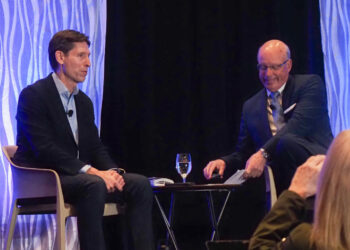
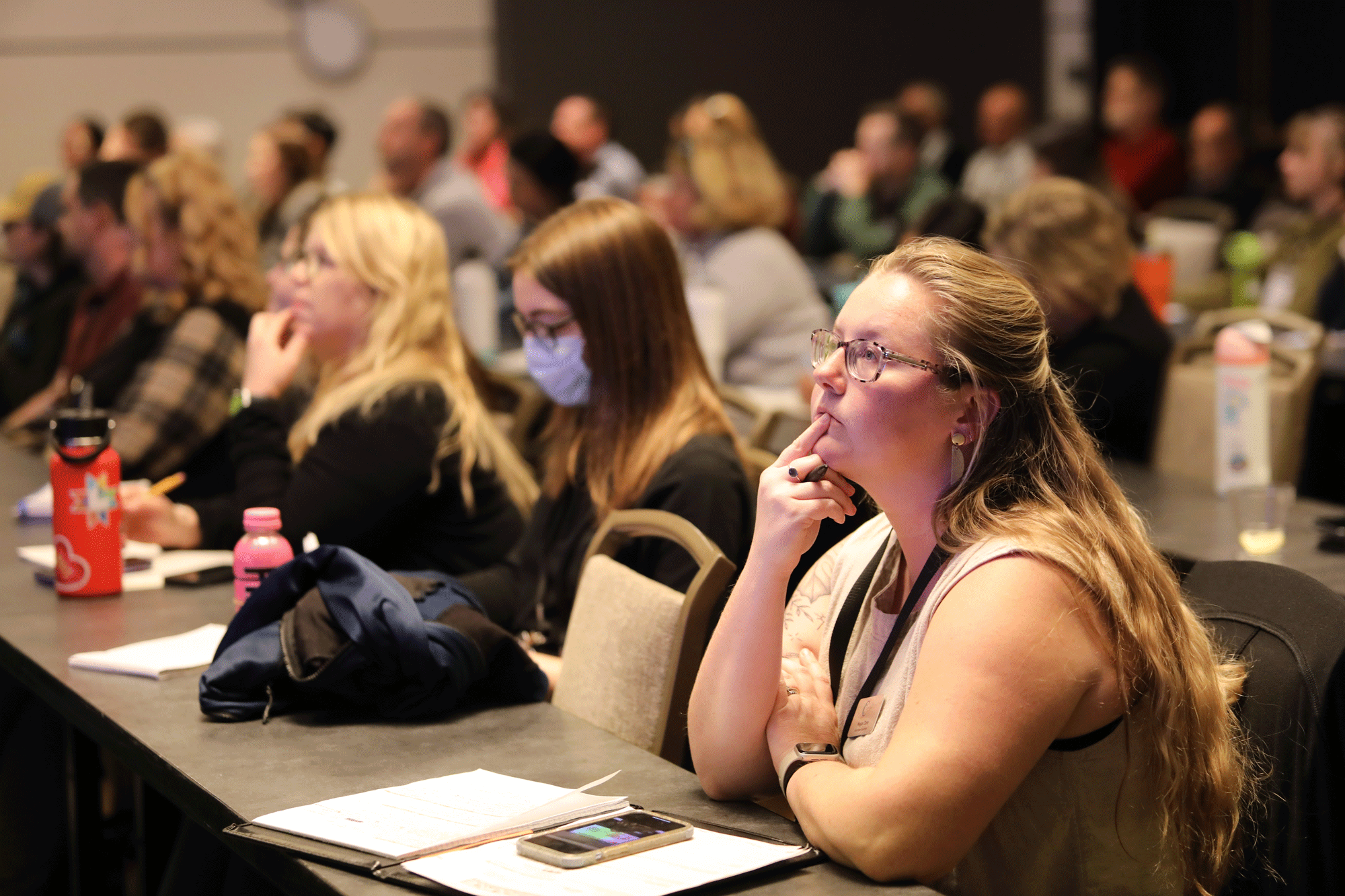
Hundreds of recycling program managers, advocates and other experts gathered in Louisville, Kentucky, in mid-November to share successes and lessons from across the country during the 2024 Resource Recycling Conference.
Sessions touched on such wide-ranging topics as deposit and extended producer responsibility systems, residential food scrap collection, textiles and resident education. As several speakers said, the field of community recycling is always changing and growing.
“The minute you think you’re a subject matter expert, a new law is in place and you have to create new programs,” Leslie Lukacs, executive director of Zero Waste Sonoma, said during the conference opener.
Finding material destinations
Finding end markets for recyclable materials requires both building connections with existing businesses and community organizations and helping new ideas take root, several recycling officials said during a panel on market development.
“I always say don’t throw away a job,” said Wayne Gjerde, soon-to-be-retiring recycling market development coordinator at the Minnesota Pollution Control Agency, referring to the economic potential of trash. Throughout his career, he’s held onto a rule of thumb: “It’s all about the money. If you can’t make money, there’s no end markets, it’s not going to happen. It’s not sustainable.”
Emmet County Recycling in rural northern Michigan doesn’t have the volume to draw the interest of far-flung buyers, said panelist Lindsey Walker, who works on market development for the county. But her program has turned that potential difficulty into an advantage, using the county’s understanding and control of its waste streams to test out hyper-local opportunities and to build on successes.
Around 15 years ago, for example, a marina approached Emmet County wanting to recycle PE shrinkwrap for boats.
“Come to find out, right in our very own town with a kid I graduated with, we have Petoskey Plastics,” an LDPE manufacturer that could take the film, Walker said. What started out as a small pilot continues today, with some material also going to Trex for its composite lumber.
“About 95% of our materials are staying in the local circular economy in Michigan,” Walker added, with programs for organics, glass, cartons, wood and other materials. “Seek out local markets, build relationships and provide good clean commodities,” she advised.
States and local governments can also take an active approach to help grow new end markets from the ground up, other panelists said. The NextCycle initiative by consulting firm RRS, for example, takes the established tools of entrepreneurship incubators — business plan training, mentorship, pitch competitions and connections to investors — and aims them squarely at reuse and recycling.
“It provides an on-ramp for innovation and entrepreneurship,” said Elisa Seltzer, a senior consultant at RRS who launched the Emmet County program before leading NextCycle Michigan. Colorado and Washington state also have their own branches of the program, with support from state governments and other organizations leading to tens of millions of dollars invested and millions of pounds of material recycled.
“We need resilient supply chains, domestic manufacturing, and recycling is sitting in the perfect place to provide the feedstock and grow our economy,” Seltzer said. “Real small players can play a role in their communities, and some can scale really big.”
For example, a wine bottle reuse business called Revino is supplying wineries around the Pacific Northwest and recently obtained a specialized bottle-washing machine from Germany after joining NextCycle Washington, said Elizabeth Chin Start, founder of Start Consulting Group and a partner in the state initiative.
Another participant, the nonprofit Refugee Artisan Initiative in Seattle, turns used textiles into purses and other household products and has now connected with the U.S. Forest Service to reuse its old firefighting hoses.
“It’s just so inspiring to see these groups,” Start said, adding that the Washington program takes care to involve local organizations and focus on underrepresented communities. NextCycle is also laying the groundwork to expand into Oregon.
Angela Fox, sustainability manager for the city of Royal Oak, Michigan, said taking part in NextCycle allowed her to connect with experts and get invaluable technical assistance.
She came in hoping to get her community on solid footing for an upcoming renegotiation of a waste management contract. Now the city is working on pilot projects for organics at schools and the farmers market, streamlined collection in the business district and other improvements.
“None of this would have been possible had it not been through NextCycle,” Fox said. “It’s really been nothing but amazing.”
– By Dan Holtmeyer
‘Keep doing what you know to be right’
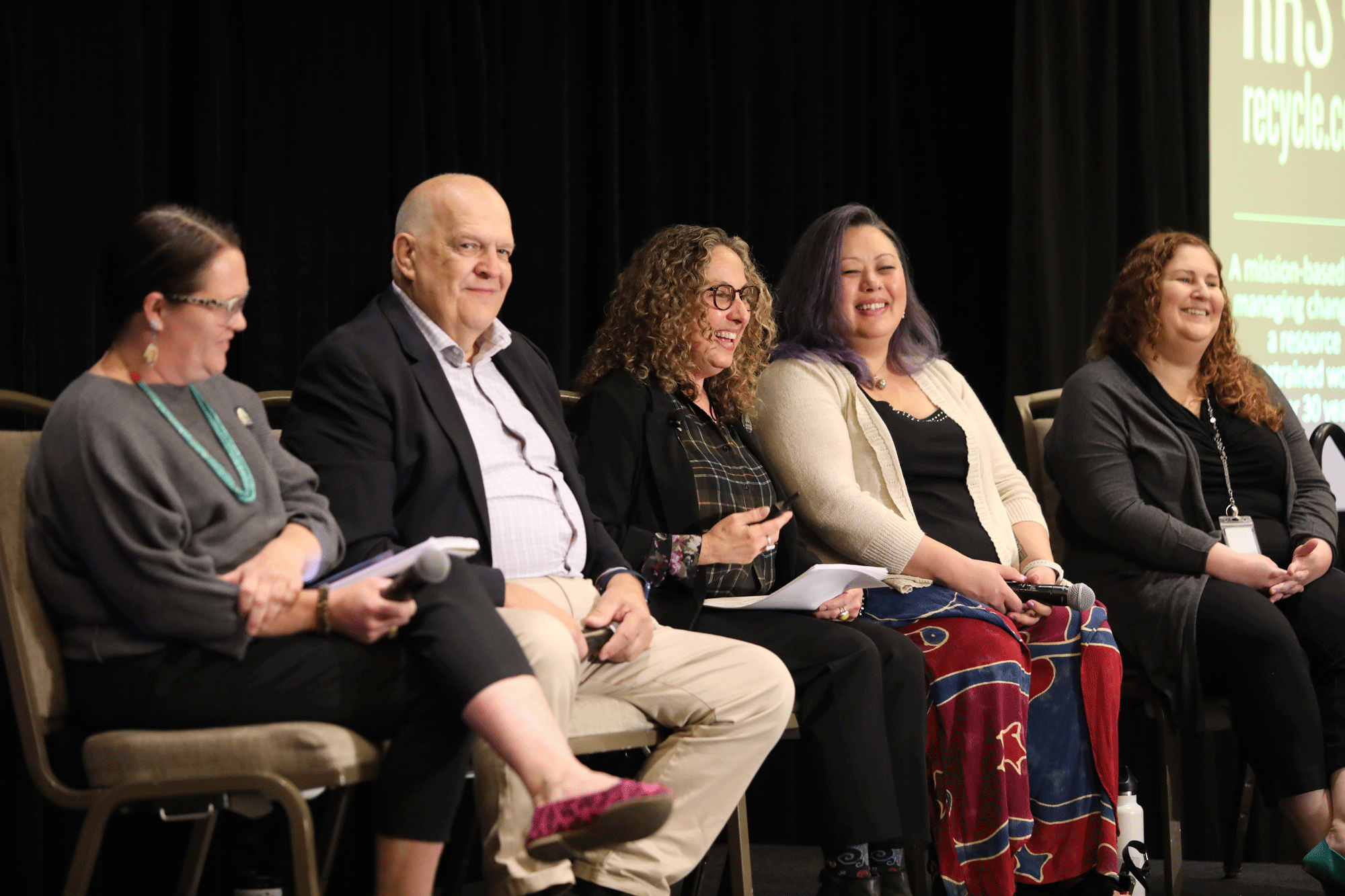
The opening plenary session featured women leaders in sustainability who have been highlighted in moderator MaryEllen Etienne’s recurring “Women in Circularity” feature that appears on its own website and on Resource Recycling’s website.
The panelists discussed their own varied backgrounds before entering the industry. Crystal Dreisbach, CEO of reuse-focused Upstream, emphasized it’s important to ensure the next generation can succeed. Although there are often job openings in the sustainability space, she noted organizations often end up poaching established sustainability leaders from each other. It’s logical to want to hire experts, but Dreisbach advised companies to focus on new blood. One way is to create internships.
“It is a lot of work to host interns, you have to mentor and coach and handhold a lot of times, but the payoff is huge,” Dreisbach said.
Along those same lines, Stacy Savage, founder and CEO of Zero Waste Strategies, said older generations need to start taking Generation Z seriously. She said it feels like young people are not being given the same chances.
“People in the older generations were given the opportunity to lead at very young ages,” she said. She advised current leaders to give young employees chances by “bringing them into the fold, incorporating their ideas — collaboration is key — and giving them the opportunity to lead.”
The panel also discussed the challenges of working in a dynamic field like sustainability and recycling, especially amid a rapidly changing regulatory environment.
There are frequently unforeseen challenges. Lukacs at Zero Waste Sonoma described her organization’s push to create EPR for marine flares, which can’t be safely disposed of in any way currently. The bill received 100% support in the state House and Senate, sending the bill to Gov. Gavin Newsom’s desk. Then he vetoed it.
Lukacs and other stakeholders figured out the technicalities that led to Newsom’s veto and even came to agree with his decision. They plan to return next year with a revised proposal.
All of that speaks to the need for sustainability leaders to practice persistence, the panel agreed.
“I’m in my fourteenth year of working against a system of waste that has been cemented as a cultural norm,” said Dreisbach. Sustainability advocates must persist, she added, “because if you keep doing what you know to be right, and you get 10,000 hours or more of that, you become an expert in that thing, whatever it is, and you can make change.”
– By Colin Staub

Curtailing contamination
Ongoing and continuous customer education and communication is vital to further grassroots recycling efforts, according to several panelists at another session.
The city of Louisville, Kentucky, uses a system that includes “oops!” tags, to notify residents of contaminants including bagged items, EPS foam and big items or tanglers, said Karen Maynard, solid waste education manager for Louisville Metro Government. The city also distributes “way to know” tags to reinforce residents’ good habits. As a result, the city has noted a 37% decrease in contaminants and an increased recovery rate at the MRF.
In Florida, Pinellas County found that data analytics can indicate which promotional platforms would be most effective in reaching residents, said Ashley Wayland, environmental outreach specialist. For example, developing an ad that causes an emotional connection with the viewer performs well, and so the county is using paid ads on Facebook and Instagram to target specific groups, such as dog owners or cyclists, and focusing on persuadable residents as a whole.
Proactive communication is proving effective in Salt Lake City, said John Lair, president and CEO of Momentum Recycling, which uses various technologies to track collection trucks and prepare monthly diversion reports for commercial customers, among other tasks. An app called Recycle Coach can send automated collection-day reminders to improve cart set-out rates, including for monthly glass pickup service, for example. In addition, when a customer fails to set out their bin four times in a row, this triggers an alert to account managers, which has reduced cancellations.
“It’s all about proactively getting information at our fingertips so we can keep these customers recycling,” Lair said.
– By Antoinette Smith