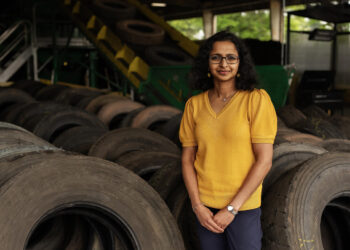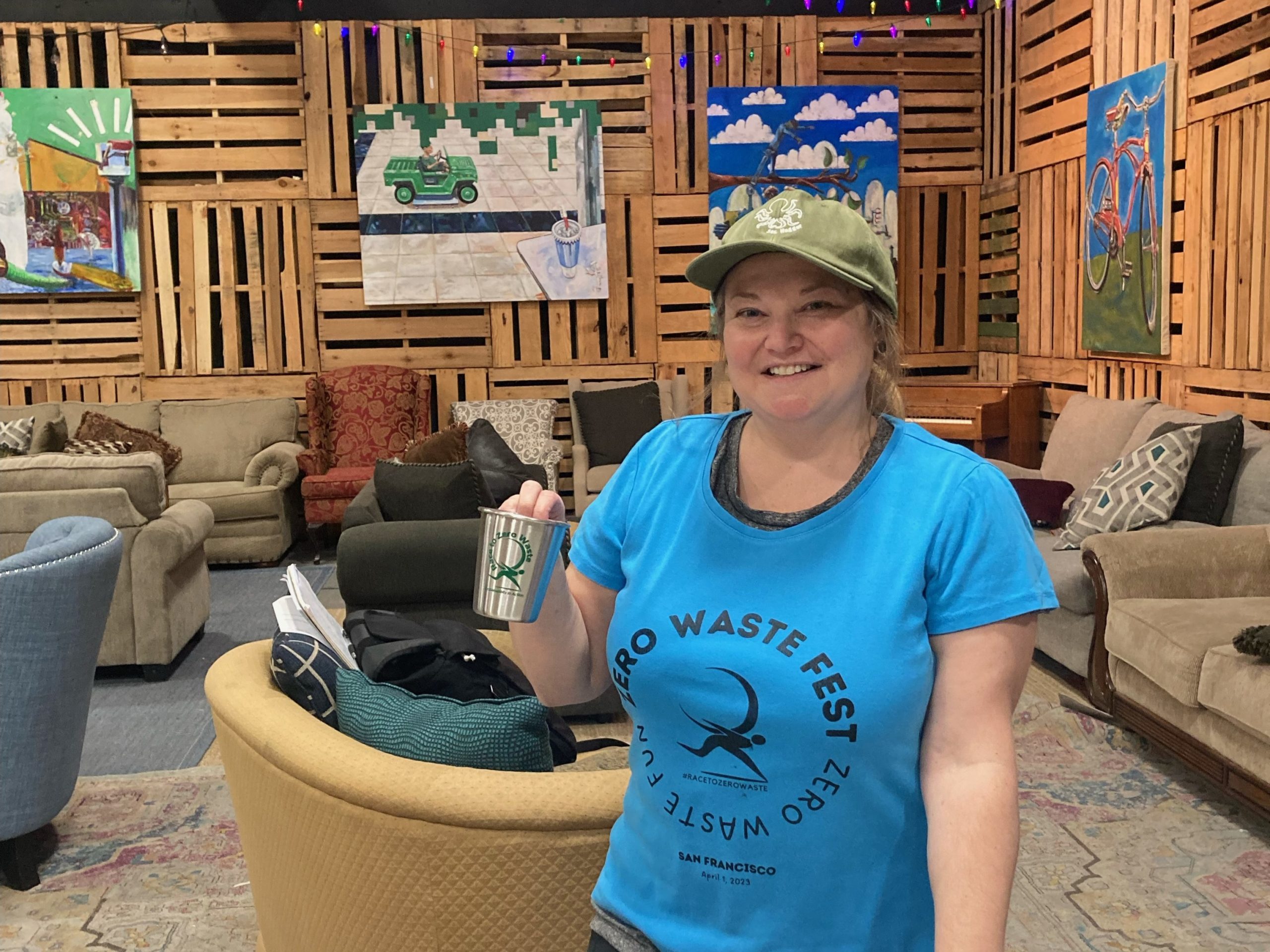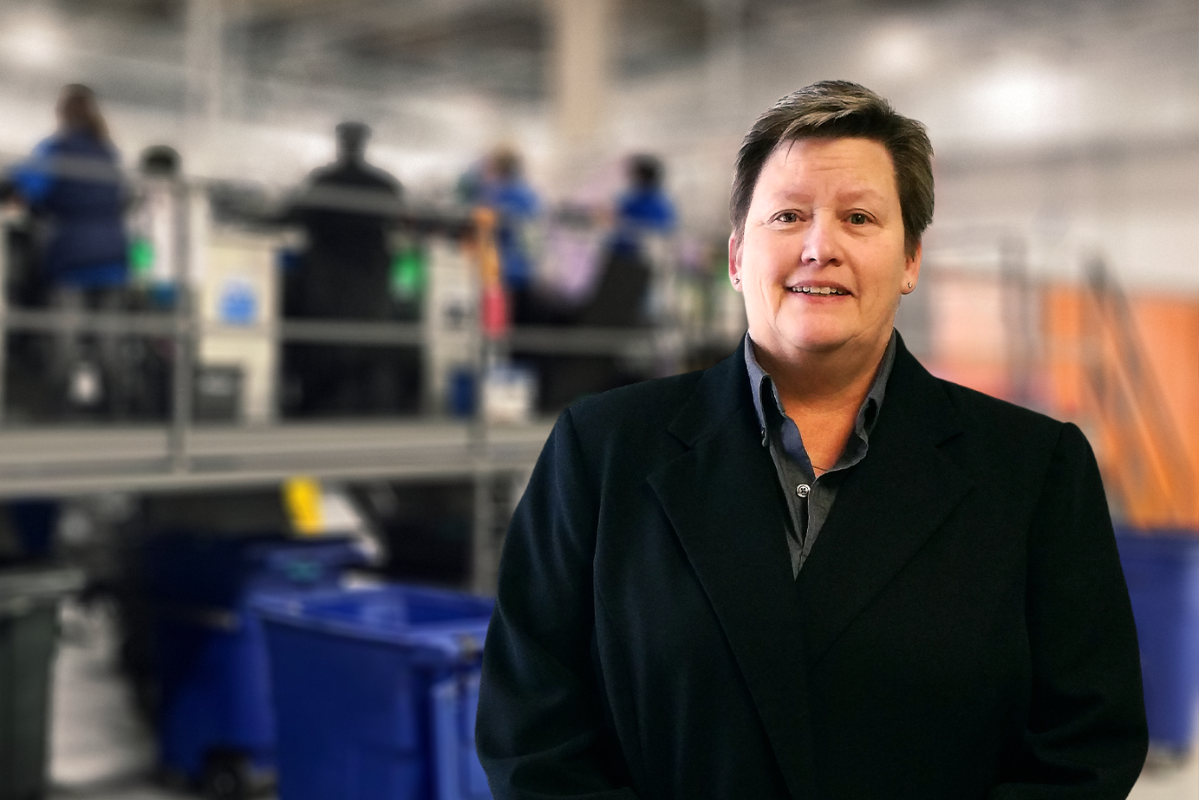













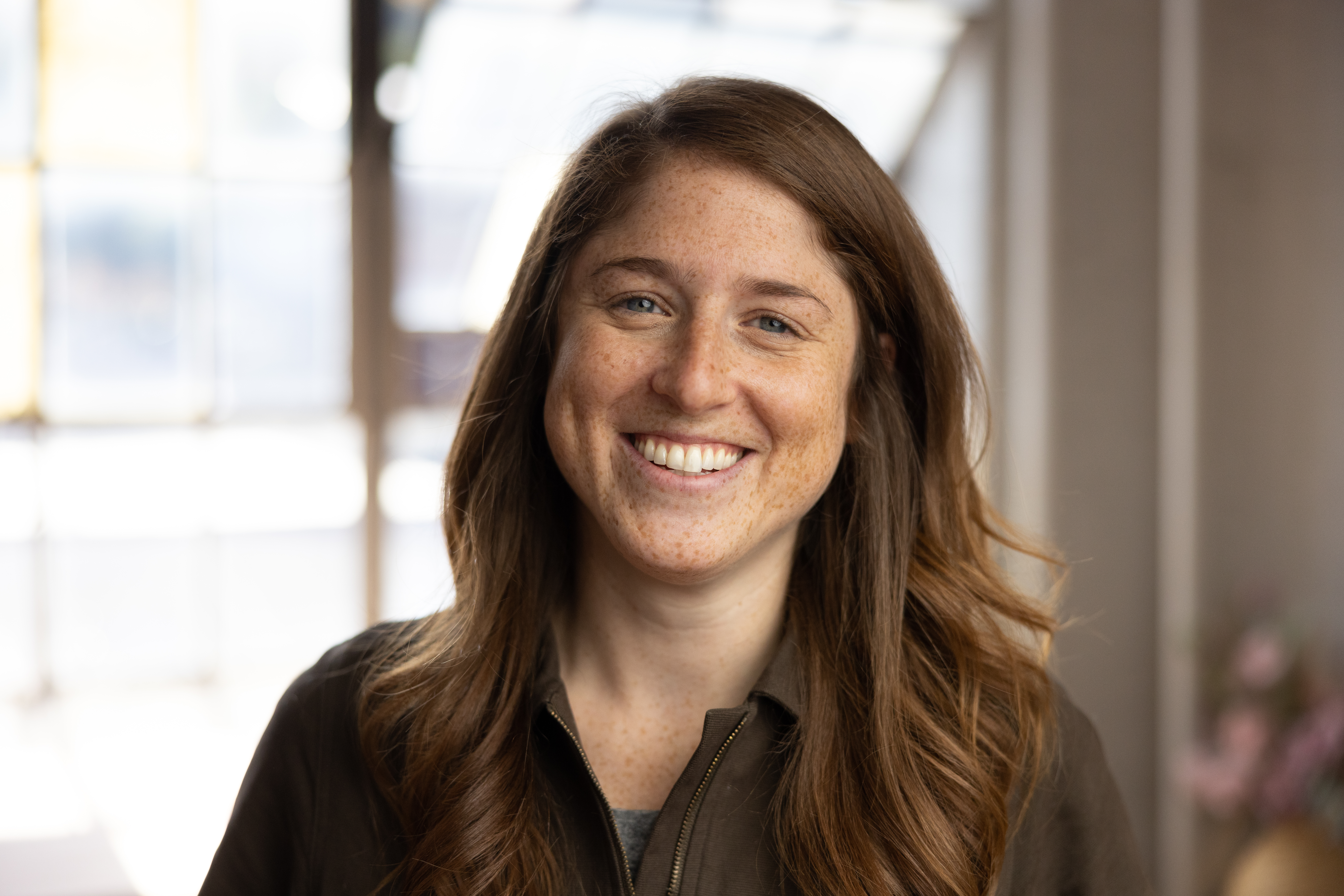
A warm welcome back to “Women in Circularity”, where we shine a light on women moving us toward a circular economy. This month, I was pleased to connect with a circular economy strategist: Casey Plasker. Casey is the founder and chief impact officer of Circularly, a Certified B Corp that has evolved from a circular economy consultancy into a platform that develops strategic partnerships to make material reuse practical and scalable.
With over a decade of experience designing and implementing projects that generate measurable economic and environmental outcomes, Casey translates circularity from theory into everyday practice.
What initially sparked your interest in the circular economy, and was there a defining moment that deepened your commitment?
I was an outdoor kid who assumed I’d become a scientist protecting the ecosystems I loved. My first job was in research, studying how climate change would affect a species of duck. The paper was published, acknowledged and was largely disconnected from action. That’s when I realized information alone doesn’t create change. I moved into energy and sustainability, measuring and reporting impacts, but often felt I was describing consequences instead of shaping outcomes.
Everything shifted when I took Columbia’s first circular economy course taught by Stephanie Johnston and read Doughnut Economics. For me, the concept of waste was reframed as a design flaw, not an inevitability. Instead of counting impacts, I could help redesign products and processes—mimicking nature, where there is no such thing as “waste.” At the same time, I witnessed a housing crisis deepen in my community and wondered how I could help. So, I left my job leading a sustainability team at a cleantech startup to start Circularly. A defining moment was when I witnessed motivated teams continually running into the same systemic barriers while housing needs and material waste grew around me. I realized the issue wasn’t intent—it was system design—and that insight continues to drive Circularly’s evolution from strategy to building infrastructure that makes circular construction the practical default.
What is the most important mindset to cultivate in this space and how has yours developed?
For circularity, the most important mindset is radical collaboration. Learning to think in terms of interdependence instead of competition. The circular economy does require technical knowledge, but at its core it’s about relationships. Materials move through many hands, and no single organization controls the full lifecycle. When you approach it like a traditional business problem with a focus on competition, the system breaks down. Circularity only works when people coordinate across organizations, roles, timelines and incentives. My consulting work underscores this, and the evolution of Circularly today keeps putting me in situations where success depends on trust across multiple organizations. Architects need contractors, contractors need reuse operators, reuse operators need storage and everyone needs clarity at the same time. No one can do it alone.
Working in the built environment requires comfort with ambiguity. We’re often operating without a playbook when it comes to implementing circularity, so the work becomes collaborative problem solving, testing ideas, adjusting and saying to ourselves “we’re going to try this and see what happens.”
Circularly itself is evolving through that process, shaped by continuous feedback from our own ecosystem. I’ve also learned that the people working hands-on with materials are the true experts, and that when you bring the right collaborators together and build trust, even the most complex technical challenges become solvable.
So the skill I try to cultivate is the ability to convene, listen, and design systems with others—not for them. Circularity isn’t something you implement, it’s something you coordinate into existence.
What initiatives are you leading that are shaping real change right now?
The work I’m most proud of is still unfolding. As an entity, Circularly is evolving. Moving beyond helping organizations imagine a circular economy to actively building the infrastructure that makes it possible. We’re building systems to identify material value before a building comes down, matching those materials with next-phase-of-life partners, coordinating how they move off site responsibly and document the impact afterward. We’re building this here in my own community in New York state, testing it alongside local architects, contractors and developers, and working with a large network of reuse and remanufacturing partners. Right now the work looks less like a finished product and more like a shared experiment—learning together what it actually takes to keep materials in use and create real value from it.
I’m also thrilled to announce that in partnership with Big Reuse, and supported by the Ulster County Resource Recovery Agency, we have a physical space where materials can “pause” between projects. It sounds simple, but having space removes one of the biggest barriers to reuse: timing. Circularly is no longer just defining strategy—we’re building the infrastructure.
In New York state alone, roughly 7.7 million tons of construction and demolition debris are generated each year, representing both a major emissions source (~1 million metric tons of CO2 equivalent annually) and about a $3 billion circular economic opportunity, along with meaningful job creation potential. If we can prove this works here and help other communities replicate it, that will feel like a real impact. Not just a single project, but a shift in how the system operates.
Looking ahead, which emerging trends in circularity excite you most and where do you see the biggest opportunities coming from?
I’m excited that circular construction is beginning to feel like a reality rather than an aspirational goal. We have a huge opportunity in the US to codify this shift through policy. We’re starting to see traction around extended producer responsibility, material traceability and regulations exploring how reclaimed lumber can be re-graded for structural use. These are signals that the industry is beginning to treat existing materials as assets instead of waste. Those frameworks matter because they normalize reuse and shift industries towards adoption. At the same time, manufacturers are developing remanufacturing and takeback programs. Instead of materials being downcycled, they can move through multiple life cycles while maintaining value. This fundamentally changes the economics and recovery will start to support local industry rather than simply avoiding disposal.
I’m also stoked by innovation at the product level, from strawbale panelization to passive solar–informed design, alongside a reframing of ownership that keeps existing materials in circulation. Reuse through deconstruction and coordination infrastructure is essential, but we also have to confront the toxicity and short lifespans of many common building products and design healthier materials that can safely return to the earth at end of life, shout out to Parsons Healthy Materials Lab.
One of the most overlooked opportunities is ownership and governance, because circular economies rely on long-term stewardship, local knowledge and skilled labor. Cooperative and employee-owned models align incentives so the people maintaining material value share in the value created. I’m particularly inspired by the Industrial Commons. When better materials, supportive policy, viable recovery pathways and business structures designed for longevity reinforce each other, circularity stops being niche and becomes how the industry operates.
Is there a community that has been inspiring you lately, especially around systems thinking and social change?
I’ve been really energized by practitioner communities like CR0WD, RECLAIM NYC and Build Reuse. Each of them creates space for honest, detailed conversations about what is working and not when trying to implement circular construction in the real world. They bring together people from different roles across the built environment, and that cross-sector dialogue is essential.
Systems change doesn’t happen in isolation—it happens when people who normally operate separately start solving problems together. Community and collaboration is everything in this work. You need spaces where people can share failures as openly as successes, because that’s how the field moves forward.