





Resource Recycling
  • The Latest
  • Analysis
    • All
    • Certification Scorecard
    • Industry Announcements
    • Opinion
    From claims to custody: PCR procurement grows up

    From claims to custody: PCR procurement grows up

    What the NAND flash crunch means for remarketing, refurbishment and residual values

    Telamon acquires ITAD consultancy Retire-IT

    Certification Scorecard — Week of July 6, 2026

    Tech giant pens detailed ‘plastic-free packaging’ guide

    What Google’s latest report means for ITAD

    Unpacking the Starbucks cup data

    Unpacking the Starbucks cup data

    Amazon cutting out more flexible packaging

    Amazon’s AWS hardware reuse is measured

  • Conferences
    • Resource Recycling Conference
    • Plastics Recycling Conference
    • E-Scrap: The Longevity Conference
    • Textiles Recovery Summit
  • Publications
    • E-Scrap News
    • Plastics Recycling Update
    • Policy Now
    • Resource Recycling
    • Other Topics
      • All Topics
      • Brand Owners
      • Critical Minerals
      • Glass
      • Grant Watch / RFPs
      • Markets
      • Organics
      • Packaging
      • Research
      • Technology
      • Textiles
Subscribe
No Result
View All Result
Resource Recycling
  • The Latest
  • Analysis
    • All
    • Certification Scorecard
    • Industry Announcements
    • Opinion
    From claims to custody: PCR procurement grows up

    From claims to custody: PCR procurement grows up

    What the NAND flash crunch means for remarketing, refurbishment and residual values

    Telamon acquires ITAD consultancy Retire-IT

    Certification Scorecard — Week of July 6, 2026

    Tech giant pens detailed ‘plastic-free packaging’ guide

    What Google’s latest report means for ITAD

    Unpacking the Starbucks cup data

    Unpacking the Starbucks cup data

    Amazon cutting out more flexible packaging

    Amazon’s AWS hardware reuse is measured

  • Conferences
    • Resource Recycling Conference
    • Plastics Recycling Conference
    • E-Scrap: The Longevity Conference
    • Textiles Recovery Summit
  • Publications
    • E-Scrap News
    • Plastics Recycling Update
    • Policy Now
    • Resource Recycling
    • Other Topics
      • All Topics
      • Brand Owners
      • Critical Minerals
      • Glass
      • Grant Watch / RFPs
      • Markets
      • Organics
      • Packaging
      • Research
      • Technology
      • Textiles
Subscribe
No Result
View All Result
Resource Recycling
No Result
View All Result
Home Recycling

Wisconsin food waste amounts to 1,033 pounds per resident each year

Stefanie ValenticbyStefanie Valentic
January 28, 2026
in Recycling

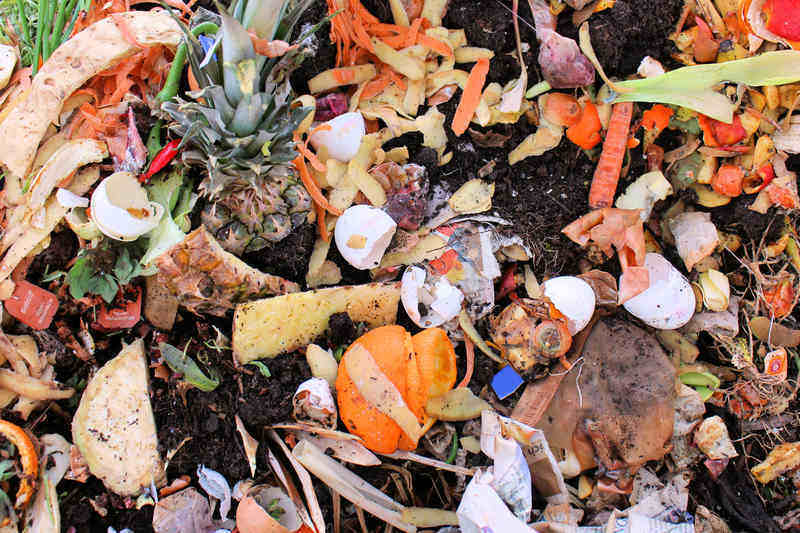
A new state evaluation examines how Wisconsin can divert more edible food from its landfills as food residuals become the largest category of waste. | Ulrich Mueller/shutterstock

Wisconsin’s nearly 6 million residents discard 1,033 pounds of food per person annually, creating the state’s largest waste stream and prompting officials to develop new strategies to rescue edible food before it reaches landfills, according to a new report.

The Food Waste Evaluation Report expands on the 2020-2021 Statewide Waste Characterization Study, which found that food residuals accounted for 20% of trash sent to Wisconsin’s landfills, equating to 854,000 tons annually. The majority, 75%, of the residuals were edible despite being thrown away, according to the state’s Department of Natural Resources (DNR).

More recent estimates included in the report showed that the number rose in 2023, with 3.05 million total tons of surplus food generated in Wisconsin, valued at $10.4 billion based on ReFED estimates.

State sets reduction target

As a result, the state’s 50% by 2030 goal aims to slice per-capita food waste in half compared to 2020 levels, the catalyst for the evaluation, targeting the entire lifecycle of food from production to disposal, encompassing “manufacturing processes, food sales and consumption and ultimately, recovery and disposal methods for food waste,” the DNR wrote in the report.

Kate Strom Hiorns, director of the DNR’s Waste and Materials Management Program, said that “Through the sustainable management of food, we can conserve resources, help businesses and consumers save money, reduce greenhouse gas emissions and provide access to food for those who do not have enough to eat.”

The latest analysis was funded by a US Environmental Protection Agency (EPA) Solid Waste Infrastructure for Recycling grant. Data from surveys and listening sessions with stakeholders, including food rescue organizations, local governments, food waste processors and waste haulers, was analyzed. The study also comprised a review of data from the DNR, the US EPA Excess Food Opportunities Map, the ReFED Insights Engine and other state-specific information, according to the DNR.

The report highlights food waste amounts, types and sources to identify prevention opportunities, along with existing food rescue and recycling infrastructure capacity, diversion capacity gaps and barriers, economic recommendations for waste diversion initiatives, policy guidance on reduction and recycling methods and investment, technical assistance and education needs.

Findings show that 88% of food residuals sent to state landfills are from residential and food services sources, with the largest share, 47%, collected from residents.

Infrastructure gaps pose challenges

The DNR indicated that the “Infrastructure for hauling food waste to destinations other than landfills (such as composting and anaerobic digestion facilities) will have to expand significantly to achieve the statewide food waste reduction goal.”

This could pose a logistical challenge, as only 30 of Wisconsin’s 286 composting facilities approved to accept food residuals are permitted to do so.

“Of the 122 anaerobic digestion facilities currently operating in Wisconsin, just 37 (30%) currently accept food waste,” the DNR stated. “To expand food donation, food rescue and food waste processing infrastructure, education, technical support and funding will be needed. Regulatory and policy reform may also be necessary.”

Tags: Legislation & EnforcementOrganics
TweetShare
Stefanie Valentic

Stefanie Valentic

Stefanie Valentic is an award-winning journalist who has covered the waste and recycling industry for more than five years. Throughout her career, she has led editorial teams and served as a keynote speaker, moderator and panelist at numerous trade shows and conferences.

Related Posts

From claims to custody: PCR procurement grows up

From claims to custody: PCR procurement grows up

byPuneet Thadani
July 10, 2026

In this guest column, the founder of Ecolar Global says the growing use of recycled content without standardized documentation presents...

Two recycled-content bills gain approval in California

California agriculture seeks SB 54 repeal

byStefanie Valentic
July 7, 2026

A coalition of state agriculture stakeholders says the packaging law could add nearly $1,400 a year to household grocery costs...

In Our Opinion: Coalitions: The EPR Differentiator

Inside NAW’s constitutional case against packaging EPR

byStefanie Valentic
July 6, 2026

The National Association of Wholesaler-Distributors is fighting EPR in Oregon, and now in California too.

EPR fees are a market signal. Here’s what they’re telling you.

Building the infrastructure behind EPR

byStefanie Valentic
July 6, 2026

CAA's Jeff Fielkow breaks down the organization's role in US packaging EPR and why being the only multi-state PRO in...

Oregon’s Recycling Modernization Act faces injunction

Oregon’s EPR program posts first-year results

byStefanie Valentic
July 6, 2026

One year into Oregon's producer-funded recycling system, CAA provides an update on new carts, and the progress achieved.

RIT researchers develop AI-based textile recycling system

CA expects first textile EPR deadline

byStefanie Valentic
June 30, 2026

California's first textile EPR registration deadline arrives July 1 amid lawsuits challenging the nonprofit status of Landbell USA, the selected...

Load More
Next Post

Certification scorecard for week of Jan. 26, 2026

More Posts

Oregon’s Recycling Modernization Act faces injunction

Oregon’s EPR program posts first-year results

July 6, 2026
Two recycled-content bills gain approval in California

California agriculture seeks SB 54 repeal

July 7, 2026
Unpacking the Starbucks cup data

Unpacking the Starbucks cup data

July 8, 2026
In Our Opinion: Coalitions: The EPR Differentiator

Inside NAW’s constitutional case against packaging EPR

July 6, 2026
Tech giant pens detailed ‘plastic-free packaging’ guide

What Google’s latest report means for ITAD

July 8, 2026
EPR fees are a market signal. Here’s what they’re telling you.

Building the infrastructure behind EPR

July 6, 2026
SB 54 draft rules generate debate on rates, review

California increases PET market payments

July 7, 2026
MP Materials breaks ground on rare earth magnet campus in North Texas

ERI confirms ITAD shift toward minerals

July 3, 2026
ITAD firm wins spot for NASA purchasing

ITAD firm wins spot for NASA purchasing

July 6, 2026
Auto Draft

Digital product passports offer gateway into secondary market

July 7, 2026
Load More

About & Publications

About Us

Staff

Archive

Magazine

Work With Us

Advertise
Jobs
Contact
Terms and Privacy

Newsletter

Get the latest recycling news and analysis delivered to your inbox every week. Stay ahead on industry trends, policy updates, and insights from programs, processors, and innovators.

Subscribe

Welcome Back!

Login to your account below

Forgotten Password?

Retrieve your password

Please enter your username or email address to reset your password.

Log In

Add New Playlist

No Result
View All Result
  • The Latest
  • Analysis
  • Recycling
  • E-Scrap
  • Plastics
  • Policy Now
  • Conferences
    • E-Scrap Conference
    • Plastics Recycling Conference
    • Resource Recycling Conference
    • Textiles Recovery Summit
  • Magazine
  • About Us
  • Advertise
  • Archive
  • Jobs
  • Staff
Subscribe
This website uses cookies. By continuing to use this website you are giving consent to cookies being used. Visit our Privacy and Cookie Policy.