







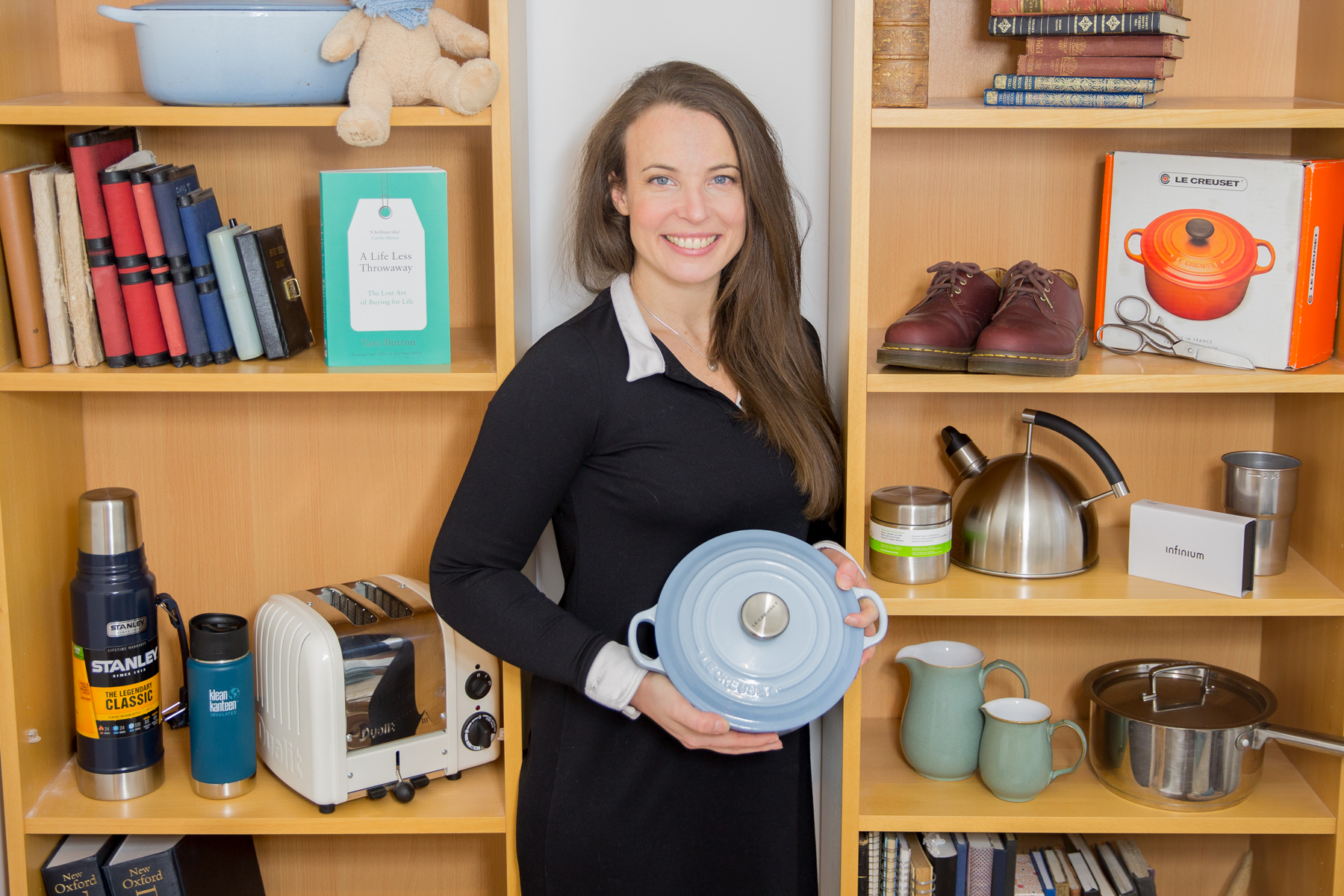
A warm welcome back to “Women in Circularity,” where we shine a light on women moving us toward a circular economy. This month, I was delighted to connect with Tara Button, a leader in the consumer product durability movement. Tara is the chief executive officer at Buy Me Once – a UK-based company championing durable, repairable and long-lasting products that works to end throwaway culture. With more than a decade of experience in sustainable consumption and behavior change, Tara brings a solutions-driven perspective to advancing circularity through product longevity, mindful purchasing and consumer empowerment.
What inspired you to focus your career on product durability, and how did that passion evolve into leading a company committed to disrupting the norms of designed obsolescence?
It genuinely started with a pot. I’d hit that classic early-30s cocktail of feeling lost, stressed, in debt and mildly horrified by my own buying habits. I’d also somehow ended up in advertising, writing ads for some of the world’s biggest brands. It felt like being paid to help the throwaway machine chew faster. Then I got a baby blue Le Creuset casserole pot for my 30th birthday. I held it and it felt like an heirloom. The idea that it could last for generations was weirdly emotional. I remember thinking: “If only everything in my life was like this.” So I went looking for a place that curated genuinely long-lasting products and it didn’t exist. I had zero web-design skills, but I couldn’t shake the thought that if we could normalise buying things once, we could ease debt and clutter, and also slash the environmental impact of constant replacement. The Buy Me Once website was my effort to build the resource I wished I could find.
In what ways has your work at Buy Me Once helped shift consumer mindsets toward mindful purchasing and long-term value, and what impact are you most proud of?
We’ve helped people swap the question “What’s cheapest?” for “What will still be here, quietly doing its job, in 10 years?” That shift sounds small, but it changes everything. It helps people feel clever rather than deprived. It reduces the constant churn of replacements that eats time, money and sanity. And it matters for climate in a way that is still wildly underappreciated. We talk a lot about recycling, but I’ve come to believe we’ve often chosen recycling over longevity as the headline solution, even though the environmental difference between continuing to use something and recycling it is colossal. Recycling still takes energy, collection, processing and often manufacturing a new replacement anyway.
What I’m most proud of my work is making longevity feel like a practical, everyday form of empowerment. Not a niche lifestyle. Not a moral sermon. Just a better deal for everyone. I’m also looking forward to creating a “durability award” that brands themselves will want to shout about and lobbying governments to include durability and fixability data on products e.g. average lifespan and “cost per year,” “cost per use.” All of this would require much more data than is currently available, so that would be the first thing to change.
Is there a durability-focused initiative you’ve led recently that offered a glimpse into how product longevity can scale in a mainstream way?
Yes. This month, Buy Me Once is being used as a stamp of authority on other retailers for the first time, with Lovebrook & Green. That’s a real “scaling” moment, because most people do not have the time, or frankly the desire, to become part-time materials engineers. For longevity to go mainstream, it needs to become legible. Recognizable. Something you can spot quickly and trust, the way people currently trust a brand name. If we can make durability an easy choice, we can cut replacements. If we cut replacements, we cut manufacturing demand. And that is one of the most direct routes to reducing CO2 that we have, hiding in plain sight.
As more brands rethink how products are made and maintained, what emerging trend in durability do you believe will most reshape consumer expectations?
Proof over promises. “Built to last” has been used as marketing confetti for years. The trend that will reshape expectations is consumers, retailers and regulators pushing for durability you can actually verify: spare parts, repair instructions, fair repair pricing, honest warranties and design choices that don’t make the whole product disposable because one component fails. Even within circular economy conversations, longevity can still feel like the overlooked sibling at the family reunion. Everyone’s chatting about recycling and resale, while longevity is in the corner muttering, “How about literally preventing the waste in the first place?”
Is there a documentary that has sparked your reflection on consumption, design or human behavior—that you’d recommend to others? The Light Bulb Conspiracy. It’s a documentary that makes you see planned obsolescence as more than a conspiracy-theory phrase. It turns it into something concrete, historical and frankly jaw-dropping. It also helps explain why I’m so passionate about shifting the default from “replace” to “repair and keep”.