




Resource Recycling
  • The Latest
  • Analysis
    • All
    • Certification Scorecard
    • Industry Announcements
    • Opinion

    America’s critical-materials buildout has a feedstock problem

    Certification scorecard – week of Sept. 14

    Canada Plastics Pact reports 2024 progress

    Trade tensions shift global mineral partnerships 

    Spin-off lets Linca focus on battery mineral recovery

    Critical mineral policy shift creates opportunity

    CommanderAI launches searchable hauler database

    Inside the Circle: Put AI to work for the people who do the work

    Northeast commodity values for Q2 reach 2-year high

    Will a MRF shortage limit EPR growth?

  • Conferences
    • Resource Recycling Conference
    • Plastics Recycling Conference
    • E-Scrap: The Longevity Conference
    • Textiles Recovery Summit
  • Publications
    • E-Scrap News
    • Plastics Recycling Update
    • Policy Now
    • Resource Recycling
    • Other Topics
      • All Topics
      • Brand Owners
      • Critical Minerals
      • Glass
      • Grant Watch / RFPs
      • Markets
      • Organics
      • Packaging
      • Research
      • Technology
      • Textiles
Subscribe
No Result
View All Result
Resource Recycling
  • The Latest
  • Analysis
    • All
    • Certification Scorecard
    • Industry Announcements
    • Opinion

    America’s critical-materials buildout has a feedstock problem

    Certification scorecard – week of Sept. 14

    Canada Plastics Pact reports 2024 progress

    Trade tensions shift global mineral partnerships 

    Spin-off lets Linca focus on battery mineral recovery

    Critical mineral policy shift creates opportunity

    CommanderAI launches searchable hauler database

    Inside the Circle: Put AI to work for the people who do the work

    Northeast commodity values for Q2 reach 2-year high

    Will a MRF shortage limit EPR growth?

  • Conferences
    • Resource Recycling Conference
    • Plastics Recycling Conference
    • E-Scrap: The Longevity Conference
    • Textiles Recovery Summit
  • Publications
    • E-Scrap News
    • Plastics Recycling Update
    • Policy Now
    • Resource Recycling
    • Other Topics
      • All Topics
      • Brand Owners
      • Critical Minerals
      • Glass
      • Grant Watch / RFPs
      • Markets
      • Organics
      • Packaging
      • Research
      • Technology
      • Textiles
Subscribe
No Result
View All Result
Resource Recycling
No Result
View All Result
Home Recycling

Closed Loop report shows results of state bag bans

Antoinette SmithbyAntoinette Smith
July 22, 2025
in Recycling
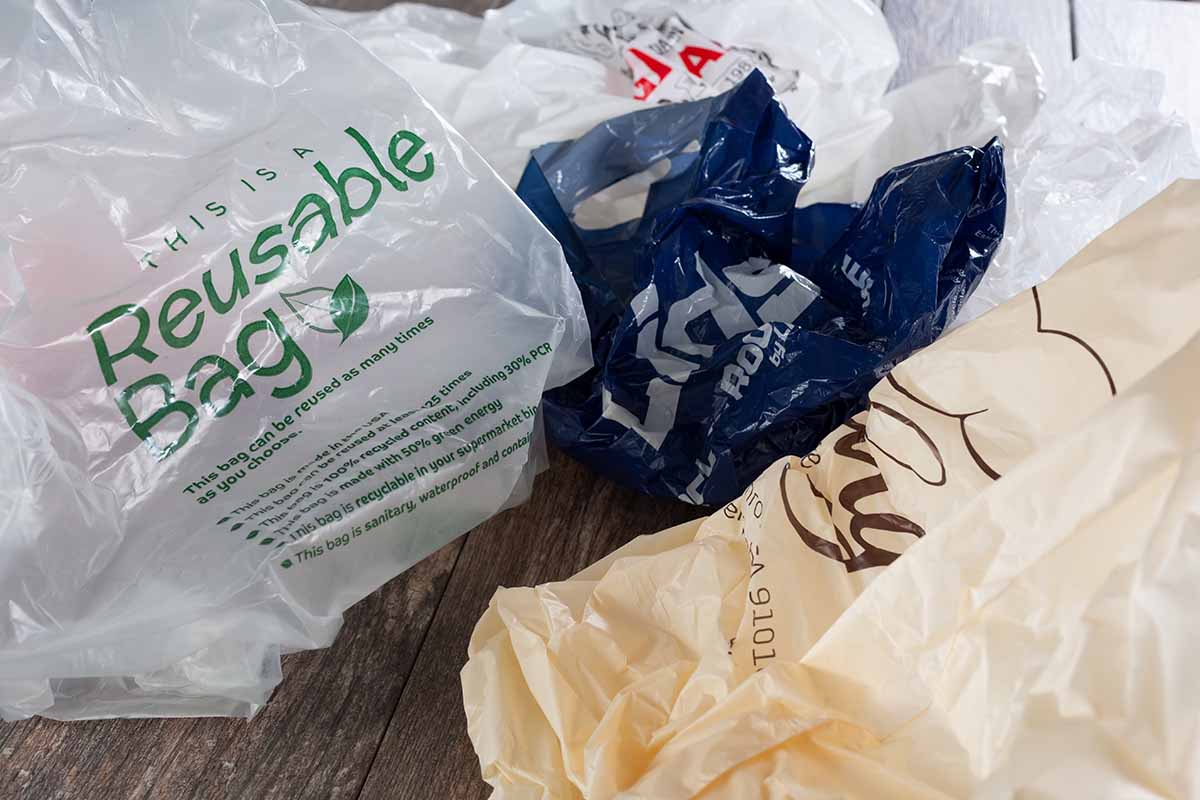
Analysis from a Closed Loop consortium studied numerous state-level methods for reducing bag waste and informed considerations for policymakers. | The Image Party/Shutterstock

A new report on state-level single-use bag laws indicates that New Jersey’s ban has had numerous effects, both positive and negative. 

The Consortium to Reinvent the Retail Bag studied various legislative means of reducing bag waste and how bag fees and bans affected waste and consumer behavior. The group is managed by Closed Loop Partners’ Center for the Circular Economy. 

So far, 12 states have implemented bans on single-use plastic bags: California, Colorado, Connecticut, Delaware, Hawai’i, Maine, New Jersey, New York, Oregon, Rhode Island, Vermont and Washington. In addition, numerous municipalities have banned and/or imposed fees for bag use, including Chicago, New York City and Los Angeles. 

The New Jersey law took effect in May 2022. As the most restrictive U.S. legislation, it prohibits distribution of single-use bags, regardless of material, though it does allow smaller grocers to offer paper bags. While the new analysis shows a significant reduction in consumption of single-use bags, regardless of material, it also indicates that more customers are accumulating too many reusable bags. 

Using the study results, the Consortium also provides a list of policy considerations for reducing waste, environmental impact and costs associated with bags. Among these considerations is enabling customers to bring their own bags or do without. In addition, the group asserts that bag bans alone do not ensure behavior change or reduced environmental impact, and that bag fees are the only legislative tool guaranteed to decrease single-use bag consumption.

Customers amass reusable bags in first year of ban 

Over the first year of the ban, the Consortium sent four surveys to state residents to gauge awareness, understanding and other measures surrounding single-use bags, and received a total of 2,600 responses. The group also analyzed two years of store data — one year before and one year after the ban was implemented — on procurement and sales of single-use bags, as well as for reusable bags of various materials.  

The primary findings were that:

  • Stores gave out 96% fewer bags per week, or about 90 million fewer across 33 stores.
  • During the first four months of the ban, customers were adapting behavior to the new law and sales of reusable bags rose.
  • A year after the ban, nearly all respondents said they owned enough or too many reusable bags; those with too many who wished to dispose of them rose significantly too.

A year after the ban took effect, 91% of those surveyed reported owning enough or too many reusable bags — an increase from 75% at implementation. Further, 16% indicated they had too many reusable bags and wanted to dispose of them, a rise of 11 points from a year earlier.  

The method of shopping also influenced bag use. Online item ordering used a disproportionate number of bags, with curbside pickup and similar methods representing only 6% of average grocery store sales but 32% of reusable bag use. 

Throughout the course of the survey, customer sentiment remained mostly unchanged, with 41% of respondents happy with the legislation a year after implementation, compared to 43% in May 2022. Those expressing confusion about the law dropped by 4 points to 10% over the year. Other emotions expressed were:

  • Frustration: 35%, up 3 points.
  • Anger: 23%, up 1 point.
  • Indifference: 22%, unchanged.

Policy considerations

The survey reinforced the notion that helping customers bring their own bags or go without is the best approach, a key consideration for regulators and policymakers charged with addressing bag waste. Other considerations the Consortium provided include:

  • Create uniform state- or regional-level legislation for a consistent customer experience, to reinforce behavior and ease the burden of retailer compliance.
  • Develop zero- or lower-waste alternatives for pickup and delivery channels.
  • Implement recovery and recycling systems for any bags used, including reusable options.
  • Consider socioeconomic impacts of proposed legislation, including that bag fees disproportionately affect lower income individuals.

Coming soon: New consumer campaign 

To accompany the study, the Consortium plans to launch a new consumer-facing campaign this summer, with details expected within the next month, according to a press release. 

In 2023, the Consortium conducted a three-month pilot project tracking the effects of store signage and employee training on consumer behavior. The project showed a nearly 4.8% decrease in single-use bags across the two studied markets — Denver and Tucson — and a 11.7% reduction in Denver, which has a 10-cent fee on single-use bags.  

A version of this story appeared in Plastics Recycling Update on July 16.

Tags: Policy Now
TweetShare
Antoinette Smith

Antoinette Smith

Antoinette Smith has covered commodity plastics and supply chains for more than a decade, with a special focus on economic impacts and consumer behavior. She brings a balanced, thoughtful view to recycling stories, and isn't afraid to ask "why?" Contact Antoinette at antoinette@resource-recycling.com.

Related Posts

Colorado’s EPR programs move from planning to practice

Colorado’s EPR programs move from planning to practice

byStefanie Valentic
September 17, 2026

Colorado's producer responsibility organizations move to implement the state's extended producer responsibility law.

SB 54 plan for cartons, film draws warning

byStefanie Valentic
September 15, 2026

The new law's cartons and film targets could add 100,000 tons of plastic contamination to California's paper exports annually, a...

California Governor Gavin Newsom speaking at podium.

What’s on Newsom’s desk after the CA session end

byStefanie Valentic
September 14, 2026

With the California legislature adjourned, packaging, food-waste and EPR advocates are watching a single date, Sept. 30, to see which...

New Jersey pushes back PCR mandate to 2030

New Jersey pushes back PCR mandate to 2030

byAntoinette Smith
September 10, 2026

One of the highest-profile US laws affecting recyclers has been amended only four months before implementation, with the state citing...

Battery fire risk isn’t going away. Insurance is responding

Vape ban awaits California governor’s signature

byStefanie Valentic
September 10, 2026

California's vape ban was written to close the exact loophole that let disposable devices survive a ban in the UK.

SB 54 Unpacked: Can film catch up to cartons?

byStefanie Valentic
September 4, 2026

Flexible film, generating 550,000 tons/year of waste, has end markets for only about 10% of it, panelists said at a...

Load More
Next Post

How AI sorting tech can help meet emerging EPR needs

2026 Buyers’ Guide

Equipment, services and technology suppliers serving the recycling industry.

Browse the Guide

More Posts

New Jersey pushes back PCR mandate to 2030

New Jersey pushes back PCR mandate to 2030

September 10, 2026
California Governor Gavin Newsom speaking at podium.

What’s on Newsom’s desk after the CA session end

September 14, 2026
Spin-off lets Linca focus on battery mineral recovery

Critical mineral policy shift creates opportunity

September 14, 2026
CommanderAI launches searchable hauler database

Inside the Circle: Put AI to work for the people who do the work

September 14, 2026
Canada tariffs latest in new normal for RPET

Canada tariffs latest in new normal for RPET

September 11, 2026

SB 54 plan for cartons, film draws warning

September 15, 2026
Lawsuits hover days after SB 54 approval

Preparing for SB 54 design compliance

September 8, 2026
Alpek closing Pennsylvania RPET plant

Alpek seizing on war-related opportunity 

July 27, 2026
Bale pricing mostly flat for September

Bale pricing mostly flat for September

September 9, 2026
Study assesses environmental cost of excess data storage

BAN paper says AI e-scrap estimates are low

September 17, 2026
Load More

About & Publications

About Us

Staff

Archive

Magazines

Work With Us

Advertise
Jobs
Contact
Terms and Privacy

Newsletters

Get the latest recycling news and analysis delivered to your inbox every week. Stay ahead on industry trends, policy updates, and insights from programs, processors, and innovators.

Subscribe

Welcome Back!

Login to your account below

Forgotten Password?

Retrieve your password

Please enter your username or email address to reset your password.

Log In

Add New Playlist

No Result
View All Result
  • The Latest
  • Analysis
  • Recycling
  • E-Scrap
  • Plastics
  • Policy Now
  • Conferences
    • E-Scrap Conference
    • Plastics Recycling Conference
    • Resource Recycling Conference
    • Textiles Recovery Summit
  • Magazines
  • About Us
  • Advertise
  • Archive
  • Jobs
  • Staff
Subscribe
This website uses cookies. By continuing to use this website you are giving consent to cookies being used. Visit our Privacy and Cookie Policy.