






Chatter about legislative effects on the industry permeated much of the 2024 E-Scrap Conference, especially uncertainty around upcoming changes to the Basel Convention, and several sessions dug deep into new laws and coming policy trends in the e-scrap industry.
Here’s a collection of policy-related comments that came out of four different sessions at the conference, which was held Sept. 30-Oct. 2 in Orlando by Resource Recycling, Inc.
State e-scrap programs
The event kicked off with a workshop on some of the latest developments in e-scrap laws led by Jason Linnell, executive director of the National Center for Electronics Recycling.
Across the country, 25 states plus Washington, D.C., have some type of electronics recycling program law. While there have not been any wholly new laws passed for a decade, several states have made updates, some substantive. Overall, those laws also cover about two-thirds of the U.S. population.
“The ones that we do have have been evolving and adapting their programs based on the changing mix that’s coming into the programs, as well as what we learn over time about how different features of these laws fare in the actual market,” Linnell said.
South Carolina modified collection targets to be based on sales weight, set higher penalties if manufacturers don’t meet those collection targets and expanded the list of covered devices. It also moved to a clearinghouse model, wherein manufacturers work together to create a plan to cover all the counties that opted into the program for the year.
Oregon expanded the scope of its covered products, added several new device categories and removed a state contractor program, which had previously been the default option for manufacturers to comply. It also altered its collection convenience requirements. Wisconsin, meanwhile, expanded its definition of devices to include some peripherals, increased manufacturer registration fees and changed the target-setting formula to be based on previous actual collections rather than on pounds sold.
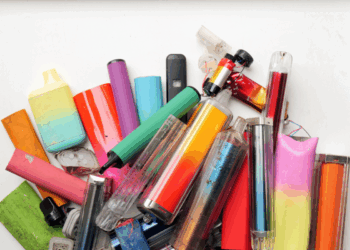
Looking at batteries specifically, California added embedded battery devices to its law in 2022, Illinois recently passed a law on portable and rechargeable batteries, Vermont added rechargeable batteries to its law, and Washington created a program for batteries.
In California, “there’s a lot of work going on right now” to determine the list of devices before the law becomes effective in 2026, Linnell said.
Hawaii changed its manufacturer recycling targets to be based on weight instead of market share and also required manufacturers to fully fund the program.
Don Hennen, director of OEM programs at Dynamic Lifecycle Innovations, recommended setting compensation rates for a level playing field and compensating collection sites “to cover their costs and nothing more, nothing less.” Standardizing compensation rates across municipalities would also bring more stability and predictability into how the state collects and allocates volumes, he said.
Walter Alcorn, vice president for environmental affairs and industry sustainability at the Consumer Technology Association, which represents manufacturers, said in the workshop that “the only way to get standardization on product scope is if we had a national program, and in this country, I don’t see that anytime soon.”
“If you give states a chance to do something different, they’re going to generally do something a little different, and sometimes a lot different,” he added. “I mean, federalism is our system in the U.S., so I don’t think we’re going to see harmonization on the product scope anytime soon.”
CTA has advocated for a federal program for many years, Alcorn said, but nothing has come of it. There is, however, “definitely political pressure to expand the scope” of many programs as consumers want an easy, one-stop drop for everything electronic. Yet there’s a huge difference between microwaves and monitors, Alcorn noted, which creates a heavy lift on the back end.
“There may be some hybrid solutions that emerge over time that involve public and private,” he said, adding that “we’re still in that, in my mind, more of the experimental phase as we sort of work around looking for those solutions.”
In another session on current trends and future directions in electronics, Alcorn added that “as we continue to look at public policy to solve some of our problems, we can make sure it’s grounded appropriately” by ensuring industry voices are heard, through lobbying and other kinds of engagement.
“It’s really important, I think, for everybody to engage, because if you’re not engaged, public policy happens to you,” he said.
In the same session, Cheryl Coleman, senior vice president of advocacy, safety and sustainability at the Recycled Materials Association, added that where legislation sometimes fails is the expectation that there will be instant results.
“It can’t be done overnight, and that’s where I think government fails,” she said. “I would love to weigh 30 less pounds, but it’s not going to happen tomorrow. It requires work. It requires time, and it requires investment. And I believe the same thing is true about what we’re doing in this industry.”
New legislation and battery recycling
Batteries also merited lots of airtime. One session on battery-related legislation included Jeff Farano, manager of compliance and governmental relations for SA Recycling; Rob Lawson-Shanks, CEO and co-founder of Molg; and Jeff Gloyd, founder of Gloyd Recycling Solutions. It was moderated by Leo Raudys, president and CEO of Call2Recycle.
There’s “a wave of regulation hitting the states that’s driving a considerable amount of change and growth and investment in the battery recycling world,” Raudys said, and “we’re keenly interested in this because it’s going to dramatically increase the scope of what we do.”
Historically, Call2Recycle has collected about 8 million pounds of batteries a year, but within the next two years, he expects that number to grow to 40 million pounds.
While regulation is sometimes written for a positive purpose, Gloyd said it “oftentimes leaves out a very important conversation: how it impacts the collector and the processor of that material from a cost perspective, from a labor perspective and most importantly from a risk perspective.”
Overall, there “just is not a lot happening legislatively,” Farano added, because federal lawmakers are “still learning, they’re still studying, they’re still understanding what are the problems that we are dealing with.”
At the state level, many are in a wait-and-see pattern, Farano said. The few states that have passed laws about batteries did so largely in response to fires.
“The problem that we’re having concerning the legislation around the states is it’s not encouraging recycling,” he said. “They’re more restrictive, they’re seeing the problems of these batteries in MRFs that are causing fires and their immediate reaction to that is, ‘oh, my God, we need to put more control, more restrictions on it.'”
Instead, laws should be pressuring manufacturers to design batteries so they are easier to handle and recycle, Farano said. Extended producer responsibility for batteries is one way to to that, because forcing battery producers to take back and handle batteries that aren’t financially feasible for reuse, repurposing or recycling, could make them start designing batteries “in a way that it is financially feasible, because they don’t want these batteries.”
However, design is not a silver bullet, Gloyd said. Consumer education is also vital, as is better sortation technology and helping keep down the costs of processing and transporting batteries.
Coming Basel changes
Looking internationally, a panel of several Basel Convention experts discussed its effects on the industry.
In January a wide range of end-of-life electronics will be newly covered by Basel regulations. This will largely prohibit U.S. companies from shipping these materials overseas, as the country didn’t ratify the convention and is therefore a nonparty member with extra restrictions.
Craig Boswell, president of HOBI International, said that the nonparty ban is “obviously particularly punitive to the United States companies, e-scrap companies in particular.”
“I mean, we’re one of the five nonparties and we’re just shut out,” he said, adding that “if we weren’t an OECD country, we’d really be in trouble.”
While there’s “no denying” that becoming a party country would solve many issues, Boswell said that’s unlikely politically.
Jim Puckett, executive director of the Basel Action Network, said major reasons for this include “industry panicking and industry being very stubborn,” as well as environmental groups’ concerns that the U.S. would not properly adhere to Basel.
“Nobody was going to get political points with either industry or the environmental groups for pushing for it as a politician,” he said. “Right now, I think it’s true that the United States not being a party is really hurting industry.”
It’s not just the U.S. directly that is hurt, said Emmanuel Nyaletey, founder and CEO of BridgeSolar, which helps bring solar energy to communities in Ghana.
“We do not have these conversations in our region as citizens in our countries,” he said. “We will depend on you guys, everyone in this room, to be the advocates for reuse or trade in Africa.”
New rules come from the United States, the U.K. or the European Union, he added, and Africa is never given a strong voice when it comes to discussion of international law.
“Think about Africans and how these rules, these changes will affect us,” he said. “There are over a billion of us now, so if we are not counted when we are implementing or drafting, these rules are going to cause a huge mess on our continent.”