





Resource Recycling
  • The Latest
  • Analysis
    • All
    • Certification Scorecard
    • Industry Announcements
    • Opinion
    Server resale values surge in AI-driven markets

    Certification scorecard for week of Jan. 19, 2026

    From CES to the shredder: What 2026 PCs mean for ITAD

    Server resale values surge in AI-driven markets

    Certification scorecard for week of Jan. 12, 2026

    Industry announcements for January 2026

    Certification scorecard for Dec. 18-30, 2025

    Certification scorecard for Dec. 18, 2025

    Industry announcements for the week of Dec. 15

    Certification scorecard for December 10, 2025

    Industry Announcements for Week of December 8

  • Conferences
  • Publications

    Other Topics

    Textiles
    Organics
    Packaging
    Glass
    Brand Owners

    Metals
    Technology
    Research
    Markets
    Grant Watch

    All Topics

Subscribe
No Result
View All Result
Resource Recycling
  • The Latest
  • Analysis
    • All
    • Certification Scorecard
    • Industry Announcements
    • Opinion
    Server resale values surge in AI-driven markets

    Certification scorecard for week of Jan. 19, 2026

    From CES to the shredder: What 2026 PCs mean for ITAD

    Server resale values surge in AI-driven markets

    Certification scorecard for week of Jan. 12, 2026

    Industry announcements for January 2026

    Certification scorecard for Dec. 18-30, 2025

    Certification scorecard for Dec. 18, 2025

    Industry announcements for the week of Dec. 15

    Certification scorecard for December 10, 2025

    Industry Announcements for Week of December 8

  • Conferences
  • Publications

    Other Topics

    Textiles
    Organics
    Packaging
    Glass
    Brand Owners

    Metals
    Technology
    Research
    Markets
    Grant Watch

    All Topics

Subscribe
No Result
View All Result
Resource Recycling
No Result
View All Result
Home Resource Recycling Magazine

Understanding how AI can help the sortation process

byTy Rhoad
February 19, 2024
in Resource Recycling Magazine

This article appeared in the December 2023 issue of Resource Recycling. Subscribe today for access to all print content.
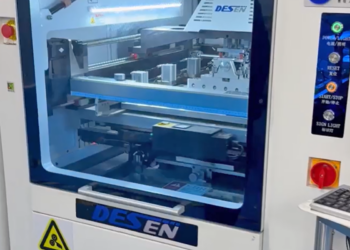

Artificial intelligence has taken the recycling industry by storm – and for good reason. When applied correctly, today’s emerging AI technologies have transformative powers, driving automation and efficiently enabling more granular sorting of complex material fractions. But they can also be a waste of both time and financial investment if not considered as part of a holistic solution.

Much of the AI buzz originates from optical sorters using robotic arms rather than valve blocks. The valve block optical sorters employed in thousands of recycling facilities for decades use precisely timed pulses of air in a drop-eject method to sort materials at rates reaching 8.0 tons per hour or higher. Conversely, the new robotic arm optical sorters more closely mimic a human’s picking motion of multiple fractions at rates slightly higher than that of a person: about 0.5 tons per hour.

To properly implement these technologies, recyclers need to fully understand what AI is and what it’s designed to do. Fully understanding how AI works and how it will improve the sort is the key to optimizing product throughput and purity, not to mention profitability.

AI is not new

Recyclers must keep in mind that AI is nothing new to the industry, and that most recycling facilities are currently using some form of it. Valve block optical sorters have for decades leveraged traditional AI to drive sorting circuit automation and recycled product purity. Plant builders and technology suppliers have worked with customers to design material flows to improve yield, purity and throughput with fewer manual sorters.

AI consists of software and algorithms, not hardware. Traditional AI is used in combination with a variety of sensors – RGB cameras, near-infrared (NIR), laser, EM (electromagnetic) and X-Ray – to automatically detect and process fractions. Traditional AI is a manual process whereby a technician engineers the classifiers and deploys them into the house-developed sorting software.

Every sensor-based sorting machine consists of numerous components, all of which play their roles and are chosen depending on the sorting task. How well, or poorly, material fractions are sorted depends on how the core components – the sensor system, data processing (software), conveyor system and ejection system – work together.

Advancements in sensors and traditional AI have already led to many automated sorting improvements. Throughout the years, optical sorter designs have evolved with greater computing power and improved algorithms to leverage traditional AI and greatly improve color sorting. This is why the MRF can now sort out higher-value clear and light blue PET with higher yields and less contamination, meaning bales can be sold to secondary plastics sorters as Grade A or B versus Grade C or D.

Deep learning: a game changer

AI’s deep learning subset is the current game-changing technology that further advances sorting accuracy and adaptability to material streams. Large datasets of trained neuronal networks enable deep learning technologies to recover materials that are difficult or even impossible to distinguish using traditional technologies.

For deep learning to work, software engineers train the network using thousands of images to create a pool of object information. The network recognizes patterns in the data and connects this information pool to the sorting task.

Deep learning advancements in AI are application-specific, so the supplier must provide the recycler with material testing, training and optimization. The supplier cannot just drop AI-based equipment into the circuit and leave. Full sorting potential is only achieved through a well-optimized and well-positioned machine with workers trained on how to get the most out of it.

Optimization leads to a much more granular sort. Whereas conventional optical sorters accurately identify and sort aluminum from the material stream, trained deep learning systems take the next step to detect and sort items such as used beverage containers (UBCs) from other aluminum in the stream. Deep learning enables recyclers to selectively target a specific value stream and increase purity of that product.

There are several areas where deep learning AI can play a part in improving the sort. We have already launched a deep learning wood sorting application with our GAIN technology and are currently developing an application that focuses on UBC cleaning. There is also value to be found in PET cleaning and the ability to detect PET food grade containers from the material stream using deep learning.

Because of its ability to be trained to see objects on the belt like a human sorter, AI’s deep learning technology, when combined with conventional sorting technologies, can bring final product qualities and yield to the next level.

Ty Rhoad is TOMRA’s regional director of recycling sorting for the Americas. He can be reached at [email protected].

The views and opinions expressed are those of the author and do not imply endorsement by Resource Recycling, Inc. If you have a subject you wish to cover in an op-ed, please send a short proposal to [email protected] for consideration.

This article appeared in the December 2023 issue of Resource Recycling. Subscribe today for access to all print content.

TweetShare
Ty Rhoad

Ty Rhoad

Related Posts

Alpek closing Pennsylvania RPET plant

Alpek closing Pennsylvania RPET plant

byAntoinette Smith
January 22, 2026

The world's biggest PET producer said in a state WARN notice the plant would close March 15, and APR chief...

Server resale values surge in AI-driven markets

Server resale values surge in AI-driven markets

byDavid Daoud
January 22, 2026

Server resale values jumped sharply in 2025 as AI infrastructure demand tightened supply, reshaping secondary IT markets and boosting returns...

Kinderhook forms Ecowaste through Live Oak, CARDS merger

byStefanie Valentic
January 22, 2026

Private equity firm Kinderhook has expanded its presence in the Mid-South with the formation of Ecowaste, a waste services provider...

US Plastics Pact announces leadership change

US Plastics Pact announces leadership change

byAntoinette Smith
January 21, 2026

Crystal Bayliss will serve as interim executive director, the group's board of directors said in a statement.

Assurant sees 60% rise in Q2 trade-in values

Reverse logistics: The engine of the smartphone supply chain

byKimberley Allison
January 21, 2026

As device refresh cycles accelerate to accommodate AI-driven functions, carriers and OEMS can turn older devices into value engines.

Server resale values surge in AI-driven markets

Certification scorecard for week of Jan. 19, 2026

byEditorial Staff
January 21, 2026

The following are facilities that have achieved, renewed or otherwise regained R2 certification recently: 100% Environnemental 4121104 Canada of Montreal,...

Load More
Next Post

Neighborhood Networks

More Posts

Haulers continue to see recycling revenue drops

GFL Environmental relocates HQ to Miami Beach

January 21, 2026
Chinese processing group details goals for US visit

AMP lays out vision of next-generation, AI-driven MRFs

July 24, 2024
New brand-led recycling group looks to work with Congress

New brand-led recycling group looks to work with Congress

January 20, 2026

Alpla decries ‘painful impact’ of recycling market pressures

January 19, 2026
CalRecycle withdraws proposed regs for SB 54

CalRecycle withdraws proposed regs for SB 54

January 12, 2026
US Plastics Pact announces leadership change

US Plastics Pact announces leadership change

January 21, 2026

Aduro reports losses, will pick site for demo plant by end Jan

January 16, 2026
Server resale values surge in AI-driven markets

Server resale values surge in AI-driven markets

January 22, 2026

New Jersey passes bill on single-use service items

January 14, 2026

CARE launches carpet fiber ID device to aid recyclers

January 14, 2026
Load More

About & Publications

About Us

Staff

Archive

Magazine

Work With Us

Advertise
Jobs
Contact
Terms and Privacy

Newsletter

Get the latest recycling news and analysis delivered to your inbox every week. Stay ahead on industry trends, policy updates, and insights from programs, processors, and innovators.

Subscribe

Welcome Back!

Login to your account below

Forgotten Password?

Retrieve your password

Please enter your username or email address to reset your password.

Log In

Add New Playlist

No Result
View All Result
  • The Latest
  • Analysis
  • Recycling
  • E-Scrap
  • Plastics
  • Policy Now
  • Conferences
    • E-Scrap Conference
    • Plastics Recycling Conference
    • Resource Recycling Conference
    • Textiles Recovery Summit
  • Magazine
  • About Us
  • Advertise
  • Archive
  • Jobs
  • Staff
Subscribe
This website uses cookies. By continuing to use this website you are giving consent to cookies being used. Visit our Privacy and Cookie Policy.