






Advertisement Header Ad
Resource Recycling
  • The Latest
  • Analysis
    • All
    • Certification Scorecard
    • Industry Announcements
    • Opinion

    Certification Scorecard for December 3, 2025

    Industry Announcements for Week of December 1

    News from Dynamic Lifecycle Innovations, Precision E-Cycle

    News from Northeast Recycling Council, Plastipak and more

    News from Northeast Recycling Council, Sortera Technologies and more

    News from MKV Polymers, Metallium Ltd. and more

    Certification Scorecard for November 19, 2025

    News from American Beverage, Inteplast Group and more

    News from Action Carting Environmental Services, International Paper and more

  • Conferences
  • Publications

    Other Topics

    Textiles
    Organics
    Packaging
    Glass
    Brand Owners

    Metals
    Technology
    Research
    Markets
    Grant Watch

    All Topics

Subscribe
No Result
View All Result
Resource Recycling
  • The Latest
  • Analysis
    • All
    • Certification Scorecard
    • Industry Announcements
    • Opinion

    Certification Scorecard for December 3, 2025

    Industry Announcements for Week of December 1

    News from Dynamic Lifecycle Innovations, Precision E-Cycle

    News from Northeast Recycling Council, Plastipak and more

    News from Northeast Recycling Council, Sortera Technologies and more

    News from MKV Polymers, Metallium Ltd. and more

    Certification Scorecard for November 19, 2025

    News from American Beverage, Inteplast Group and more

    News from Action Carting Environmental Services, International Paper and more

  • Conferences
  • Publications

    Other Topics

    Textiles
    Organics
    Packaging
    Glass
    Brand Owners

    Metals
    Technology
    Research
    Markets
    Grant Watch

    All Topics

Subscribe
No Result
View All Result
Resource Recycling
No Result
View All Result
Home Recycling

Transitioning small communities to EPR

Marissa HeffernanbyMarissa Heffernan
May 3, 2023
in Recycling
Share on XLinkedin
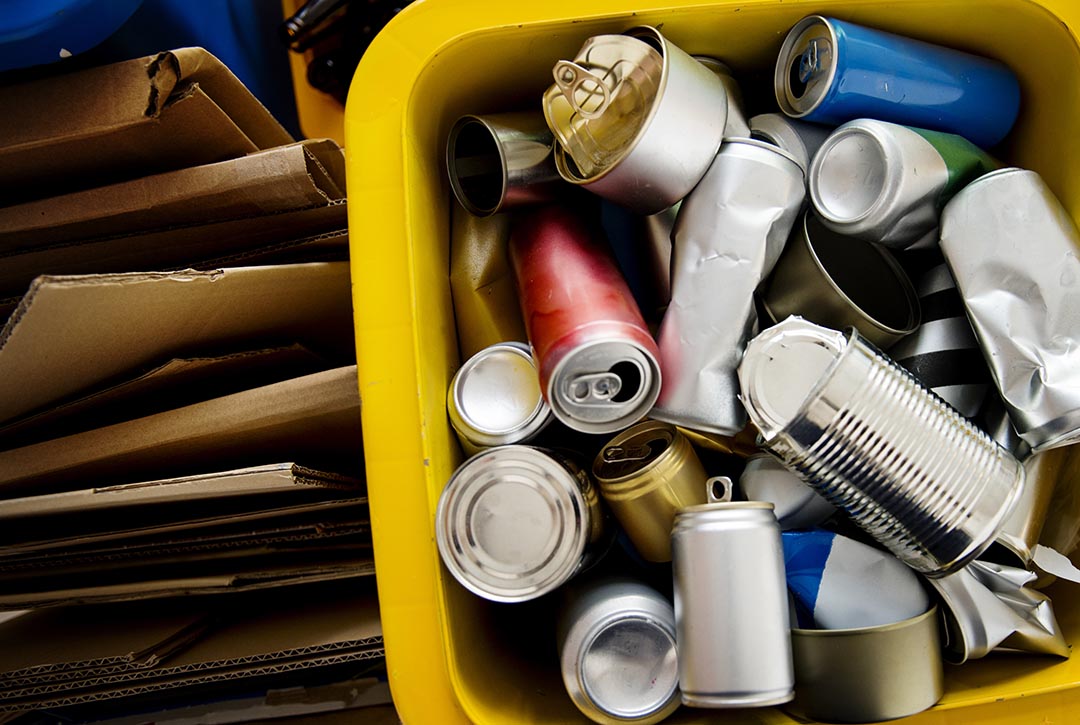
Speakers from across Canada faced a variety of EPR-related challenges, but all agreed on one thing: Good EPR implementation requires strict cost management. | Rawpixel.com/Shutterstock

Representatives from five small Canadian municipalities shared the challenges and benefits of extended producer responsibility, advising anyone in a similar situation to be very familiar with costs and contamination. 

The panelists spoke during “Alberta’s EPR Transition – Advice from Small Municipalities Across Canada,” an April 24 webinar hosted by the Recycling Council of Alberta. About 150 people attended to hear lessons learned from the extended producer responsibility (EPR) regulations implemented in Alberta on Nov. 30, 2022. 

Moderated by Leah Seabrook of Strathcona County, Alberta, speakers were Ben Van Nostrand of Columbia Shuswap Regional District, British Columbia, Laura Zapotichny of the Regional District of Fraser-Fort George, British Columbia, John Watson of Dysart and surrounding areas in Saskatchewan, Laura Barrett of Simcoe County, Ontario and Melissa Kovacs Reid of Dufferin County, Ontario. 

Challenges of density 

Serving smaller towns and communities efficiently, especially rural ones, is one of the challenges of EPR, Van Nostrand said. 

He said prior to the packaging and stewardship program coming into place, Columbia Shuswap Regional District operated 18 single-stream recycling depots and had “extremely high levels of contamination.” 

“It was extremely expensive to operate,” he added, costing about 1.3 million Canadian dollars (about $960,000) annually to manage 1,500 tons. 

Zapotichny echoed that sentiment, noting the Regional District of Fraser-Fort George has a low population density and decided to continue running its own drop-off program independently from Recycle BC, one of the producer responsibility organizations (PROs) operating in Canada. 

“When it was first presented to us, we were concerned about the capital investments needed to join the program, the fines and the true cost of the program,” she said, adding that “many of our rural communities did not qualify under the program for curbside.” 

While there are risks inherent to meeting EPR requirements, and the district is left dealing with market fluctuations, Zapotichny said maintaining control was a huge benefit. 

“We continue to monitor both our program and theirs and make decisions that are best for our residents,” she said. 

Barrett explained that Simcoe County is mostly rural, with some urban pockets and a seasonal population. The recycling program consists mainly of curbside collection with a few depots for drop-off. 

“Our experience with EPR has been good but also very challenging as well,” she said, noting that what seems to work best during the transition period is when there’s competition among the PROs. 

When there’s less competition, municipalities have less negotiating power and tend to get lower compensation, Barrett said. For example, hazardous waste has been a difficult stream to transition due to low competition, whereas tires and other programs were easier “and we feel we are adequately compensated there,” she said. 

Now, the county is faced with a choice: keep running their hazardous waste drop-off centers supplemented with tax dollars, since program costs are not fully covered under the current EPR system, or end the program.

Controlling costs

Kovacs Reid said Dufferin County also decided to opt out of letting the PRO run county programs, which are fully single-stream with no depots. The decision was based on contamination reduction requirements and costs. 

She said the PRO offered the county compensation at a 2020 level of costs and “that would not have been enough.” 

However, the county is still working with PRO Circular Materials on education campaigns and Circular Materials is running a blue box collection system in the county. 

Van Nostrand said his area has seen a huge cost savings and reduction in contamination, though Recycle BC is not fully funding all the costs for Columbia Shuswap Regional District, either. The PRO covers the cost of hauling and sorting. 

The district has been able to create jobs staffing the depots in rural areas and partnered with other stewardship programs to offer pathways for more materials, he said. 

“It was the right move,” Van Nostrand said, adding that “it’s been extremely successful and I would recommend it,” though he continues to push for full funding.  

Sharing advice 

The tips panelists gave to attendees who are also facing EPR transitions had a common theme: Know your program inside and out before entering a contract with a PRO. 

John Watson said Dysart, along with a coalition of several surrounding municipalities, will transition its services on July 1. He said in the area, 55 communities were depot-only just like Dysart, so they have banded together.  

“I recommend that other small communities build that network up,” he said, noting that his coalition used to meet once per week. 

He also recommended knowing exactly how much the recycling program costs, from staffing all the way to how much propane is used to heat the landfill office. 

“This is a marathon, not a sprint, so brace yourself,” he said, adding that things are still “changing week by week.” 

Keep a close eye on your contracts in preparation to transition to PRO-run EPR, Kovacs Reid said, and make sure you have extension terms to get to the transition date or build in termination or transfer clauses. 

Zapotichny said clear guiding principles for decision-makers are key, because “EPR is complex, it is not easy to understand and not easy to explain to residents.” 

She also recommended being prepared to continually advocate for rural areas to get the proper funding and full cost recovery. 

Barrett recommended knowing all the nuances of the regulations and running “all the scenarios of what might happen and how it might all connect.” 

She also advocated for a detailed breakdown of recycling costs and warned that “PROs are very last minute.” 

“Really know the costs, not just hard contract costs but staff time, buildings, trucks, equipment,” she said. “Whatever you use, you want to show it to the PRO.” 

Working closely with other municipalities is key, she emphasized, because “it’s better to go to the ministry with a united front than to go individually.” 

 

Tags: CanadaEPRPolicy Now
Marissa Heffernan

Marissa Heffernan

Marissa Heffernan worked at Resource Recycling from January 2022 through June 2025, first as staff reporter and then as associate editor. Marissa Heffernan started working for Resource Recycling in January 2022 after spending several years as a reporter at a daily newspaper in Southwest Washington. After developing a special focus on recycling policy, they were also the editor of the monthly newsletter Policy Now.

Related Posts

The Re:Source Podcast Episode 1: E-Scrap look-back and 2026 outlook

The Re:Source Podcast Episode 1: E-Scrap look-back and 2026 outlook

byStefanie Valentic
November 21, 2025

Welcome to The Re:Source, a podcast for insights, strategies and stories from the world of materials management, recycling and the...

From crawl to run: a clear roadmap for ITAD ESG

From crawl to run: a clear roadmap for ITAD ESG

byScott Snowden
November 20, 2025

In a workshop at this year’s E-Scrap Conference in Grapevine, Texas, e-Stewards and Bloom ESG walked IT asset disposition operators...

Sector holds wide gaps in environmental standards

Sector holds wide gaps in environmental standards

byDavid Daoud
November 20, 2025

A recent investigation by the Basel Action Network has renewed questions about environmental accountability throughout the electronics lifecycle.

Analysis: EU softens ESG rules as compliance pressure builds for US

Analysis: EU softens ESG rules as compliance pressure builds for US

byDavid Daoud
November 20, 2025

The European Union’s sustainability agenda remains the most far-reaching globally, but as of late 2025 it has entered a phase...

ERCC outlines shift toward convenience benchmarks

ERCC outlines shift toward convenience benchmarks

byScott Snowden
November 13, 2025

State and industry leaders at the 2025 E-Scrap Conference signaled growing support for moving electronics recycling programs away from weight-based...

SERI works to restore faith in certifications

SERI works to restore faith in certifications

byAntoinette Smith
October 29, 2025

Ahead of the release of a full year-end report, SERI provided a preview of the outcomes from its Assurance activities...

Load More
Next Post

Panelists: Bottle bills, EPR can coexist

More Posts

Analysis: Q3 earnings confirm new industry priorities

Analysis: Q3 earnings confirm new industry priorities

November 13, 2025
Iron Mountain raises ITAD guidance on strong growth

Iron Mountain raises ITAD guidance on strong growth

November 13, 2025
ERCC outlines shift toward convenience benchmarks

ERCC outlines shift toward convenience benchmarks

November 13, 2025
Analysis: EU softens ESG rules as compliance pressure builds for US

Analysis: EU softens ESG rules as compliance pressure builds for US

November 20, 2025
Sector holds wide gaps in environmental standards

Sector holds wide gaps in environmental standards

November 20, 2025
From crawl to run: a clear roadmap for ITAD ESG

From crawl to run: a clear roadmap for ITAD ESG

November 20, 2025
New entrepreneurs bring renewed energy to e-cycling

New entrepreneurs bring renewed energy to e-cycling

November 20, 2025
The Re:Source Podcast Episode 1: E-Scrap look-back and 2026 outlook

The Re:Source Podcast Episode 1: E-Scrap look-back and 2026 outlook

November 21, 2025
ERI and ReElement partner on rare earth magnet recovery

ERI and ReElement partner on rare earth magnet recovery

November 26, 2025
Cyber risks confront ITAD work, contracts, coverage

Cyber risks confront ITAD work, contracts, coverage

November 26, 2025
Load More

About & Publications

About Us

Staff

Archive

Magazine

Work With Us

Advertise
Jobs
Contact
Terms and Privacy

Newsletter

Get the latest recycling news and analysis delivered to your inbox every week. Stay ahead on industry trends, policy updates, and insights from programs, processors, and innovators.

Subscribe

Welcome Back!

Login to your account below

Forgotten Password?

Retrieve your password

Please enter your username or email address to reset your password.

Log In

Add New Playlist

No Result
View All Result
  • The Latest
  • Analysis
  • Recycling
  • E-Scrap
  • Plastics
  • Conferences
    • E-Scrap Conference
    • Plastics Recycling Conference
    • Resource Recycling Conference
    • Textiles Recovery Summit
  • Magazine
  • About Us
  • Advertise
  • Archive
  • Jobs
  • Staff
Subscribe
This website uses cookies. By continuing to use this website you are giving consent to cookies being used. Visit our Privacy and Cookie Policy.