



Resource Recycling
  • The Latest
  • Analysis
    • All
    • Certification Scorecard
    • Industry Announcements
    • Opinion
    Auto Draft

    Umicore highlights strength in recycling, catalysis

    Apto, Tusaar partner on rare earths recovery

    Apto, Tusaar partner on rare earths recovery

    Certification scorecard for the week of Feb. 16, 2026

    Sims Lifecycle leverages hyperscale decommissioning

    Sims Lifecycle leverages hyperscale decommissioning

    The electronics recycling industry is undergoing a transformation from labor-intensive manual operations to highly automated, AI-driven facilities that use advanced robotics, cleaner chemistry and digital tracking systems to extract critical materials.

    The cyber-physical MRF: AI and robotics reshape e-waste recovery

    Certification scorecard for the week of Feb. 9, 2026

    Meta-Corning deal signals IT hardware retirement wave

    Meta-Corning deal signals IT hardware retirement wave

    Malaysia clamps down on illegal e-waste imports amid probes

    Malaysia clamps down on illegal e-waste imports amid probes

    URT builds alliance to remake electronics plastics at scale

    ICYMI: Top 5 e-scrap stories from January 2026

  • Conferences
  • Publications

    Other Topics

    Textiles
    Organics
    Packaging
    Glass
    Brand Owners

    Metals
    Technology
    Research
    Markets
    Grant Watch

    All Topics

Subscribe
No Result
View All Result
Resource Recycling
  • The Latest
  • Analysis
    • All
    • Certification Scorecard
    • Industry Announcements
    • Opinion
    Auto Draft

    Umicore highlights strength in recycling, catalysis

    Apto, Tusaar partner on rare earths recovery

    Apto, Tusaar partner on rare earths recovery

    Certification scorecard for the week of Feb. 16, 2026

    Sims Lifecycle leverages hyperscale decommissioning

    Sims Lifecycle leverages hyperscale decommissioning

    The electronics recycling industry is undergoing a transformation from labor-intensive manual operations to highly automated, AI-driven facilities that use advanced robotics, cleaner chemistry and digital tracking systems to extract critical materials.

    The cyber-physical MRF: AI and robotics reshape e-waste recovery

    Certification scorecard for the week of Feb. 9, 2026

    Meta-Corning deal signals IT hardware retirement wave

    Meta-Corning deal signals IT hardware retirement wave

    Malaysia clamps down on illegal e-waste imports amid probes

    Malaysia clamps down on illegal e-waste imports amid probes

    URT builds alliance to remake electronics plastics at scale

    ICYMI: Top 5 e-scrap stories from January 2026

  • Conferences
  • Publications

    Other Topics

    Textiles
    Organics
    Packaging
    Glass
    Brand Owners

    Metals
    Technology
    Research
    Markets
    Grant Watch

    All Topics

Subscribe
No Result
View All Result
Resource Recycling
No Result
View All Result
Home Analysis Opinion

In My Opinion: EPR takeaways from OECD meeting

byScott Cassel, CEO and Founder, Product Stewardship Institute
November 1, 2022
in Opinion
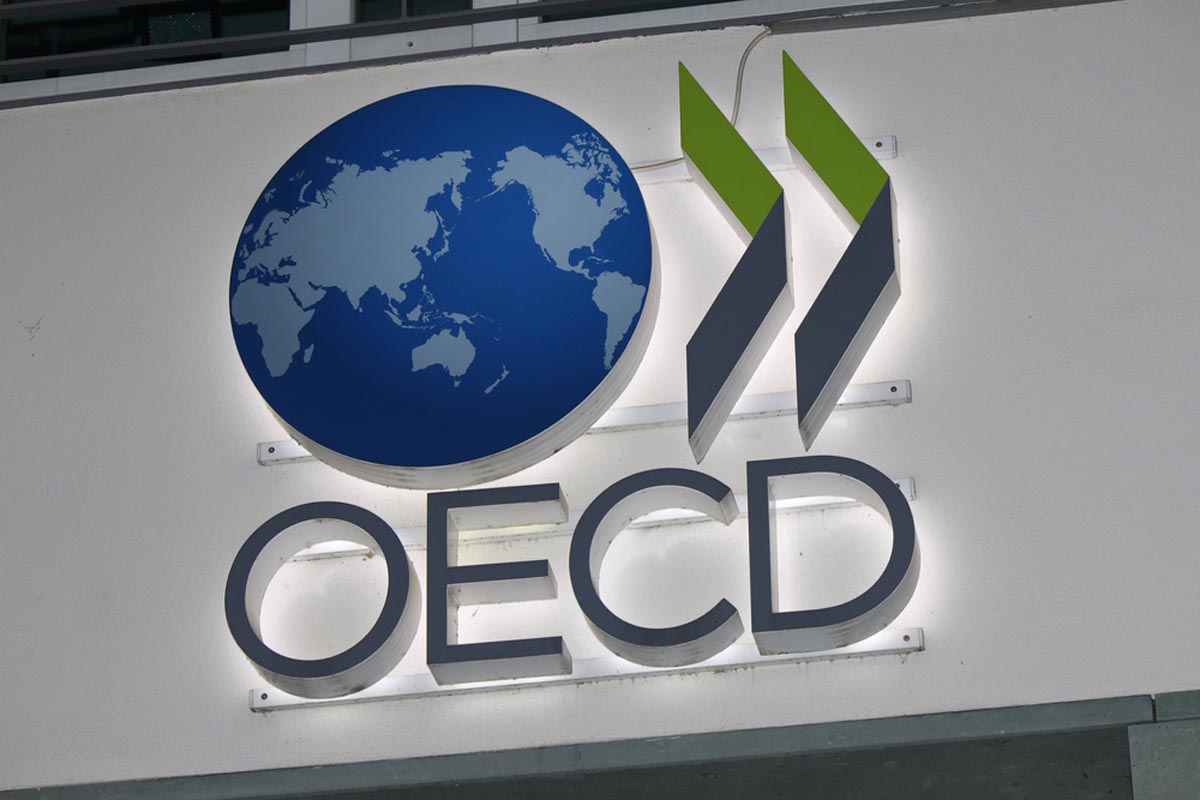
The founder of the Product Stewardship Institute recently advised the Organization for Economic Cooperation and Development (OECD) on plastic pollution reduction policies. | 360b/Shutterstock

In September, I was invited to join a stakeholder consultation meeting organized by the Organization for Economic Cooperation and Development (OECD) in Washington D.C. The objective was to assess the performance of the U.S. EPA in addressing the environmental – and, especially environmental justice – impacts of plastic, which pollutes our coasts and oceans worldwide. Participants were also asked to recommend initiatives that the EPA could take to further reduce impacts.

I found myself in a unique position. On the one hand, I wanted to make sure that EPR, being a critical approach to solving the problem, was included. On the other, I also wanted to support additional source-reducing strategies such as the single-use plastic bans that were championed by others in the room, including national nonprofits Surfrider and Ocean Conservancy. 

With 38 member countries, the OECD works to establish international standards to help solve social, environmental and economic problems. The Product Stewardship Institute (PSI) has worked extensively with the organization. For example, I had previously contributed to OECD EPR guidance documents and presented on U.S EPR activity at an OECD event in Tokyo in 2011. This year, we were recommended by OECD and invited to participate in the consultation meeting at the request of EPA.

At the meeting, I presented on how state packaging EPR laws will reduce plastic pollution, especially when considered with other legislative measures such as post-consumer recycled  content mandates and enhanced deposit return systems. Over the past two years, packaging EPR laws influenced by PSI’s model EPR legislation were enacted in Maine, Oregon, Colorado and California. In 2023, at least nine state bills are expected to be introduced or re-introduced.

Scott Cassel

I also pointed out that the nation’s fragmented recycling infrastructure and policies, lack of a consistent materials management policy and limited technical capabilities challenge the implementation of statewide packaging EPR policies. Although waste management is delegated to the states, there is a critical need for greater state harmonization and/or a national solution that could be found in a federal bill, such as the Break Free From Plastic Act, which may be re- introduced in 2023 (PSI’s model also informed that bill’s EPR component). 

While it is unclear what authority the EPA has to promote policy that is not directly enacted by Congress, I emphasized that the agency does have the ability to provide guidance and technical support on issues such as packaging labeling; a standard definition of recycling; and goals for source reduction, reuse, recycling and post-consumer recycled content. I also suggested that EPA could support national efforts driven by state and local governments.

This is a real, potentially game-changing possibility and my own experience bears this out. Beginning in 2003, PSI worked with EPA to facilitate a multi-stakeholder dialogue – which included industry, government, recycled paint manufacturers, retailers and painting contractors – and develop a state legislative model for paint EPR. In 2009, Oregon used that model to enact the country’s first EPR law. 

Since then, PSI has helped enact paint EPR laws built on the same model in 10 states and Washington, D.C. Paint EPR programs have collected more than 51 million gallons of paint, recycled over 72% of all latex paint collected, saved governments and taxpayers nearly $300 million and established more than 2,000 collection sites, over 70% of which are at voluntary retail locations.

I strongly believe that with EPA’s help we could replicate the model established for paint and that this would help solve the plastic pollution problem. All stakeholders could work together to create a national packaging EPR strategy that also emphasizes source-reduction strategies such as reuse, which are widely promoted by environmental nonprofits, including those that attended the meeting.

We at PSI look forward to reading the OECD report generated from the meeting, which will be discussed at a joint meeting of the OECD Working Party on Environmental Performance (WPEP) in 2023.


Scott Cassel has over 35 years of experience tackling waste management issues in the public, private and nonprofit sectors. In 2000, he founded the Product Stewardship Institute, a policy advocate and consulting nonprofit that pioneered product stewardship in the United States and has helped enact 130 extended producer responsibility (EPR) laws across 16 product categories in 33 states. 

The views and opinions expressed are those of the author and do not imply endorsement by Resource Recycling, Inc. If you have a subject you wish to cover in an op-ed, please send a short proposal to [email protected] for consideration.

Tags: EPR
TweetShare
Scott Cassel, CEO and Founder, Product Stewardship Institute

Scott Cassel, CEO and Founder, Product Stewardship Institute

Related Posts

Minnesota publishes prelim EPR assessment

Minnesota publishes prelim EPR assessment

byAntoinette Smith
February 20, 2026

The report will inform recommendations featured in the next report to develop the state's EPR program for packaging.

Vermont’s battery stewardship law targets fire risk

byStefanie Valentic
February 20, 2026

The state's new law gives residents more options to safely dispose of everything from single-use alkaline batteries to medium-format e-bike...

Wisconsin proposes E-Cycle target revisions

Wisconsin proposes E-Cycle target revisions

byScott Snowden
February 17, 2026

The state proposed updates clarifying target calculations, waiver standards and adding select battery devices to eligible collections, with public comment...

Textile clothing bins

Report details how to make CA textile recycling work

byPaul Lane
February 16, 2026

A new report confirms the sentiment that led to a new textile recovery law in California, detailing just how much...

Oregon’s Recycling Modernization Act faces injunction

Court partially blocks Oregon EPR law, dismisses bulk of lawsuit

byStefanie Valentic
February 10, 2026

An Oregon federal court issued a limited injunction halting the state's EPR law for members of NAW, but rejected the...

Dual WM MRF launch strengthens Ontario recycling infrastructure

Dual WM MRF launch strengthens Ontario recycling infrastructure

byStefanie Valentic
February 9, 2026

WM has opened two new facilities in Ontario capable of processing 30% of the province's total volumes under new EPR...

Load More
Next Post

Post-recession reforms help MRFs weather price fluctuations

More Posts

Sims Lifecycle leverages hyperscale decommissioning

Sims Lifecycle leverages hyperscale decommissioning

February 18, 2026
Republic Services waiting on fourth Polymer Center

Republic Services waiting on fourth Polymer Center

February 18, 2026
Chinese processing group details goals for US visit

AMP lays out vision of next-generation, AI-driven MRFs

July 24, 2024
NERC: Blended average prices fell 40% in third quarter

HDPE, PP bales rise as paper fiber and cans stabilize

February 12, 2026
Bipartisan reps introduce bill on recycling claims

Bipartisan reps introduce bill on recycling claims

February 12, 2026
Textile clothing bins

Report details how to make CA textile recycling work

February 16, 2026
Sony heads renewable plastic supply chain

Sony heads renewable plastic supply chain

February 19, 2026

Focus on recycling film, flexibles takes shape in two reports

February 13, 2026

Origin Materials to reduce staff in reorg

February 13, 2026
Iron Mountain sees ITAD surge, raises forecast on record Q2

Iron Mountain posts record Q4, guides strong 2026 growth

February 13, 2026
Load More

About & Publications

About Us

Staff

Archive

Magazine

Work With Us

Advertise
Jobs
Contact
Terms and Privacy

Newsletter

Get the latest recycling news and analysis delivered to your inbox every week. Stay ahead on industry trends, policy updates, and insights from programs, processors, and innovators.

Subscribe

Welcome Back!

Login to your account below

Forgotten Password?

Retrieve your password

Please enter your username or email address to reset your password.

Log In

Add New Playlist

No Result
View All Result
  • The Latest
  • Analysis
  • Recycling
  • E-Scrap
  • Plastics
  • Policy Now
  • Conferences
    • E-Scrap Conference
    • Plastics Recycling Conference
    • Resource Recycling Conference
    • Textiles Recovery Summit
  • Magazine
  • About Us
  • Advertise
  • Archive
  • Jobs
  • Staff
Subscribe
This website uses cookies. By continuing to use this website you are giving consent to cookies being used. Visit our Privacy and Cookie Policy.