Decades of data show that beverage container deposit programs (aka bottle bills) are the single most effective solution to increase beverage container recycling rates, reduce associated litter and marine debris, lower energy use, avoid greenhouse gas emissions, decrease waste collection and landfilling costs, and provide more of the high-quality scrap manufacturers need to make new products.
Credit goes to the National Waste & Recycling Association (NWRA) for acknowledging these deposit program benefits. The recently released study it funded, “Economic Impact of Beverage Container Deposits on Municipal Recycling Processing Costs,” which was prepared by the consulting firm RRS, lists several of them – disposal cost savings, reduction in litter and marine debris and associated cleanup costs, and higher-value materials more likely to be circular.

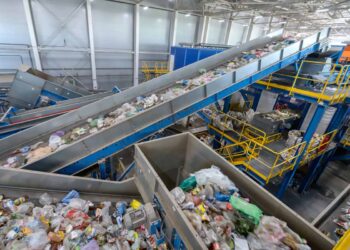
But instead of quantitatively evaluating all of these factors, the study suffers from “MRF myopia” – only considering the financial impacts of bottle bills on MRFs due to the loss of “key commodities,” meaning PET, aluminum and glass beverage containers. Together, these comprise 20.5% of the throughput of the average MRF, according to the study.
It’s not unexpected to see this narrow focus given that NWRA represents a large majority of the U.S. private sector waste and recycling market, with members including MRF owners (as well as waste haulers and landfill owners). They have a vested financial interest in maximizing their business’ earnings.
However, according to the data in the NWRA-funded study, the impact of bottle bills on MRFs will be manageable. The data show the total value of a MRF ton (as of August 2021) at $156, and the value at $154 under a full deposit system scenario (with all beverage containers on a 10-cent deposit). That $2 per ton drop (a 1.3% decrease) pales in comparison to the normal cyclical swings in commodity prices, as the study also shows. The much greater impact to the average MRF is the loss in tonnage, which reduces MRF tipping fee revenue from incoming tons as well as revenues from scrap sales (or payments, in the case of glass).
The NWRA takes the study data to project an annual increase per household in MRF processing costs – perhaps creating the impression that bottle bills will raise overall waste management costs for municipalities. But nothing could be further from the truth.
30+ studies: Bottle bills create municipal savings
Although the NWRA study briefly references municipal savings attributable to bottle bills, it fails to factor in well-documented data on the financial impacts to taxpayers and ratepayers who pay through their municipal agencies for higher costs associated with the comprehensive management of beverage containers. These include collection of materials, litter cleanup, stormwater clean-out and landfill tipping fees, plus, of course, MRF processing fees.
In the last 15 years, more than 30 studies have reported the financial impacts of deposit systems on municipalities/jurisdictions in the U.S., Canada, Europe and Australia, with about a dozen of those conducted in the last five years. The international nonprofit organization Reloop compiled a list of these studies with a summary of findings of each and indicated, “It is noteworthy that, although different in scope, location, author and year, nearly every study reported significant net cost savings to municipalities.”
One such study, titled “Massachusetts Container Deposit Return System: 2016 Employment and Economic Impacts in the Commonwealth,” was prepared for the Container Recycling Institute (of which I serve as president) by Cambridge, Mass.-based Industrial Economics, Inc. The firm used state data, in-depth information from key market actors and two supplemental modeling analyses.
This study, amended in 2018 to reflect the closure of a glass bottle manufacturing facility, found that by redirecting beverage containers from the municipal waste stream, the bottle bill saves cities and towns in Massachusetts on the order of $20 million annually associated with the collection, recycling and/or disposal of containers. Additional findings included that roughly 1,600 to 1,800 jobs are associated with the economic system surrounding the bottle bill, with the bill’s total value to the economy ranging from $43 million to $72 million (including direct, indirect and induced effects).
Beyond the immediate financial benefits of bottle bills to municipalities, we must consider the catastrophic long-term economic, environmental and societal impacts resulting from plastic pollution, marine debris and climate change if we do not do our part to contribute to a more circular economy. And when it comes to beverage containers, deposit programs represent the most proven method to help address these crises. This is why adoption/implementation of deposit programs is skyrocketing across the globe, and support is – finally – more rapidly growing for these programs in the U.S.
EPR for PPP: A valuable solution
Although we are very concerned that the NWRA-funded study only tells part of the story about the financial impacts of bottle bills on municipalities, we do commend the organization for including extended producer responsibility (EPR) for packaging and printed paper (PPP) among its suggested policy options.
Combining deposit systems with EPR for packaging represents the ideal approach to recycling, because it shifts responsibility for products’ life cycles to the manufacturers, adds more non-deposit materials to the recycling stream (a benefit to MRFs), and increases recycling rates for high-quality materials diverted from MRFs to the deposit system infrastructure.
Given that the NWRA-funded study presents a packaging EPR system and other policy options to address its conclusions about the financial impacts of bottle bills on MRFs, we see an important opportunity for dialogue to develop programs that meet the needs of MRFs – while enabling robust beverage container deposit systems to provide financial benefits to municipalities, improve our communities and support a circular economy critical to our future.
Susan Collins is president of the nonprofit Container Recycling Institute, a leading authority on the economic and environmental impacts of used beverage containers and other consumer product packaging. Its mission is to make North America a global model for the collection and quality recycling of packaging materials.
The views and opinions expressed are those of the author and do not imply endorsement by Resource Recycling, Inc. If you have a subject you wish to cover in an op-ed, please send a short proposal to news@resource-recycling.com for consideration.