




Resource Recycling
  • The Latest
  • Analysis
    • All
    • Certification Scorecard
    • Industry Announcements
    • Opinion
    From claims to custody: PCR procurement grows up

    From claims to custody: PCR procurement grows up

    What the NAND flash crunch means for remarketing, refurbishment and residual values

    Telamon acquires ITAD consultancy Retire-IT

    Certification Scorecard — Week of July 6, 2026

    Tech giant pens detailed ‘plastic-free packaging’ guide

    What Google’s latest report means for ITAD

    Unpacking the Starbucks cup data

    Unpacking the Starbucks cup data

    Amazon cutting out more flexible packaging

    Amazon’s AWS hardware reuse is measured

  • Conferences
    • Resource Recycling Conference
    • Plastics Recycling Conference
    • E-Scrap: The Longevity Conference
    • Textiles Recovery Summit
  • Publications
    • E-Scrap News
    • Plastics Recycling Update
    • Policy Now
    • Resource Recycling
    • Other Topics
      • All Topics
      • Brand Owners
      • Critical Minerals
      • Glass
      • Grant Watch / RFPs
      • Markets
      • Organics
      • Packaging
      • Research
      • Technology
      • Textiles
Subscribe
No Result
View All Result
Resource Recycling
  • The Latest
  • Analysis
    • All
    • Certification Scorecard
    • Industry Announcements
    • Opinion
    From claims to custody: PCR procurement grows up

    From claims to custody: PCR procurement grows up

    What the NAND flash crunch means for remarketing, refurbishment and residual values

    Telamon acquires ITAD consultancy Retire-IT

    Certification Scorecard — Week of July 6, 2026

    Tech giant pens detailed ‘plastic-free packaging’ guide

    What Google’s latest report means for ITAD

    Unpacking the Starbucks cup data

    Unpacking the Starbucks cup data

    Amazon cutting out more flexible packaging

    Amazon’s AWS hardware reuse is measured

  • Conferences
    • Resource Recycling Conference
    • Plastics Recycling Conference
    • E-Scrap: The Longevity Conference
    • Textiles Recovery Summit
  • Publications
    • E-Scrap News
    • Plastics Recycling Update
    • Policy Now
    • Resource Recycling
    • Other Topics
      • All Topics
      • Brand Owners
      • Critical Minerals
      • Glass
      • Grant Watch / RFPs
      • Markets
      • Organics
      • Packaging
      • Research
      • Technology
      • Textiles
Subscribe
No Result
View All Result
Resource Recycling
No Result
View All Result
Home Recycling

Coca-Cola: Recycling is ‘critical component’ of sustainability

Colin StaubbyColin Staub
May 18, 2021
in Recycling
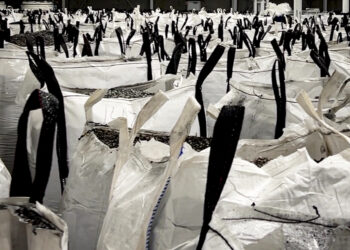
Coca-Cola has a goal to use 50% PCR by 2030 in its packaging portfolio. | Dilok Klaisataporn / Shutterstock

A leader at Coca-Cola estimates the beverage giant will approach 20% recycled PET use by the end of 2021.

Nicole Ray, sustainable packaging program director for Coca-Cola, discussed the brand owner’s recycling work during an interview at the Plastics Recycling Conference, held virtually in April.

Ray said recycling is a “critical component” in the company’s sustainability work, and she noted materials recovery is central to Coca-Cola’s World Without Waste goal that was set in 2018. That program has several components.

“Number one, we want to help collect back every bottle and can so they don’t end up in a place they shouldn’t be,” Ray said. “Number two, we want to make sure everything we put out into the market is recyclable, because the third piece of this is we actually want to leverage 50% recycled content in our packaging portfolio.”

Ray delved into the company’s recent recycled plastic work and discussed the financial stability of the plastics recycling sector. She also identified areas for industry improvement, primarily in generating a larger supply of post-consumer resin.

Company goals and progress

Coca-Cola in February announced a 100% post-consumer resin (PCR) 13.2-ounce container as well as 100% PCR 20-ounce bottles for its flagship brand – both are available in select regions of the U.S.

Nicole Ray
Nicole Ray

Ray said these projects were in the works for more than a year.

“It’s so exciting when we’re able to work with our supply chain, our RPET converters, to get that much recycled content PET into our package,” Ray said. “It’s a big deal.”

She added the company is planning on-package labeling that talks about Coca-Cola’s bottle-to-bottle initiative and how to properly recycle the bottles.

“For us, that’s really exciting, we’ve got to get the consumers excited [so] that they want to recycle, they see that it can come back as another bottle,” Ray said.

Coca-Cola has a global goal to use 25% PCR by 2025 and 50% by 2030 in its packaging portfolio. But in the most recent Ellen MacArthur Foundation audit charting big brands’ recycled material use, Coca-Cola reported that it currently uses about 10% PCR across its portfolio.

Nonetheless, Ray said the company is on track to hit its targets. She said the recent 100% recycled PET (RPET) announcements will boost the company’s recycled material use to between 15% and 20% RPET across its portfolio by the end of 2021. The company’s recycled content use in other materials, such as aluminum, is already far higher, she noted.

But despite the company’s confidence that it will reach its RPET goals, Ray said recycled resin supply remains a concern.

“There comes a point … where we need to make sure that all the systems are ready for this, because we’re not the only ones making goals. That’s the great part – the other CPGs are making really significant goals too,” Ray said. “And so there’s not enough material out there for all of us.”

She reiterated the company’s focus on consumer engagement with recycling as one strategy to boost supply. She also highlighted Coca-Cola’s involvement with The Recycling Partnership, the Closed Loop Fund, Keep America Beautiful and other initiatives tackling recycling collection in the U.S.

As a couple examples of areas for PET bottle collection improvement, Ray pointed to recycling in the commercial sector, such as in restaurants, as well as in public areas that might lack recycling infrastructure.

“If you go through your local park and there’s no bins for you to even recycle there, we’ve lost that bottle or can,” Ray said.

The company is also experimenting with different types of collection systems. As one example, Ray said Coca-Cola has installed reverse vending machines in non-deposit areas.

One such collection system was launched in the summer of 2018 at the Special Olympics, which were held in Seattle, where there is no container deposit. The company provided reverse vending machines and donated 5 cents to the Special Olympics for each container collected. The company has done similar initiatives on college campuses, Ray added.

Financial health of the sector

The plastics recycling industry has had its share of financial volatility, even before the coronavirus pandemic. And the disruptive effects of COVID-19 have piled on. Major PET bottle reclaimer CarbonLite cited COVID-19 pressures in the company’s recent move to declare bankruptcy.

Ray anticipates external forces will continue to affect the economics of plastics recycling. “I think we’re going to continue to see commodity prices go up and down, I don’t think there’s any way of getting around that,” she said.

Ray suggested continuing to focus on building up demand.

“I think the reality is we need to help the system truly be sustainable, be able to ride these different tides that come in and also know that there’s going to be an end market, someone that wants to buy that material back,” she explained.

As a major end user, Coca-Cola is also impacted by fluctuating commodity prices.

“The pricing of recycled plastic has been a challenge, even this year we saw huge dips in virgin [pricing], and this is the year that we’re launching all of our 100% RPET,” she said. However, the pricing is not moving the company away from recycled material use.

“It’s no longer just about sharing the goals that we have, it’s about showing them come to life,” Ray said. “So we are committed to this, our end goal is to help make this system truly sustainable so that it does get to a price parity, but we also need to make sure that all the pieces in this value chain are strong, so that we can withstand some of those challenges that we’re seeing some of the producers go through.”

A version of this story appeared in Plastics Recycling Update on May 12.
 

Tags: Brand OwnersCollectionPlastics
TweetShare
Colin Staub

Colin Staub

Colin Staub was a reporter and associate editor at Resource Recycling until August 2025.

Related Posts

From claims to custody: PCR procurement grows up

From claims to custody: PCR procurement grows up

byPuneet Thadani
July 10, 2026

In this guest column, the founder of Ecolar Global says the growing use of recycled content without standardized documentation presents...

APR adds PCR content verification to cert program

APR adds PCR content verification to cert program

byAntoinette Smith
July 9, 2026

The Association of Plastic Recyclers (APR) is expanding its PCR Certification Program to verify the percentage of PCR content in...

Unpacking the Starbucks cup data

Unpacking the Starbucks cup data

byAntoinette Smith
July 8, 2026

Upon close examination, data casting doubt on the coffee giant's recycling claims raises more questions than it answers.

Rod McDaniel

Westward expansion continues for S3 Recycling

byPaul Lane
July 2, 2026

The company is tripling its California ITAD footprint after its latest acquisition.

Recycling Symbol With Hands

TRP report calls for unified recycling process

byPaul Lane
June 24, 2026

The latest State of Recycling report says sustained investment and aligned outcomes are necessary to maximize results.

EPR deadlines approach as lawsuits loom

byStefanie Valentic
June 23, 2026

Packaging producers in Washington and Maryland have until July 1 to register with a producer responsibility organization (PRO), demonstrating how...

Load More
Next Post

Notes From the Field: Global lessons on EPR

More Posts

Oregon’s Recycling Modernization Act faces injunction

Oregon’s EPR program posts first-year results

July 6, 2026
Two recycled-content bills gain approval in California

California agriculture seeks SB 54 repeal

July 7, 2026
Unpacking the Starbucks cup data

Unpacking the Starbucks cup data

July 8, 2026
In Our Opinion: Coalitions: The EPR Differentiator

Inside NAW’s constitutional case against packaging EPR

July 6, 2026
Tech giant pens detailed ‘plastic-free packaging’ guide

What Google’s latest report means for ITAD

July 8, 2026
EPR fees are a market signal. Here’s what they’re telling you.

Building the infrastructure behind EPR

July 6, 2026
SB 54 draft rules generate debate on rates, review

California increases PET market payments

July 7, 2026
MP Materials breaks ground on rare earth magnet campus in North Texas

ERI confirms ITAD shift toward minerals

July 3, 2026
ITAD firm wins spot for NASA purchasing

ITAD firm wins spot for NASA purchasing

July 6, 2026
Auto Draft

Digital product passports offer gateway into secondary market

July 7, 2026
Load More

About & Publications

About Us

Staff

Archive

Magazine

Work With Us

Advertise
Jobs
Contact
Terms and Privacy

Newsletter

Get the latest recycling news and analysis delivered to your inbox every week. Stay ahead on industry trends, policy updates, and insights from programs, processors, and innovators.

Subscribe

Welcome Back!

Login to your account below

Forgotten Password?

Retrieve your password

Please enter your username or email address to reset your password.

Log In

Add New Playlist

No Result
View All Result
  • The Latest
  • Analysis
  • Recycling
  • E-Scrap
  • Plastics
  • Policy Now
  • Conferences
    • E-Scrap Conference
    • Plastics Recycling Conference
    • Resource Recycling Conference
    • Textiles Recovery Summit
  • Magazine
  • About Us
  • Advertise
  • Archive
  • Jobs
  • Staff
Subscribe
This website uses cookies. By continuing to use this website you are giving consent to cookies being used. Visit our Privacy and Cookie Policy.