Resource Recycling
  • The Latest
  • Analysis
    • All
    • Certification Scorecard
    • Industry Announcements
    • Opinion
    The electronics recycling industry is undergoing a transformation from labor-intensive manual operations to highly automated, AI-driven facilities that use advanced robotics, cleaner chemistry and digital tracking systems to extract critical materials.

    The cyber-physical MRF: AI and robotics reshape e-waste recovery

    Certification scorecard for the week of Feb. 9, 2026

    Meta-Corning deal signals IT hardware retirement wave

    Meta-Corning deal signals IT hardware retirement wave

    Malaysia clamps down on illegal e-waste imports amid probes

    Malaysia clamps down on illegal e-waste imports amid probes

    URT builds alliance to remake electronics plastics at scale

    ICYMI: Top 5 e-scrap stories from January 2026

    The electronics recycling industry is undergoing a transformation from labor-intensive manual operations to highly automated, AI-driven facilities that use advanced robotics, cleaner chemistry and digital tracking systems to extract critical materials.

    Certification scorecard for the week of Feb. 2, 2026

    Auditors warn EU may fall short on critical metals

    Auditors warn EU may fall short on critical metals

    Industry announcements for January 2026

    Industry announcements for February 2026

    ICYMI: Top 5 recycling stories from January 2026

  • Conferences
  • Publications

    Other Topics

    Textiles
    Organics
    Packaging
    Glass
    Brand Owners

    Metals
    Technology
    Research
    Markets
    Grant Watch

    All Topics

Subscribe
No Result
View All Result
Resource Recycling
  • The Latest
  • Analysis
    • All
    • Certification Scorecard
    • Industry Announcements
    • Opinion
    The electronics recycling industry is undergoing a transformation from labor-intensive manual operations to highly automated, AI-driven facilities that use advanced robotics, cleaner chemistry and digital tracking systems to extract critical materials.

    The cyber-physical MRF: AI and robotics reshape e-waste recovery

    Certification scorecard for the week of Feb. 9, 2026

    Meta-Corning deal signals IT hardware retirement wave

    Meta-Corning deal signals IT hardware retirement wave

    Malaysia clamps down on illegal e-waste imports amid probes

    Malaysia clamps down on illegal e-waste imports amid probes

    URT builds alliance to remake electronics plastics at scale

    ICYMI: Top 5 e-scrap stories from January 2026

    The electronics recycling industry is undergoing a transformation from labor-intensive manual operations to highly automated, AI-driven facilities that use advanced robotics, cleaner chemistry and digital tracking systems to extract critical materials.

    Certification scorecard for the week of Feb. 2, 2026

    Auditors warn EU may fall short on critical metals

    Auditors warn EU may fall short on critical metals

    Industry announcements for January 2026

    Industry announcements for February 2026

    ICYMI: Top 5 recycling stories from January 2026

  • Conferences
  • Publications

    Other Topics

    Textiles
    Organics
    Packaging
    Glass
    Brand Owners

    Metals
    Technology
    Research
    Markets
    Grant Watch

    All Topics

Subscribe
No Result
View All Result
Resource Recycling
No Result
View All Result
Home Recycling

Researchers tout benefits of a US bottle bill

byJared Paben
May 4, 2021
in Recycling
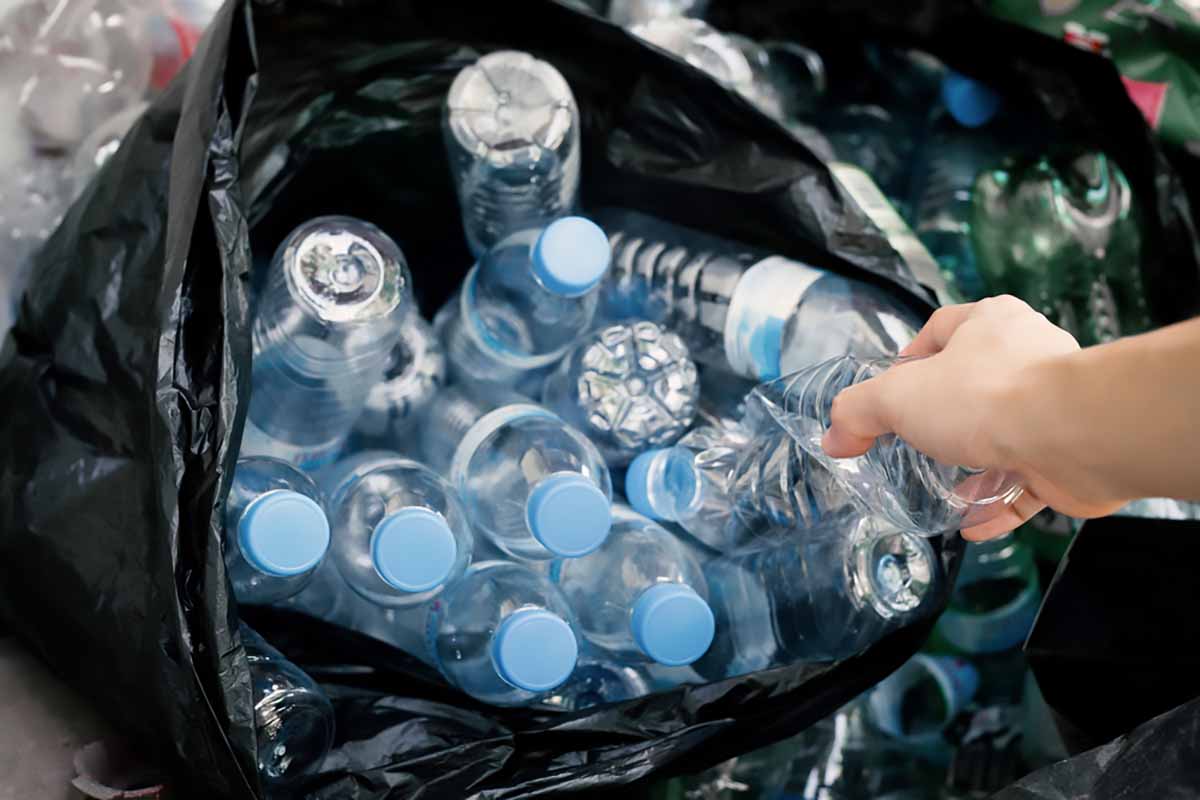
Researchers estimate over 74 billion PET bottles were landfilled, burned or littered in the U.S. in 2019. | Teerasak Ladnongkhun / Shutterstock

This story has been updated and corrected.

A new report estimates that a nationwide bottle deposit program would reduce the number of drink containers each American wastes to 67 per year, down from 426 under the status quo.

Meanwhile, a different report found that states with bottle bills have about half as much beverage container litter per capita as states without deposit programs.

The documents come as some of the giant beverage brands, which have historically opposed bottle bills, have become more receptive to deposit programs, depending on how they’re structured.

Ten states and the territory of Guam currently have bottle bills.

Wasted containers estimate

Reloop, a nonprofit group that supports bottle bills, estimated in the “What we waste” report that over 74 billion PET bottles, 50 billion aluminum cans and 15 billion glass bottles were landfilled, burned or littered in the U.S. in 2019. The numbers come out to about 426 containers per person per year.

“This wasteful approach means millions of tonnes of unnecessary climate emissions, substantial unnecessary cleanup costs for city, county and state governments, and ecological effects that will last decades,” Elizabeth Balkan, director of Reloop Americas, stated in a press release. “One worthwhile measure to reduce waste is at hand, though: a nationwide deposit on [beverage] cans and bottles, which forms part of legislative proposals already under consideration. This approach, used already in 10 states and common in Europe, would reduce wasted cans and bottles here by 84%, and it is an option Congress should now be taking very seriously.”

A national bottle bill is included in legislation that was introduced in Congress in March.

According to Reloop, a high-performing U.S. bill that achieves redemption rates of around 90% – such as those in Oregon and Michigan – would cut U.S. drink container waste down to 22 billion containers per year, or about 67 per person.

Reloop cautioned that its estimates are likely undercounts, as well. The sales dataset didn’t include wine, spirits, milk, pouches or cartons. Also, the glass recycling rate number came from EPA’s 2017 number, which the Container Recycling Institute thinks is an overestimate, according to Reloop.

Keep America Beautiful-funded study

Earlier this month, Keep America Beautiful (KAB), a national nonprofit group, posted some data points from a comprehensive report about litter. Within the document, which was prepared by Burns & McDonnell, is an estimate that states without container deposits have about twice as much beverage container litter as bottle-bill states. A survey found that bottle-bill states had about four littered deposit containers per capita, compared with eight for non-deposit states.

That was true for both roadway litter and litter along waterways.

“There was also more non‐deposit litter per capita in non‐bottle bill states, though the difference in litter per capita for these non‐deposit items in non‐bottle bill versus bottle bill states was significantly less than for deposit materials,” according to the KAB study.

Maia Corbitt, who is leading a legislative lobbying effort to bring a deposit-like program to Texas, said KAB has historically not supported bottle bills. Corbitt is director of advocacy and mission giving for the Garver Black Hilyard Family Foundation, which donated the funding for the KAB reports’ bottle deposit state comparison data and is committed to seeing the results published, she said.

“I think there are signals that the loyal opposition is coming around to the benefits of a bottle deposit system –  and recognition that many of the other provisions in the Break Free From Plastic Pollution Act are much less palatable, said Corbitt, who joined the KAB board earlier this year. “I smell a compromise.”

Evolving beverage industry positions

The Break Free From Plastic Pollution Act also includes a national extended producer responsibility (EPR) program, which requires packaging producers to fund collection and recycling programs. The American Beverage Association (ABA), which represents non-alcoholic drink brands, issued a statement saying that details still need to be hashed out, but ABA generally supports the goals of the legislation.

With regard to deposit programs, ABA has softened its outright opposition to them over the past year or so, saying it can support programs if they’re designed in particular ways.

In a Plastics Recycling Update interview recorded for the 2021 Plastics Recycling Conference, Nicole Ray of The Coca-Cola Co. said her company works with ABA to put out new guidance around EPR and deposit-return programs.

“[The goal is] making sure that it’s set up in a way that’s truly fair and is helping push recovery at the core of it,” said Ray, who is sustainable packaging program director at The Coca-Cola Co. “We see some programs that just have some gaps and we aren’t really getting to the bottom of making sure all those bottles and cans are coming back through the system as bottles and cans. So thinking through how you set up that right framework is critical.” 

This story has been corrected to clarify that Keep America Beautiful (KAB) published data points from the litter study but did not publish the full report. The story has also been updated to clarify Corbitt’s comments regarding KAB’s position on bottle bills. Lastly, details about Garver Black Hilyard Family Foundation funding for the bottle bill research were added to the story. 
 

Tags: Brand OwnersIndustry GroupsLegislationResearch
TweetShare
Jared Paben

Jared Paben

Related Posts

Focus on recycling film, flexibles takes shape in two reports

byAntoinette Smith
February 13, 2026

The US Plastics Pact and the Alliance to End Plastic Waste released reports outlining necessary steps to improving recycling outcomes...

Bipartisan reps introduce bill on recycling claims

Bipartisan reps introduce bill on recycling claims

byAntoinette Smith
February 12, 2026

Legislators introduced the Recycled Materials Attribution Act in the US House, drawing support from a new industry group and scrutiny...

APR, industry create proactive guidance for PET caps

byAntoinette Smith
February 12, 2026

The Association of Plastic Recyclers recognized that developing guidelines before PET caps were completely developed and commercialized was crucial, and...

APR expands recycling efforts in Mexico, Latin America

byAntoinette Smith
February 11, 2026

The organization aims to leverage Mexico's leadership in plastics recycling and vital role in North American markets.

Oregon’s Recycling Modernization Act faces injunction

Court partially blocks Oregon EPR law, dismisses bulk of lawsuit

byStefanie Valentic
February 10, 2026

An Oregon federal court issued a limited injunction halting the state's EPR law for members of NAW, but rejected the...

Member states select new chair for global plastics treaty

Member states select new chair for global plastics treaty

byAntoinette Smith
February 10, 2026

During a short session, the Intergovernmental Negotiating Committee elected Chilean diplomat Julio Cordano to continue efforts toward an internationally binding...

Load More
Next Post

EPA leader connects recycling and environmental justice

More Posts

Oregon’s Recycling Modernization Act faces injunction

Court partially blocks Oregon EPR law, dismisses bulk of lawsuit

February 10, 2026
Chinese processing group details goals for US visit

AMP lays out vision of next-generation, AI-driven MRFs

July 24, 2024
Malaysia clamps down on illegal e-waste imports amid probes

Malaysia clamps down on illegal e-waste imports amid probes

February 6, 2026

REUSE Act heads to US House for consideration

February 9, 2026
Meta-Corning deal signals IT hardware retirement wave

Meta-Corning deal signals IT hardware retirement wave

February 9, 2026

ecoATM recycled 7.5M phones in 2025 as payouts hit $1.5B

February 10, 2026
Texas sues over dumped wind turbine blades

Texas sues over dumped wind turbine blades

February 10, 2026
Packaging Corp. to buy Greif containerboard segment

Export trends offset containerboard production decline

February 6, 2026

Alpek talks PET overcapacity, soft demand

February 11, 2026

Amcor expects flat sales volumes to continue 

February 6, 2026
Load More

About & Publications

About Us

Staff

Archive

Magazine

Work With Us

Advertise
Jobs
Contact
Terms and Privacy

Newsletter

Get the latest recycling news and analysis delivered to your inbox every week. Stay ahead on industry trends, policy updates, and insights from programs, processors, and innovators.

Subscribe

Welcome Back!

Login to your account below

Forgotten Password?

Retrieve your password

Please enter your username or email address to reset your password.

Log In

Add New Playlist

No Result
View All Result
  • The Latest
  • Analysis
  • Recycling
  • E-Scrap
  • Plastics
  • Policy Now
  • Conferences
    • E-Scrap Conference
    • Plastics Recycling Conference
    • Resource Recycling Conference
    • Textiles Recovery Summit
  • Magazine
  • About Us
  • Advertise
  • Archive
  • Jobs
  • Staff
Subscribe
This website uses cookies. By continuing to use this website you are giving consent to cookies being used. Visit our Privacy and Cookie Policy.