



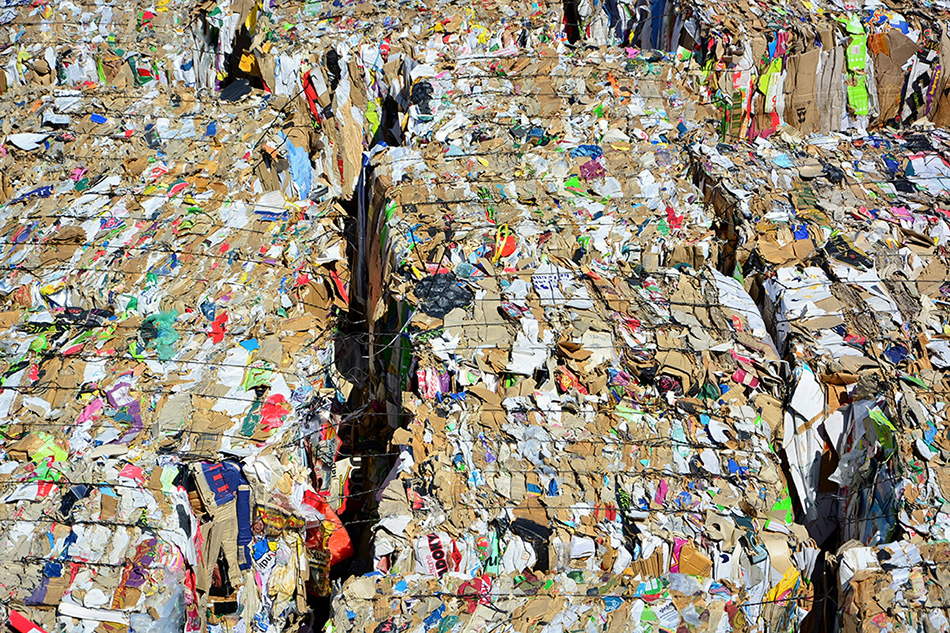
Recycled paper mill operator DS Smith predicts strong growth in corrugated packaging, long after the initial impacts of the COVID-19 pandemic have passed, the company’s head of recycling said.
DS Smith is headquartered in Europe but operates two paper mills in the U.S., and the company has pushed further into the U.S. market in recent years. The company operates multiple U.S. box-making facilities and recycling facilities, focused on fiber-based packaging and OCC recovery.
The pandemic threw a wrench in the OCC market, driving up demand sharply at the same time that supply streams were adjusting. In a phone interview, Toby Earnest, director of recycling at DS Smith North America, discussed the impact of those disruptions.
Earnest also shared forecasts for growth in OCC demand, discussed the company’s plans for further North American expansion, and provided insights on how China’s import ban has impacted the global OCC market (this interview has been edited for brevity and clarity).
RR: How has the pandemic impacted the OCC market in recent months?
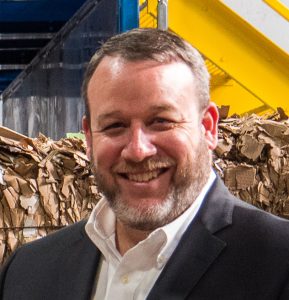
Toby Earnest: The pandemic has created a lot of volatility in the recovered fibers market. We’ve seen supply decreases from the industrial, commercial, hospitality, restaurant industry. Those sectors were hit hard. They’re coming back a little bit now and have been back on the comeback trail for a little while. We’ve seen grocery experience goods spike, and of course the e-commerce business has spiked quite a bit since the recovery from the pandemic.
The pandemic accelerated the shift to online shopping and that e-commerce. That packaging ends up in our residential sector. The addition of our recycling operations in North America has kind of positioned us to help use our robust supply chain to capture some of those recovered fibers in the market needed to fuel our essential paper mills and other paper mill partners.
We announced that paper recycling facility in Reading, Pa. just about a week before the pandemic and lockdowns and restrictions took place. Having that recycling facility kind of gave us a circular economy trifecta that we like to have, as we have a paper mill in Reading, Pa. and also a packaging facility there, all within a mile or two of each other.
That circular economy trifecta also allows us to recover fibers from our packaging facility, other packaging facilities in the area, along with some distribution centers and other fiber streams. We bring those into the recycling plant for processing and we send those to our paper mills, our carton paper mills, and they generate paper and send it back to the packaging plants to produce the essential packaging products for our customers.
So a lot of changes over the last 12 months due to the pandemic, but we feel like we’ve evolved and adapted well within the market.
Is it mostly OCC you’re using, or other grades?
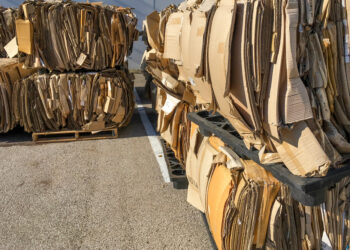
At our mills, it’s mostly OCC.
“We’re going to have to continue to find ways to find synergies in the supply chain in total to keep ahead of OCC demand, because from everything I read and the people I talk to, the demand itself is expected to increase worldwide every year through 2025.”
Are MRFs a significant channel for sourcing recovered fiber at DS Smith?
It is one of the streams that we use. We try to work with those larger facilities, the Waste Managements, the Republics, those material recovery facilities.
We try to work with them because we operate in the cities they operate in. So I think it’s being a part of that community, we need to be a part of that solution as well.
What has it been like sourcing OCC during the pandemic? Since the clean commercial generators have slowed, are you having any trouble getting enough material?
I think negotiating a new reality around recovered fibers has been a challenge for everyone. It is difficult. OCC is now – and was before, but I think now more of – a global commodity, well-sought-after in the U.S. as well as across the world.
DS Smith, here in the U.S. and in Europe, we’ve leveraged some of our established customer relationships, our supplier relationships, our supply chain relationships, to help weather this storm. I think we’re going to have to keep doing that.
We’re going to have to continue to find ways to find synergies in the supply chain in total to keep ahead of OCC demand, because from everything I read and the people I talk to, the demand itself is expected to increase worldwide every year through 2025. Our circular business model is helping build bridges to get to that reusable OCC.
“Our CEO has stated many times that we want to grow in the U.S. market. The packaging is going to be up 3.3% in total, and I think the U.S. market is primed to get a large percentage of that.”
Do you tie the projected OCC demand directly to what we’re seeing in the corrugated market, that e-commerce is driving these packaging changes?
Absolutely. We work hand in hand with a lot of those major customers.
We’re up 44% year over year just in that e-commerce sector. Initially during the pandemic, volumes were down, but once lockdowns and restrictions eased and we made adjustments, and really just our industry made adjustments to the new COVID reality, growth has been fast and furious. For us, we’re seeing it. We’re feeling it. Projections for the packaging market as a whole, it’s set to grow 3.3% in 2021. We’re going to be a part of that growth.
DS Smith previously predicted significant growth in the U.S. corrugated market in the years to come, and the company expressed interest in expanding its presence in the U.S. That was before COVID hit. How does the pandemic impact that growth?
We absolutely plan to grow in the U.S. market. I think the market is right for us to grow here, and our CEO has stated many times that we want to grow in the U.S. market. The packaging is going to be up 3.3% in total, and I think the U.S. market is primed to get a large percentage of that. It’s kind of a ferocious growth in packaging for the U.S., and I think DS Smith definitely wants to be a part of that growth and has plans in place to make that happen.
This year brings another major shakeup in the global recovered fiber market, as China has officially banned imports of all recovered fiber. Does this impact your operations? Does it present an opportunity to bring in material displaced by that market shift?
From a fiber standpoint, China moving out of the market has created opportunities for other countries.
A lot of the companies that were heavily involved in China have now moved to India, to Malaysia, to Thailand, some of the other countries surrounding China, and have put a lot of infrastructure in place to provide pulp from OCC and recyclable products back into China.
That trend, and Chinese imports going down, they started that in 2017 when they announced that they were going to do it and not take any more recycled fibers into the country. I think our industry was well aware that that was coming. It’s kind of been factored in all along. We knew it was coming. We saw the decreases in export from Europe, from the US, every year. They started out in 2017 taking 25 million tons. That number decreased to 18 million tons in 2018, 11 million tons in 2019 and in 2020 they took just about 5.5 or 6 million tons. And now they’re not taking any.
But that was the plan all along. We all saw it coming. We all saw the infrastructure that was being developed around the world to help compensate. Even in the U.S., there’s been investments from Asian companies in the U.S. We saw that increased investment with Nine Dragons and some of the other companies.
The fiber need is still there. Whether they’re taking it directly into China or not is not paramount to what’s really going on. The fiber need is still there, and that growth is still there. If you’re going to grow packaging 3.3%, you’re going to have to have the fiber.
January was the first month of China’s all-out import ban, and the U.S. export figures reflected that as exports to China had decreased almost entirely. But overall exports of the material were up, so other countries have really filled that void.
It’s going everywhere. It’s going to India. It’s going to Southeast Asia. It’s going to Latin America. Like I said, this is really a global commodity, and it’s going everywhere.