







Advertisement Header Ad
Resource Recycling
  • The Latest
  • Analysis
    • All
    • Certification Scorecard
    • Industry Announcements
    • Opinion

    Certification Scorecard for December 3, 2025

    Industry Announcements for Week of December 1

    News from Dynamic Lifecycle Innovations, Precision E-Cycle

    News from Northeast Recycling Council, Plastipak and more

    News from Northeast Recycling Council, Sortera Technologies and more

    News from MKV Polymers, Metallium Ltd. and more

    Certification Scorecard for November 19, 2025

    News from American Beverage, Inteplast Group and more

    News from Action Carting Environmental Services, International Paper and more

  • Conferences
  • Publications

    Other Topics

    Textiles
    Organics
    Packaging
    Glass
    Brand Owners

    Metals
    Technology
    Research
    Markets
    Grant Watch

    All Topics

Subscribe
No Result
View All Result
Resource Recycling
  • The Latest
  • Analysis
    • All
    • Certification Scorecard
    • Industry Announcements
    • Opinion

    Certification Scorecard for December 3, 2025

    Industry Announcements for Week of December 1

    News from Dynamic Lifecycle Innovations, Precision E-Cycle

    News from Northeast Recycling Council, Plastipak and more

    News from Northeast Recycling Council, Sortera Technologies and more

    News from MKV Polymers, Metallium Ltd. and more

    Certification Scorecard for November 19, 2025

    News from American Beverage, Inteplast Group and more

    News from Action Carting Environmental Services, International Paper and more

  • Conferences
  • Publications

    Other Topics

    Textiles
    Organics
    Packaging
    Glass
    Brand Owners

    Metals
    Technology
    Research
    Markets
    Grant Watch

    All Topics

Subscribe
No Result
View All Result
Resource Recycling
No Result
View All Result
Home Recycling

Plastics recovery project underway in Pacific Northwest

Colin StaubbyColin Staub
August 20, 2019
in Recycling
Share on XLinkedin
An industry-backed demonstration project is taking place at a former Far West Recycling facility in Portland, Ore. | Jared Paben / Resource Recycling, Inc.

Aug. 1 kicked off public demonstrations of an effort to sort a variety of resins from loads of material otherwise bound for disposal. The goal is to develop a pool of data that can help guide future industry investments.

The Pacific Northwest Secondary Sorting Demonstration Project is in the middle of its 60-day run, operating in a shuttered recycling center in Portland, Ore. Equipment from Titus MRF Services was transported up from Los Angeles, and the project is currently working through loads of material provided by several materials recovery facilities (MRFs).

Led by the Plastics Industry Association, the project is also sponsored by the American Chemistry Council (ACC), Americas Styrenics (AmSty), Berry Global, the Carton Council, LyondellBasell, the Metro regional government that covers the Portland metropolitan area, and industrial products manufacturer Milliken.

The volume and variety of funding organizations “speaks to the breadth of interest” from different sectors, said Kim Holmes, vice president of sustainability for the Plastics Industry Association.

The project was announced in June.

Data is the driver

At a warehouse that formerly housed a recycling center operated by Far West Recycling, the secondary sort project will work through four separate 40-ton loads of material, or 160 tons in all.

The inbound stream is MRF residue otherwise destined for disposal. The secondary facility is taking that material and using sorting equipment to further separate it to recover additional value.

The 160 tons is a relatively small volume, but it’s a sample size that will generate data that can be generalized for wider application. The Portland project is separating out six streams of material: PET, HDPE, LDPE, PP, PS, and gable top and aseptic cartons.

Material is coming in from several MRFs around the Pacific Northwest, including facilities operated by Far West, Waste Connections and others.

(Story continues below slideshow. Hover over a photo to bring up arrows that allow you to advance through the sequence.)

This project is primarily geared toward developing an in-depth look at the types of recyclables that are for one reason or another not being recovered by MRFs, Holmes explained during an Aug. 1 tour. The resulting information can be used to help stakeholders make more informed decisions about investing in processing infrastructure, end markets and recycling technology.

Over the last year, a variety of entities have shown interest in putting more capital behind materials recovery as recycling and pollution concerns have been amplified in the media. Having better data about what MRFs are sending to landfill and incineration could help investors make wiser choices.

“Every pound of material will be accounted for in the final report,” Holmes said, noting the final analysis will be made public and will just present the numbers, not specific investment recommendations.

The project will run trials through the end of August, and the report is slated for completion in October.

California facility provides model

Titus MRF Services operates a commercial-scale secondary sorting facility in Los Angeles, the only facility of its kind in the U.S. Under a secondary sorting model, the idea is that a single facility taking in material from many MRFs throughout a region could operate with benefits of scale. For a single MRF, it might not make sense to invest in equipment to effectively recover material that makes up a very small portion of the stream, but with a larger concentration of that material, the economics could pencil out.

Under the Titus model, MRFs pay a toll fee to the secondary sorting facility – a sum that’s lower than the local landfill tip fee.

Depending on a variety of factors, including material and market conditions, the secondary sorting facility shares commodity sales revenue with the MRF supplying the material. Ideally, the model provides a cheaper way for MRFs to get rid of material they aren’t recovering and generates a greater volume of sorted recyclables.

If the secondary sort idea were to be brought to other markets, the model would likely vary significantly based on region, given differences in what recycling programs accept, the presence or lack of a container deposit, MRF sorting procedures and more.

As for where the material from the Portland pilot project will go after it’s sorted and tabulated, a number of end users have expressed interest. According to Holmes, Exxon Mobil has asked for the PE; Loop Industries is interested in the low-grade PET; Regenyx (a partnership of AmSty and chemical recycling firm Agilyx) will take the PS; Exxon Mobil and chemical recycling company Renewlogy are interested in the recovered film; and Berry Global will take the PP.

Impetus for study

The world of plastics recycling is changing and the industry will look very different in the years to come, Holmes said. The secondary sorting project is an example of one model that could emerge. There’s no one solution for the challenges facing the recycling industry, she added, but the idea is that the secondary sorting facility concept could be one of several tools.

The secondary sorting model could tackle several challenges facing the recycling sector. For instance, it could help MRFs adapt to the ever-changing material stream, Holmes said, by enabling recovery of different types of material without requiring investments in each MRF.

A secondary sort could also help the industry address another emerging challenge. There has been unprecedented investment from brand owners in recycling companies, as well as unprecedented recycled-content commitments from brand owners, but all signs indicate that without a significant increase in recycling rates there will be insufficient supply of recycled material available for brand owners to meet their goals.

A version of this story appeared in Plastics Recycling Update on August 7.

 

Tags: Industry GroupsPlasticsTechnology
Colin Staub

Colin Staub

Colin Staub was a reporter and associate editor at Resource Recycling until August 2025.

Related Posts

Colorado

Colorado NGO, recycler partner on innovation

byAntoinette Smith
December 2, 2025

Direct Polymers, the state's largest plastics processor, will leverage a new innovation hub to help accelerate development of products made...

Beauty packaging NGO looks to expand

Beauty packaging NGO looks to expand

byAntoinette Smith
December 2, 2025

In its efforts to reduce beauty packaging waste and increase industry accountability, Pact Collective is seeking to add to its more than...

Analysis: Recycling needs more voices in the room

Analysis: Recycling needs more voices in the room

byStratton Kirton, Liberty Tire Recycling
November 11, 2025

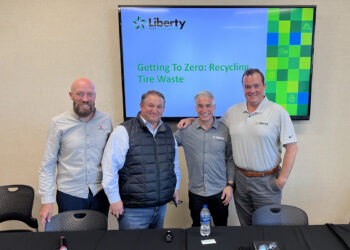
Guest columnist Stratton Kirton explores how a recent discussion among tire recycling stakeholders serves as a model for addressing broader...

Plastics Pact supports chemical recycling as complementary

Plastics Pact supports chemical recycling as complementary

byAntoinette Smith
November 19, 2025

To help inform policy and develop industry-led best practices, the US Plastics Pact published a position paper on Wednesday regarding...

Shipping containers stacked at port.

Latest GPS tracking report charts Canadian exports

byColin Staub
October 10, 2018

The Basel Action Network (BAN) has released a report stating two Canadian companies have exported end-of-life electronics to Hong Kong...

ISRI group pursuing grading system for reusable devices

byJared Paben
August 30, 2018

A committee at the Institute of Scrap Recycling Industries has begun a project to write specifications for electronics destined for...

Load More
Next Post

Indonesia's fiber import rules become more clear

More Posts

Analysis: Q3 earnings confirm new industry priorities

Analysis: Q3 earnings confirm new industry priorities

November 13, 2025
Iron Mountain raises ITAD guidance on strong growth

Iron Mountain raises ITAD guidance on strong growth

November 13, 2025
ERCC outlines shift toward convenience benchmarks

ERCC outlines shift toward convenience benchmarks

November 13, 2025
Analysis: EU softens ESG rules as compliance pressure builds for US

Analysis: EU softens ESG rules as compliance pressure builds for US

November 20, 2025
Sector holds wide gaps in environmental standards

Sector holds wide gaps in environmental standards

November 20, 2025
From crawl to run: a clear roadmap for ITAD ESG

From crawl to run: a clear roadmap for ITAD ESG

November 20, 2025
New entrepreneurs bring renewed energy to e-cycling

New entrepreneurs bring renewed energy to e-cycling

November 20, 2025
The Re:Source Podcast Episode 1: E-Scrap look-back and 2026 outlook

The Re:Source Podcast Episode 1: E-Scrap look-back and 2026 outlook

November 21, 2025
ERI and ReElement partner on rare earth magnet recovery

ERI and ReElement partner on rare earth magnet recovery

November 26, 2025
Cyber risks confront ITAD work, contracts, coverage

Cyber risks confront ITAD work, contracts, coverage

November 26, 2025
Load More

About & Publications

About Us

Staff

Archive

Magazine

Work With Us

Advertise
Jobs
Contact
Terms and Privacy

Newsletter

Get the latest recycling news and analysis delivered to your inbox every week. Stay ahead on industry trends, policy updates, and insights from programs, processors, and innovators.

Subscribe

Welcome Back!

Login to your account below

Forgotten Password?

Retrieve your password

Please enter your username or email address to reset your password.

Log In

Add New Playlist

No Result
View All Result
  • The Latest
  • Analysis
  • Recycling
  • E-Scrap
  • Plastics
  • Conferences
    • E-Scrap Conference
    • Plastics Recycling Conference
    • Resource Recycling Conference
    • Textiles Recovery Summit
  • Magazine
  • About Us
  • Advertise
  • Archive
  • Jobs
  • Staff
Subscribe
This website uses cookies. By continuing to use this website you are giving consent to cookies being used. Visit our Privacy and Cookie Policy.