





Resource Recycling
  • The Latest
  • Analysis
    • All
    • Certification Scorecard
    • Industry Announcements
    • Opinion
    Auto Draft

    Umicore highlights strength in recycling, catalysis

    Apto, Tusaar partner on rare earths recovery

    Apto, Tusaar partner on rare earths recovery

    Certification scorecard for the week of Feb. 16, 2026

    Sims Lifecycle leverages hyperscale decommissioning

    Sims Lifecycle leverages hyperscale decommissioning

    The electronics recycling industry is undergoing a transformation from labor-intensive manual operations to highly automated, AI-driven facilities that use advanced robotics, cleaner chemistry and digital tracking systems to extract critical materials.

    The cyber-physical MRF: AI and robotics reshape e-waste recovery

    Certification scorecard for the week of Feb. 9, 2026

    Meta-Corning deal signals IT hardware retirement wave

    Meta-Corning deal signals IT hardware retirement wave

    Malaysia clamps down on illegal e-waste imports amid probes

    Malaysia clamps down on illegal e-waste imports amid probes

    URT builds alliance to remake electronics plastics at scale

    ICYMI: Top 5 e-scrap stories from January 2026

  • Conferences
  • Publications

    Other Topics

    Textiles
    Organics
    Packaging
    Glass
    Brand Owners

    Metals
    Technology
    Research
    Markets
    Grant Watch

    All Topics

Subscribe
No Result
View All Result
Resource Recycling
  • The Latest
  • Analysis
    • All
    • Certification Scorecard
    • Industry Announcements
    • Opinion
    Auto Draft

    Umicore highlights strength in recycling, catalysis

    Apto, Tusaar partner on rare earths recovery

    Apto, Tusaar partner on rare earths recovery

    Certification scorecard for the week of Feb. 16, 2026

    Sims Lifecycle leverages hyperscale decommissioning

    Sims Lifecycle leverages hyperscale decommissioning

    The electronics recycling industry is undergoing a transformation from labor-intensive manual operations to highly automated, AI-driven facilities that use advanced robotics, cleaner chemistry and digital tracking systems to extract critical materials.

    The cyber-physical MRF: AI and robotics reshape e-waste recovery

    Certification scorecard for the week of Feb. 9, 2026

    Meta-Corning deal signals IT hardware retirement wave

    Meta-Corning deal signals IT hardware retirement wave

    Malaysia clamps down on illegal e-waste imports amid probes

    Malaysia clamps down on illegal e-waste imports amid probes

    URT builds alliance to remake electronics plastics at scale

    ICYMI: Top 5 e-scrap stories from January 2026

  • Conferences
  • Publications

    Other Topics

    Textiles
    Organics
    Packaging
    Glass
    Brand Owners

    Metals
    Technology
    Research
    Markets
    Grant Watch

    All Topics

Subscribe
No Result
View All Result
Resource Recycling
No Result
View All Result
Home Recycling

Bottle bill expansion draws municipal and MRF concern

Colin StaubbyColin Staub
February 12, 2019
in Recycling

Recycling stakeholders are pushing back against a container deposit expansion proposal in New York state, stating it will injure recycling programs when they’re already struggling with a down market.

In mid-January, New York Gov. Andrew Cuomo proposed bringing most non-alcoholic beverage containers into the state’s container deposit law. The law currently covers beer and malt beverages, carbonated soft drinks and water, certain wine products and bottled water.

The expansion would bring in “sports drinks, energy drinks, fruit and vegetable beverages and ready-to-drink teas and coffee,” according to the announcement. The expansion was included in the governor’s budget proposal, released Jan. 15. Legislative committees are currently holding hearings on the budget, which is supposed to be passed before the next fiscal year begins on April 1.

In a Feb. 8 announcement, the governor’s office said the bottle bill expansion “will help reduce sorting and financial burdens on local government recycling programs.”

But some recycling stakeholders, including the state’s recycling association and the processor handling New York City’s recyclables, see the proposal in a different light. Although they continue to call for expanding the bottle bill to include additional glass bottles, they are voicing concern with adding more plastic and metal containers.

“Redirecting this material into the deposit system will remove this revenue stream from New York State’s curbside recycling programs at a time when it is most desperately needed by local municipal recycling programs,” wrote Kelli Timbrook, president of the New York State Association for Reduction, Reuse and Recycling (NYSAR), in Jan. 29 testimony to state legislators.

Quantifying revenue shift

Both proponents and opponents of the expansion cite the market disruptions caused by China’s import policies in their arguments. Supporters point to the bottle bill expansion as one of several improvements that can help improve New York recycling amid the industry-wide strife.

“To respond to the global recycling crisis and address issues related to contamination of recycled materials, we propose to expand the Bottle Bill to make most non-alcoholic beverage containers eligible for a five-cent redemption … ,” wrote Basil Seggos, commissioner for the New York State Department of Environmental Conservation (NYSDEC), in testimony before lawmakers.

Asked about the impact to the recycling market during the Jan. 23 hearing, Seggos said that “ultimately it will help them, because right now on the  municipal side they’re dealing with a waste stream that’s subject to a very significant global crisis right now.”

He noted that markets for plastics, paper and metals have been disrupted by China’s import restrictions. “What we’re trying to do is bring a clean flow of recyclable materials into an appropriate source and have those well-recycled,” he said.

Bottle bill advocates maintain that container deposits increase recovery rates by offering consumers a financial incentive to recycle, create a cleaner stream of recyclables, and recover materials for an overall lower cost than curbside recycling programs.

But in New York, opponents of the expansion foresee harm to the recycling industry. NYSAR said the materials targeted by the expansion represent an estimated $10 million in commodity value statewide. That is revenue that companies and programs currently handling those materials will no longer see if the containers are added to the deposit program, opponents contend.

According to NYSAR, that $10 million impact would come on top of an estimated $42 million in increased costs to recycling companies and programs brought on by the current market downturn. If lawmakers decide to expand the law  to cover additional plastic and metal containers, NYSAR asks that they also reimburse local recycling programs with a $10 million pot of money to offset the financial impact. The group also asked that lawmakers allocate $42 million in the state budget to disburse to municipal recycling programs struggling with the current market.

‘Critical value’ commodities

In New York City, the deposit program expansion would cover 60 percent of all PET bottles and 25 percent of aluminum cans not yet covered, according to Sims Municipal Recycling, which handles all of the city’s recyclables. The proposal would also target several types of HDPE containers, which Sims identifies as the most valuable plastic in the curbside mix.

“These are all commodities of critical value to the curbside program,” said Tom Outerbridge, manager of Sims Municipal Recycling, in a statement to Resource Recycling.

“It is not possible to redirect this material into the deposit system and remove this revenue stream from the curbside program without impacting its financial viability,” Outerbridge said. “Similar, proportional impacts can be expected for municipal recycling programs across the state.”

Outerbridge added that the container deposit expansion “is being looked at in a vacuum, as though every redeemed bottle is taken from a landfill or the ocean.”

Sims and NYSAR were joined by a wider group of recycling stakeholders in expressing alarm about the bill. A policy paper laying out recycling-related concerns was endorsed by the National Waste & Recycling Association and nationwide haulers Republic Services, Waste Connections and Waste Management. It was also endorsed by regional haulers Action Environmental Services, Buffalo Recycling, Casella Waste Systems, Interstate Waste Services, Modern Disposal Services, Tunnel Hill Partners and Winter Bros. Waste Systems.

“The value of this material is a significant foundation of the economic investment made in building our recycling infrastructure and helps pay for these programs,” the paper states, explaining that New York City’s recycling program alone would lose $4 million annually in commodity revenue. “This expansion could blow a hole in many municipal budgets while they struggle to keep recycling afloat.”

Agreement on glass?

The proposal has received support from a wide range of environmental groups, including Citizens Campaign for the Environment, The Nature Conservancy, Environmental Advocates of New York, the New York League of Conservation Voters and the New York Public Interest Research Group.

Some of the proponents also asked that the expansion bring wine and spirits into the program as well, a concept for which NYSAR, Outerbridge and the policy paper all cite strong recycling industry support. They point to frequent recycling operator complaints about glass damaging MRF equipment and contaminating other materials.

Although Cuomo’s announcement explains that he has directed the NYSDEC to research that possibility, Seggos, the department head, noted the current proposal stops short of adding glass liquor and wine bottles.

“While they need to be dealt with, probably within the bottle bill process within the next few years, we need to study exactly how to bring them into the fold,” he said.

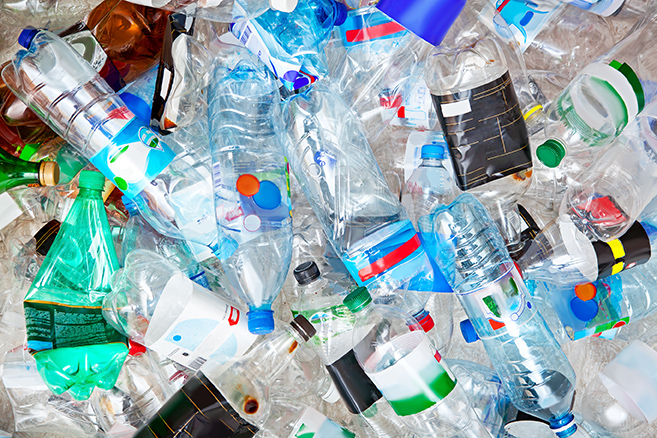
Photo credit: luckyraccoon/Shutterstock

 

SSI Shredding Solutions

Tags: Container DepositsLegislation
TweetShare
Colin Staub

Colin Staub

Colin Staub was a reporter and associate editor at Resource Recycling until August 2025.

Related Posts

Minnesota publishes prelim EPR assessment

Minnesota publishes prelim EPR assessment

byAntoinette Smith
February 20, 2026

The report will inform recommendations featured in the next report to develop the state's EPR program for packaging.

Vermont’s battery stewardship law targets fire risk

byStefanie Valentic
February 20, 2026

The state's new law gives residents more options to safely dispose of everything from single-use alkaline batteries to medium-format e-bike...

Textile clothing bins

Report details how to make CA textile recycling work

byPaul Lane
February 16, 2026

A new report confirms the sentiment that led to a new textile recovery law in California, detailing just how much...

Bipartisan reps introduce bill on recycling claims

Bipartisan reps introduce bill on recycling claims

byAntoinette Smith
February 12, 2026

Legislators introduced the Recycled Materials Attribution Act in the US House, drawing support from a new industry group and scrutiny...

Oregon’s Recycling Modernization Act faces injunction

Court partially blocks Oregon EPR law, dismisses bulk of lawsuit

byStefanie Valentic
February 10, 2026

An Oregon federal court issued a limited injunction halting the state's EPR law for members of NAW, but rejected the...

Member states select new chair for global plastics treaty

Member states select new chair for global plastics treaty

byAntoinette Smith
February 10, 2026

During a short session, the Intergovernmental Negotiating Committee elected Chilean diplomat Julio Cordano to continue efforts toward an internationally binding...

Load More
Next Post

Mixed news for recovered plastics pricing

More Posts

Sims Lifecycle leverages hyperscale decommissioning

Sims Lifecycle leverages hyperscale decommissioning

February 18, 2026
Republic Services waiting on fourth Polymer Center

Republic Services waiting on fourth Polymer Center

February 18, 2026
Chinese processing group details goals for US visit

AMP lays out vision of next-generation, AI-driven MRFs

July 24, 2024
NERC: Blended average prices fell 40% in third quarter

HDPE, PP bales rise as paper fiber and cans stabilize

February 12, 2026
Textile clothing bins

Report details how to make CA textile recycling work

February 16, 2026
Bipartisan reps introduce bill on recycling claims

Bipartisan reps introduce bill on recycling claims

February 12, 2026
Sony heads renewable plastic supply chain

Sony heads renewable plastic supply chain

February 19, 2026

Focus on recycling film, flexibles takes shape in two reports

February 13, 2026

Origin Materials to reduce staff in reorg

February 13, 2026
Iron Mountain sees ITAD surge, raises forecast on record Q2

Iron Mountain posts record Q4, guides strong 2026 growth

February 13, 2026
Load More

About & Publications

About Us

Staff

Archive

Magazine

Work With Us

Advertise
Jobs
Contact
Terms and Privacy

Newsletter

Get the latest recycling news and analysis delivered to your inbox every week. Stay ahead on industry trends, policy updates, and insights from programs, processors, and innovators.

Subscribe

Welcome Back!

Login to your account below

Forgotten Password?

Retrieve your password

Please enter your username or email address to reset your password.

Log In

Add New Playlist

No Result
View All Result
  • The Latest
  • Analysis
  • Recycling
  • E-Scrap
  • Plastics
  • Policy Now
  • Conferences
    • E-Scrap Conference
    • Plastics Recycling Conference
    • Resource Recycling Conference
    • Textiles Recovery Summit
  • Magazine
  • About Us
  • Advertise
  • Archive
  • Jobs
  • Staff
Subscribe
This website uses cookies. By continuing to use this website you are giving consent to cookies being used. Visit our Privacy and Cookie Policy.