



Resource Recycling
  • The Latest
  • Analysis
    • All
    • Certification Scorecard
    • Industry Announcements
    • Opinion

    Certification scorecard – Week of March 23, 2026

    Certification Scorecard – Week of March 16, 2026

    Groups identify recovered plastics users in the Northeast

    Bale pricing for recycled plastics diverges

    Why global ITAD is stranded in the Gulf

    Why global ITAD is stranded in the Gulf

    Certification scorecard for the week of March 9, 2026

    Diversion Dynamics: Secondhand exports slow down fast fashion

    Certification scorecard for the week of March 2, 2026

    Industry announcements for January 2026

    Industry Announcements for March 2026

    HP receives ocean plastics certification

    HP Inc. earnings point to memory inflation challenge

  • Conferences
  • Publications

    Other Topics

    Textiles
    Organics
    Packaging
    Glass
    Brand Owners

    Metals
    Technology
    Research
    Markets
    Grant Watch

    All Topics

Subscribe
No Result
View All Result
Resource Recycling
  • The Latest
  • Analysis
    • All
    • Certification Scorecard
    • Industry Announcements
    • Opinion

    Certification scorecard – Week of March 23, 2026

    Certification Scorecard – Week of March 16, 2026

    Groups identify recovered plastics users in the Northeast

    Bale pricing for recycled plastics diverges

    Why global ITAD is stranded in the Gulf

    Why global ITAD is stranded in the Gulf

    Certification scorecard for the week of March 9, 2026

    Diversion Dynamics: Secondhand exports slow down fast fashion

    Certification scorecard for the week of March 2, 2026

    Industry announcements for January 2026

    Industry Announcements for March 2026

    HP receives ocean plastics certification

    HP Inc. earnings point to memory inflation challenge

  • Conferences
  • Publications

    Other Topics

    Textiles
    Organics
    Packaging
    Glass
    Brand Owners

    Metals
    Technology
    Research
    Markets
    Grant Watch

    All Topics

Subscribe
No Result
View All Result
Resource Recycling
No Result
View All Result
Home Recycling

Study: Recyclable packaging not always greenest option

Dan LeifbyDan Leif
December 11, 2018
in Recycling

Oregon’s environmental agency has released research that suggests several popular packaging attributes – including “recyclable” and “recycled content” – do not consistently result in lower-impact products.

The 106-page report from the Oregon Department of Environmental Quality (DEQ) was finalized this summer but is just now being publicized.

It continues Oregon DEQ’s efforts to frame decision-making in the context of sustainable materials management (SMM), a concept that has gained traction among a variety of public and private stakeholders. In SMM frameworks, complete material life cycles are taken into account when designing programs and policy.

As SMM strategies have advanced, there has been growing discussion over where the recycling industry fits in. Businesses, the U.S. EPA and others have held up isolated examples showing packaging materials that are widely recyclable or use recycled content don’t always emerge as the most environmentally friendly options when evaluated via life cycle assessment.

“We got to wondering if these types of examples were the exception, or whether perhaps popular [recycling-related] attributes might not reliably correlate with low-impact choices,” said Minal Mistry, who led the research effort for DEQ.

Mistry’s comments came in a statement on the research that DEQ prepared for Resource Recycling.

‘Design and material selection is more important’

In undertaking the recent research, Oregon officials sought to gather a significantly larger data set around the question of whether recyclability and use of recycled content should always be the goal in construction of packaging and foodservice products.

DEQ hired a contractor, Franklin Associates, and that company combed through publicly available life-cycle assessments (LCAs) published worldwide between 2000 and 2017. The analysis found hundreds of comparisons between packaging and foodservice items with the attributes of interest and comparable items without those same attributes.

Minal Mistry, Oregon DEQ
Minal Mistry of the Oregon Department of Environmental Quality.

According to DEQ, the results were mixed.

For example, increasing the recycled content of plastics was found to almost always lessen the product or packaging’s environmental footprint in a variety of ways. “Once you’ve chosen to use a specific material – say, PET – increasing the recycled content of that material is typically a good choice,” said Mistry.

But when the researchers looked at the numbers from over 530 environmental-impact comparisons found in the literature between different materials (for example, a steel can versus an aseptic carton), higher recycled content was found to have no consistent correlation with lower impacts. In fact, the DEQ report indicates that in 61 percent of all comparisons, the packaging material with higher recycled content actually correlated with significantly higher (worse) environmental impacts.

Turning to recyclability, results of over 520 comparisons were basically a wash: 44 percent of comparisons found significantly higher environmental impacts for recyclable packages while 39 percent of comparisons found significantly lower (beneficial) impacts.

“While recycling is beneficial, design and material selection is more critical,” Mistry noted. “The [recycling-related] attributes by themselves are too broad to be helpful in isolation, and need to be used with care.”

Similarly mixed results were found when researchers analyzed packaging and products labeled “bio-based” or “compostable.”

Wider debate within industry

The study results come out as a variety of different industry stakeholders are more actively voicing their perspectives on the shift toward life-cycle-based decision-making when it comes to materials use.

For instance, some observers have noted that LCAs fail to account for the impacts associated with items that are mismanaged at end of life, a concern of growing importance as the marine plastics problem grabs more attention. In a follow-up email, Oregon DEQ said it acknowledges such limitations of LCAs, but the government agency also pointed out that the recycling attributes in question themselves have only a limited relationship to reducing marine debris from the U.S.

On another front, recycling groups have begun expressing anxieties that the growing drumbeat around SMM could push brand owners and others away from recycling commitments and behaviors that have taken years to solidify.

The DEQ said in the statement to Resource Recycling that the study results are not a critique of recycling itself.

“Recycling – the act of making products from formerly used materials – has been evaluated extensively for its environmental impacts and is typically found to be beneficial,” said David Allaway, a senior policy analyst at Oregon DEQ who also contributed to the recent research. “But recycling and recyclability, while related concepts, are fundamentally different. Recycling describes a preferable method for managing discarded materials, while recyclability simply describes the technical and economic potential of a material to be recycled. As this research shows, just because a material is ‘recyclable’ does not guarantee that it is consistently the lower impact choice.”

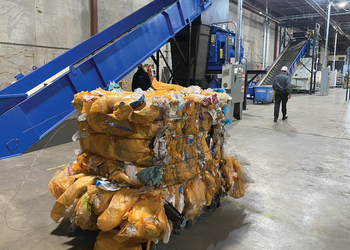
Photo credit: Trong Nguyen/Shutterstock
 

Tags: DataHard-to-Recycle MaterialsPlasticsResearch
TweetShare
Dan Leif

Dan Leif

Dan Leif is the managing editor at Resource Recycling, Inc., which publishes Resource Recycling, Plastics Recycling Update and E-Scrap News. He has been with the company since 2013 and has edited different trade publications since 2006. He can be contacted at [email protected].

Related Posts

Report pegs fire losses at $2.5b in US and Canada recycling industry

byScott Snowden
March 27, 2026

A new fire report estimates $2.5b in damage across US and Canadian recycling facilities in 2025, with lithium-ion batteries still...

Rural effort targets vapes as battery fire risk grows

byScott Snowden
March 24, 2026

A Wisconsin firefighter is building a rural vape collection service as discarded devices with lithium-ion batteries continue to raise fire...

In My Opinion: Bring consumer trust to refurb markets

Record $6.4B in trade-ins as older phones drive market

byScott Snowden
March 23, 2026

Device protection and services firm Assurant showed that iPhones were traded in at an average 3.8 years and Androids reached...

Australia battery recycling sector could reach A$6.9bn by 2050

Australia battery recycling sector could reach A$6.9bn by 2050

byScott Snowden
March 20, 2026

The country's battery recycling industry already contributes A$2.1 billion today, according to a new industry-funded report that calls for extended...

APR honors recycling leaders during PRC

APR honors recycling leaders during PRC

byScott Snowden
March 19, 2026

Conference awards honored researchers, companies and policymakers for advances in plastics recycling as speakers highlighted technical progress despite difficult market...

EPR expanding beyond packaging into tougher waste streams

EPR expanding beyond packaging into tougher waste streams

byScott Snowden
March 19, 2026

Proposals beyond packaging include boat wrap, hazardous products and oil containers, though infrastructure gaps and unclear producer rules remain, panelists...

Load More
Next Post

How a materials recovery facility will sort flexible plastics

More Posts

Mexican Coke bottler to invest $1bn in ops this year

Mexican Coke bottler to invest $1bn in ops this year

March 25, 2026
Unilever shifting focus to flexibles targets

Unilever shifting focus to flexibles targets

March 23, 2026
Envela reports stronger Q3 ITAD revenues

Top 5 reasons for the rise of US e-scrap recycling

March 23, 2026

AMP raises $91 million to push AMP ONE ahead

December 10, 2024

Quebec PRO reflects on first year of packaging EPR

March 30, 2026
Closeup of Trex composite flooring installed in a restaurant.

Trex gears up for new plastic board plant

March 24, 2026
L-R: Koichiro Nishimura, CEO of ERI Japan and Manager, ITOCHU; John Shegerian, Chairman & CEO of ERI; and Daisuke Inoue, Deputy General Manager, ITOCHU, celebrate the announcement of ERI Japan.

ERI enters Japan through joint venture with Itochu

March 24, 2026
Groups identify recovered plastics users in the Northeast

Bale pricing for recycled plastics diverges

March 17, 2026
#ESC2025 Speaker Spotlight: Matthew Young

From bootstrap to boom: EVR poised for growth after capital injection

March 26, 2026
Auto Draft

Ball Corp. US recycled aluminum content drops

March 26, 2026
Load More

About & Publications

About Us

Staff

Archive

Magazine

Work With Us

Advertise
Jobs
Contact
Terms and Privacy

Newsletter

Get the latest recycling news and analysis delivered to your inbox every week. Stay ahead on industry trends, policy updates, and insights from programs, processors, and innovators.

Subscribe

Welcome Back!

Login to your account below

Forgotten Password?

Retrieve your password

Please enter your username or email address to reset your password.

Log In

Add New Playlist

No Result
View All Result
  • The Latest
  • Analysis
  • Recycling
  • E-Scrap
  • Plastics
  • Policy Now
  • Conferences
    • E-Scrap Conference
    • Plastics Recycling Conference
    • Resource Recycling Conference
    • Textiles Recovery Summit
  • Magazine
  • About Us
  • Advertise
  • Archive
  • Jobs
  • Staff
Subscribe
This website uses cookies. By continuing to use this website you are giving consent to cookies being used. Visit our Privacy and Cookie Policy.