



Resource Recycling
  • The Latest
  • Analysis
    • All
    • Certification Scorecard
    • Industry Announcements
    • Opinion

    From CES to the shredder: What 2026 PCs mean for ITAD

    Certification scorecard for week of Jan. 12, 2026

    Industry announcements for January 2026

    Certification scorecard for Dec. 18-30, 2025

    Certification scorecard for Dec. 18, 2025

    Industry announcements for the week of Dec. 15

    Certification scorecard for December 10, 2025

    Industry Announcements for Week of December 8

    Certification Scorecard for December 3, 2025

  • Conferences
  • Publications

    Other Topics

    Textiles
    Organics
    Packaging
    Glass
    Brand Owners

    Metals
    Technology
    Research
    Markets
    Grant Watch

    All Topics

Subscribe
No Result
View All Result
Resource Recycling
  • The Latest
  • Analysis
    • All
    • Certification Scorecard
    • Industry Announcements
    • Opinion

    From CES to the shredder: What 2026 PCs mean for ITAD

    Certification scorecard for week of Jan. 12, 2026

    Industry announcements for January 2026

    Certification scorecard for Dec. 18-30, 2025

    Certification scorecard for Dec. 18, 2025

    Industry announcements for the week of Dec. 15

    Certification scorecard for December 10, 2025

    Industry Announcements for Week of December 8

    Certification Scorecard for December 3, 2025

  • Conferences
  • Publications

    Other Topics

    Textiles
    Organics
    Packaging
    Glass
    Brand Owners

    Metals
    Technology
    Research
    Markets
    Grant Watch

    All Topics

Subscribe
No Result
View All Result
Resource Recycling
No Result
View All Result
Home Recycling

Scrap plastic sampling and sorting guidelines released

byJared Paben
October 2, 2018
in Recycling

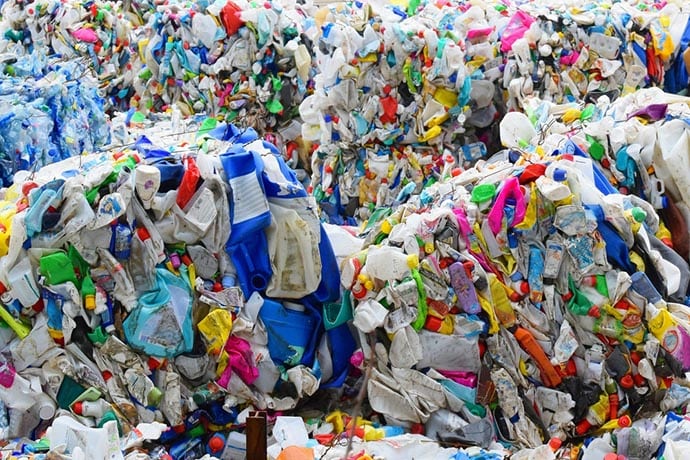
Public and private entities regularly sample waste streams to glean data on the plastics that could be captured for recycling. Now, guidelines have been developed to standardize the process so results can be compared.

The Association of Plastic Recyclers (APR) this week unveiled the best management practices for sorting plastics during waste characterization studies. A Sept. 26 webinar introduced the standards to the industry.

Plastic waste characterization studies involve scooping samples of garbage or recyclables, sorting out the plastics and weighing them. The data helps reclaimers, materials recovery facility (MRF) operators, public recycling programs, state governments and others understand what’s in the plastic stream and how it’s changing over time.

For MRFs, it can also help inform decisions on capital investments. In particular, more MRF operators are using waste characterizations on residual streams to determine which materials were missed that could be captured in the future with new equipment or through manual sorter training.

The problem is not all studies categorize and sort plastic items the same way, making comparisons difficult or impossible. APR’s best management practices are intended to provide standardization.

“What we know is that there’s a loss of clarity when we diverge from standards, so we can’t necessarily compare like items to like items if we’re not calling them and dividing them and sorting them in the same way,” Tonya Randell of More Recycling said during the webinar.

More Recycling conducts industry surveys to gather data for national plastics recycling reports, so the consulting film understands the importance of apples-to-apples comparisons, she said.

“The best management practices help us with better comparisons across the board,” she said.

‘A great idea because it allows consistency’

Liz Bedard of APR and Stacey Luddy of More Recycling took the lead in creating the best management practices, with input from Cascadia Consulting, MSW Consultants, RSE USA, RRS and SCS Global Services. They were developed with support from the American Chemistry Council (ACC).

The effort started a couple of years ago, Bedard said, when APR’s Rigids Committee gathered various waste characterization studies and found the results couldn’t be compared. For example, one study may have sorted PET into eight different subcategories while another used four.

“Without that consistency, without that ability to compare, it was impossible for us to understand trends,” she said.

APR’s standards broadly place plastics into five categories: PET and HDPE bottles and jars, Nos. 3-7 bottles and small rigids, bulky rigids, film and flexibles, and other plastics.

Three sorting levels are provided, depending on how extensive a study is desired and how much money is available to pay for it. Level 1 means separating plastics into eight sub-categories, level 2 involves 17, and level 3 involves 29.

“These categories are based on marketable bales,” Bedard said. “We want this to very much be based on reality, what’s happening out there in the real world.”

The number of sub-categories varies. For example, all three levels require separating PET/HDPE into three sub-categories: PET, HDPE natural and HDPE color. “Those are the commodities that are really being pulled out by just about every program in the United States,” Randell said.

But the number of sub-categories jumps substantially in the 3-7s category – from one in level 1 up to 18 in level 3 – simply because of the huge variety of plastics in the 3-7 category.
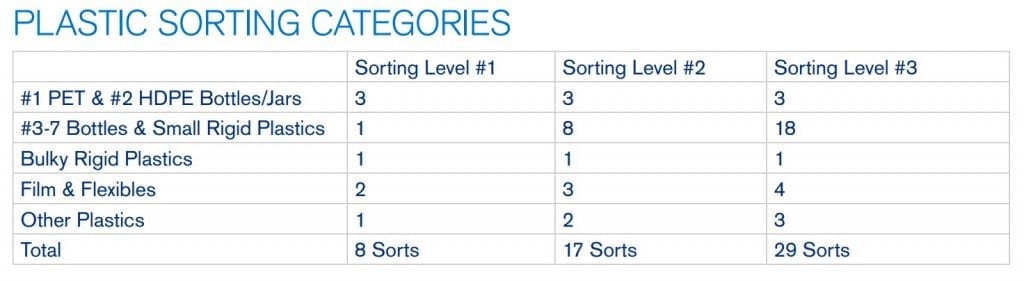
Chart detailing plastic sorting categories.Stacey Demers of SCS Engineers explained that the more categories you have, the more time it takes and, generally, the more expensive it becomes. Her firm conducts waste characterization studies for municipalities, states, businesses and institutions.

“Every time we do a different study, there’s always a different list of materials. Sometimes they’ve copied it from another study they’ve seen. Sometimes it’s just curiosity. Sometimes they’re not even sure why they have those categories,” she said. “So having … the best management practices put out for the different categories, I think, is a great idea because it allows consistency. It allows material that can fit into categories to help municipalities know the percentage of recyclable plastics that’s in their waste stream and what their program needs to target later on.”

Photo credit: Tunatura/Shutterstock

Tags: Industry GroupsPlastics
TweetShare
Jared Paben

Jared Paben

Related Posts

Emerald joins effort to boost film, flexibles recycling

byAntoinette Smith
January 15, 2026

In an interview, Emerald's CEO said the company became the first packaging manufacturer to join the US Flexible Film Initiative,...

CARE launches carpet fiber ID device to aid recyclers

byAntoinette Smith
January 14, 2026

The customized unit can identify all yarn fibers and blends in about half a second, helping to make sorting more...

Battery recycling company settles environmental case

Call2Recycle rebrand signals broader role in US recycling

byScott Snowden
January 13, 2026

The organization, now called The Battery Network, is assuming an expanded role in battery logistics, EPR compliance and critical material...

US Plastics Pact releases progress report

byAntoinette Smith
January 13, 2026

The group reported progress on five-year goals by signatories representing the entire plastics value chain, but pointed out systemic challenges...

Analysis: Dire EU landscape hints at US future

EU Commission fast-tracks support for plastics recyclers

byAntoinette Smith
January 6, 2026

The European Commission acknowledged the urgency for EU-wide measures to protect trade from cheap imports and to provide regulatory certainty...

paint cans recycling

PaintCare brings stewardship to Illinois, Maryland on deck

byStefanie Valentic
December 19, 2025

Illinois is the 12th state to launch a paint recycling program, while Maryland is poised to launch its own program...

Load More
Next Post

Containerboard mill on the way in Pacific Northwest

More Posts

mobile phone fix

Repair movement reshapes reuse as laws reshape ITAD

December 17, 2025
Austria’s DRS on track for 80% collection in first year

Austria’s DRS on track for 80% collection in first year

December 17, 2025
Deposit schemes garner support, despite ‘awareness gap’

Deposit schemes garner support, despite ‘awareness gap’

December 18, 2025
paint cans recycling

PaintCare brings stewardship to Illinois, Maryland on deck

December 19, 2025
WM Facility

Modern recycling meets AI 

December 18, 2025
small format coalition

Small format packing collaboration

December 18, 2025
Carbios delays French PET recycling plant to secure funds

Carbios delays French PET recycling plant to secure funds

December 19, 2025
Mitsubishi Materials buys into Elemental e-scrap pact in US

Mitsubishi Materials buys into Elemental e-scrap pact in US

December 19, 2025
#PRC2026 Speaker Spotlight: Joel Morales

#PRC2026 Speaker Spotlight: Joel Morales

December 22, 2025
Panel tracks shifts in e-scrap as policy, AI reshape

Panel tracks shifts in e-scrap as policy, AI reshape

December 22, 2025
Load More

About & Publications

About Us

Staff

Archive

Magazine

Work With Us

Advertise
Jobs
Contact
Terms and Privacy

Newsletter

Get the latest recycling news and analysis delivered to your inbox every week. Stay ahead on industry trends, policy updates, and insights from programs, processors, and innovators.

Subscribe

Welcome Back!

Login to your account below

Forgotten Password?

Retrieve your password

Please enter your username or email address to reset your password.

Log In

Add New Playlist

No Result
View All Result
  • The Latest
  • Analysis
  • Recycling
  • E-Scrap
  • Plastics
  • Policy Now
  • Conferences
    • E-Scrap Conference
    • Plastics Recycling Conference
    • Resource Recycling Conference
    • Textiles Recovery Summit
  • Magazine
  • About Us
  • Advertise
  • Archive
  • Jobs
  • Staff
Subscribe
This website uses cookies. By continuing to use this website you are giving consent to cookies being used. Visit our Privacy and Cookie Policy.