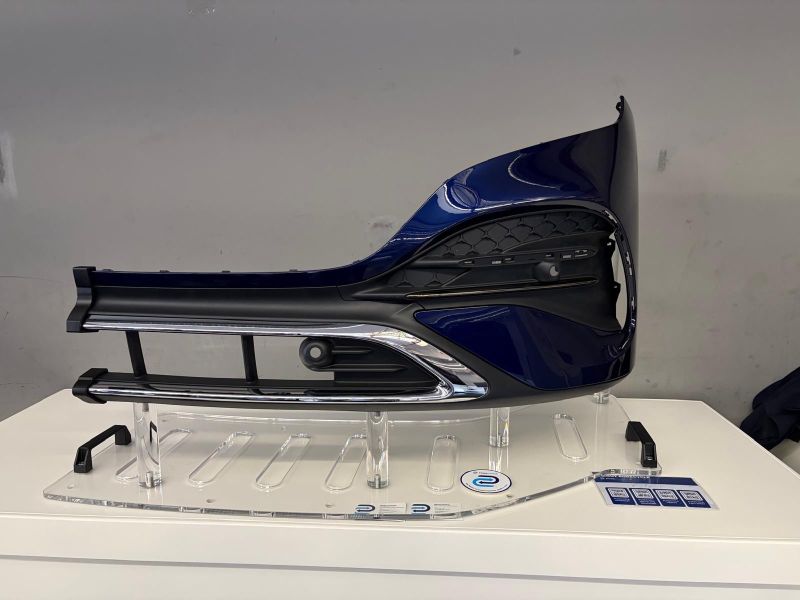
US-based PureCycle and Germany-based Motherson produced an automotive bumper prototype containing 30% PureFive recycled polypropylene resin, ahead of EU regulations requiring new vehicles to contain at least 15% recycled plastic.
The European Parliament gave final approval last month to the EU’s End-of-Life Vehicles Regulation (ELVR), which mandates that by 2032 new vehicles contain at least 15% recycled plastic content, and at least 3% must be sourced from end-of-life vehicles. By 2036, those thresholds increase to 25% and 5%, respectively.
The near-series Class A bumper prototype was produced at Motherson’s plant in Tuscaloosa, Alabama. Class A vehicle parts or surfaces are highly visible exterior or interior components that end users can see or touch, such as body panels, bumpers and door handles. Near-series production prototypes are nearly identical to the final product, and are used to conduct final testing.
Motherson’s Germany-based Global Innovation Team conducted performance tests on the bumper, including testing climate conditions and evaluating mechanical properties, and presented the results at Startup Autobahn Expo, the world’s largest automotive innovation platform, on July 2.
In a statement, PureCycle said the collaboration with Motherson enables further work on automotive-grade materials, and toward a long-term goal of closed-loop recycling “from bumper to bumper.”
The companies plan to work toward increasing the recycled content to over 30% and expanding into additional exterior and interior applications for PureFive resin.
Fabian Wehrle, global innovation exterior engineer at Motherson, said, “This collaboration with PureCycle is an important step toward integrating recycled materials into applications that meet the high requirements of premium OEMs for Class-A surfaces.”
Last October, PureCycle announced that Volkswagen Group of America had produced a fully assembled bumper fascia made with PureCycle resin, for the VW Atlas SUV.
And in an earnings call the following month, CEO Dustin Olson said:
“It’s a very difficult project to get post-consumer curbside recycled product into applications that are as sensitive as automotive. Remember, automotive is one of the most complex supply chains in the world, and their precision to quality and just perfection is extreme.”
Olson added that recycled resin with inconsistent quality or containing contaminants can cause issues with automotive finishes, such as cracking in extreme temperatures.
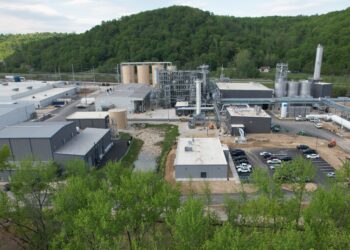
Looking ahead, Olson said he did not expect automotive applications for PureCycle’s resin to ramp up quickly in the next one to two years for the Ironton plant in Ohio.
“I think we have other opportunities that are going to go faster and quite frankly, probably bring more value,” he said at the time. “But I fully believe that automotive is going to be a foundational component to our growth plan,” providing stable volumes for the planned Thailand plant and for the now-delayed second US plant, planned for Augusta, Georgia.
In March PureCycle received a €40 million EU grant toward construction of a new dissolution recycling plant in Belgium, planned for startup in 2029. The company also is planning a plant in Thailand.