












Minnesota has completed a preliminary needs assessment, an early step on the path to implementing its extended producer responsibility (EPR) law for packaging.
The report, compiled by the Eunomia consultancy, contains findings on the state’s current management of packaging and paper products covered under the EPR law, including tonnage of materials, and an overview of existing infrastructure and available markets.
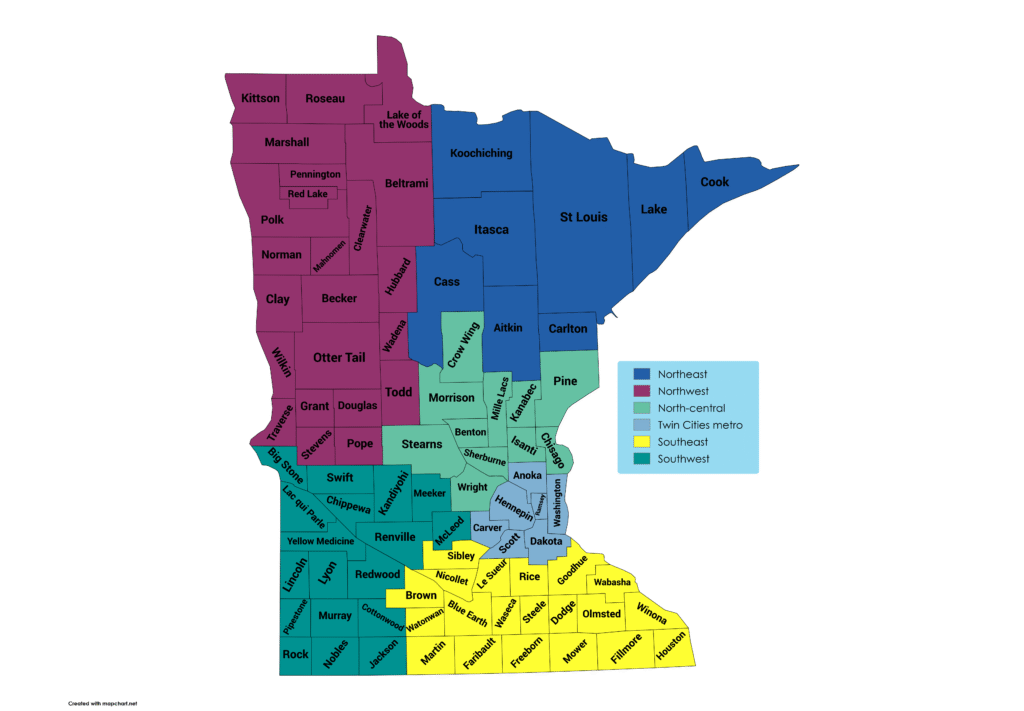
For the entire state, 68.86% of residents have access to curbside recycling programs, with the highest levels in the Twin Cities, north-central and southeast regions (more than 75% for each), and southwest (more than 65%). The lowest access rates were in the northeast (14%) and northwest (42%).
The state has a population of 5,842,388, with the Twin Cities representing 56% of the total, north-central and southeast at 13% each, northwest at 8%, northeast at 6% and southwest at 5%.
Among the findings was that because counties are not the primary data collectors, methodology is inconsistent and as such cannot provide an accurate accounting. For example, some counties group materials broadly while others are more granular. For example, some counties report all rigid plastics as “mixed plastic containers and rigids,” while others specify PET and HDPE but report all other polymers as “mixed plastic containers and rigids.”
In addition, reported volumes may include materials that are not among “covered materials,” particularly metals. The report also found that single-stream is the most prominent collection system across the state.
The next step in the process is the needs assessment, due Dec. 31. It will include:
- An official baseline for program measures and outcomes, including proposals for statewide requirements
- Recommendations on where investments should be made in collection, sorting, and responsible markets
- A recommended methodology for reimbursement rates for service providers
- An evaluation of environmental improvements and accountability
- An assessment of best practices for education and outreach
In 2024, the state became the fifth state to pass packaging EPR, and the program timeline is as follows:
- Dec. 31, 2026: Initial needs assessment due
- Aug. 1, 2028: Program plan submitted to advisory board
- Oct. 1, 2028: PRO stewardship plan due
- Feb. 1, 2029: Producers cover at least 50% of program costs
- Feb. 1, 2030: Producers cover at least 75% of program costs
- Feb. 1, 2031: Producers cover at least 90% of program costs
- Jan. 1, 2032: Covered materials must be reusable, recyclable, compostable or collected by an approved alternative collection system