





Resource Recycling
  • The Latest
  • Analysis
    • All
    • Certification Scorecard
    • Industry Announcements
    • Opinion
    The electronics recycling industry is undergoing a transformation from labor-intensive manual operations to highly automated, AI-driven facilities that use advanced robotics, cleaner chemistry and digital tracking systems to extract critical materials.

    The cyber-physical MRF: AI and robotics reshape e-waste recovery

    Certification scorecard for the week of Feb. 9, 2026

    Meta-Corning deal signals IT hardware retirement wave

    Meta-Corning deal signals IT hardware retirement wave

    Malaysia clamps down on illegal e-waste imports amid probes

    Malaysia clamps down on illegal e-waste imports amid probes

    URT builds alliance to remake electronics plastics at scale

    ICYMI: Top 5 e-scrap stories from January 2026

    The electronics recycling industry is undergoing a transformation from labor-intensive manual operations to highly automated, AI-driven facilities that use advanced robotics, cleaner chemistry and digital tracking systems to extract critical materials.

    Certification scorecard for the week of Feb. 2, 2026

    Auditors warn EU may fall short on critical metals

    Auditors warn EU may fall short on critical metals

    Industry announcements for January 2026

    Industry announcements for February 2026

    ICYMI: Top 5 recycling stories from January 2026

  • Conferences
  • Publications

    Other Topics

    Textiles
    Organics
    Packaging
    Glass
    Brand Owners

    Metals
    Technology
    Research
    Markets
    Grant Watch

    All Topics

Subscribe
No Result
View All Result
Resource Recycling
  • The Latest
  • Analysis
    • All
    • Certification Scorecard
    • Industry Announcements
    • Opinion
    The electronics recycling industry is undergoing a transformation from labor-intensive manual operations to highly automated, AI-driven facilities that use advanced robotics, cleaner chemistry and digital tracking systems to extract critical materials.

    The cyber-physical MRF: AI and robotics reshape e-waste recovery

    Certification scorecard for the week of Feb. 9, 2026

    Meta-Corning deal signals IT hardware retirement wave

    Meta-Corning deal signals IT hardware retirement wave

    Malaysia clamps down on illegal e-waste imports amid probes

    Malaysia clamps down on illegal e-waste imports amid probes

    URT builds alliance to remake electronics plastics at scale

    ICYMI: Top 5 e-scrap stories from January 2026

    The electronics recycling industry is undergoing a transformation from labor-intensive manual operations to highly automated, AI-driven facilities that use advanced robotics, cleaner chemistry and digital tracking systems to extract critical materials.

    Certification scorecard for the week of Feb. 2, 2026

    Auditors warn EU may fall short on critical metals

    Auditors warn EU may fall short on critical metals

    Industry announcements for January 2026

    Industry announcements for February 2026

    ICYMI: Top 5 recycling stories from January 2026

  • Conferences
  • Publications

    Other Topics

    Textiles
    Organics
    Packaging
    Glass
    Brand Owners

    Metals
    Technology
    Research
    Markets
    Grant Watch

    All Topics

Subscribe
No Result
View All Result
Resource Recycling
No Result
View All Result
Home Plastics

Oregon simplifies EPR exemption process

Marissa HeffernanbyMarissa Heffernan
February 20, 2025
in Plastics
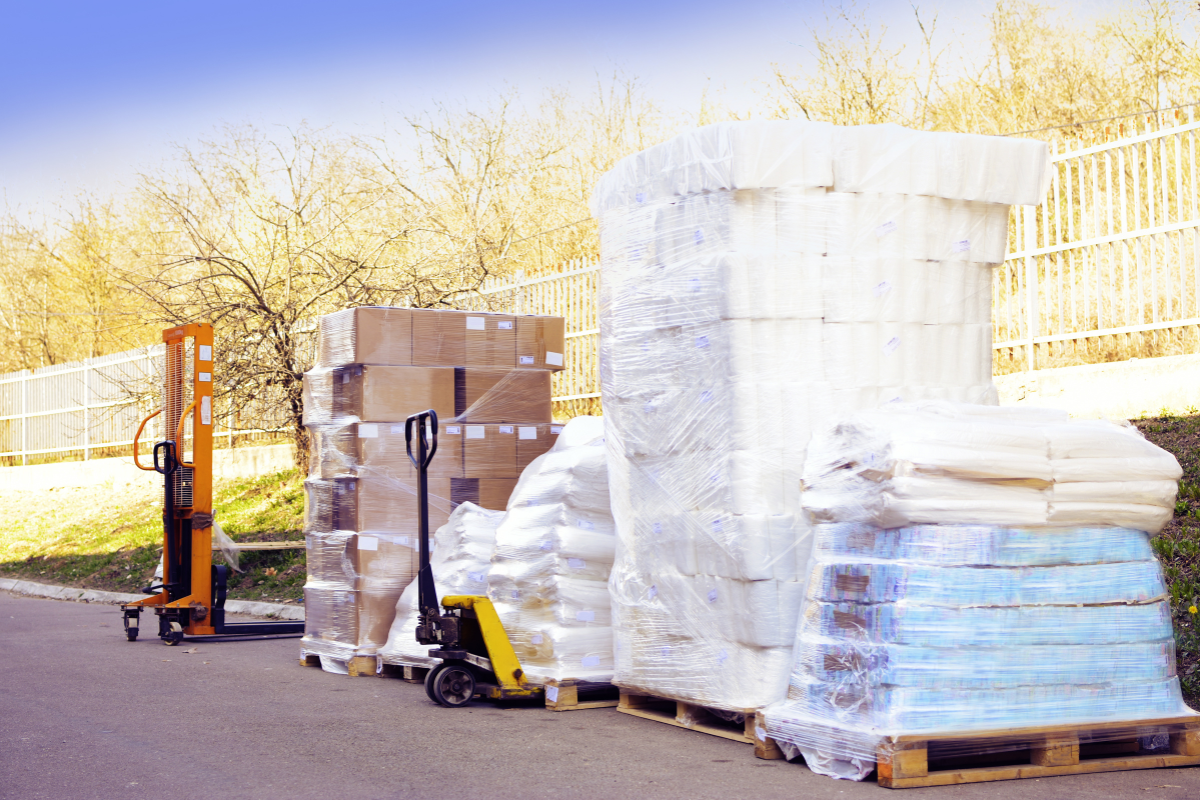
Plastic pallet wrap is one material that’s eligible for an exemption from the state’s extended producer responsibility for packaging program. | St.Marco/Shutterstock

The Product Stewardship Institute and the Oregon Department of Environmental Quality explained the different exemptions available to producers under the state’s incoming extended producer responsibility for packaging law in a recent webinar.

The Feb. 4 webinar covered the material-specific 869(13) exemption, which is intended to exempt products that don’t impose program costs on the producer responsibility organization because they are recycled outside of the commingled system. 

To get the exemption, a producer must demonstrate that a material is collected through an outside recycling collection service, doesn’t undergo separation from other materials at a MRF and is recycled at a responsible end market.

There are three kinds of claims: passive, limited-active and active. An active claim is for any material that is eligible under the exemption and requires full substantiation. Passive claims are for two kinds of material, non-consumer tertiary or transport OCC and HDPE/LDPE pallet wrap. Limited active claims are for shredded printer or copier paper. 

Justin Gast, a natural resource specialist with Oregon DEQ, noted that for those three materials – non-consumer tertiary or transport OCC, HDPE/LDPE pallet wrap and shredded paper – producers can also choose to request claims via a “pool volume.” 

“That means instead of needing to substantiate that all qualifying criteria are met for a particular volume of materials, producers will have the option of being allocated a proportion of what we are calling a pool volume,” Gast said. “This is the volume of the material that has been reported in the material recovery survey as being recycled outside the commingled system.” 

Those three materials are eligible for the simplified pool volume process because they represent the highest volumes outside of the commingled system and the state has solid data on their volumes recycled outside of the commingled system, courtesy of the material recovery survey. 

Gast noted that for a passive claim, producers won’t have to submit a DEQ claim or demonstrate eligibility. For a limited active claim, producers will have to submit a form but will not have to demonstrate eligibility. 

Active claims require producers to both submit a form and demonstrate eligibility. 

No claim paperwork is required for a passive pool volume claim because those producers will simply report their gross supply rate in pounds of OCC and pallet wrap to Circular Action Alliance, the state producer responsibility organization, as part of their regular supply reporting.

CAA will then allocate the pool volume across all reporting producers based on the amounts reported. 

For shredded paper, producers will need to fill out minimal parts of the claims form because CAA does not have a reporting category particular to printing and copying paper, Gast added. 

The preliminary pool volumes are 228,175 tons for OCC, 7,936 tons for pallet wrap and 9,916 tons for shredded paper. Gast noted those amounts may change before May 1, and they could drop lower if any end markets currently receiving the material don’t self-certify as a responsible end market. 

The pool volume for shredded paper could increase, he added, because only eight private shredding companies responded to the survey, and “DEQ knows there are other existing document destruction companies operating in Oregon.” 

The current data is from Access Document Management, Docutrak, Graf Paper Salvage, Iron Mountain, Isecure Inc, Northstar Recycling, Paper Chase Recycling and Shred-It. 

Other private shredding companies or service producers that offer separate document destruction services but combined the volumes with other fiber volumes reported when reporting have until March 6 to submit substantiation to the state, Gast said. 

Submitting a claim form 

There is an online claim submission portal that Jessica Branom-Zwick, director and partner at Cascadia Consulting, helped develop. 

The form has eight main sections, six involving data entry. Branom-Zwick said the form is color-coded for user ease, and will also flag potential data entry errors. 

There are two types of full active claims, one for producers who arrange for recycling and one for producers who don’t. Those who do not arrange for it themselves have to fill out more information, she said. 

All active exemption claims are due by March 7, and DEQ will provide CAA with its claims determination on May 1. CAA will hold a drop-in session on February 25 for producers seeking support in submitting claims. 

Nicole Portley, EPR program plan lead at Oregon DEQ, acknowledged the short timeline. DEQ originally planned to apply the exemptions in 2026 as a retroactive correction to 2025 fees but heard from producers that they wanted real-time fees.

“I want to acknowledge the complexity of what the statute is asking producers for,” she said. She added that DEQ is “balancing some competing needs here.” 

“Producers want fairness, with the fairest possible approach being that every producer make a fully substantiated claim against the three criteria, but producers also want ease in terms of the process for claiming these exemptions,” Portley said. “And CAA and DEQ need an efficient process for considering and granting the claims.”

That’s why the state decided to simplify the process for the three selected materials, she said: “We recognize the statute is setting a high bar here for producer substantiation.” 

A version of this story appeared in Resource Recycling on Jan. 19.

Tags: EPRPlasticsTextiles
TweetShare
Marissa Heffernan

Marissa Heffernan

Marissa Heffernan worked at Resource Recycling from January 2022 through June 2025, first as staff reporter and then as associate editor. Marissa Heffernan started working for Resource Recycling in January 2022 after spending several years as a reporter at a daily newspaper in Southwest Washington. After developing a special focus on recycling policy, they were also the editor of the monthly newsletter Policy Now.

Related Posts

Oregon’s Recycling Modernization Act faces injunction

Court partially blocks Oregon EPR law, dismisses bulk of lawsuit

byStefanie Valentic
February 10, 2026

An Oregon federal court issued a limited injunction halting the state's EPR law for members of NAW, but rejected the...

Dual WM MRF launch strengthens Ontario recycling infrastructure

Dual WM MRF launch strengthens Ontario recycling infrastructure

byStefanie Valentic
February 9, 2026

WM has opened two new facilities in Ontario capable of processing 30% of the province's total volumes under new EPR...

States push recycling reform forward in new year

byStefanie Valentic
February 2, 2026

New Jersey just passed a bill restricting single-use plastic items, California has opened another round of public comment on SB...

Cirba Solutions: Battery fires stoking EPR bill movement

byStefanie Valentic
February 2, 2026

As batteries appear in everything from light-up shoes to electric vehicles, new EPR laws are reshaping recycling requirements.

Stakeholders respond to California recyclability report

CalRecycle opens SB 54 draft for comments

byStefanie Valentic
February 2, 2026

Editor’s Note: California EPR will be featured in sessions at the co-located 2026 Resource Recycling Conference and Plastics Recycling Conference,...

Emerging state EPR shows trend toward harmonization

Emerging state EPR shows trend toward harmonization

byAntoinette Smith
January 29, 2026

During an APR webinar, recycling policy experts explored the growing list of EPR bills for packaging, and the implications for...

Load More
Next Post

Durable goods companies offer construction outlooks

More Posts

Oregon’s Recycling Modernization Act faces injunction

Court partially blocks Oregon EPR law, dismisses bulk of lawsuit

February 10, 2026
Chinese processing group details goals for US visit

AMP lays out vision of next-generation, AI-driven MRFs

July 24, 2024
Malaysia clamps down on illegal e-waste imports amid probes

Malaysia clamps down on illegal e-waste imports amid probes

February 6, 2026

REUSE Act heads to US House for consideration

February 9, 2026

APR, industry create proactive guidance for PET caps

February 12, 2026

ecoATM recycled 7.5M phones in 2025 as payouts hit $1.5B

February 10, 2026
Meta-Corning deal signals IT hardware retirement wave

Meta-Corning deal signals IT hardware retirement wave

February 9, 2026
Texas sues over dumped wind turbine blades

Texas sues over dumped wind turbine blades

February 10, 2026

Alpek talks PET overcapacity, soft demand

February 11, 2026
The electronics recycling industry is undergoing a transformation from labor-intensive manual operations to highly automated, AI-driven facilities that use advanced robotics, cleaner chemistry and digital tracking systems to extract critical materials.

The cyber-physical MRF: AI and robotics reshape e-waste recovery

February 12, 2026
Load More

About & Publications

About Us

Staff

Archive

Magazine

Work With Us

Advertise
Jobs
Contact
Terms and Privacy

Newsletter

Get the latest recycling news and analysis delivered to your inbox every week. Stay ahead on industry trends, policy updates, and insights from programs, processors, and innovators.

Subscribe

Welcome Back!

Login to your account below

Forgotten Password?

Retrieve your password

Please enter your username or email address to reset your password.

Log In

Add New Playlist

No Result
View All Result
  • The Latest
  • Analysis
  • Recycling
  • E-Scrap
  • Plastics
  • Policy Now
  • Conferences
    • E-Scrap Conference
    • Plastics Recycling Conference
    • Resource Recycling Conference
    • Textiles Recovery Summit
  • Magazine
  • About Us
  • Advertise
  • Archive
  • Jobs
  • Staff
Subscribe
This website uses cookies. By continuing to use this website you are giving consent to cookies being used. Visit our Privacy and Cookie Policy.