




Resource Recycling
  • The Latest
  • Analysis
    • All
    • Certification Scorecard
    • Industry Announcements
    • Opinion
    APR adds PCR content verification to cert program

    Certification Scorecard — Week of August 24, 2026

    Top stories from July 2024

    ITAD global regulation and compliance this summer

    ESG

    Foreign equity is moving into North America’s e-scrap origination

    From claims to custody: PCR procurement grows up

    Certification Scorecard — Week of August 17, 2026

    Sorted: Country roads, take my recycling

    State program revamp proposal advances in Oregon

    Oregon EPR ruling looms: what legal experts think

  • Conferences
    • Resource Recycling Conference
    • Plastics Recycling Conference
    • E-Scrap: The Longevity Conference
    • Textiles Recovery Summit
  • Publications
    • E-Scrap News
    • Plastics Recycling Update
    • Policy Now
    • Resource Recycling
    • Other Topics
      • All Topics
      • Brand Owners
      • Critical Minerals
      • Glass
      • Grant Watch / RFPs
      • Markets
      • Organics
      • Packaging
      • Research
      • Technology
      • Textiles
Subscribe
No Result
View All Result
Resource Recycling
  • The Latest
  • Analysis
    • All
    • Certification Scorecard
    • Industry Announcements
    • Opinion
    APR adds PCR content verification to cert program

    Certification Scorecard — Week of August 24, 2026

    Top stories from July 2024

    ITAD global regulation and compliance this summer

    ESG

    Foreign equity is moving into North America’s e-scrap origination

    From claims to custody: PCR procurement grows up

    Certification Scorecard — Week of August 17, 2026

    Sorted: Country roads, take my recycling

    State program revamp proposal advances in Oregon

    Oregon EPR ruling looms: what legal experts think

  • Conferences
    • Resource Recycling Conference
    • Plastics Recycling Conference
    • E-Scrap: The Longevity Conference
    • Textiles Recovery Summit
  • Publications
    • E-Scrap News
    • Plastics Recycling Update
    • Policy Now
    • Resource Recycling
    • Other Topics
      • All Topics
      • Brand Owners
      • Critical Minerals
      • Glass
      • Grant Watch / RFPs
      • Markets
      • Organics
      • Packaging
      • Research
      • Technology
      • Textiles
Subscribe
No Result
View All Result
Resource Recycling
No Result
View All Result
Home Plastics

Midwest reclaimer rolls out $2 million PP processing line

byJared Paben
September 26, 2023
in Plastics
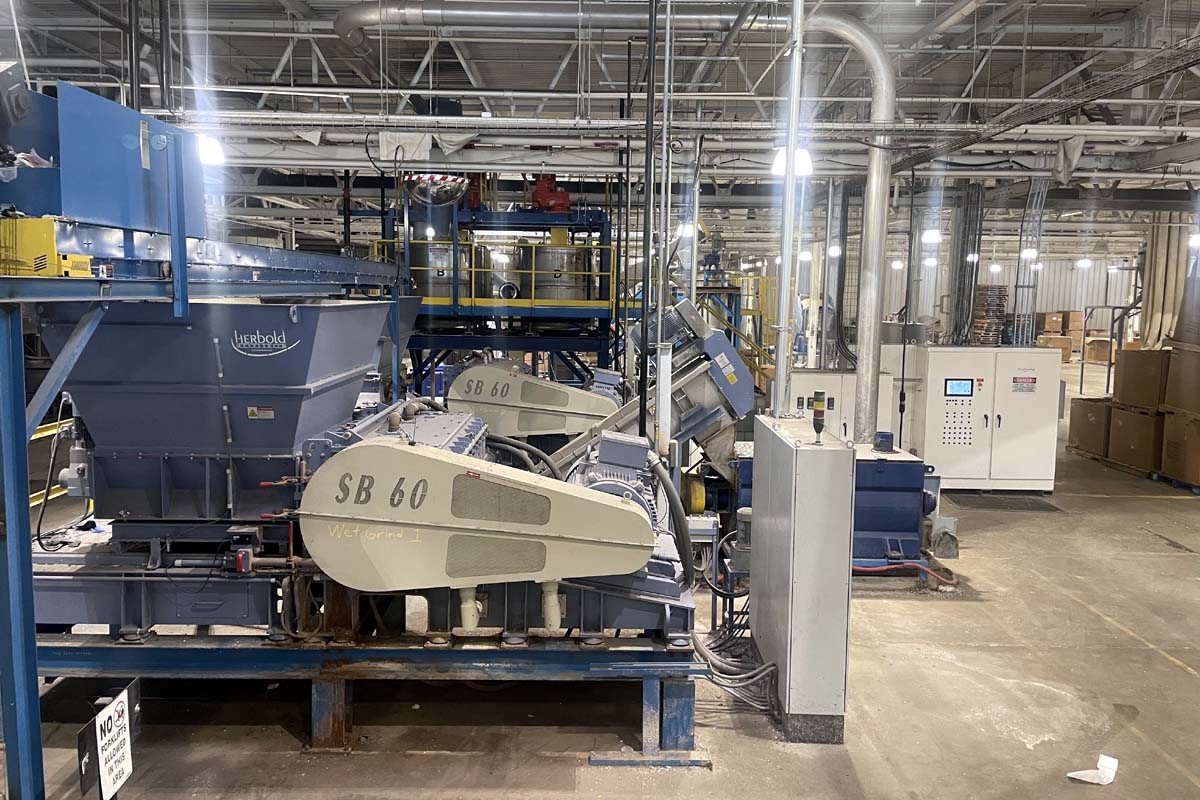
A wet grinder in Plastic Recycling Inc.’s new PP line in Indianapolis.  | Courtesy of PRI

Plastic Recycling Inc. is now processing post-consumer curbside PP, with an eye toward obtaining an FDA food-contact letter in the near future.

The Indianapolis-based plastics reclaimer is initially sorting and washing about 25 million pounds of PP per year on the system, said Brandon Shaw, marketing manager for Plastic Recycling Inc. (PRI), but the system is modular and can be scaled up easily.

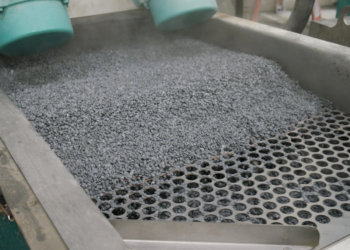
The line, which processes PP bales from materials recovery facilities (MRFs), includes a trommel, metal removal technology, shredding, optical sorting, wet grinding, washing and rinsing steps, float-sink separation, drying and color sorting.

The company is also looking to add sorting robots to produce a stream of PP scrap consisting entirely of food and drink packaging. 

PRI has invested millions of dollars in recent years to boost its production capabilities, including by building-out a $3 million lab. 

With the investments, including two new extruders that added 60 million pounds of annual capacity, PRI now has the capacity to produce 160 million pounds of recycled plastic, Shaw said.

In terms of post-consumer PP, specifically, the reclaimer can produce about 45 million pounds a year, said Marco Meloni, chief operating officer at PRI. 

“We are able now to really respond to all the requests of the market in terms of recycled content, PCR content and virgin plus recycled products,” Meloni said. “So we are able now to give a very wide range of products to the market.”

Commercial-scale production starts

Located at PRI’s 550,000-square-foot compounding facility in Indianapolis, the new PP line is currently running. (PRI also has a 120,000-square-foot scrap processing plant in Indianapolis, as well as facilities in Tennessee and South Carolina.)

Shaw estimated the line cost about $2 million, not counting roughly $1 million worth of equipment already owned by PRI. 

PRI has been buying bales for the last three months, with commercial production starting in August. “We’re working with all the big MRFs,” he said. 

So far, PRI hasn’t had any trouble sourcing enough PP feedstock, Shaw said, noting that relatively few reclaimers are recycling curbside PP bales, with the market dominated by KW Plastics. 

Prices for PP have been low lately, with post-consumer scrap averaging only about 5 cents per pound nationally, according to RecyclingMarkets.net. Throughout 2022, a year that included some high PCR pricing, bales averaged nearly 20 cents per pound, and during the first half of this year, they averaged 7.5 cents per pound.

Virgin pricing has also been low. Citing marketing conditions, plastics producer Braskem recently decided to reduce PP production levels at a plant in Pennsylvania, according to Plastics News. 

Shaw acknowledged that there is a “tough market right now economically, but we are playing the long game and using the lab upgrade to create real compounds with the ability to create colors.” 

PRI has invested substantially in its lab, which is expected to employ a staff of 17 people conducting testing on raw materials and finished goods, as well as R&D, Meloni said.

Pursuing a letter of no objection

PRI has received FDA letters of no objection (LNOs) for PP and PS in the past. LNOs allow their recipients to begin marketing their recycled resin for use in food and drink packaging, subject to any limitations spelled out by the FDA. The most recent one was for the mechanical recycling of PP, received May 28, 2019, according to the FDA database. 

Shaw explained PRI’s existing PP letter covers source-controlled recyclables, from which PRI produces white, natural and colored compounds. The new line will help PRI achieve a letter covering curbside material, he said. 

“With the line, we’ve got capabilities to make custom colors, sort by FDA/non-FDA streams,” Shaw said. “So we’ll be going after FDA on it.” 

Closed Loop Partners, the NextGen Consortium and Greyparrot, a company that has developed a visioning system powered by AI, recently announced that they’re working on a study to analyze the composition of curbside PP bales. Their work will build off research conducted in 2022 by the NextGen Consortium and consulting firm Resource Recycling Systems (RRS), which found that PP bales from two MRFs contained about 48% food-grade PP. 

Shaw said PRI’s internal analysis is more or less in line with that finding, with PRI calculating that nearly half of a bale is food-grade PP – about 26% clear/natural and 20% light colored. MRFs using optical sorters and robots generally produce the highest-quality bales, and those relying strictly on manual sorting generally produce the lowest, he noted. 

In terms of pursuing an FDA LNO on the curbside PP, PRI’s lab can conduct 95% of the testing required by the FDA, Meloni said.

Shaw acknowledged that, for the MRF material, PRI won’t be able to achieve FDA’s A-H conditions of use. (At the top end, A allows the packaging to be exposed to sterilization processes over boiling temperatures, and and at the low end, H allows the PP to be used for frozen, ready-prepared meals that are reheated in a microwave in the package.) But the company’s in-house lab will allow PRI to achieve as many conditions of use as possible, he said. 

Shaw said he expects PRI will receive an LNO for curbside PP in the next few months. 

He anticipates the PCR would be used for items such as caps and closures, beauty product packaging, and more. It would likely be injection molded, with some thermoforming, as well. 

PRI can essentially use its sorting and lab capabilities to make round pegs to fit into round holes, instead of asking customers to force square pegs in. 

“There’s a lot of interest,” Shaw said. “Now that people are seeing what we’re doing, we can actually make a product they want, rather than pushing a product on them that they’re forced to attempt to use.” 

Tags: PPProcessors
TweetShare
Jared Paben

Jared Paben

Related Posts

Study quantifies lithium battery threat to infrastructure

Fire incidents remain on the upswing in summer

byPaul Lane
August 24, 2026

July proved to be a dangerous month for waste handling facilities in North America, with an above-average number of fire...

May pricing bullish for most bales

August pricing bearish for plastic bales

byAntoinette Smith
August 17, 2026

War-related peaks for post-consumer bale pricing have largely eased, despite continued volatility in crude oil.

PureCycle sees easing headwinds to R-PP adoption

PureCycle says H2 outlook already playing out 

byAntoinette Smith
August 13, 2026

The company said momentum is accelerating amid regulatory developments and the promise of a consistent, streamlined supply chain.

Maximizing the value of post-consumer PP 

Maximizing the value of post-consumer PP 

byEdward Kosior
August 5, 2026

In a guest column, Dr. Kosior makes the case for tailoring recycled PP grades to specific applications to provide a...

Alpek closing Pennsylvania RPET plant

Alpek seizing on war-related opportunity 

byAntoinette Smith
July 27, 2026

The world's largest PET producer saw a big increase in spot volumes during Q2 thanks to supply chain disruptions, and...

Dow touts US PE advantage amid Iran war

Dow bullish on August PE pricing

byAntoinette Smith
July 24, 2026

Executives made the case for higher prices during a Q2 investor call, pointing to planned maintenance and a throttled supply...

Load More
Next Post

News from Ascend Elements, Li-Cycle and more

2026 Buyers’ Guide

Equipment, services and technology suppliers serving the recycling industry.

Browse the Guide

More Posts

Alpek closing Pennsylvania RPET plant

Alpek seizing on war-related opportunity 

July 27, 2026
The Maine state capitol building.

No bidders respond to Maine’s EPR RFP

August 20, 2026
Company debuts battery-containing device shredder

New battery shredding system debuts stateside

August 20, 2026
The Maine state capitol in Augusta.

Circular Action Alliance won’t bid on Maine’s PRO contract

August 19, 2026

Bob’s Red Mill meets 92% waste diversion rate

August 26, 2026
WM CEO Jim Fish to retire in string of leadership changes

WM CEO Jim Fish to retire in string of leadership changes

August 26, 2026
Hefty ending Orange Bag program

Hefty ending Orange Bag program

August 25, 2026
ESG

Foreign equity is moving into North America’s e-scrap origination

August 19, 2026
Lawsuits hover days after SB 54 approval

NAW-backed coalition seeks SB 54 injunction

August 21, 2026
State program revamp proposal advances in Oregon

Oregon EPR ruling looms: what legal experts think

August 17, 2026
Load More

About & Publications

About Us

Staff

Archive

Magazine

Work With Us

Advertise
Jobs
Contact
Terms and Privacy

Newsletter

Get the latest recycling news and analysis delivered to your inbox every week. Stay ahead on industry trends, policy updates, and insights from programs, processors, and innovators.

Subscribe

Welcome Back!

Login to your account below

Forgotten Password?

Retrieve your password

Please enter your username or email address to reset your password.

Log In

Add New Playlist

No Result
View All Result
  • The Latest
  • Analysis
  • Recycling
  • E-Scrap
  • Plastics
  • Policy Now
  • Conferences
    • E-Scrap Conference
    • Plastics Recycling Conference
    • Resource Recycling Conference
    • Textiles Recovery Summit
  • Magazine
  • About Us
  • Advertise
  • Archive
  • Jobs
  • Staff
Subscribe
This website uses cookies. By continuing to use this website you are giving consent to cookies being used. Visit our Privacy and Cookie Policy.