
Resource Recycling
  • The Latest
  • Analysis
    • All
    • Certification Scorecard
    • Industry Announcements
    • Opinion
    Following petition, Microsoft extends Windows 10 support

    Windows AI Recall is pushing data destruction upstream

    Certification Scorecard — Week of April 27, 2026

    Five trends shaping PCR packaging to 2031

    Intel sign on company building with blue sky and trees.

    Intel boosts margins by selling what it used to scrap

    Our top stories from April 2022

    Peters-Michaud named CEO, Houghton chair of Sage Sustainable Electronics

    Closeup of a printed circuitboard

    Can modular metals recovery challenge the smelter model?

  • Conferences
    • Resource Recycling Conference
    • Plastics Recycling Conference
    • E-Scrap: The Longevity Conference
    • Textiles Recovery Summit
  • Publications
    • E-Scrap News
    • Plastics Recycling Update
    • Policy Now
    • Resource Recycling
    • Other Topics
      • Brand Owners
      • Critical Minerals
      • Glass
      • Grant Watch
      • Markets
      • Organics
      • Packaging
      • Research
      • Technology
      • Textiles
      • All Topics
Subscribe
No Result
View All Result
Resource Recycling
  • The Latest
  • Analysis
    • All
    • Certification Scorecard
    • Industry Announcements
    • Opinion
    Following petition, Microsoft extends Windows 10 support

    Windows AI Recall is pushing data destruction upstream

    Certification Scorecard — Week of April 27, 2026

    Five trends shaping PCR packaging to 2031

    Intel sign on company building with blue sky and trees.

    Intel boosts margins by selling what it used to scrap

    Our top stories from April 2022

    Peters-Michaud named CEO, Houghton chair of Sage Sustainable Electronics

    Closeup of a printed circuitboard

    Can modular metals recovery challenge the smelter model?

  • Conferences
    • Resource Recycling Conference
    • Plastics Recycling Conference
    • E-Scrap: The Longevity Conference
    • Textiles Recovery Summit
  • Publications
    • E-Scrap News
    • Plastics Recycling Update
    • Policy Now
    • Resource Recycling
    • Other Topics
      • Brand Owners
      • Critical Minerals
      • Glass
      • Grant Watch
      • Markets
      • Organics
      • Packaging
      • Research
      • Technology
      • Textiles
      • All Topics
Subscribe
No Result
View All Result
Resource Recycling
No Result
View All Result
Home Plastics

How different diversion systems stack up on GHG emissions

Marissa HeffernanbyMarissa Heffernan
July 26, 2022
in Plastics
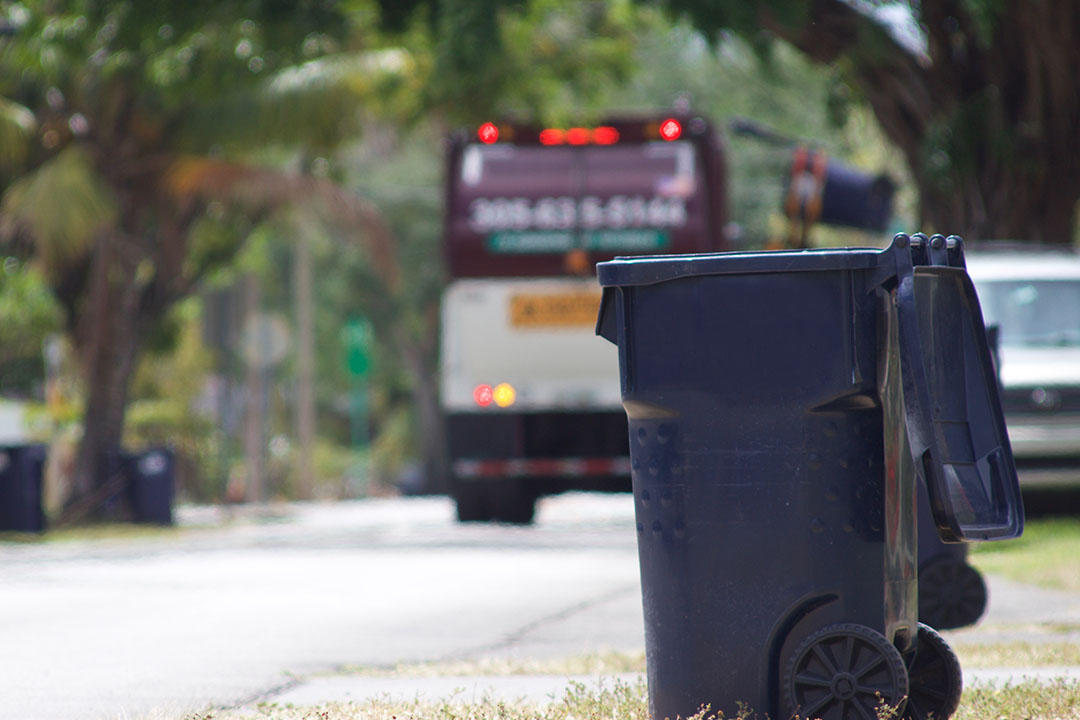
Using 2014 data from the U.S. EPA, researchers examined GHG benefits of recycling. | Lawrence Glass/Shutterstock

A new life cycle assessment quantifies the impacts of different curbside collection scenarios, concluding that a typical single-stream recycling program reduces overall emissions by almost 40% when compared with simply landfilling the material.

However, the Environmental Research & Education Foundation (EREF) study also found that recycling-related transport and processing for some materials, such as glass, can negate greenhouse gas (GHG) benefits. And it determined that including food scraps and yard waste in curbside programs can potentially limit emissions benefits as well.

“A combination of landfill with gas to energy combined with recycling contributed to the greatest reduction in GHG emissions and energy demand assuming a closed-loop (e.g., bottle to bottle) recycling system,” the report stated. “However, the end use of the recyclables are very important and sustainability benefits can be highly variable and even erased under some non-closed loop end use scenarios.”

Transportation emissions are a relatively small percentage of total emissions, but can still have an effect, the report found.

“This is especially true for materials with more marginal emissions benefits associated with their recycling such as fiber and glass,” it said. The report determined the emissions benefits of recycling fiber are negated after the material is transported 360 miles; for glass, the number is 1,150 miles.

Plastics and metals can be transported the farthest without negating recycling benefits, upwards of 3,200 miles by truck, or coast to coast.

Recycled always better?

A primary focus of the assessment was comparing GHG emissions and fossil fuel energy use associated with landfilling, recycling and composting to find out whether using a recycled material is always better than using a virgin material. The research also investigated whether there are scenarios where it is better not to divert a material and how the transportation distance from processing facility to re-manufacturer affects the benefits of recovering a given item.

Materials management was analyzed under four scenarios: an all-landfill scenario (one bin), a curbside single-stream recycling scenario (two bins), a curbside single-stream and yard waste composting scenario (three bins), and a curbside single-stream and combined yard/food waste composting scenario (three bins).The analysis used 2014 data from the EPA for the percentages of material in a recycling stream, including paper, old corrugated cardboard (OCC) , ferrous metal and aluminum containers, HDPE containers, PET containers, PP containers and glass containers.

It also assumed a materials recovery facility (MRF) contamination rate of 18% and a collection fleet using 80% diesel and 20% compressed natural gas. Finally, the model assumed baled recyclables went to a closed-loop or best-case remanufacturing end use.

GHG reduction results

Overall, the study found that the two-bin scenario resulted in a 38% reduction in emissions, compared to the landfill-only scenario. Meanwhile, a three-bin, yard-waste-only system had overall emissions roughly equivalent to that of the landfill-only scenario. The fourth scenario, with combined food and yard waste, resulted in a 10% emissions savings.

When it came to fossil fuel energy use, all scenarios resulted in energy savings compared to just landfilling. The two-bin scenario once again had the highest energy savings, followed by the three-bin yard-waste-only scenario and then the combined yard and food waste scenario.
Learn more in person
A session at the 2022 Resource Recycling Conference will explore how cities are tying their materials recovery efforts to the fight against climate change. The speakers are Scott Pasternak of Burns & McDonnell, Amy Larkin of PR3, and Joe Bontempo of The Recycling Partnership. Register to attend the conference today.”The primary reason all scenarios saved energy relates to using recovered recyclable materials in remanufacturing relative to processing virgin materials,” the report noted. “Thus, the primary means of energy savings when diversion from landfill scenarios are considered is from recycling. Yard waste or mixed organics composting results in some additional fossil energy use due to activities such as curbside collection and pile aeration; as a result, energy savings are slightly reduced for these scenarios.”

However, the report also noted that composting has “other significant environmental benefits.”

“The use of compost has been shown to improve soil quality and structure, control erosion and sedimentation and improve water retention,” the report stated. “These benefits would not be captured in impact assessments focused solely on GHG and energy use, such as the one performed in this study.”

Actions in control of the industry

Between 66% and 70% of emissions associated with typical materials in the waste stream are caused by product manufacturing and consumer behavior, the report noted, and are therefore out of the control of the waste and recycling industry.

“Of the activities the waste industry can control, landfilling has the largest impact on GHG emissions, and efforts to improve gas capture rates provide the highest GHG benefits,” the report advised.

Improving how well residents correctly sort recyclables into the recycling bin can reduce emissions significantly, the report suggested, and there is “significant room for improvement through activities such as education, outreach and labeling.”

Boosting landfill gas capture rates and minimizing downtime of landfill gas management equipment would provide the highest emission reducing benefit for landfilled materials, the report suggested, and transitioning collection vehicles to compressed natural gas or electric would help reduce emissions on the collections side.

Although decisions about remanufacturing processes are not directly within the industry’s control, the report noted that improved MRF design and operation could create better bales to allow better end uses and markets.

“To remain viable long term, the success of recycling and composting rests upon the ability to demonstrate that it can achieve the triple-bottom line of people, planet and profit,” the report said.

A version of this story appeared in Resource Recycling on July 26.

 

Tags: Research
TweetShare
Marissa Heffernan

Marissa Heffernan

Marissa Heffernan worked at Resource Recycling from January 2022 through June 2025, first as staff reporter and then as associate editor. Marissa Heffernan started working for Resource Recycling in January 2022 after spending several years as a reporter at a daily newspaper in Southwest Washington. After developing a special focus on recycling policy, they were also the editor of the monthly newsletter Policy Now.

Related Posts

What Netflix’s ‘Plastic Detox’ gets wrong – and right

byKeith Loria
April 23, 2026

Advocates are excited about the attention brought on plastics by the documentary, but scientists say more nuance is needed.

Hawaii trials asphalt made with plastic debris and nets

Hawaii trials asphalt made with plastic debris and nets

byScott Snowden
April 20, 2026

Researchers at Hawaii Pacific University test asphalt made with fishing nets and plastic debris, with early results showing no increase...

Amazon, DOE partner on critical materials recovery

byScott Snowden
April 13, 2026

DOE and Amazon will study recovery of graphite from textiles and gallium from IT hardware, aiming to strengthen US supply...

Rice researchers use lemon juice to boost battery recycling

byScott Snowden
April 9, 2026

Rice researchers reported a battery recycling process that uses plasma and mild solvents to recover most metals from black mass...

Packaging sector sees shift from AI pilots to wider use

byScott Snowden
April 1, 2026

AI adoption is expanding across packaging operations as costs fall and use cases widen, though concerns around accountability, ROI and...

Report pegs fire losses at $2.5b in US and Canada recycling industry

byScott Snowden
March 27, 2026

A new fire report estimates $2.5b in damage across US and Canadian recycling facilities in 2025, with lithium-ion batteries still...

Load More
Next Post

Canada eyes federal plastics registry, labeling rules

More Posts

What Netflix’s ‘Plastic Detox’ gets wrong – and right

April 23, 2026
EPR fees are a market signal. Here’s what they’re telling you.

Oregon DEQ flags 250 producers for RMA noncompliance

April 21, 2026
Birch Plastics gets FDA green-light for post-industrial PP

LyondellBasell upgrade to PreZero assets on hold

April 23, 2026

PCA keeping focus on virgin fiber products

April 27, 2026
Dow touts US PE advantage amid Iran war

Dow touts US PE advantage amid Iran war

April 24, 2026
The independent ITAD at a crossroads

The independent ITAD at a crossroads

April 22, 2026
Intel sign on company building with blue sky and trees.

Intel boosts margins by selling what it used to scrap

April 29, 2026
AT&T, Compudopt expand e-recycling program

AT&T, Compudopt expand e-recycling program

April 23, 2026
Float-sink technology at the Quantum Lifecycle Partners facility in Toronto, Canada enables the processing of e-plastics.

E-plastics recovery line opens in Canada

April 28, 2026

Google pilots reuse kits to extend device life

April 21, 2026
Load More

About & Publications

About Us

Staff

Archive

Magazine

Work With Us

Advertise
Jobs
Contact
Terms and Privacy

Newsletter

Get the latest recycling news and analysis delivered to your inbox every week. Stay ahead on industry trends, policy updates, and insights from programs, processors, and innovators.

Subscribe

Welcome Back!

Login to your account below

Forgotten Password?

Retrieve your password

Please enter your username or email address to reset your password.

Log In

Add New Playlist

No Result
View All Result
  • The Latest
  • Analysis
  • Recycling
  • E-Scrap
  • Plastics
  • Policy Now
  • Conferences
    • E-Scrap Conference
    • Plastics Recycling Conference
    • Resource Recycling Conference
    • Textiles Recovery Summit
  • Magazine
  • About Us
  • Advertise
  • Archive
  • Jobs
  • Staff
Subscribe
This website uses cookies. By continuing to use this website you are giving consent to cookies being used. Visit our Privacy and Cookie Policy.