Resource Recycling
  • The Latest
  • Analysis
    • All
    • Certification Scorecard
    • Industry Announcements
    • Opinion
    Top stories from March 2025

    3 factors force e-scrap processing onshore

    Data center boom sets up ITAD growth

    Certification Scorecard — Week of June 15, 2026

    Tzvika Shahaf of Blancco

    Blancco names new SVP of product strategy

    IT security driving plans, reshaping budgets

    Study cuts projected AI server e-waste by 90%

    A call to action: End markets and EPR

    A call to action: End markets and EPR

  • Conferences
    • Resource Recycling Conference
    • Plastics Recycling Conference
    • E-Scrap: The Longevity Conference
    • Textiles Recovery Summit
  • Publications
    • E-Scrap News
    • Plastics Recycling Update
    • Policy Now
    • Resource Recycling
    • Other Topics
      • All Topics
      • Brand Owners
      • Critical Minerals
      • Glass
      • Grant Watch / RFPs
      • Markets
      • Organics
      • Packaging
      • Research
      • Technology
      • Textiles
Subscribe
No Result
View All Result
Resource Recycling
  • The Latest
  • Analysis
    • All
    • Certification Scorecard
    • Industry Announcements
    • Opinion
    Top stories from March 2025

    3 factors force e-scrap processing onshore

    Data center boom sets up ITAD growth

    Certification Scorecard — Week of June 15, 2026

    Tzvika Shahaf of Blancco

    Blancco names new SVP of product strategy

    IT security driving plans, reshaping budgets

    Study cuts projected AI server e-waste by 90%

    A call to action: End markets and EPR

    A call to action: End markets and EPR

  • Conferences
    • Resource Recycling Conference
    • Plastics Recycling Conference
    • E-Scrap: The Longevity Conference
    • Textiles Recovery Summit
  • Publications
    • E-Scrap News
    • Plastics Recycling Update
    • Policy Now
    • Resource Recycling
    • Other Topics
      • All Topics
      • Brand Owners
      • Critical Minerals
      • Glass
      • Grant Watch / RFPs
      • Markets
      • Organics
      • Packaging
      • Research
      • Technology
      • Textiles
Subscribe
No Result
View All Result
Resource Recycling
No Result
View All Result
Home Plastics

Report recaps plastic bumper cover recycling project

byJared Paben
September 6, 2019
in Plastics
Report recaps plastic bumper cover recycling project
Challenges remain to scaling up TPO bumper collection to a national scale. | Kaentian Street/Shutterstock

TPO bumper covers can be processed into a high-quality recycled pellet that’s cheaper than virgin plastic, but challenges remain in feedstock collection and preparation.

That’s a conclusion from a Plastics Industry Association report recapping the multi-year End-of-Life Vehicle (ELV) Recycling project, which examined recycling potential for thermoplastic polyolefin (TPO) bumper covers.

Phase I of the project, which involved testing the technical and economic feasibility, was covered in depth in the spring 2018 edition of Plastics Recycling Update magazine. It showed that bumper cover TPO, which contains a valuable rubber package, can be recycled into high-quality pellets that could be used in a number of applications.

In late May, the Plastics Industry Association released a report covering the results from Phases II and III, which involved proving the replicability and scalability of TPO bumper recycling.

“Based on ongoing feedback from the ELV workgroup participants throughout all phases of work, ensuring end markets exist for this material once it is processed and in pellet form is not a concern,” the report concluded. “That said, two challenges remain to scaling up collection to a national scale: proving the economics work for collection, and ensuring bumpers are prepared according to the [Institute of Scrap Recycling Industries] bale specification so they will not be rejected once they reach the recycler.”

End market potential proven

The project’s materials processing and analysis demonstrated that TPO can be recycled into a high-quality plastic, according to the report, which included the plastics’ testing results.

For example, ACI Plastics, a reclaimer with locations around the U.S., sent the TPO through grinding, paint removal and pelletizing steps. ACI found the final pellets met the company’s specifications for paint-removed TPO for use in Class A applications. But the company found the incoming feedstock had a lot of contamination, including metal, lights, rub strips and other parts. Of the 2,513 pounds ACI received, the company was only able to recover 1,269 pounds, or about half of the weight.

Contamination proved less of a problem for Ultra-Poly Corporation of Pennsylvania. Ultra-Poly took in a 1,000-plus-pound bale of bumper covers, broke it, separated the materials and manually removed large metal contaminants such as electrical wiring or metal brackets. Without removing labels or small metal clips, the company sent the TPO into its regrind system, which consists of a shredder, magnet, blower, another magnet, grinder and elutriation. According to the company, the metal clips were easily removed by the magnets, and the elutriation sucked away the paper contamination and fines.The regrind was then fed to an extruder, filtered and pelletized, and the pellets were injection molded into bars and plaques for testing. The testing showed that the “mechanical and physical properties appear to be good in spite of known contamination with low levels of ABS.” The molded parts were somewhat “pocked” from residual paint and non-TPO contamination, but the pellets would still be useful for many applications where a smooth, high-gloss finish isn’t necessary, Ultra-Poly determined.

Additionally, the plastic “is also potentially useful as a compounding component to improve impact strength and stiffness of other recycled streams,” Ultra-Poly concluded.

The report concluded that, as long as the TPO bales met Institute of Scrap Recycling Industries (ISRI) specifications, all of the reclaimers involved in the project could process the recycled TPO at a cost less than prime TPO. The bale specs state that everything attached to the bumper cover should be removed before baling, including lamps, grills, emblems, rub strips and reflectors, and that contamination should be limited to small metal parts such as clips and screws.

Collection hesitation remains an issue

The Plastics Industry Association worked on the project with ISRI and that organization’s auto recycling members. Two ISRI members, Michigan-based Padnos and Indiana-headquartered Metro Recycling, provided TPO bumper covers for recycling and testing.
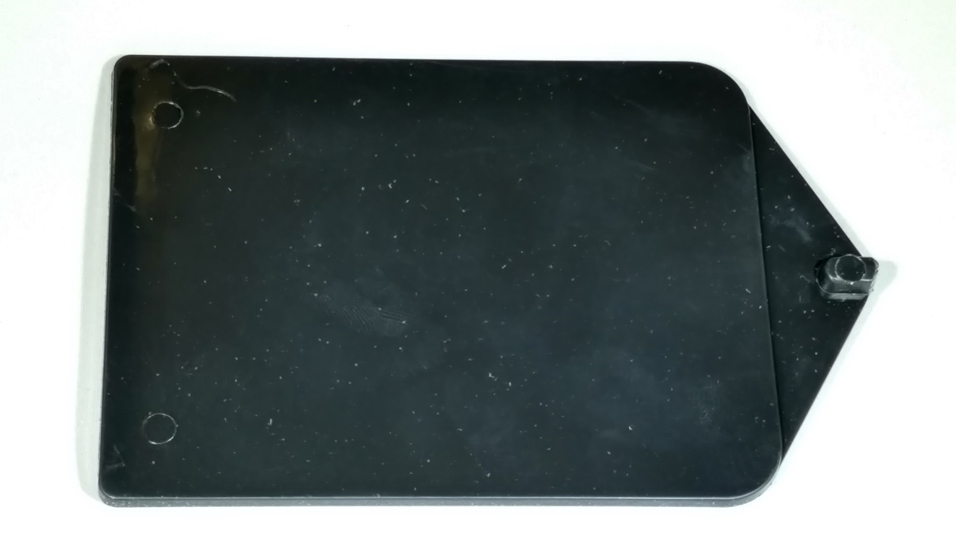
Ultra-Poly Corporation molded the recycled TPO bumper plastic into plaques for testing.

In general, the ELV project found that auto scrap yards weren’t particularly interested in separating TPO bumpers for recycling. Their facilities are focused on shredding crushed vehicles and then sorting out the valuable metals, leaving the rest, including plastics, to go to disposal.

“Overall, after spending several months conversing with members, it appears that opening additional collection channels for TPO bumper through auto shredders would be challenging due to the perceived lack of economic advantages,” the Plastics Industry Association report noted.

The ELV project staff also encountered hesitation among the “pick and pull” yards, which sell parts from intact vehicles. For both types of companies, recovering TPO bumpers would require added time and cost. In addition, they generally lack the available space or balers needed to prepare the scrap TPO for efficient transportation to plastics reclaimers.

To overcome those challenges, the ELV project staff recommended auto recycling companies consider planning for TPO recovery when they build new facilities or improve existing ones.

The report suggested there may also be other sources of post-consumer TPO bumpers.

“Through these phases of research, it has become clear that efficient collection of ELV bumpers remains the greatest barrier to scaling up the recovery of ELV bumpers across the nation,” the report concluded. “It is our recommendation that further recovery opportunities be explored with other industry sectors, including auto body repair shops, which are removing bumpers through their normal course of business.”

To receive the latest news and analysis about plastics recycling technologies, sign up now for our free monthly Plastics Recycling Update: Technology Edition e-newsletter.


Tags: Industry GroupsResearchTechnology
TweetShare
Jared Paben

Jared Paben

Related Posts

Data center boom sets up ITAD growth

byDavid Daoud
June 18, 2026

Rapid growth in data center construction is setting up future ITAD needs.

Tzvika Shahaf of Blancco

Blancco names new SVP of product strategy

byDavid Daoud
June 17, 2026

At the same time the data erasure landscape is undergoing a major shift.

CAA seeks industry input on EPR fees

CAA seeks industry input on EPR fees

byAntoinette Smith
June 16, 2026

A new producer steering committee will help involve stakeholders more directly in the fee-setting process as packaging EPR law is...

IT security driving plans, reshaping budgets

Study cuts projected AI server e-waste by 90%

byDavid Daoud
June 16, 2026

New research provides a more grounded view to recent estimates of upcoming AI-related scrap.

Crystal Bayliss of the U.S. Plastic Pact

Bayliss tapped to lead US Plastics Pact 

byAntoinette Smith
June 15, 2026

Crystal Bayliss had served in an interim capacity since January, after the departure of CEO and executive director Jonathan Quinn.

Recycling council emphasizes importance of supply

Sorted: Why recycling isn’t a ‘scam’

byBrian Clark Howard
June 15, 2026

The sector has taken a beating in the press and in public perception, but recycling has many benefits.

Load More
Next Post
Here’s who recently received FDA recycling letters

Here's who recently received FDA recycling letters

More Posts

Group updates on UBC-sorting robot’s success

Plastic bale pricing falls while paper, UBCs firm

June 15, 2026
ICIS monthly recycled plastics pulse: Most Oct resin prices stabilize for fall

CA advances PET payments bill, posts DRS recovery rates

June 18, 2026
CAA seeks industry input on EPR fees

CAA seeks industry input on EPR fees

June 16, 2026
Revised CA budget includes $200m for recycling

CAA files California program plan for SB 54

June 15, 2026
batteries

WM adds batteries to recycling watch list

June 16, 2026
IT security driving plans, reshaping budgets

Study cuts projected AI server e-waste by 90%

June 16, 2026
Quebec film recycler expands into Mississippi

Quebec film recycler expands into Mississippi

June 18, 2026
Recycling council emphasizes importance of supply

Sorted: Why recycling isn’t a ‘scam’

June 15, 2026
Report finds increase in cell phone trade-ins

Report finds increase in cell phone trade-ins

June 17, 2026
A call to action: End markets and EPR

A call to action: End markets and EPR

June 16, 2026
Load More

About & Publications

About Us

Staff

Archive

Magazine

Work With Us

Advertise
Jobs
Contact
Terms and Privacy

Newsletter

Get the latest recycling news and analysis delivered to your inbox every week. Stay ahead on industry trends, policy updates, and insights from programs, processors, and innovators.

Subscribe

Welcome Back!

Login to your account below

Forgotten Password?

Retrieve your password

Please enter your username or email address to reset your password.

Log In

Add New Playlist

No Result
View All Result
  • The Latest
  • Analysis
  • Recycling
  • E-Scrap
  • Plastics
  • Policy Now
  • Conferences
    • E-Scrap Conference
    • Plastics Recycling Conference
    • Resource Recycling Conference
    • Textiles Recovery Summit
  • Magazine
  • About Us
  • Advertise
  • Archive
  • Jobs
  • Staff
Subscribe
This website uses cookies. By continuing to use this website you are giving consent to cookies being used. Visit our Privacy and Cookie Policy.