





Resource Recycling
  • The Latest
  • Analysis
    • All
    • Certification Scorecard
    • Industry Announcements
    • Opinion
    The electronics recycling industry is undergoing a transformation from labor-intensive manual operations to highly automated, AI-driven facilities that use advanced robotics, cleaner chemistry and digital tracking systems to extract critical materials.

    The cyber-physical MRF: AI and robotics reshape e-waste recovery

    Certification scorecard for the week of Feb. 9, 2026

    Meta-Corning deal signals IT hardware retirement wave

    Meta-Corning deal signals IT hardware retirement wave

    Malaysia clamps down on illegal e-waste imports amid probes

    Malaysia clamps down on illegal e-waste imports amid probes

    URT builds alliance to remake electronics plastics at scale

    ICYMI: Top 5 e-scrap stories from January 2026

    The electronics recycling industry is undergoing a transformation from labor-intensive manual operations to highly automated, AI-driven facilities that use advanced robotics, cleaner chemistry and digital tracking systems to extract critical materials.

    Certification scorecard for the week of Feb. 2, 2026

    Auditors warn EU may fall short on critical metals

    Auditors warn EU may fall short on critical metals

    Industry announcements for January 2026

    Industry announcements for February 2026

    ICYMI: Top 5 recycling stories from January 2026

  • Conferences
  • Publications

    Other Topics

    Textiles
    Organics
    Packaging
    Glass
    Brand Owners

    Metals
    Technology
    Research
    Markets
    Grant Watch

    All Topics

Subscribe
No Result
View All Result
Resource Recycling
  • The Latest
  • Analysis
    • All
    • Certification Scorecard
    • Industry Announcements
    • Opinion
    The electronics recycling industry is undergoing a transformation from labor-intensive manual operations to highly automated, AI-driven facilities that use advanced robotics, cleaner chemistry and digital tracking systems to extract critical materials.

    The cyber-physical MRF: AI and robotics reshape e-waste recovery

    Certification scorecard for the week of Feb. 9, 2026

    Meta-Corning deal signals IT hardware retirement wave

    Meta-Corning deal signals IT hardware retirement wave

    Malaysia clamps down on illegal e-waste imports amid probes

    Malaysia clamps down on illegal e-waste imports amid probes

    URT builds alliance to remake electronics plastics at scale

    ICYMI: Top 5 e-scrap stories from January 2026

    The electronics recycling industry is undergoing a transformation from labor-intensive manual operations to highly automated, AI-driven facilities that use advanced robotics, cleaner chemistry and digital tracking systems to extract critical materials.

    Certification scorecard for the week of Feb. 2, 2026

    Auditors warn EU may fall short on critical metals

    Auditors warn EU may fall short on critical metals

    Industry announcements for January 2026

    Industry announcements for February 2026

    ICYMI: Top 5 recycling stories from January 2026

  • Conferences
  • Publications

    Other Topics

    Textiles
    Organics
    Packaging
    Glass
    Brand Owners

    Metals
    Technology
    Research
    Markets
    Grant Watch

    All Topics

Subscribe
No Result
View All Result
Resource Recycling
No Result
View All Result
Home Plastics

Recovering metal-LDPE mix from carton residue

byJared Paben
July 25, 2018
in Plastics

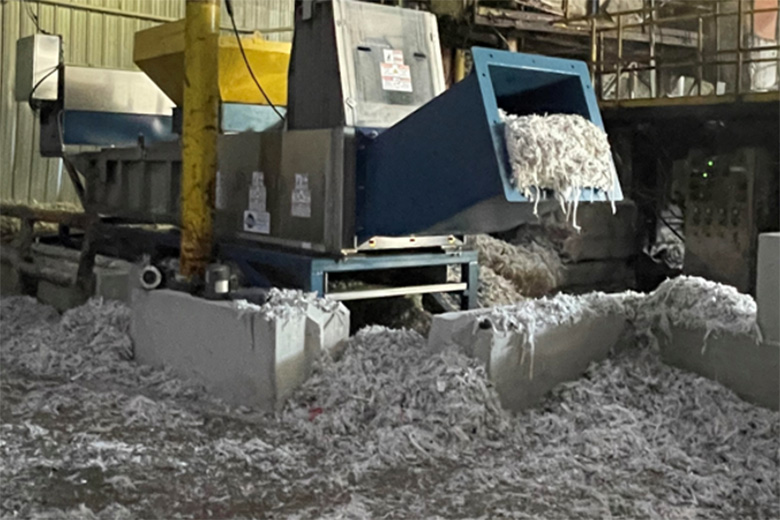
After paper recycling companies extract fiber from cartons, they’re often left with a plastic-aluminum mix that’s sent to disposal. An Italian company has begun recycling that mix into pellets.

Startup Ecoplasteam, based in northern Italy, has partnered with nearby recycling equipment company AMUT to develop a mechanical recycling system for polylaminated materials. Rather than attempting to separate the ultra-thin layers of aluminum and polyolefin film, the system processes them together into pellet form.

Aluminum is used in cartons as a barrier layer to prevent oxidation and light damage, giving foods extended shelf life at room temperature. According to carton maker TetraPak, the company’s aseptic cartons use a layer of aluminum eight times thinner than a human hair.

AMUT issued a press release about the recycling technology in late June. In a follow-up interview with Plastics Recycling Update, Anthony Georges, president of AMUT North America, provided more details on the technology and end product.

At its production facility in Spinetta Marengo, Italy, Ecoplasteam takes in feedstock from multiple sources, including paper mills that have already recovered cellulose from cartons and generally send the leftover mix of aluminum and PE residue to disposal.

“We’re seeing that there’s a lot of opportunities to divert a lot of waste away from the landfills now,” Georges said.

Recycling process

Novara, Italy-based AMUT supplied a polyolefin washing line and extrusion system. It’s capable of processing 4,000 kilograms (roughly 8,800 pounds) per hour, but the Ecoplasteam system is running at about 2,200 pounds per hour due to still-limited feedstock availability, Georges said. The system is basically AMUT’s standard designs with some special designs on the extruder screws and barrels, he added.

AMUT started installation in summer 2017, and the system was fully operational earlier this year, Georges said.

Ecoplasteam licenses the production process technology from a Swiss company called REPLAN Global (REPLAN stands for Recycling Planet). According to Ecoplasteam, the process involves a thorough washing to remove residual cellulose. The product is then shredded, reducing the aluminum to about one square millimeter and allowing it to be mixed in the final recipe at various levels. The material is then agglomerated to homogenize it. Finally, the melt cycle ensures optimal mixing of the different “recipe” ingredients, depending on the end use.

First published in 2013, a patent from REPLAN Global describes the process for recycling multi-layer TetraPak cartons. According to the description, the feedstock arriving from paper mills contains about 40 percent water, 30 percent cellulose, 15 percent PE and 15 percent aluminum. A float-sink tank and then a centrifuge are used to remove heavy contaminants, water and cellulose, before the remaining material is milled and dried.

The result is a material made up of roughly 49 percent PE, 49 percent aluminum, 1 percent water and 1 percent cellulose, according to REPLAN Global’s patent. The plastic and aluminum can then be melted and extruded into pellets.

The patent description explains that details of the process and equipment may vary widely, but the principle of the invention is the same.

End-use applications

Ecoallene productsThe final product, an aluminum-filled LDPE, currently has a couple of names, according to Georges: POAL, which stands for polyolefin-aluminum, and “Ecoallene.” Georges said the plastic-metal composite has been injection molded by a manufacture into new products, which have a sparkle from the aluminum content. According to the press release, POAL can be used in the automotive, building, giftware and general tools markets. Georges suggested it could replace some higher-molecular-weight virgin resin.

“What we’re seeing is the durability of of it is very good, and also the flexibility,” Georges said. “Because of the aluminum, you have impact resistance already built into it as well.”

REPLAN Global has technical information on three different formulations of Ecoallene on its website.

Georges said he sees potential to replicate the recycling technology with multilayer packaging without metal.

“We think with this technology the next step is to develop a useful multilayer pellet from other packaging streams, such as the pouches we’re seeing out in the marketplace that have the same type of oxygen barrier materials,” he said.

 

Tags: EuropeFilm & FlexiblesHard-to-Recycle MaterialsTechnology
TweetShare
Jared Paben

Jared Paben

Related Posts

Focus on recycling film, flexibles takes shape in two reports

byAntoinette Smith
February 13, 2026

The US Plastics Pact and the Alliance to End Plastic Waste released reports outlining necessary steps to improving recycling outcomes...

The electronics recycling industry is undergoing a transformation from labor-intensive manual operations to highly automated, AI-driven facilities that use advanced robotics, cleaner chemistry and digital tracking systems to extract critical materials.

The cyber-physical MRF: AI and robotics reshape e-waste recovery

byDavid Daoud
February 12, 2026

The electronics recycling industry is entering a new phase of technological acceleration. Advances in artificial intelligence, robotics, advanced chemistry, and...

Texas sues over dumped wind turbine blades

Texas sues over dumped wind turbine blades

byScott Snowden
February 10, 2026

The state attorney general sued Global Fiberglass Solutions over alleged illegal storage and disposal of all turbine blades at two...

Member states select new chair for global plastics treaty

Member states select new chair for global plastics treaty

byAntoinette Smith
February 10, 2026

During a short session, the Intergovernmental Negotiating Committee elected Chilean diplomat Julio Cordano to continue efforts toward an internationally binding...

Amcor expects flat sales volumes to continue 

byAntoinette Smith
February 6, 2026

The global packaging giant said some brand owners have lost market share while navigating an inflationary environment, and now may...

Royal Mint, Procurri partner for ITAD metals recovery

byScott Snowden
February 5, 2026

Reformation Metals partnered with Procurri to combine secure IT asset disposal with clean technology recycling that recovers up to 99%...

Load More
Next Post
Attractive shipping pricing to continue

Vietnam mulls sharper scrap import restrictions

More Posts

Chinese processing group details goals for US visit

AMP lays out vision of next-generation, AI-driven MRFs

July 24, 2024
Oregon’s Recycling Modernization Act faces injunction

Court partially blocks Oregon EPR law, dismisses bulk of lawsuit

February 10, 2026
Malaysia clamps down on illegal e-waste imports amid probes

Malaysia clamps down on illegal e-waste imports amid probes

February 6, 2026
Bipartisan reps introduce bill on recycling claims

Bipartisan reps introduce bill on recycling claims

February 12, 2026

APR, industry create proactive guidance for PET caps

February 12, 2026
NERC: Blended average prices fell 40% in third quarter

HDPE, PP bales rise as paper fiber and cans stabilize

February 12, 2026

REUSE Act heads to US House for consideration

February 9, 2026
Texas sues over dumped wind turbine blades

Texas sues over dumped wind turbine blades

February 10, 2026
The electronics recycling industry is undergoing a transformation from labor-intensive manual operations to highly automated, AI-driven facilities that use advanced robotics, cleaner chemistry and digital tracking systems to extract critical materials.

The cyber-physical MRF: AI and robotics reshape e-waste recovery

February 12, 2026

Alpek talks PET overcapacity, soft demand

February 11, 2026
Load More

About & Publications

About Us

Staff

Archive

Magazine

Work With Us

Advertise
Jobs
Contact
Terms and Privacy

Newsletter

Get the latest recycling news and analysis delivered to your inbox every week. Stay ahead on industry trends, policy updates, and insights from programs, processors, and innovators.

Subscribe

Welcome Back!

Login to your account below

Forgotten Password?

Retrieve your password

Please enter your username or email address to reset your password.

Log In

Add New Playlist

No Result
View All Result
  • The Latest
  • Analysis
  • Recycling
  • E-Scrap
  • Plastics
  • Policy Now
  • Conferences
    • E-Scrap Conference
    • Plastics Recycling Conference
    • Resource Recycling Conference
    • Textiles Recovery Summit
  • Magazine
  • About Us
  • Advertise
  • Archive
  • Jobs
  • Staff
Subscribe
This website uses cookies. By continuing to use this website you are giving consent to cookies being used. Visit our Privacy and Cookie Policy.