






Resource Recycling
  • The Latest
  • Analysis
    • All
    • Certification Scorecard
    • Industry Announcements
    • Opinion
    The electronics recycling industry is undergoing a transformation from labor-intensive manual operations to highly automated, AI-driven facilities that use advanced robotics, cleaner chemistry and digital tracking systems to extract critical materials.

    The cyber-physical MRF: AI and robotics reshape e-waste recovery

    Certification scorecard for the week of Feb. 9, 2026

    Meta-Corning deal signals IT hardware retirement wave

    Meta-Corning deal signals IT hardware retirement wave

    Malaysia clamps down on illegal e-waste imports amid probes

    Malaysia clamps down on illegal e-waste imports amid probes

    URT builds alliance to remake electronics plastics at scale

    ICYMI: Top 5 e-scrap stories from January 2026

    The electronics recycling industry is undergoing a transformation from labor-intensive manual operations to highly automated, AI-driven facilities that use advanced robotics, cleaner chemistry and digital tracking systems to extract critical materials.

    Certification scorecard for the week of Feb. 2, 2026

    Auditors warn EU may fall short on critical metals

    Auditors warn EU may fall short on critical metals

    Industry announcements for January 2026

    Industry announcements for February 2026

    ICYMI: Top 5 recycling stories from January 2026

  • Conferences
  • Publications

    Other Topics

    Textiles
    Organics
    Packaging
    Glass
    Brand Owners

    Metals
    Technology
    Research
    Markets
    Grant Watch

    All Topics

Subscribe
No Result
View All Result
Resource Recycling
  • The Latest
  • Analysis
    • All
    • Certification Scorecard
    • Industry Announcements
    • Opinion
    The electronics recycling industry is undergoing a transformation from labor-intensive manual operations to highly automated, AI-driven facilities that use advanced robotics, cleaner chemistry and digital tracking systems to extract critical materials.

    The cyber-physical MRF: AI and robotics reshape e-waste recovery

    Certification scorecard for the week of Feb. 9, 2026

    Meta-Corning deal signals IT hardware retirement wave

    Meta-Corning deal signals IT hardware retirement wave

    Malaysia clamps down on illegal e-waste imports amid probes

    Malaysia clamps down on illegal e-waste imports amid probes

    URT builds alliance to remake electronics plastics at scale

    ICYMI: Top 5 e-scrap stories from January 2026

    The electronics recycling industry is undergoing a transformation from labor-intensive manual operations to highly automated, AI-driven facilities that use advanced robotics, cleaner chemistry and digital tracking systems to extract critical materials.

    Certification scorecard for the week of Feb. 2, 2026

    Auditors warn EU may fall short on critical metals

    Auditors warn EU may fall short on critical metals

    Industry announcements for January 2026

    Industry announcements for February 2026

    ICYMI: Top 5 recycling stories from January 2026

  • Conferences
  • Publications

    Other Topics

    Textiles
    Organics
    Packaging
    Glass
    Brand Owners

    Metals
    Technology
    Research
    Markets
    Grant Watch

    All Topics

Subscribe
No Result
View All Result
Resource Recycling
No Result
View All Result
Home Plastics

WM and other plastic exporters react to China’s ban

Colin StaubbyColin Staub
July 26, 2017
in Plastics
WM and other plastic exporters react to China’s ban

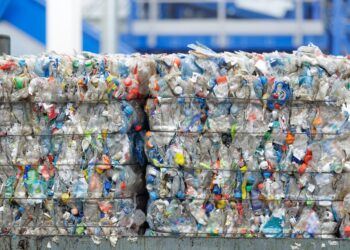
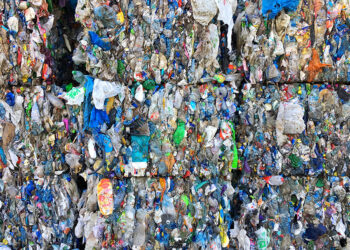
U.S. recycling leaders who are closely tied to export markets say China’s proposed import prohibition on recovered plastic and other materials could drive changes all the way back to the curb.

In a July 18 filing with the World Trade Organization (WTO), China’s Ministry of Environmental Protection said recycled PET, PE, PVC, PS and “other” plastics – as well as unsorted mixed paper, textiles and some trace metals – would be banned from import into the country later this year.

The Chinese government has offered no further clarification on the finer points of what would be covered. But even without all the concrete details, companies are taking the announcement seriously.

“We’re reacting immediately to this, as though it were to happen today, just because of the timing and when some of these shipments get there,” said Brent Bell, vice president of recycling for Waste Management.

Resource Recycling spoke to the country’s largest hauler, as well as a Midwest recycling company and a PET broker, and learned how they view the imports ban and how it relates to previous Chinese regulatory efforts.

More serious than past actions?

Waste Management, the largest waste and recycling company in North America, anticipates it will feel the biggest impact in the market for plastic Nos. 3-7. Most of its PET and HDPE grades stay in the U.S., Bell said, but China is a more significant downstream outlet for the lower-grade plastics.

For a traditional residential recycling company, Bell said he views the ban as more impactful on the plastics side than fiber, particularly if the company is putting out a higher grade of paper as Waste Management has done for the past several years.

The WTO filing does not give a firm adoption date but mentions an “entry into force” date in September, and it says the ban would be enacted by the end of the year. For Waste Management, that means containers leaving for China in the next few weeks could potentially arrive when the new regulations are in place.

“It didn’t come as a surprise to us, because we saw some foreshadowing of this earlier on in the year,” Bell said. “We just didn’t know what specifically it meant and what the time frame would be, but for them to file with the World Trade Organization, it’s a pretty significant change.”

In some ways Waste Management views the latest announcement as a step into uncharted territory. Other Chinese import crackdowns in recent years, such as Green Fence and National Sword, have been framed as heightened enforcement of existing regulations.

“I view [the ban] a lot differently and probably a lot more seriously to some degree,” Bell said. “Because they’re actually announcing that there are specific materials and grades that … will not be allowed in the country.”

“We’re reacting immediately to this, as though it were to happen today.”
–Brent Bell, Waste Management

Bell said the ban could lead to more domestic 3-7 processing capacity. If China disappears as a downstream outlet, domestic processors of lower-grade plastics will not have to compete with Chinese prices, “so maybe their business model works today,” he said.

Bell also said the move will likely play into discussions at the local government level. Whenever there is a significant end-market change outside of commodities pricing, that gets communicated to the company’s customers, including municipal recycling programs.

“We do let them know there could be some interruption for some period of time and it may impact all the materials that are accepted in the program,” Bell said.

Finding new markets, pushing quality

For Michigan-based Royal Oak Recycling, a hauler and broker that moves close to 800,000 tons per year of material, shifting exports away from China actually began about 18 months ago.

Between Chinese regulatory actions and simply a higher volume of material it needed to move, the company started looking to alternative countries. It took a gamble on several emerging economies in other parts of the world and has formed solid relationships with buyers, said Craig Reeves, the company’s director of sales and operations. Plastic scrap makes up about a quarter of the material the company moves, and of that volume, Reeves estimates just 1 percent ships to China.

As Chinese regulations continue to roll in, other companies are apparently looking to follow suit.
“Because a lot of people have stopped shipping plastic scrap into China, it’s flooded some of the other markets with more availability of the material,” Reeves said.

That fact could mean a heightened emphasis on quality may be seen soon in those alternative markets, Reeves noted.

Ed Mamou, vice president of Royal Oak Recycling, described the ban as an opportunity to review curbside recycling programs and improve their quality. He pointed to the companies that began sorting polypropylene out of mixed bales as a response to Green Fence, improving the value of those curbside streams. The ban could also spur more communication between the various players in a residential stream, with increased outreach and efforts to minimize contamination.

“You have to educate people and hold people accountable, and if you don’t, you end up with garbage,” said Reeves. “That’s the message, that they want [garbage] to stop coming into their country. And it’s no different than what we would want coming into our own country at the end of the day.”

“I find it hard to believe that China is going to cut all imports, because they rely so heavily on it and they manufacture so much of the plastic [products] in the world.”
–Sally Houghton, Plastic Recycling Corporation of California

Mamou echoed that communication across the recycling supply chain will be key during the imports ban, extending from hauler to end user.

“If I’m a broker of material working with the MRF, I would have already been telling them to clean it up, otherwise you’re going to have no outlets for this material,” he said. “So if the broker’s not doing his job telling the MRF, or the end user’s not telling the MRF to clean it up better, then everybody’s in a little bit of trouble.”

Doubts about ban implementation

The nonprofit Plastic Recycling Corporation of California (PRCC) buys and sells recovered PET bottles, moving more than 100 million pounds per year. PRCC handles about a third of the recovered PET bottles generated in California.

Sally Houghton, materials manager for PRCC, said around 85 percent of its recovered PET sales are domestic. Most of the remainder is exported to China.

But Houghton is not convinced China will fully ban all of the materials outlined in the recent announcement.

“I find it hard to believe that China is going to cut all imports, because they rely so heavily on it and they manufacture so much of the plastic [products] in the world,” Houghton said.

However, she said if the ban is in fact enacted, “it would cause a big issue for the industry. Not just for bottles but for other plastics, lower-grade plastics that really don’t have many alternatives. PET’s always got alternatives, but I think other grades, the 3-7s and so on, I think they’re going to struggle much more.”

In the wake of Green Fence, the U.S. saw a push for more domestic plastics processing, and Houghton said PRCC could likely find domestic markets for the material it currently sends to China. She added, though, that the effort to keep more material in North America after Green Fence has come with struggles as processors were forced to work harder to get their lower-grade material moved into market.

“It did have, in some ways, a good impact,” she said. “But it also meant those that really didn’t have upgraded material had great difficulty.”

 

Sorema

Tags: MarketsTrade & Tariffs
TweetShare
Colin Staub

Colin Staub

Colin Staub was a reporter and associate editor at Resource Recycling until August 2025.

Related Posts

UN trade data, tools aim to shape plastics treaty talks

UN trade data, tools aim to shape plastics treaty talks

byAntoinette Smith
February 17, 2026

UN agencies aim to use the harmonized trade data and a statistical framework to improve outcomes for the global negotiations,...

NERC: Blended average prices fell 40% in third quarter

HDPE, PP bales rise as paper fiber and cans stabilize

byRecyclingMarkets.net Staff
February 12, 2026

National average prices of post-consumer material bales were flat to higher on the month.

Alpek talks PET overcapacity, soft demand

byAntoinette Smith
February 11, 2026

Executives from the Mexico-headquartered polyester giant said the Chinese government has acknowledged issues and convened PET producers, but Alpek is...

Terex beats ESG integration targets as REV group merger closes

byStefanie Valentic
February 11, 2026

Terex exceeded $25 million in ESG integration synergy targets and completed its REV Group merger, expanding its specialty equipment platform...

Packaging Corp. to buy Greif containerboard segment

Export trends offset containerboard production decline

byStefanie Valentic
February 6, 2026

AF&PA reported a 4% decline in containerboard production for 2025, while packaging paper shipments rose 2% in December and boxboard...

Malaysia clamps down on illegal e-waste imports amid probes

Malaysia clamps down on illegal e-waste imports amid probes

byDavid Daoud
February 6, 2026

Malaysia’s growing role as a hub for global e‑scrap is colliding with corruption probes, large container seizures and regional backlash. ...

Load More
Next Post

California seeks comments on mandatory packaging criteria

More Posts

Chinese processing group details goals for US visit

AMP lays out vision of next-generation, AI-driven MRFs

July 24, 2024
Oregon’s Recycling Modernization Act faces injunction

Court partially blocks Oregon EPR law, dismisses bulk of lawsuit

February 10, 2026
Malaysia clamps down on illegal e-waste imports amid probes

Malaysia clamps down on illegal e-waste imports amid probes

February 6, 2026

APR, industry create proactive guidance for PET caps

February 12, 2026

REUSE Act heads to US House for consideration

February 9, 2026
Bipartisan reps introduce bill on recycling claims

Bipartisan reps introduce bill on recycling claims

February 12, 2026

Alpek talks PET overcapacity, soft demand

February 11, 2026
Texas sues over dumped wind turbine blades

Texas sues over dumped wind turbine blades

February 10, 2026
The electronics recycling industry is undergoing a transformation from labor-intensive manual operations to highly automated, AI-driven facilities that use advanced robotics, cleaner chemistry and digital tracking systems to extract critical materials.

The cyber-physical MRF: AI and robotics reshape e-waste recovery

February 12, 2026
Meta-Corning deal signals IT hardware retirement wave

Meta-Corning deal signals IT hardware retirement wave

February 9, 2026
Load More

About & Publications

About Us

Staff

Archive

Magazine

Work With Us

Advertise
Jobs
Contact
Terms and Privacy

Newsletter

Get the latest recycling news and analysis delivered to your inbox every week. Stay ahead on industry trends, policy updates, and insights from programs, processors, and innovators.

Subscribe

Welcome Back!

Login to your account below

Forgotten Password?

Retrieve your password

Please enter your username or email address to reset your password.

Log In

Add New Playlist

No Result
View All Result
  • The Latest
  • Analysis
  • Recycling
  • E-Scrap
  • Plastics
  • Policy Now
  • Conferences
    • E-Scrap Conference
    • Plastics Recycling Conference
    • Resource Recycling Conference
    • Textiles Recovery Summit
  • Magazine
  • About Us
  • Advertise
  • Archive
  • Jobs
  • Staff
Subscribe
This website uses cookies. By continuing to use this website you are giving consent to cookies being used. Visit our Privacy and Cookie Policy.