
Resource Recycling
  • The Latest
  • Analysis
    • All
    • Certification Scorecard
    • Industry Announcements
    • Opinion

    From CES to the shredder: What 2026 PCs mean for ITAD

    Certification scorecard for week of Jan. 12, 2026

    Industry announcements for January 2026

    Certification scorecard for Dec. 18-30, 2025

    Certification scorecard for Dec. 18, 2025

    Industry announcements for the week of Dec. 15

    Certification scorecard for December 10, 2025

    Industry Announcements for Week of December 8

    Certification Scorecard for December 3, 2025

  • Conferences
  • Publications

    Other Topics

    Textiles
    Organics
    Packaging
    Glass
    Brand Owners

    Metals
    Technology
    Research
    Markets
    Grant Watch

    All Topics

Subscribe
No Result
View All Result
Resource Recycling
  • The Latest
  • Analysis
    • All
    • Certification Scorecard
    • Industry Announcements
    • Opinion

    From CES to the shredder: What 2026 PCs mean for ITAD

    Certification scorecard for week of Jan. 12, 2026

    Industry announcements for January 2026

    Certification scorecard for Dec. 18-30, 2025

    Certification scorecard for Dec. 18, 2025

    Industry announcements for the week of Dec. 15

    Certification scorecard for December 10, 2025

    Industry Announcements for Week of December 8

    Certification Scorecard for December 3, 2025

  • Conferences
  • Publications

    Other Topics

    Textiles
    Organics
    Packaging
    Glass
    Brand Owners

    Metals
    Technology
    Research
    Markets
    Grant Watch

    All Topics

Subscribe
No Result
View All Result
Resource Recycling
No Result
View All Result
Home Plastics

Analysis says regulations hurt California bottle redemption centers

Colin StaubbyColin Staub
May 2, 2017
in Plastics

The Golden State’s container redemption program differs from bottle bills in other states, and according to a new study, that fact might be hindering the system’s effectiveness.

The California Legislative Analyst’s Office (LAO) recently stated a convoluted system that is used to determine subsidies to redemption centers has contributed to the closing of more than 300 of those sites in the past 16 months. The centers are critical to recovering drink containers covered by the California Redemption Value (CRV) program.

The subsidy issue was one point noted in an analysis from LAO that was released last month. It discussed the unintended consequences of the way the state program is set up. The review pointed to a few aspects peculiar to California’s program and contrasted them with programs in nine other deposit states. LAO is a nonpartisan office that advises the legislature.

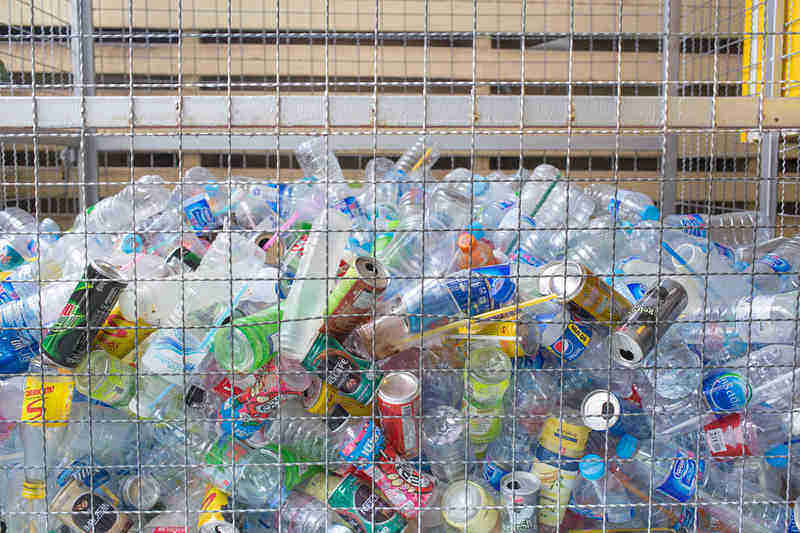
The CRV program adds a 5- or 10-cent surcharge on drink containers, with the amount depending on container size. The charge is refunded when the container is returned for recycling. Most returns are done through collection centers, also known as redemption or recycling centers.

The CRV program collects an immense number of containers. From July 2015 through June 2016 – the most recent 12-month period for which figures are available – the state redeemed nearly 8.6 billion PET containers and 177 million HDPE containers, out of more than 18.7 billion beverage containers altogether.

Collection center closures

As of early April there were 1,692 collection centers operating, down from 1,832 one year earlier. The CRV program establishes “convenience zones” that cover a half-mile around supermarkets with annual sales of more than $2 million. If there is no collection center in these areas, the supermarket is responsible for redeeming covered containers or paying a daily fee to opt out.

The percentage of convenience zones unserved by a collection center statewide jumped from 14 percent to 25 percent from March 2016 to March 2017. That impacts businesses, which become legally obligated to redeem or pay the fee, and consumers, who have fewer options for redemption.

California collection centers are responsible for selling containers to processors, as opposed to other states in which beverage distributors fund that process. That means collection centers have to absorb the cost when scrap values fall. The LAO noted that often hits collection centers harder than it does distributors, which tend to be larger companies.

That’s why collection centers located within convenience zones receive payments from the California Department of Resources Recycling and Recovery (CalRecycle) to offset the difference between scrap values and collection costs. This is similar to the handler fee paid to redemption centers in many other states, except for how the fee is set. Rather than an amount set by lawmakers, California’s payments are based on the average cost to collection centers.

But the LAO pointed out the handler fee amount is only updated quarterly, which often fails to keep up with quickly fluctuating commodity prices. Other unexpected economic changes can take even longer to factor into the handler fee. For instance, the report cited a recent raise in the minimum wage and explained that “these increases will not fully be reflected in the handling fee amount for several years until data can be collected and incorporated in the next cost survey completed following those increases – likely in 2020.”

Lacking flexibility

Finally, the LAO report took note of the operational flexibility redemption outlets enjoy in other states, compared with the relative rigidity of California’s redemption center requirements. Along with simple requirements such as mandated hours of operation, California prohibits certain departures from standard bottle collection systems that have been implemented in other states. As examples, mobile collection programs, such as those in Hawaii and New York, are not allowed. Bulk collection, in which customers can drop off bags full of containers for redemption, is also limited.

“Removing requirements that are costly or not effective could make additional closures less likely,” the report concluded. “If there is concern that eliminating some requirements might reduce consumer convenience, the Legislature could consider using pilot projects to collect data and monitor the effects of the change before implementing them statewide.”


 

Fimic

Tags: CaliforniaCollectionContainer DepositsLegislation
TweetShare
Colin Staub

Colin Staub

Colin Staub was a reporter and associate editor at Resource Recycling until August 2025.

Related Posts

Colorado expands repair rights as electronics rules take effect

Colorado expands repair rights as electronics rules take effect

byScott Snowden
January 19, 2026

A new Colorado law expanding consumers’ right to repair electronic devices took effect this month, requiring manufacturers to provide access...

Houston, MRF operator sign chemical recycling MOU

CompuCycle CEO: Transparency drives electronics diversion

byStefanie Valentic
January 16, 2026

As Houston's role as a major port city raises concerns about electronics being exported overseas for processing, CompuCycle CEO Kelly...

New Jersey passes bill on single-use service items

byAntoinette Smith
January 14, 2026

The New Jersey Legislature has passed a bill that would limit restaurant owners from distributing plastic serviceware, and is headed...

CalRecycle withdraws proposed regs for SB 54

CalRecycle withdraws proposed regs for SB 54

byAntoinette Smith
January 12, 2026

In a late afternoon email on Jan. 9, the state's resource and recycling agency abruptly withdrew proposed regulations for the...

California posts initial recycling rates

California posts initial recycling rates

byAntoinette Smith
January 9, 2026

The data showed that plastic packaging that will be covered under SB 54 is being recycled at very low rates,...

Diversion Dynamics: Recycling partnerships are an art form, but crucial for progress

Diversion Dynamics: Recycling partnerships are an art form, but crucial for progress

byStefanie Valentic
January 8, 2026

Whether you're operating a MRF, managing municipal contracts or navigating supplier relationships, the daily pressures pile up: financial constraints, shifting...

Load More
Next Post

Assessing the ROI of EPR

More Posts

#PRC2026 Speaker Spotlight: Joel Morales

#PRC2026 Speaker Spotlight: Joel Morales

December 22, 2025
Panel tracks shifts in e-scrap as policy, AI reshape

Panel tracks shifts in e-scrap as policy, AI reshape

December 22, 2025
Robot pilot targets legacy parts to help supply defense

Robot pilot targets legacy parts to help supply defense

December 29, 2025
Solar recycling ramps up in NY with new pickup service

Solar recycling ramps up in NY with new pickup service

December 23, 2025
State policy drives tire recycling investment in Southeast

State policy drives tire recycling investment in Southeast

December 23, 2025
New Hampshire makes progress on waste goals

New Hampshire makes progress on waste goals

December 22, 2025
Federal PACK Act aims to preempt ‘patchwork’ of state laws

Federal PACK Act aims to preempt ‘patchwork’ of state laws

December 23, 2025
APR year in review

APR year in review

December 30, 2025
#PRC2026 Speaker Spotlight: Christine Yeager

#PRC2026 Speaker Spotlight: Christine Yeager

December 29, 2025
House resolution aims to make recyclability central to product design

House resolution aims to make recyclability central to product design

December 30, 2025
Load More

About & Publications

About Us

Staff

Archive

Magazine

Work With Us

Advertise
Jobs
Contact
Terms and Privacy

Newsletter

Get the latest recycling news and analysis delivered to your inbox every week. Stay ahead on industry trends, policy updates, and insights from programs, processors, and innovators.

Subscribe

Welcome Back!

Login to your account below

Forgotten Password?

Retrieve your password

Please enter your username or email address to reset your password.

Log In

Add New Playlist

No Result
View All Result
  • The Latest
  • Analysis
  • Recycling
  • E-Scrap
  • Plastics
  • Policy Now
  • Conferences
    • E-Scrap Conference
    • Plastics Recycling Conference
    • Resource Recycling Conference
    • Textiles Recovery Summit
  • Magazine
  • About Us
  • Advertise
  • Archive
  • Jobs
  • Staff
Subscribe
This website uses cookies. By continuing to use this website you are giving consent to cookies being used. Visit our Privacy and Cookie Policy.