




Resource Recycling
  • The Latest
  • Analysis
    • All
    • Certification Scorecard
    • Industry Announcements
    • Opinion
    Northeast commodity values for Q2 reach 2-year high

    Will a MRF shortage limit EPR growth?

    From claims to custody: PCR procurement grows up

    Certification scorecard — week of September 7

    iFixit launches 2-week circuit board training course

    Printed circuit board (PCB) recycling explained

    Sims: Parts reuse helped offset 2020 cloud challenges

    ITAD providers should choose their data-center niche

    Dell expects PC refresh to extend into next year

    Dell, HP show enterprise PC spending separating from unit volume

    Update of e-Stewards to be released for comment

    Certification scorecard for the week of Aug. 31

  • Conferences
    • Resource Recycling Conference
    • Plastics Recycling Conference
    • E-Scrap: The Longevity Conference
    • Textiles Recovery Summit
  • Publications
    • E-Scrap News
    • Plastics Recycling Update
    • Policy Now
    • Resource Recycling
    • Other Topics
      • All Topics
      • Brand Owners
      • Critical Minerals
      • Glass
      • Grant Watch / RFPs
      • Markets
      • Organics
      • Packaging
      • Research
      • Technology
      • Textiles
Subscribe
No Result
View All Result
Resource Recycling
  • The Latest
  • Analysis
    • All
    • Certification Scorecard
    • Industry Announcements
    • Opinion
    Northeast commodity values for Q2 reach 2-year high

    Will a MRF shortage limit EPR growth?

    From claims to custody: PCR procurement grows up

    Certification scorecard — week of September 7

    iFixit launches 2-week circuit board training course

    Printed circuit board (PCB) recycling explained

    Sims: Parts reuse helped offset 2020 cloud challenges

    ITAD providers should choose their data-center niche

    Dell expects PC refresh to extend into next year

    Dell, HP show enterprise PC spending separating from unit volume

    Update of e-Stewards to be released for comment

    Certification scorecard for the week of Aug. 31

  • Conferences
    • Resource Recycling Conference
    • Plastics Recycling Conference
    • E-Scrap: The Longevity Conference
    • Textiles Recovery Summit
  • Publications
    • E-Scrap News
    • Plastics Recycling Update
    • Policy Now
    • Resource Recycling
    • Other Topics
      • All Topics
      • Brand Owners
      • Critical Minerals
      • Glass
      • Grant Watch / RFPs
      • Markets
      • Organics
      • Packaging
      • Research
      • Technology
      • Textiles
Subscribe
No Result
View All Result
Resource Recycling
No Result
View All Result
Home Plastics

Equipment allows reclaimer to enter higher-end markets

byJared Paben
April 28, 2017
in Plastics
Equipment allows reclaimer to enter higher-end markets

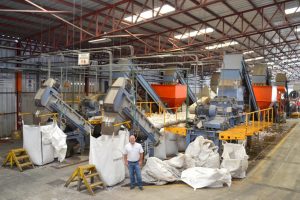
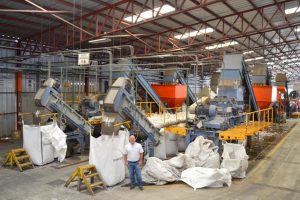
When recycling processor Invema switched from a high-speed friction washer to an updated system relying on boilers and chemicals, something unexpected happened: Energy usage decreased by 20 percent.

The technology was one key part of an equipment package enabling the Honduras-based recycling company to begin producing food-grade PET pellets and sheets. George Gatlin, owner of Invema, spoke about his company’s leap forward in capabilities during a Latin America session at the 2017 Plastics Recycling conference, which was held in New Orleans in March.

Invema’s investments were driven in part by increasing competition in Central America, where many reclaimers began investing in grinding and washing equipment, Gatlin said. But they’re realizing that, with current market prices, they can’t survive simply selling non-food-grade washed flake. “So we are seeing definitely in the region more people invest in the next step, be it sheet, pellet, fiber, strapping,” he said. “That’s creating competition.”

Founded by Gatlin in 1994 as a aluminum can recycling company, Invema today recycles metals, cardboard, car batteries, electronics and PET bottles. Now the largest PET reclaimer in Central America, Invema recently purchased lines for washing, pelletizing and producing sheet. The move helped the company diversify its products, Gatlin said.

“As we’ve seen the markets in the last two years – they’ve been terrible,” Gatlin said. “By being diversified, we can add value to what we’re doing and, more importantly, create stability to our suppliers.”

Food-grade products

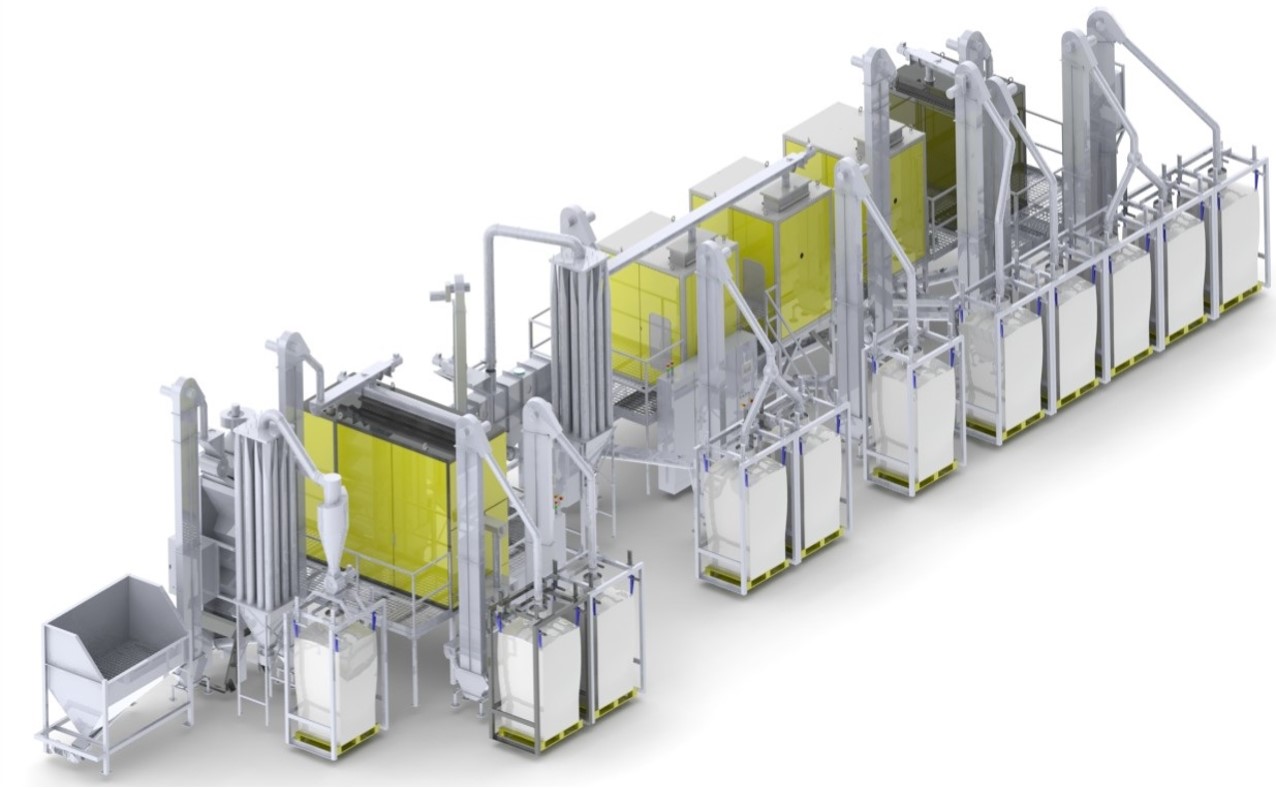
With financial assistance from the Washington, D.C.-based Inter-American Development Bank, Invema purchased and, in July 2016, installed the 3-metric-tons-per-hour wash line made by Herbold Meckesheim. It also bought Starlinger food-grade pellet equipment and a Starlinger food-grade sheet system. The extrusion equipment was all installed during the first quarter of 2017. Gatlin said his company chose the equipment after consulting with Plastics Forming Enterprises, an independent testing and R&D company based on New Hampshire.

Invema is currently producing about 4.4 million pounds of washed PET flakes each month, Gatlin told Plastics Recycling Update in late April. Of that amount, about 1.3 million pounds will be recycled into food-grade pellets and 1.2 million pounds will be recycled into food-grade sheet. The remaining flake will be sold on the market.

Invema is currently in the process of obtaining approval to sell the pellets to major beverage brands, including Coca-Cola, Gatlin said. They expect to get the OK by around July. Invema is in the process of sending samples from the sheet line to various thermoforming customers, mostly in the U.S.

Currently, the company is selling flakes washed in the Herbold system primarily in the U.S. to the rPET resin, sheet, fiber and strapping industries, he said.

Herbold, a German company, issued a press release about the installation, noting that Invema is producing recycled post-consumer plastic that meets U.S. Food and Drug Administration standards. The press release gave a basic description of the Herbold equipment process: PET bottles are first pre-sorted before they’re size-reduced in two Herbold granulators, each with a capacity of 1,800 kilograms per hour. Then, the flakes are washed cold and hot, dried and sent to flake-sorting equipment.

Invema has also invested in plastics recycling laboratories at its headquarters, which sits on about 50 acres in the city of San Pedro Sula, in northern Honduras. Specifically, the company now has a flake lab to measure PVC content, color, density and humidity. But the bigger-ticket item was a pellet lab with gas chromatography equipment. That lab measure limonene, benzene, acetaldehyde and viscosity.

“So it’s been a very educational last two years,” Gatlin told the audience.

From residue to resin

Gatlin also described Invema’s efforts to tackle a tricky stream: the caps, rings and labels that often constitute residue from a wash line. For a long time, Invema was simply disposing of this material.

Then, the company also installed a Herbold polyolefin wash line to rewash the caps, rings and labels and sort the materials. The sorting of labels from rings and caps is done with hydrocyclone separation steps from Herbold. Hydrocyclones work similar to float-sink tanks to sort plastics by density but use a feeding pump and rotational forces of moving water to aid in separation.
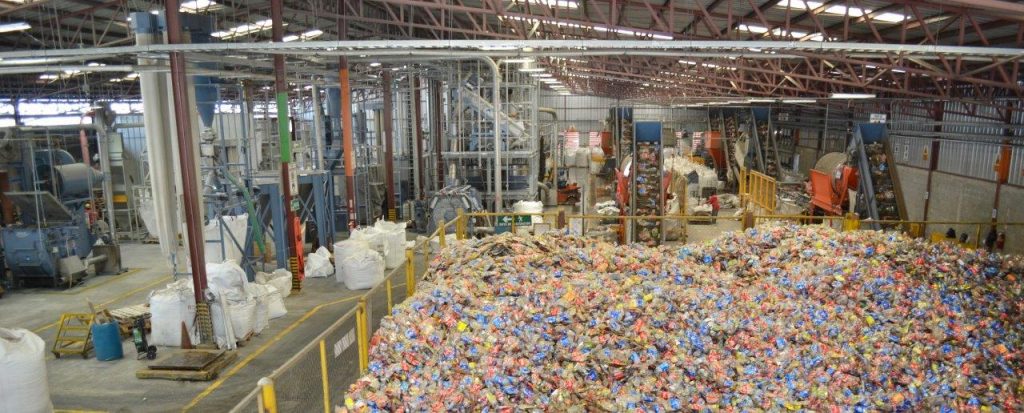
The material is then send into an NGR extruder line, Gatlin said. That transforms the BOPP labels into PP pellets and the caps into HDPE pellets. Today, the company is producing about 150,000 pounds of PP pellets and 400,000 pounds of HDPE pellets per month, Gatlin said.

“It hasn’t been easy. It’s a very, very complicated thing to do, and we’re still refining it,” he said. “But at least we’re able to use the whole bottle, and that’s great.”

At the end of the Latin America session, an attendee asked what advice the speakers would share. Gatlin suggested investing in the best technology possible.

“It’s expensive at the beginning, but at the end you’re buying experience and you’re buying efficiency,” he said. “And if you have the right tool, then you’ll be able to have the right – let’s calls it weapons – to be able to go out and fight and compete and succeed.”

 

Plastics Recycling 2018

Tags: EquipmentHDPEPPReclaimersTechnology
TweetShare
Jared Paben

Jared Paben

Related Posts

New Jersey pushes back PCR mandate to 2030

New Jersey pushes back PCR mandate to 2030

byAntoinette Smith
September 10, 2026

One of the highest-profile US laws affecting recyclers has been amended only four months before implementation, with the state citing...

Northeast commodity values for Q2 reach 2-year high

Will a MRF shortage limit EPR growth?

byKatherine Doerr
September 10, 2026

Where will all the EPR-collected SSR go? Will there be enough MRFs to handle the material?

iFixit launches 2-week circuit board training course

Printed circuit board (PCB) recycling explained

byJavier Castilloand2 others
September 9, 2026

Recycling PCBs presents significant technical challenges because these waste streams combine metallic, non-metallic and electronic fractions with different characteristics and...

Bale pricing mostly flat for September

Bale pricing mostly flat for September

byRecyclingMarkets.net Staff
September 9, 2026

PET, HDPE and PP grades remain steady at low levels, while paper grades are marginally higher.

Inside the sneaker recycling boom

Report: AI opportunity robust in footwear recycling

byPaul Lane
September 8, 2026

BCC Research found AI’s usage in the footwear recycling space is growing but remains in the early stages, holding the...

Dell expects PC refresh to extend into next year

Dell, HP show enterprise PC spending separating from unit volume

byDavid Daoud
September 3, 2026

Large enterprises are still refreshing their PC fleets, but the broader market is becoming less dependable as a source of...

Load More
Next Post
Equipment Spotlight: Separate black PS from black ABS

Equipment Spotlight: Separate black PS from black ABS

2026 Buyers’ Guide

Equipment, services and technology suppliers serving the recycling industry.

Browse the Guide

More Posts

New Jersey pushes back PCR mandate to 2030

New Jersey pushes back PCR mandate to 2030

September 10, 2026
Lawsuits hover days after SB 54 approval

Preparing for SB 54 design compliance

September 8, 2026
Northeast commodity values for Q2 reach 2-year high

Will a MRF shortage limit EPR growth?

September 10, 2026

SB 54 Unpacked: Can film catch up to cartons?

September 4, 2026
Analysis: CA climate rules set off ripple effect for thousands

SB 54 Unpacked: California jurisdictions face scramble to comply

September 2, 2026
Sims: Parts reuse helped offset 2020 cloud challenges

ITAD providers should choose their data-center niche

September 8, 2026
Alpek closing Pennsylvania RPET plant

Alpek seizing on war-related opportunity 

July 27, 2026
Study explores cleanliness of food packaging in bins

SB 54 Unpacked: REMs, reimbursements remain moving targets

September 3, 2026
Hawaii's state capitol building.

Funding lapse leaves Hawaii e-scrap collectors seeking answers

September 10, 2026
Bipartisan reps introduce bill on recycling claims

House subcommittee advances PACK Act

September 1, 2026
Load More

About & Publications

About Us

Staff

Archive

Magazines

Work With Us

Advertise
Jobs
Contact
Terms and Privacy

Newsletters

Get the latest recycling news and analysis delivered to your inbox every week. Stay ahead on industry trends, policy updates, and insights from programs, processors, and innovators.

Subscribe

Welcome Back!

Login to your account below

Forgotten Password?

Retrieve your password

Please enter your username or email address to reset your password.

Log In

Add New Playlist

No Result
View All Result
  • The Latest
  • Analysis
  • Recycling
  • E-Scrap
  • Plastics
  • Policy Now
  • Conferences
    • E-Scrap Conference
    • Plastics Recycling Conference
    • Resource Recycling Conference
    • Textiles Recovery Summit
  • Magazines
  • About Us
  • Advertise
  • Archive
  • Jobs
  • Staff
Subscribe
This website uses cookies. By continuing to use this website you are giving consent to cookies being used. Visit our Privacy and Cookie Policy.