

 A five-year-old plastics recycling equipment company based in Vermont is focusing its products on the layperson and filling a void in the recycling world.
Tyler McNaney started Filabot in 2011, during his first semester in college. His small-scale machines turn used plastic into feedstock for 3-D printers.
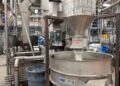
Filabot sells extruders and grinders in multiple sizes: grinders for bigger volumes of plastic and smaller ones for home users or college classrooms. The company’s current machines can process up to 2 pounds of material per hour, and McNaney said the company is working on models that are capable of handling 5-10 pounds per hour.
McNaney recently talked with Plastics Recycling Update: Technology Edition about Filabot’s growth and how the company’s concept can help solve recycling problems in communities around the world.
Question: Can you describe how the Filabot equipment works?
McNaney: Filabot is basically a plastic extruder that takes plastic pellets or ground up materials. It pressurizes [material], melts it and then puts it on a filament spool for 3-D printing.
Question: Plastics recycling can be complicated, especially with different resins and various additives. Is this something people without plastics-recycling experience can use?
Answer: Yeah, our system is very simple. We do have a few different levels of our system. We have an entry-level system, we have a production-level and then we have a reclamation-level. All of our systems in general are very simple to use. There’s no complicated software, it’s really setting the temperature, putting the material in, it processes and then putting it in our extruder system and making filament from it.
Question: How does the material have to be prepared before it goes into the extruder?
Answer: For recycling, you have to make sure it’s clean. You sort it. If you have something that’s super dirty, you want to get the dirt off. Then you put it through a grinder. We have larger industrial grinders for very large volumes of plastic that people can use. Or we have a smaller grinder that we’re working on that would be more for home users or colleges, someone who only has one 3-D printer.
Question: How much separation by resin and color has to occur before feeding pellets or grinds into the extruder?
Answer: You want to have all the materials separated by grade and property, like all your PLAs you want to have separate, all your ABS, all your HDPE. Color-wise, you could mix them all together, but it would just come out black. You can separate them and that’s a process we do here at Filabot for our recycling program. But other than that, just keep them separate is the biggest thing. When customers send it to us for our current recycling program, in a little bag will be ABS, and the rest will be PLA in another section of the box. You’ve got to break it out, you do have to do that, take that initial step.
Question: Could somebody use this equipment to recycle their post-consumer PET or HDPE bottles or plastic bags and films into 3D printer filament?
Answer: The simplest answer is yes, it is possible. The problem with PET is it has a really high melt flow. We have done it in our lab and we have been able to 3-D print and make a little bead with it. But commercially, in customer environments, out in the field, it’s not quite possible yet. We’re trying to make that possible. But it’s definitely something we’re working toward and something that we know can happen.
Question: What about the HDPE?
Answer: Some you can, some you can’t. There’s different grades of HDPE, so there are different flow rates in all those. Having a machine that’s able to work in a wide range like that is something that we’ve been working on.
Question: How many extruders or grinders has Filabot sold?
Answer: We have sold over 3,000 of our midrange systems out there in the world, all over. I mean everywhere. There’s a little map that plugs into our website and shows us where all of our systems are and the whole map is pretty much red. It’s awesome.
Question: Is there one area where most of the buyers seem to be from?
Answer: Our system really has a wide range of applications, but [the buyers] really are from all over. We feel that if they’re buying in a third-world country, they’re buying it to recycle and to make new filament, but if it’s domestic, like United States, they’re buying it to do research into polymers, mostly.
Question: It’s not just businesses then that are buying your machines?
Answer: No, it’s not. There’s a lot of businesses buying it, a lot of colleges, elementary schools, schools in general. There’s people who are doing humanitarian aspects. There’s a group out in Hawaii that is collecting waste plastic and using our system to recycle. Having a machine that’s capable of processing this waste plastic is very important.
Question: What has the company’s growth looked like?
Answer: We started in 2011, it was a Kickstarter that I ran. And for a year, maybe two years, it was just myself running it, with help from my family. Currently, we have seven employees, six full time and one part time. We’ve been on a pretty good growth path, we’ve been self funded so no investments outside coming in, it’s all been through our sales and through what we’ve been doing, which is pretty neat. We’re really proud of what we’ve done and what we’re working toward accomplishing.
Question: Do you see this technology disrupting the plastics recycling landscape and, if so, how?
Answer: I don’t think it’s going to disrupt the recycling aspect of the landscape. I think it’s going to improve it, in some cases. The size of our machines would never be used to recycle all the plastic in the ocean. But having a machine that’s able to take small volumes of this plastic can be really handy because larger recycling streams would not take those 100-pound or 500-pound loads of material. It just wouldn’t be economical for them. Our machines help push 3-D printing in remote areas where plastics are littering the streets or floating in the waterways. Our machine would be able to convert that into usable, 3-D printable material. I think the whole plastic problem, it’s a multi-faceted solution. There’s many different areas that need to be worked on, from creating food plastics to creating the right recycling programs.
Question: What is your next goal?
Answer: Right now, we’re actually working on a larger recycling program. We have always accepted failed prints at Filabot, but we’ve actually started to make it a larger project. We are working with 3-D printing manufacturing companies. There’s a company called Voodoo Manufacturing in New York, and they send us about 400 pounds of failed prints … and what we do is we take it in, we recycle it. We’re also in talks with MakerBot about working with them on doing a recycling project. Again, just another solution to the recycling issue, and we really hope that kicks off.