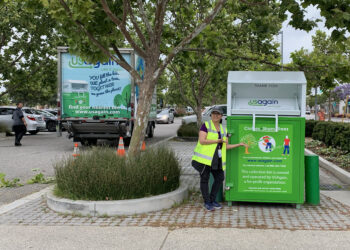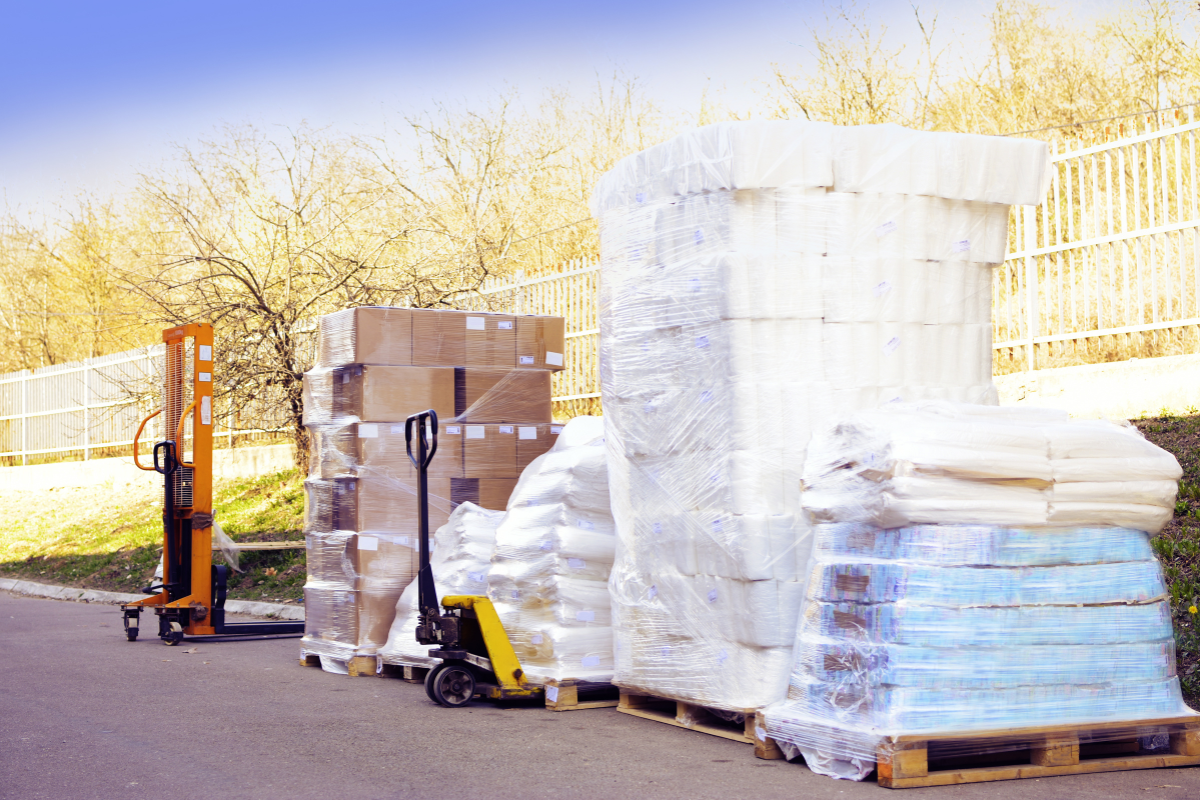












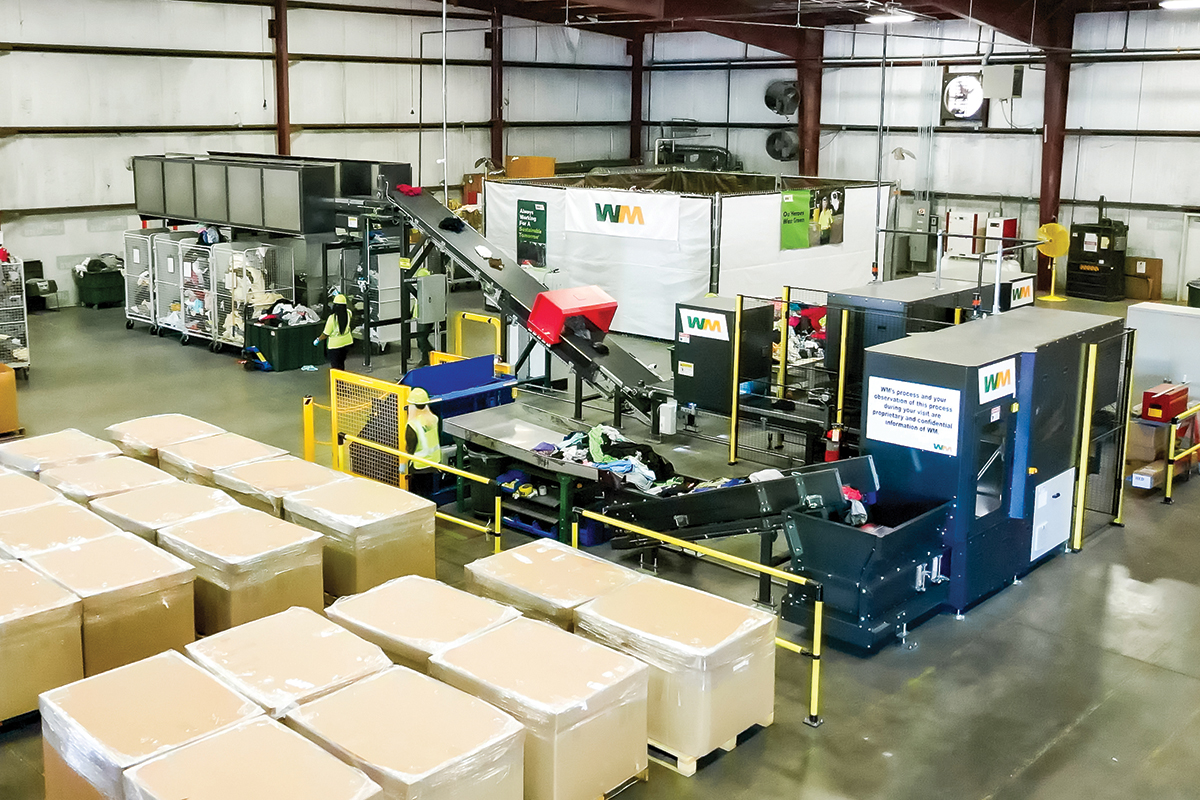
As questions about sorting locally intensify, the concept of a domestic textile MRF has gained attention.
Textiles are one of the most complex and least understood material streams in the recycling and circular economy landscape. Unlike packaging or paper, textiles span thousands of product types, fiber blends, and end uses, and they move through a global system shaped by both reuse and recycling markets.
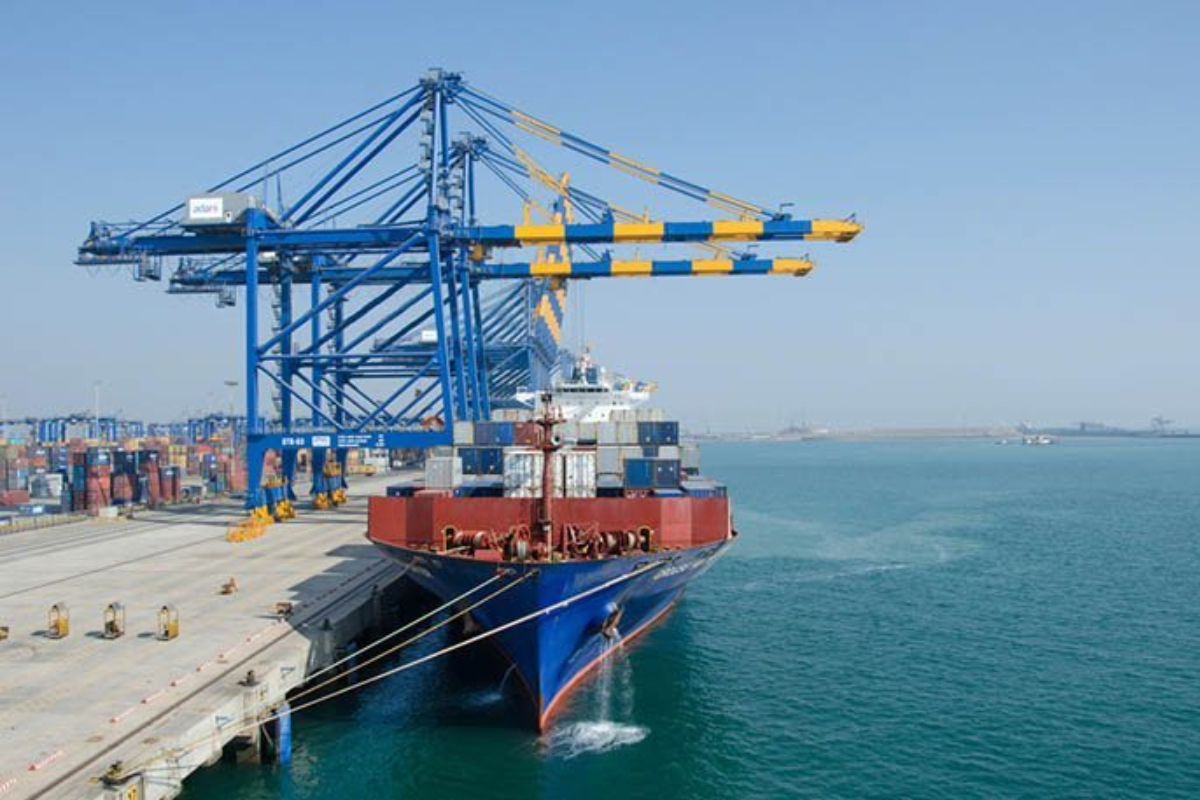
Current textile management practices, which largely rely on exporting collected textiles for formal sorting and distribution as part of a vibrant and well-established global secondhand textile trade, are valued at over $5 billion, according to the Observatory of Economic Complexity. The United States plays a central role in this system, accounting for roughly one-fifth of global used clothing exports.
In recent years, a growing conversation in the textile recovery sector has focused on whether postconsumer textiles should and could be sorted closer to home. The idea reflects familiar circular economy principles – reduce transportation emissions, maintain regulatory oversight, support local jobs, and keep material value within the local economy. As interest in local and regional sorting grows, we are faced with important questions about how new infrastructure models might coexist with or even reshape an existing system that already operates at scale.
Role Of A Textile MRF
Among the new infrastructure models, the concept of a domestic textile Material Recovery Facility (MRF) has gained attention. Currently, no commercial-scale textile MRFs are operating in North America, or anywhere really. There are fully operational sorting and grading houses that rely primarily on manual labor. These facilities are largely located in the world’s dominant grading hubs like Pakistan, the United Arab Emirates and Central America. A few pilots are using automation, but they are very early stage and experimental.
The 2020 report, Textile Recovery in the U.S.: A Roadmap to Circularity, was among the first industry publications to examine the role a domestic textile MRF could play, alongside early pilot projects such as Sweden’s SipTex facility. Since then, the concept has gained traction, with growing interest and exploration across the sector.
As envisioned, a textile MRF is a fully automated centralized hub capable of transforming mixed textiles into streamlined reuse- and recycling-ready feedstocks and marketable commodity bales. This MRF would be a place where a truckload of postconsumer textiles can be tipped and a bunch of whirling machines and robots swiftly disaggregate them and sort each one for best and highest use. From a technical perspective, we know this is possible. The question is whether it’s economically viable. After modeling dozens of scenarios across different regions and material streams, the findings are consistent: a centralized, automated hub can work, but only under a precise set of conditions. The economics are highly sensitive, and the margin for error is narrow.
To be viable, a textile MRF would need to be large enough to reach economies of scale, comparable to traditional MRFs. Incoming loads would need to be evaluated piece by piece to separate reusable from recyclable items, an activity that remains largely manual and human-driven today. Reusable items would require grading for quality, condition and style, while the non-rewearable fraction would need to be sorted for repurposing and recycling end markets, such as reclaimed wiping cloth, mechanical recycling, and chemical recycling. Each of these steps adds complexity, cost, and operational risk that impact the overall business case.
Economics of a Textile MRF
Ultimately, it is the economics, not the technology, that determines whether a textile MRF can succeed. Financial viability is reliant on three primary factors: feedstock, facility operations, and end-market viability.
Feedstock
Feedstock is one of the most important variables in planning a textile MRF. Cost, quality, condition, and composition directly influence overall facility economics. The reuse fraction carries the highest value (especially vintage-grade, luxury, and “new” vintage), while the recycling fraction carries the lowest.
As capture rates increase, experts anticipate a growing share of low-value textiles that residents would otherwise throw away, especially in regions with textile waste disposal bans, like Massachusetts and the European Union. And because textile MRFs will coexist alongside charities, thrift, resale, and consignment – which naturally draw the highest-quality items – the feedstock entering a textile MRF is likely to skew lower grade.
Given these realities, partnerships between MRFs and charities, reuse operators, and other sorting entities offer an opportunity to better balance value, share risk, and optimize feedstock flows across the system.
Facility Costs
At its core, automated textile sorting is an exercise in customization.. No off-the-shelf equipment package that can be dropped into a warehouse and switched on exists. Every project begins with long lists of variables, feedstock volumes and characteristics, number and types of sort categories, pre-processing workflows, offtake specifications, and more. It’s more customized than today’s MRFs for sorting plastics, but with much of the same equipment.
Facility-level considerations such as site selection, permitting and real estate conditions set the cost structure from day one. Throughput capacity determines operational potential, while equipment selection and configuration, accuracy, speed, refinement, and automation level influence cost per ton. At every inflection point in the process, from intake to pre-sorting to main and fine sorts to pre-processing (i.e., preparation for recycling, such as metal removal and size reduction), and final bale production, there are opportunities for customization, and each decision reshapes both performance and cost.
Equipment vendors configure customized combinations of technologies: near infrared (NIR) or hyperspectral imaging for fiber identification, RGB (Red, Green, Blue) systems for color detection, magnets and metal detectors for disruptor removal (e.g., buttons, zippers,PVC prints)l, density separators, shredders and size reduction equipment, and increasingly, AI-driven vision systems that can “see” material attributes (like fiber composition) that the human eye cannot. These systems can be paired and sequenced to create a functional solution, but the price tag rises with every layer of processing refinement.
Sorting complexity increases with feedstock complexity. Mixes of multi-layer, single-layer, multi-material, large- and small-sized items require more steps and more equipment. Contaminants add to the processing steps, and each additional sorting requirement affects labor, equipment needs, and throughput.
Labor rates, financing terms, partnership models, and long-term scaling strategies further shape overall costs. In high labor cost environments like the U.S., manual reuse sorting at scale is difficult to justify without subsidies. AI and robotics may eventually shift this dynamic, but current technologies have not yet matured to meet industry ambitions. A thoughtfully designed facility is not just about machinery; it’s about aligning capital investment, operating strategies, and growth projections with the realities of the marketplace.
End Markets
Finally, none of this works without stable end markets. Strong offtake agreements, clear specifications, consistent volumes, and predictable comparable pricing are essential to building the confidence required to operate and invest. Today, wide swings in commodity pricing heighten risk and dampen investment. As the market matures, standardized feedstock and offtake specifications and transparent price indices can help bring greater clarity and confidence.
Location of end markets is another factor. Proximity to markets lowers transportation costs and reduces risk, but end markets are limited in the US. Demand for secondhand textiles is driven predominantly by international markets, and domestic demand for recycled feedstocks is low overall. Without demand-pull, even the most efficient facility with an abundant supply of feedstock will struggle.
Fitting Textile MRFs Into Broader System
So where does that leave us? Even with a solid economic case, a textile MRF is only one part of a much larger system. To understand its real-world potential, we need to look at how this hub-and-spoke model fits within the current landscape of collectors, thrift operators, peer-to-peer platforms, branded resale programs, and the large secondhand export trade.
The existing system has real strengths. It moves massive volumes of material, supports a well-established reuse economy, and provides essential access to affordable apparel, while sustaining hundreds of thousands of jobs, and driving significant economic activity across multiple countries.
If the goal is to expand textile diversion and build a resilient circularity ecosystem, the question becomes one of system design: what architecture gives us the best chance of succeeding at the scale required? Is this a “yes, and” evolution of today’s system, or does it require a more fundamental restructuring?
Looking ahead, textile MRFs have the potential to become a meaningful part of regional circularity infrastructure. However, success will depend on aligning feedstock realities, facility design, and strong end market demand, while carefully balancing impacts on existing systems. As extended producer responsibility laws for textiles take hold, we can expect more scrutiny of textile waste management practices, shifts in funding and value propositions, and continued debate about how textiles are best handled. What is certain is that today’s system will evolve, shaped by new business models, partnerships, and policy frameworks.
Marisa Adler is a textile circularity and EPR consultant at RRS focused on textile recovery, reuse, and recycling system design. Apurupa Gorthi is a policy analyst at RRS specializing in waste management systems. JD Lindeberg is a Principal and President of RRS, who recently has focused on increasing recovery through the innovative development and application of recovery technologies.