
Resource Recycling
  • The Latest
  • Analysis
    • All
    • Certification Scorecard
    • Industry Announcements
    • Opinion

    Certification Scorecard — Week of April 27, 2026

    Five trends shaping PCR packaging to 2031

    Intel sign on company building with blue sky and trees.

    Intel boosts margins by selling what it used to scrap

    Our top stories from April 2022

    Peters-Michaud named CEO, Houghton chair of Sage Sustainable Electronics

    Closeup of a printed circuitboard

    Can modular metals recovery challenge the smelter model?

    Intel sign outside of company building.

    What Intel’s blockbuster quarter means for ITAD

    Feds to develop repairable computer donation program

    The whitebox blind spot in PC recycling

    Analysis: circular design still elusive in laptops

    PC shipments grew in Q1, but questions remain

    The independent ITAD at a crossroads

    The independent ITAD at a crossroads

  • Conferences
    • Resource Recycling Conference
    • Plastics Recycling Conference
    • E-Scrap: The Longevity Conference
    • Textiles Recovery Summit
  • Publications
    • E-Scrap News
    • Plastics Recycling Update
    • Policy Now
    • Resource Recycling
    • Other Topics
      • Brand Owners
      • Critical Minerals
      • Glass
      • Grant Watch
      • Markets
      • Organics
      • Packaging
      • Research
      • Technology
      • Textiles
      • All Topics
Subscribe
No Result
View All Result
Resource Recycling
  • The Latest
  • Analysis
    • All
    • Certification Scorecard
    • Industry Announcements
    • Opinion

    Certification Scorecard — Week of April 27, 2026

    Five trends shaping PCR packaging to 2031

    Intel sign on company building with blue sky and trees.

    Intel boosts margins by selling what it used to scrap

    Our top stories from April 2022

    Peters-Michaud named CEO, Houghton chair of Sage Sustainable Electronics

    Closeup of a printed circuitboard

    Can modular metals recovery challenge the smelter model?

    Intel sign outside of company building.

    What Intel’s blockbuster quarter means for ITAD

    Feds to develop repairable computer donation program

    The whitebox blind spot in PC recycling

    Analysis: circular design still elusive in laptops

    PC shipments grew in Q1, but questions remain

    The independent ITAD at a crossroads

    The independent ITAD at a crossroads

  • Conferences
    • Resource Recycling Conference
    • Plastics Recycling Conference
    • E-Scrap: The Longevity Conference
    • Textiles Recovery Summit
  • Publications
    • E-Scrap News
    • Plastics Recycling Update
    • Policy Now
    • Resource Recycling
    • Other Topics
      • Brand Owners
      • Critical Minerals
      • Glass
      • Grant Watch
      • Markets
      • Organics
      • Packaging
      • Research
      • Technology
      • Textiles
      • All Topics
Subscribe
No Result
View All Result
Resource Recycling
No Result
View All Result
Home Analysis

Tungsten scrap export controls draw industry attention

byDavid Daoud
April 9, 2026
in Analysis, E-Scrap
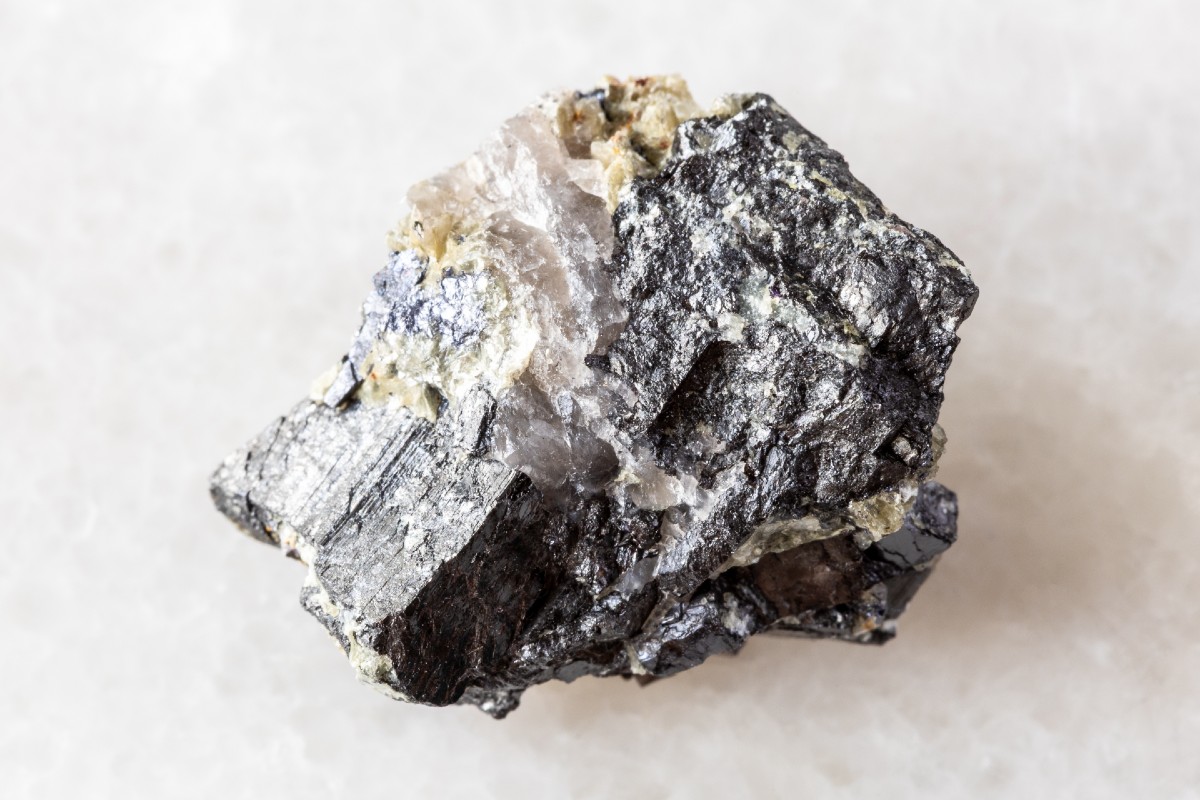
Wolframite ore, the primary ore of tungsten from Altai, Russia

Wolframite is the primary ore of tungsten. Photo: Shutterstock

A coalition of industries and businesses that rely on tungsten is urging the U.S. Department of Commerce to consider export controls on tungsten scrap, arguing that tighter oversight could help preserve domestic supply for manufacturers and defense users.

The request comes as tungsten remains a critical mineral in the United States and as China’s export controls continue to shape the market. The U.S. Geological Survey says tungsten is included on the final 2025 U.S. List of Critical Minerals, which is intended to identify minerals vital to the economy and national security that face potential supply-chain risk. The USGS also reports that the United States has not commercially mined tungsten since 2015 and that world supply remains dominated by Chinese production and exports.

In a statement received by Resource Recycling, the coalition, led by AMERMIN, says export licensing requirements should be imposed on tungsten scrap bound for China, Russia and other countries it considers adversarial. In its letter, the group argues that tungsten-bearing material collected in the United States is being purchased at premium prices by foreign buyers and shipped offshore, reducing the supply available to domestic processors and end users.

The policy request follows China’s Announcement No. 10, issued by the Ministry of Commerce and the General Administration of Customs, which imposed export controls on certain tungsten-related items. That announcement did not end tungsten trade, but it did add another layer of friction to an already concentrated market. Reuters later reported that tungsten prices rose to their highest level since 2013 as export curbs tightened supply.

Tungsten is used in tooling, machining, electronics and defense-related applications, and its strategic role has kept it on policymakers’ radar for years. The US critical minerals designation does not automatically trigger export controls, but it does reinforce the view that tungsten is a supply-chain sensitive material worth watching closely.

Looking ahead, much will depend on how the U.S. Department of Commerce defines tungsten scrap in any rulemaking. A narrow definition could target clearly identified high-purity material, while a broader one could sweep in mixed scrap streams and lower-grade residues that recyclers and processors handle as part of more complex recovery operations. That distinction is important because many facilities do not process tungsten as a standalone commodity; they recover it from mixed-metal inputs alongside other materials.

There is also the question of capacity. Even if more tungsten scrap stays in the United States, domestic refining and recovery may not be able to absorb all of it quickly. The USGS notes that seven US companies have the capability to convert tungsten concentrates, ammonium paratungstate, tungsten oxide and scrap into tungsten metal powder, tungsten carbide powder or related products, but that does not mean the market has unlimited room for additional feedstock. If exports are constrained before processing capacity expands, tighter margins for collectors and processors may follow rather than a clean supply win for US manufacturers.

That is why the issue matters to the recycling sector. The proposed controls could support a domestic supply objective, but they could also change where tungsten-bearing scrap goes and what it is worth. If domestic buyers cannot take all of it, prices for certain grades could weaken. If they can, the rule could help keep more material in the US supply chain.

For now, the letter is best understood as a policy push, not a foregone market shift. The practical impact will depend on how the U.S. Department of Commerce defines the scrap, which destinations are covered, and whether domestic processors have the capacity to absorb more of the material now leaving the country.

Tungsten has certainly become part of a larger critical minerals debate. China’s export controls, US critical-mineral status and the effort to retain more scrap at home have created a real policy issue. 

Tags: Critical Minerals
TweetShare
David Daoud

David Daoud

David Daoud is a contributor to Resource Recycling and E-Scrap News, covering IT asset disposition, electronics recycling, and circular IT governance. He is the founder of and current Principal Analyst at Compliance Standards LLC, where he conducts independent research and advisory work on ITAD markets, sustainability and ESG compliance, data security, and lifecycle risk management. Daoud has analyzed enterprise IT trends since the late 1990s and was among the first analysts to examine ITAD as a distinct market segment during his time at IDC. He advises operators, OEMs, and investment teams on regulatory, technology, and market developments affecting the electronics lifecycle.

Related Posts

Closeup of a printed circuitboard

Can modular metals recovery challenge the smelter model?

byDavid Daoud
April 28, 2026

UK-based startup DEScycle is testing a new approach to extracting metals from electronic scrap.

EV Battery Pack - Sergii Chernov-Shutterstock

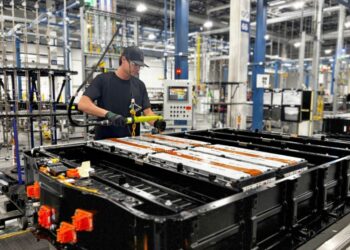
Redwood, Rivian deal fuels US infrastructure plans

byStefanie Valentic
April 15, 2026

Batteries that are no longer ideal for powering a vehicle still have substantial capacity left. Automobile manufacturer Rivian and battery...

Bloom ESG and e-Stewards roll out critical metals metric

byDavid Daoud
April 15, 2026

The two groups announced the upgrade to their jointly developed Environmental Benefits Calculator.

German demo plant targets lithium recovery from battery scrap

byScott Snowden
April 10, 2026

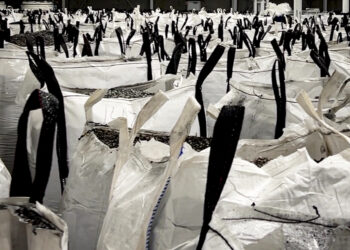
Tozero has opened a demo plant processing 1,500 metric tons of battery scrap yearly, recovering lithium, graphite and nickel-cobalt to...

Rice researchers use lemon juice to boost battery recycling

byScott Snowden
April 9, 2026

Rice researchers reported a battery recycling process that uses plasma and mild solvents to recover most metals from black mass...

Trafigura signs $1.1b deal for recycled battery metals

byScott Snowden
April 8, 2026

Trafigura entered the agreement to expand access to recycled critical materials, supporting efforts to build more resilient battery supply chains...

Load More
Next Post
Bill to update New Jersey e-scrap program heads to governor

New Jersey recyclers talk EPR

More Posts

Birch Plastics gets FDA green-light for post-industrial PP

LyondellBasell upgrade to PreZero assets on hold

April 23, 2026

What Netflix’s ‘Plastic Detox’ gets wrong – and right

April 23, 2026
EPR fees are a market signal. Here’s what they’re telling you.

Oregon DEQ flags 250 producers for RMA noncompliance

April 21, 2026
The independent ITAD at a crossroads

The independent ITAD at a crossroads

April 22, 2026

Google pilots reuse kits to extend device life

April 21, 2026

PCA keeping focus on virgin fiber products

April 27, 2026
Dow touts US PE advantage amid Iran war

Dow touts US PE advantage amid Iran war

April 24, 2026
What is EPR and why it matters

What is EPR and why it matters

April 22, 2026
AT&T, Compudopt expand e-recycling program

AT&T, Compudopt expand e-recycling program

April 23, 2026
Prescription drug bottles

National Prescription Drug Take Back Day is Saturday

April 24, 2026
Load More

About & Publications

About Us

Staff

Archive

Magazine

Work With Us

Advertise
Jobs
Contact
Terms and Privacy

Newsletter

Get the latest recycling news and analysis delivered to your inbox every week. Stay ahead on industry trends, policy updates, and insights from programs, processors, and innovators.

Subscribe

Welcome Back!

Login to your account below

Forgotten Password?

Retrieve your password

Please enter your username or email address to reset your password.

Log In

Add New Playlist

No Result
View All Result
  • The Latest
  • Analysis
  • Recycling
  • E-Scrap
  • Plastics
  • Policy Now
  • Conferences
    • E-Scrap Conference
    • Plastics Recycling Conference
    • Resource Recycling Conference
    • Textiles Recovery Summit
  • Magazine
  • About Us
  • Advertise
  • Archive
  • Jobs
  • Staff
Subscribe
This website uses cookies. By continuing to use this website you are giving consent to cookies being used. Visit our Privacy and Cookie Policy.