












As Houston’s role as a major port city raises concerns about electronics being exported overseas for processing, CompuCycle CEO Kelly Hess has combined convenience with transparency to change how residents recycle.
The company’s new partnership with Goodwill Houston creates year-round drop-off access while ensuring that all donated electronics stay local and are processed in-house at CompuCycle’s 130,000-square-foot certified facility in the nation’s fourth-largest city.
“This partnership represents the best of what local collaboration can achieve,” Hess said on the day of the announcement. “Together with Goodwill, we’re creating a simple pathway for Houstonians to make a positive impact—whether that’s funding job training programs or ensuring their old electronics are processed responsibly right here in Houston.”
The city’s electronics recycling landscape has shifted dramatically since Kelly Hess founded CompuCycle in 1996. Hess recently spoke to E-Scrap News about watching Houston’s e-scrap industry grow, what the partnership with Goodwill means for residents and how the company is addressing export risk in a port city.
How has Houston’s electronics recycling landscape changed since CompuCycle started as the city’s first woman-owned certified recycler?
Hess: When CompuCycle started in 1996, electronics recycling in Houston was still informal and underdeveloped. There were few dedicated processors, limited standards and little focus on data security, environmental accountability or what happened to materials after collection.
Over time, the industry matured and CompuCycle helped lead that shift. As standards emerged, CompuCycle became the first R2-certified electronics processor in the region and later expanded into advanced in-house capabilities, including becoming Houston’s first dedicated electronics plastics processor. These investments reflected a move away from basic collection toward accountable, domestic processing.
Today Houston’s electronics recycling landscape includes more players and more collection options, but expectations have changed. Customers now want proof, proof of data destruction, proof of downstream responsibility, and proof that materials are handled safely and domestically. CompuCycle has built its model around meeting those expectations through a closed-loop, in-house processing system, supported by dual certification under e-Stewards and R2v3, along with leading security, environmental and safety standards. The biggest change since 1996 isn’t just growth in volume, it’s a shift toward transparency and accountability.
What’s the current state of Houston’s e-waste recycling infrastructure, and how does this partnership impact diversion?
Hess: Houston has a number of electronics recyclers operating in the region, but only a smaller subset are independently certified processors under rigorous standards such as R2v3 and e-Stewards. Those certifications matter because they address downstream accountability, data security, and environmental controls, not just collection.
The Goodwill partnership builds on access and visibility. By pairing convenient, community-based drop-off locations with transparent, certified processing, the program is expected to increase participation over time and divert additional material from landfills, supported by ongoing community education and outreach rather than one-time collection events.
Does the partnership include refurbishment and resale through Goodwill, or does CompuCycle strictly handle end-of-life processing?
Hess: This partnership is designed to support both outcomes, based on device condition and suitability. CompuCycle manages end-of-life processing for the vast majority of electronics collected through Goodwill. Items that are non-functional, obsolete, or not appropriate for reuse are securely processed through CompuCycle’s certified facility.
A limited subset of devices, primarily iPads and mobile phones, may be eligible for refurbishment and resale when they meet Goodwill’s reuse criteria. These devices are evaluated separately, and reuse occurs only when it can be done responsibly and securely.
By clearly defining these pathways, the partnership ensures that reuse happens where appropriate, while CompuCycle maintains control and accountability for end-of-life electronics through secure, certified processing.
How does Goodwill’s donation network change the economics vs. events, take-back or trade-ins?
Hess: Partnering with Goodwill changes the economics of electronics collection because it turns collection into a steady, everyday channel, rather than a one-time event or an incentive-driven program.Municipal drop-off events are effective but expensive. They require temporary staffing, traffic
control, marketing, containers, and transportation to capture a short burst of material, and volumes can be unpredictable. Manufacturer take-back programs and retailer trade-ins typically focus on a narrow range of higher-value devices and often rely on rebates or resale value to work economically.
Goodwill’s donation network operates differently. People already visit Goodwill locations regularly, and electronics arrive as part of normal household clean-outs, not because of a promotion or special event. That lowers the cost to acquire material per pound, creates a more consistent flow of electronics week to week, and captures a broader mix of real end-of-life devices.
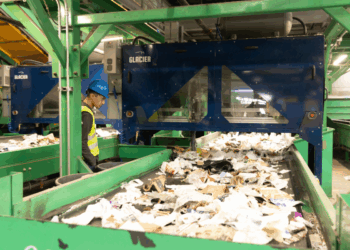
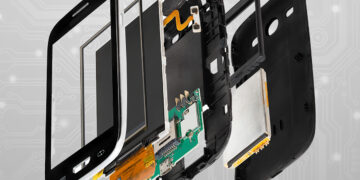
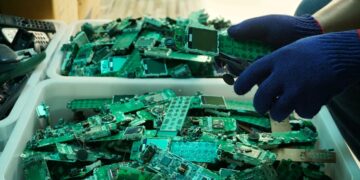
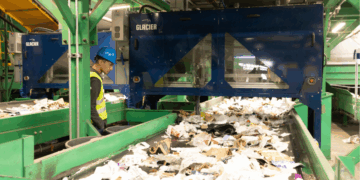
Because all scrap electronics donated through Goodwill are processed exclusively by CompuCycle, the downstream model is also simpler and more efficient. Material is processed at our state-of-the-art, fully automated facility, where electronics are shredded into their raw material components, including steel, copper, aluminum, plastics, and circuit boards. Plastics are further refined into single-polymer streams for reuse, and all recovered commodities are shipped directly to approved smelters, refineries, and mills for use as manufacturing feedstock.
In simple terms, events and incentives create volume spikes at a higher cost. The Goodwill partnership creates a dependable, lower-cost pipeline – combined with direct, in-house processing – that supports scale, transparency, and long-term economic sustainability.
How do consumer electronics from Goodwill differ from typical corporate ITAD streams, and what volume do you anticipate annually?
Hess: Consumer electronics coming through Goodwill differ significantly from corporate ITAD material. Corporate ITAD streams are usually newer, more uniform, and retired on planned refresh cycles. Devices are often well documented, handled in bulk, and maintained in controlled environments, which results in more consistent conditions and lower contamination rates.
Consumer electronics donated through Goodwill reflect real household use. Devices are typically older, more diverse in brand and type, and arrive in mixed condition, from functional items to fully end-of-life equipment. There is also a higher likelihood of missing components, physical damage, batteries left in devices, and occasional non-electronic items mixed in, which increases the need for sorting and upfront handling.
Goodwill’s intake standards help reduce unnecessary contamination, and the partnership allows CompuCycle to plan for this variability rather than treating consumer material like corporate ITAD.
In terms of volume, this is being approached as a build-and-scale program. Initial volumes will depend on participation across Goodwill locations and donor behavior, but we anticipate processing hundreds of thousands of pounds of consumer electronics annually, with the ability to scale as the program expands and stabilizes.
As a major port city, Houston faces e-scrap export concerns. How does your in-house processing model ensure materials stay domestic?
Hess: Houston’s port access makes strong controls especially important. CompuCycle addresses export risk by operating a multi-million-dollar, in-house processing facility that provides a domestic solution for responsibly managing scrap electronics, rather than relying on brokers or export-driven downstreams.
All scrap electronics collected through this partnership are processed locally at CompuCycle’s Houston facility. Devices are dismantled or shredded into raw material components, and materials are managed through approved domestic recycling channels. By processing material in-house, CompuCycle maintains direct custody and visibility, which significantly reduces export risk.
For Houston residents, this model provides transparency and confidence that electronics donated locally are processed responsibly, within the region, and under verifiable controls, an especially important safeguard in a major port city.