
Resource Recycling
  • The Latest
  • Analysis
    • All
    • Certification Scorecard
    • Industry Announcements
    • Opinion
    Rainforest

    Inside the Circle: What the rainforest can teach us about EPR

    Closeup of a printed circuitboard

    Hardware demand puts new focus on parts harvesting

    Rare look inside the world’s largest plastics recycler

    Mass balance matters: Why different rules can lead to different outcomes 

    Certification Scorecard — Week of June 1, 2026

    IT asset disposition and electronics recycling: Now and then

    $60 billion in AI servers will create an ITAD challenge

    The independent ITAD at a crossroads

    DMD acquires ITAD firm Lifespan, outlines acquisition strategy

  • Conferences
    • Resource Recycling Conference
    • Plastics Recycling Conference
    • E-Scrap: The Longevity Conference
    • Textiles Recovery Summit
  • Publications
    • E-Scrap News
    • Plastics Recycling Update
    • Policy Now
    • Resource Recycling
    • Other Topics
      • All Topics
      • Brand Owners
      • Critical Minerals
      • Glass
      • Grant Watch / RFPs
      • Markets
      • Organics
      • Packaging
      • Research
      • Technology
      • Textiles
Subscribe
No Result
View All Result
Resource Recycling
  • The Latest
  • Analysis
    • All
    • Certification Scorecard
    • Industry Announcements
    • Opinion
    Rainforest

    Inside the Circle: What the rainforest can teach us about EPR

    Closeup of a printed circuitboard

    Hardware demand puts new focus on parts harvesting

    Rare look inside the world’s largest plastics recycler

    Mass balance matters: Why different rules can lead to different outcomes 

    Certification Scorecard — Week of June 1, 2026

    IT asset disposition and electronics recycling: Now and then

    $60 billion in AI servers will create an ITAD challenge

    The independent ITAD at a crossroads

    DMD acquires ITAD firm Lifespan, outlines acquisition strategy

  • Conferences
    • Resource Recycling Conference
    • Plastics Recycling Conference
    • E-Scrap: The Longevity Conference
    • Textiles Recovery Summit
  • Publications
    • E-Scrap News
    • Plastics Recycling Update
    • Policy Now
    • Resource Recycling
    • Other Topics
      • All Topics
      • Brand Owners
      • Critical Minerals
      • Glass
      • Grant Watch / RFPs
      • Markets
      • Organics
      • Packaging
      • Research
      • Technology
      • Textiles
Subscribe
No Result
View All Result
Resource Recycling
No Result
View All Result
Home E-Scrap

Analysis: DOE takes equity stake in Lithium Americas deal

byDavid Daoud
October 8, 2025
in E-Scrap
Analysis: DOE takes equity stake in Lithium Americas deal

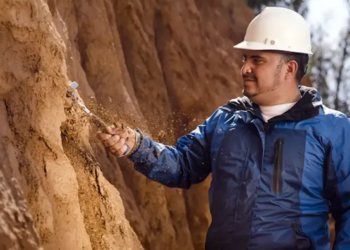
The US Department of Energy is redefining its approach to industrial investment through a revised agreement with Lithium Americas Corporation, the Canada- and Nevada-based developer of the Thacker Pass lithium project. 

Under the new structure, the US Department of Energy’s (DOE) Loan Programs Office (LPO) will hold equity warrants equal to 5% of Lithium Americas Corporation (LAC) and another 5% of the LAC/General Motors joint venture. General Motors holds a 38% stake in the Thacker Pass joint venture through a $625 million investment, securing offtake rights that allow it to purchase a significant portion of lithium production to support its electric vehicle supply chain.

The arrangement, which includes more than $100 million in additional project-level equity contributed by private stakeholders as part of the revised collateral package, combines traditional lending with partial ownership and represents a notable evolution in how the federal government supports domestic production of strategic materials.

The warrants do not give DOE immediate ownership but rather the right to acquire equity at a set price in the future, allowing the agency to share in potential upside while limiting taxpayer risk if the project underperforms.

Thacker Pass is projected to produce about 40,000 metric tons/year of battery-grade lithium carbonate once operational, becoming the country’s only major source of the material. With the United States currently accounting for less than 1% of global lithium output, the project is viewed as a critical step in strengthening domestic supply chains for batteries and energy storage.

The stakes are important, as evidenced by GM’s investment, because lithium is a lightweight metal used primarily in rechargeable batteries that power electric vehicles, smartphones and energy storage systems. Its electrochemical properties allow batteries to hold high energy density while remaining compact and durable, making it essential to the clean energy and digital economies. As global demand for electric mobility and renewable power expands, access to reliable, low-cost lithium supply has become a strategic priority for both manufacturers and governments.

The DOE’s use of warrants and equity positions is part of a broader effort to apply private-market principles to public-sector finance. These instruments, last seen in the department’s 2010 support for Tesla, are intended to limit taxpayer exposure while allowing government participation in project value creation. Secretary of Energy Chris Wright emphasized that the restructuring reflects an intent to balance fiscal prudence with strategic industrial goals. 

The inclusion of equity warrants in a federal loan structure is not new, but the scale and visibility of this transaction indicate a renewed effort to blend public and private capital tools in strategic industries. The additional private equity and collateral contributions, rather than new DOE equity, reinforce the project’s capitalization and reduce repayment risk.

The federal approach to industrial investment has also expanded beyond energy. Initiatives under the CHIPS and Science Act and the Defense Production Act have supported semiconductor, battery, and critical-minerals capacity through varied funding channels. 

Comparable programs have benefited companies such as Intel and MP Materials, though the mechanisms, oversight agencies, and funding structures differ, ranging from grants and tax incentives to loans and strategic contracts. These examples collectively illustrate how Washington is deploying multiple forms of public capital to strengthen industrial and supply-chain resilience, though they should not be interpreted as direct DOE equity analogs.

A broader implication in this announcement is that the federal government appears to be prepared to share in project risk to accelerate private participation. By doing so, DOE effectively lowers perceived investment risk for large-scale resource and infrastructure projects that might otherwise have struggled to attract financing.

Implications for recycling, ITAD and materials recovery

The policy development extends beyond primary extraction. While the DOE announcement focused on lithium extraction, its structure has indirect implications for recycling, IT asset disposition (ITAD) and circular-materials recovery, sectors increasingly viewed as complementary sources of critical minerals and feedstock for energy-transition supply chains. 

This evolution reinforces the economic relevance of recovered metals and components. Rather than being treated as waste-stream byproducts, materials such as copper, nickel, lithium and rare earths are now recognized as feedstock for national resource security. The DOE’s participation in upstream lithium production magnifies the growing interdependence between end-of-life electronics recovery and critical-minerals processing.

At the investment level, large recyclers and material-recovery firms could attract renewed investor attention as institutional and infrastructure capital increasingly recognizes the operational and strategic overlap between recycling and resource extraction.

The Thacker Pass restructuring may serve as a reference model for future DOE and LPO projects that combine environmental infrastructure with strategic-materials development. As similar arrangements emerge, the distinction between mining, recycling and ITAD will continue to narrow, creating a single, integrated materials-management ecosystem.

For those involved in the circular-materials value chain, staying prepared and demonstrating responsible management and transparency will be increasingly important. As federal frameworks evolve, meaningful collaboration and trust will pave the way for future opportunities in circular and critical-materials projects.

Tags: Critical Minerals
TweetShare
David Daoud

David Daoud

David Daoud is a contributor to Resource Recycling and E-Scrap News, covering IT asset disposition, electronics recycling, and circular IT governance. He is the founder of and current Principal Analyst at Compliance Standards LLC, where he conducts independent research and advisory work on ITAD markets, sustainability and ESG compliance, data security, and lifecycle risk management. Daoud has analyzed enterprise IT trends since the late 1990s and was among the first analysts to examine ITAD as a distinct market segment during his time at IDC. He advises operators, OEMs, and investment teams on regulatory, technology, and market developments affecting the electronics lifecycle.

Related Posts

Rare earth processor lands $5.1M in Defense funds

IonicRE partnership supports recycled rare earth supply chain for defense magnets

byIsabella Burke
June 8, 2026

The Australian company is joining with Florida-based Advanced Magnet Lab in a new MOU.

Emerging technology holds the key to rare earth recovery

Emerging technology holds the key to rare earth recovery

byDan Wang, Toyoshima Green Tech
June 1, 2026

Toyoshima has developed a process that recovers critical materials at high purity in an efficient way.

Europe’s recyclers miss most of the critical materials

Europe’s recyclers miss most of the critical materials

byDavid Daoud
May 29, 2026

A major research project makes for sober reading for ITAD professionals.

Illinois expands battery recycling as lithium-ion fire concerns mount

Illinois expands battery recycling as lithium-ion fire concerns mount

byKeith Loria
May 27, 2026

The state is rolling out an expanded battery stewardship program, while fires continue to be a threat to recyclers nationwide.

MP Materials breaks ground on rare earth magnet campus in North Texas

How critical mineral alliances aim to shape the future of e-scrap metals

byDavid Daoud
May 21, 2026

The Minerals Integrity & Resilience Alliance (MIRA) is part of a broader effort to strengthen transparency and resilience across critical...

Aurubis: Thefts involved scrap sample manipulation

Metals and electronics recyclers report growth

byDavid Daoud
May 20, 2026

Aurubis, Umicore and Sims show that downstream multimetal and electronics-related recovery businesses are, at least for now, operating in a...

Load More
Next Post
#ESC2025 Speaker Spotlight: Matthew Young

#ESC2025 Speaker Spotlight: Matthew Young

More Posts

Recycling industry addresses Beyond Plastics report

Recycling industry addresses Beyond Plastics report

May 26, 2026
Machinex

Longview mill tragedy raises broader questions for fiber, recycling sectors

May 29, 2026
Fire at an EMR recycling facility in Camden, New Jersey May 29, 2026.

EMR faces shutdown calls after numerous fires

June 2, 2026
The independent ITAD at a crossroads

DMD acquires ITAD firm Lifespan, outlines acquisition strategy

June 2, 2026
IT asset disposition and electronics recycling: Now and then

$60 billion in AI servers will create an ITAD challenge

June 3, 2026
War, not demand driving polymer pricing

War, not demand driving polymer pricing

June 2, 2026
BASF, Encina expand circular feedstock partnership

BASF, Encina expand circular feedstock partnership

June 3, 2026
Our top stories from June 2021

Colorado advances EV battery EPR law

June 3, 2026
In My Opinion: Comparing the nation’s first packaging EPR laws

What Maine’s vape EPR law means for recyclers

June 4, 2026
California extends compostable labeling law

California bills crack down on false recycling, compostable claims

May 29, 2026
Load More

About & Publications

About Us

Staff

Archive

Magazine

Work With Us

Advertise
Jobs
Contact
Terms and Privacy

Newsletter

Get the latest recycling news and analysis delivered to your inbox every week. Stay ahead on industry trends, policy updates, and insights from programs, processors, and innovators.

Subscribe

Welcome Back!

Login to your account below

Forgotten Password?

Retrieve your password

Please enter your username or email address to reset your password.

Log In

Add New Playlist

No Result
View All Result
  • The Latest
  • Analysis
  • Recycling
  • E-Scrap
  • Plastics
  • Policy Now
  • Conferences
    • E-Scrap Conference
    • Plastics Recycling Conference
    • Resource Recycling Conference
    • Textiles Recovery Summit
  • Magazine
  • About Us
  • Advertise
  • Archive
  • Jobs
  • Staff
Subscribe
This website uses cookies. By continuing to use this website you are giving consent to cookies being used. Visit our Privacy and Cookie Policy.