



Resource Recycling
  • The Latest
  • Analysis
    • All
    • Certification Scorecard
    • Industry Announcements
    • Opinion
    From claims to custody: PCR procurement grows up

    From claims to custody: PCR procurement grows up

    What the NAND flash crunch means for remarketing, refurbishment and residual values

    Telamon acquires ITAD consultancy Retire-IT

    Certification Scorecard — Week of July 6, 2026

    Tech giant pens detailed ‘plastic-free packaging’ guide

    What Google’s latest report means for ITAD

    Unpacking the Starbucks cup data

    Unpacking the Starbucks cup data

    Amazon cutting out more flexible packaging

    Amazon’s AWS hardware reuse is measured

  • Conferences
    • Resource Recycling Conference
    • Plastics Recycling Conference
    • E-Scrap: The Longevity Conference
    • Textiles Recovery Summit
  • Publications
    • E-Scrap News
    • Plastics Recycling Update
    • Policy Now
    • Resource Recycling
    • Other Topics
      • All Topics
      • Brand Owners
      • Critical Minerals
      • Glass
      • Grant Watch / RFPs
      • Markets
      • Organics
      • Packaging
      • Research
      • Technology
      • Textiles
Subscribe
No Result
View All Result
Resource Recycling
  • The Latest
  • Analysis
    • All
    • Certification Scorecard
    • Industry Announcements
    • Opinion
    From claims to custody: PCR procurement grows up

    From claims to custody: PCR procurement grows up

    What the NAND flash crunch means for remarketing, refurbishment and residual values

    Telamon acquires ITAD consultancy Retire-IT

    Certification Scorecard — Week of July 6, 2026

    Tech giant pens detailed ‘plastic-free packaging’ guide

    What Google’s latest report means for ITAD

    Unpacking the Starbucks cup data

    Unpacking the Starbucks cup data

    Amazon cutting out more flexible packaging

    Amazon’s AWS hardware reuse is measured

  • Conferences
    • Resource Recycling Conference
    • Plastics Recycling Conference
    • E-Scrap: The Longevity Conference
    • Textiles Recovery Summit
  • Publications
    • E-Scrap News
    • Plastics Recycling Update
    • Policy Now
    • Resource Recycling
    • Other Topics
      • All Topics
      • Brand Owners
      • Critical Minerals
      • Glass
      • Grant Watch / RFPs
      • Markets
      • Organics
      • Packaging
      • Research
      • Technology
      • Textiles
Subscribe
No Result
View All Result
Resource Recycling
No Result
View All Result
Home E-Scrap

Report: Battery ‘retirement tide’ nears

Colin StaubbyColin Staub
March 13, 2025
in E-Scrap
Report: Battery ‘retirement tide’ nears

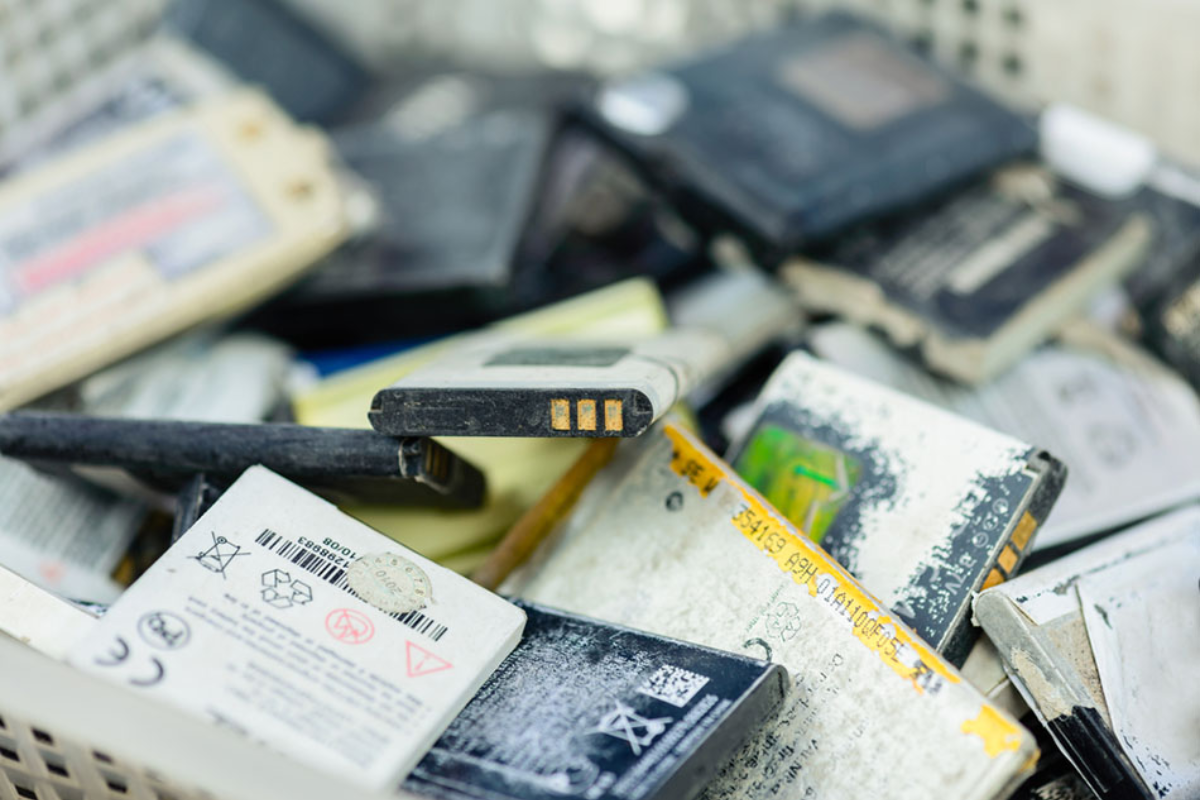
North America’s current capacity to process 144,000 tons per year of lithium-ion batteries is “quite insignificant” against the projected growth in new manufacturing, according to a recent overview of the global lithium-ion battery recycling landscape from consulting and research firm Deloitte and a division of the American Chemical Society.

However, the report found the U.S. “has initiatives underway to expand their current recycling capacity by more than 300,000 tons per year, involving both the improvement of existing facilities and the development of new ones.”

The report, titled “Lithium-ion battery recycling market and innovation: Trends for a green future,”  outlines which processing methods are most commonly used to recycle batteries found in consumer electronics. It comes as the authors project an upcoming spike in batteries entering the waste stream, driven by electric vehicles.

U.S. capacity is well below China’s 1.1 million tons per year, Deloitte found, and China has plans to expand that capacity by 1.2 million tons each year moving forward.

The report framed the need for battery processing capacity expansion with some urgency, given the timing of wider-spread electric vehicle adoption.

“Since the performance of the lithium battery will gradually deteriorate with the increase of use time, the average service life of EV batteries ranges from 5 to 8 years,” the authors wrote. “Therefore, the first batch of EV batteries put into the market are ushering in a ‘retirement tide.'”

The report offered some technical specifics about battery chemistries and their typical recycling methods. For consumer electronics, lithium cobalt oxide and lithium manganese oxide are the most common battery chemistries. These are most frequently processed through hydrometallurgy, which is a chemical leaching process, or through smelting or a combination of the two. 

A third method, which the report labeled “direct recycling,” involves mechanically dismantling batteries to recover the cathode without using acids or smelting. It’s less commonly used for consumer electronics batteries and lithium-ion battery applications despite having what the report identifies as the lowest environmental impact. In the U.S., emerging battery processor Princeton NuEnergy is an example of a company using this “cathode-to-cathode” technology.

Tracking government actions

The report, completed by the China office of Deloitte, found that China has also been particularly proactive on lithium-ion battery regulation. The country was engaged in lithium-ion battery end-of-life policymaking as far back as 2016, while U.S. EPA activity ramped up around 2021. China’s interest in promoting battery recycling was concurrent with wide-ranging solid waste reforms, which included a ban on imports of many recyclables and culminated in 2020.

There remains no U.S. federal policy covering lithium-ion battery waste management, but the EPA in a comprehensive 2021 report outlined the scale of battery-related fires in recycling facilities across the U.S., including in e-scrap facilities. In 2022, the U.S. government began funding battery recycling efforts across the country through the Inflation Reduction Act, legislation that established grants for clean energy and related projects.

In 2023, the EPA revisited the battery issue through a series of recommendations including that lithium-ion batteries be handled as hazardous waste, but did not go as far as changing regulations. And since then, the agency has convened a series of cross-industry working groups aimed at improving collection and labeling of lithium-ion batteries of all sizes. 
Tags: BatteriesCritical MineralsResearch
TweetShare
Colin Staub

Colin Staub

Colin Staub was a reporter and associate editor at Resource Recycling until August 2025.

Related Posts

Canada EV battery reuse pilot to start

Canada EV battery reuse pilot to start

byPaul Lane
July 8, 2026

Mapleview Energy is testing the use of older EV batteries to store solar energy gathered on a farm in Fergus,...

Auto Draft

Digital product passports offer gateway into secondary market

byPaul Lane
July 7, 2026

Industry leaders say buyers and sellers of used mobile devices would benefit from standardized rules for how to treat second-hand...

Blue Whale Materials announces new CEO, capital backing

byStefanie Valentic
July 7, 2026

Blue Whale Materials just landed a new CEO and a strengthened balance sheet as it races to scale battery recycling...

Lithium-ion battery recycler to build New York facility

Earthworks acquires metals sorting tech

byPaul Lane
July 1, 2026

The system that’s now owned by Earthworks Industries will help it maximize critical mineral recovery efforts.

Bipartisan reps introduce bill on recycling claims

Congressional hearing focuses on opening US mineral market

byPaul Lane
June 29, 2026

Stakeholders spoke on behalf of legislation that would bolster domestic mineral recovery efforts.

Our top stories from June 2021

EV battery recycling market expected to surge

byPaul Lane
June 26, 2026

Grand View Research expects the market to grow more than tenfold by 2033.

Load More
Next Post
Metal duties come into play, some tariffs suspended

Metal duties come into play, some tariffs suspended

More Posts

Oregon’s Recycling Modernization Act faces injunction

Oregon’s EPR program posts first-year results

July 6, 2026
Two recycled-content bills gain approval in California

California agriculture seeks SB 54 repeal

July 7, 2026
Unpacking the Starbucks cup data

Unpacking the Starbucks cup data

July 8, 2026
In Our Opinion: Coalitions: The EPR Differentiator

Inside NAW’s constitutional case against packaging EPR

July 6, 2026
Tech giant pens detailed ‘plastic-free packaging’ guide

What Google’s latest report means for ITAD

July 8, 2026
EPR fees are a market signal. Here’s what they’re telling you.

Building the infrastructure behind EPR

July 6, 2026
SB 54 draft rules generate debate on rates, review

California increases PET market payments

July 7, 2026
MP Materials breaks ground on rare earth magnet campus in North Texas

ERI confirms ITAD shift toward minerals

July 3, 2026
ITAD firm wins spot for NASA purchasing

ITAD firm wins spot for NASA purchasing

July 6, 2026
Auto Draft

Digital product passports offer gateway into secondary market

July 7, 2026
Load More

About & Publications

About Us

Staff

Archive

Magazine

Work With Us

Advertise
Jobs
Contact
Terms and Privacy

Newsletter

Get the latest recycling news and analysis delivered to your inbox every week. Stay ahead on industry trends, policy updates, and insights from programs, processors, and innovators.

Subscribe

Welcome Back!

Login to your account below

Forgotten Password?

Retrieve your password

Please enter your username or email address to reset your password.

Log In

Add New Playlist

No Result
View All Result
  • The Latest
  • Analysis
  • Recycling
  • E-Scrap
  • Plastics
  • Policy Now
  • Conferences
    • E-Scrap Conference
    • Plastics Recycling Conference
    • Resource Recycling Conference
    • Textiles Recovery Summit
  • Magazine
  • About Us
  • Advertise
  • Archive
  • Jobs
  • Staff
Subscribe
This website uses cookies. By continuing to use this website you are giving consent to cookies being used. Visit our Privacy and Cookie Policy.