



This article appeared in the 2024 issue of E-Scrap News. Subscribe today for access to all print content.
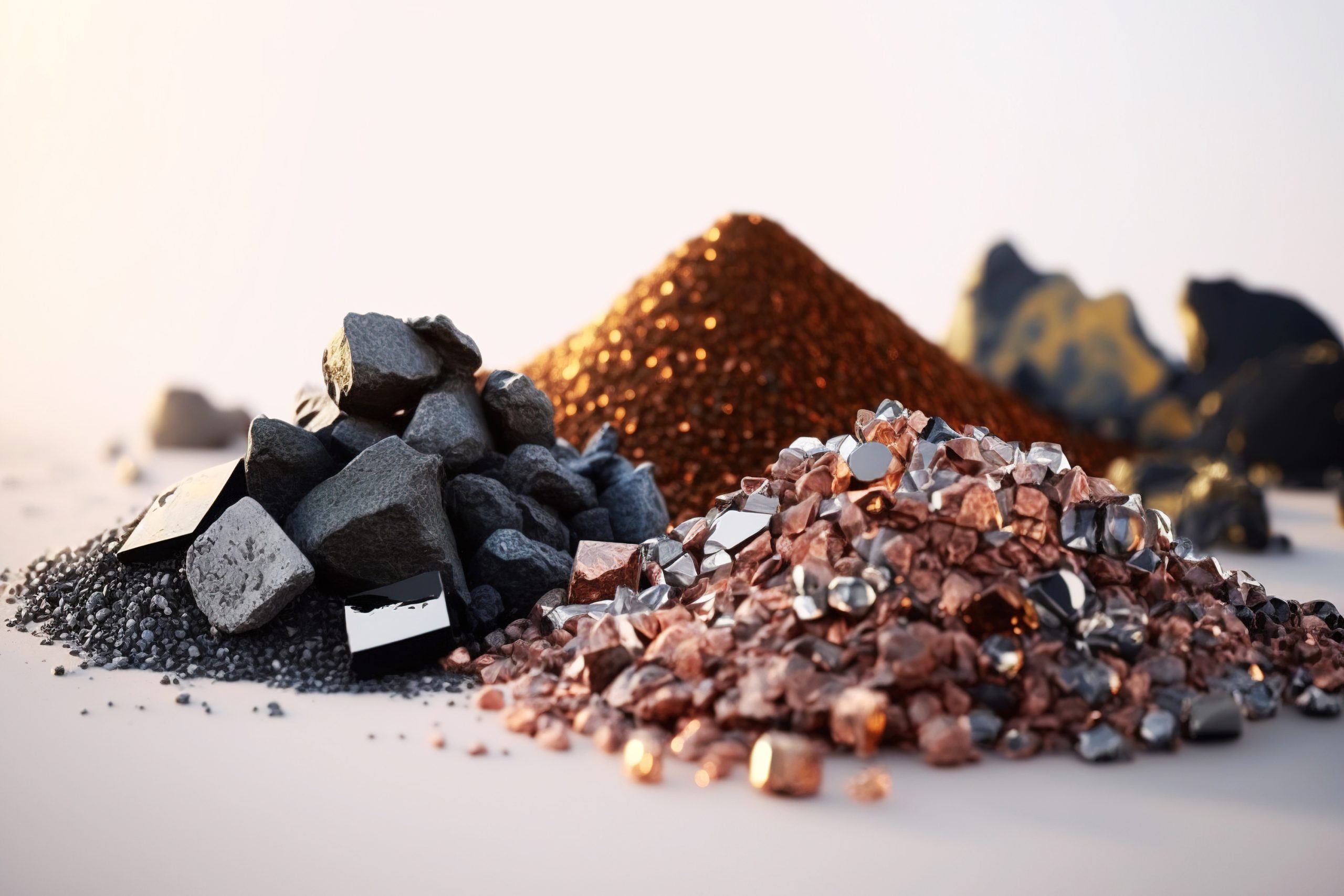
One of e-scrap recycling’s chief concerns boils down to mining copper, gold and other metals all over again, this time from within piles of cell phones and computers rather than veins of ore.
The U.S. Department of Energy has dubbed these substances “critical minerals” because of their importance to electric vehicles, solar panels and other ubiquitous technologies, with the federal government putting millions of dollars in grants and other support on the line for the minerals’ recovery. Globally, energy-critical mineral trade reaches hundreds of billions of dollars each year, according to the World Trade Organization.
Researchers and companies across the globe therefore continue to seek more efficient and economic methods for these metals’ extraction via creative chemistry and even biology. What follows are some of the big steps they’ve taken over the past year.
Feds seek to ‘defragment’ sector
A technology manager with the DOE said improving e-scrap management fits squarely within the federal government’s material sourcing and climate goals, so the agency last spring launched a new funding and technical assistance opportunity targeting electronics recovery.
The department on March 6 announced the Electronics Scrap Recycling Advancement Prize, or E-SCRAP. It’s a competition for a broad range of applicants connected to the electronics recycling industry, with multiple phases highlighting different stages of project implementation.
Jeremy Mehta, technology manager within the department’s Advanced Materials and Manufacturing Technologies Office, said the department has invested in a number of e-scrap recovery-related projects over the past decade, particularly in the separation and material extraction stage. For example, the department is a funding partner of the REMADE Institute, which supports research and development related to recycling, reuse and remanufacturing. Other government branches including the U.S. military have also funded such efforts.
The E-SCRAP prize aims to build on that work and connect it to other segments of the end-of-life electronics sector.
“We see this prize as being an effective tool to bridge some of the different players that exist along the value chain, from collection to sorting, to concentration, to preprocessing, to actual separation and extraction,” Mehta said. “It’s a fragmented value chain … and we’re trying to defragment that.”
The prize has three phases, with the first focused on incubation-stage projects; applications were due early this month. The department will choose 10 competitors to each receive $50,000 in cash and $30,000 in analysis and support from a national laboratory. During this phase, selected competitors “will propose solutions that have the potential to substantially increase the amount of recovered critical materials from electronic waste and used in U.S. manufacturing,” according to the program.
The second phase will focus on prototype projects. It’s another open application process, so even projects that aren’t selected for the incubation phase can apply again. During this stage, “competitors will prototype their innovation and begin collecting and/or generating data that can be used to optimize technoeconomic strategy and life cycle impacts between partners along the recycling value chain,” the department stated.
The third phase is a demonstration, where competitors will implement what they’ve come up with and propose ways to scale it up. Mehta said the prize would be suitable for applicants from many backgrounds, including but not limited to e-scrap processors, end users and researchers.
Bacteria help recover rare earths
A team of Austrian researchers developed what they describe as a cost-effective and non-polluting method to recover rare earth metals from electronics, and in June they said they’ve achieved recovery rates of up to 85% from the e-scrap stream.
In the collaboration between multiple Austrian research universities, researchers tested a two-stage bacterial process for recovering both common metals and rare earths from shredded e-scrap.
They found that the acids produced by specific microorganisms are able to leach iron, copper, aluminum and other metals from the stream, and that with these metals leached out, separate bacteria draw in the remaining rare earth metals through a process called “bio-accumulation.” Without the first stage, the common metals interfere with this process of accumulation, so both steps are needed for rare earth recovery.
Escherichia coli, better known as the E. coli behind common gastrointestinal illnesses, was found to be the “most successful accumulator of rare earths,” the researchers noted.
They suggested several benefits to their bacterial approach over the current standard practices.
“The methods currently used to extract rare earths are based on chemical processes, which are associated with the formation of environmentally harmful by-products and the creation of new problematic substances,” the university said in a written summary. “A combination of biotechnological methods has clear advantages over chemical methods, as both the leaching and the accumulation in the cells of the bacteria are environmentally friendly and sustainable, and no hazardous or polluting substances are produced at any stage of the process.”
They added a caveat that the process needs to be refined to be able to handle the typical varying concentrations of different metals in the e-scrap stream. This is the current area of research, they added, with a goal of making the process “reproducible and reliable” with any inbound ratio of metals.
The research was conducted by the University of Natural resources and Applied Life Sciences, abbreviated as BOKU in Austria, and the IMC University of Applied Sciences Krems.
The Austrian research joins a growing body of work to explore a variety of recovery processes for rare earth metals. One recent project examined a method that does not involve any acid, while another explored what the researchers described as “membrane solvent extraction.” That process involves dissolving rare earth magnets in acid and feeding the resulting liquid through a membrane that only allows the rare earth component to come through.
Using saltwater for metal recovery
Researchers at DOE’s Pacific Northwest National Laboratory found a way to recover some critical metals from e-scrap using a mixed-salt water-based solution.
Materials separation scientist Qingpu Wang led a team to develop this method to selectively recover manganese, magnesium, dysprosium and neodymium by dissolving the e-scrap containing them in continuously flowing reaction chambers, according to a press release in April.
The method relies on the behavior of metals when placed in a reaction chamber in which two different liquids are flowing together. Dissolved metals will form solids at different rates, which the researchers used to separate and purify them.
“Our goal is to develop an environmentally friendly and scalable separation process to recover valuable minerals from e-waste,” Wang said. “Here we showed that we can spatially separate and recover nearly pure rare earth elements without complex, expensive reagents or time-consuming processes.”
The first success occurred in February, when the researchers successfully separated neodymium and dysprosium from a mixed liquid. The separation process took four hours using their method, while conventional separation methods typically take around 30 hours.
Wang said the next goal is to modify the design of the reactor to recover a larger amount of product.
Building off that research and using a complementary technique, Wang and materials scientist Elias Nakouzi recovered nearly pure manganese from a solution that mimicked dissolved lithium-ion battery waste.
They used a gel-based system that relied on the different transport and reactivity rates of the metals in the sample.
“The beauty in this process is its simplicity,” Nakouzi said. “Rather than relying on high-cost or specialty materials, we pared things back to thinking about the basics of ion behavior. And that’s where we found inspiration.”
OEM invests in Cyclic Materials
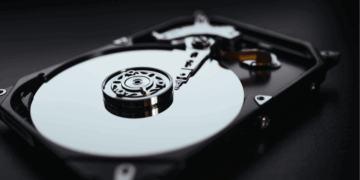
Cyclic Materials received an investment from Microsoft’s Climate Innovation Fund to accelerate the company’s technology for recovering rare earth metals from hard drives, the Canadian metals recycler announced in July.
Cyclic has developed a patent-pending technology to recycle rare earths from end-of-life hard drives and other materials. The technology allows ITAD companies to separate out the parts of hard drives that have rare earth magnets and still shred the rest of the hard drive to recover the other precious metals that are typically targeted.
Microsoft launched the Climate Innovation Fund in 2020 and planned to invest $1 billion into new technologies over four years. It does not disclose individual investment amounts. Brandon Middaugh, senior director of the Climate Innovation Fund, said in a press release that “as demand for rare earth elements continues to grow in importance, we’re excited to support the creation of a sustainable supply of these materials with this investment.”
Cyclic Materials co-founder and CEO Ahmad Ghahreman said in a written statement that the investment “enables us to accelerate the deployment of our commercial facilities, which is a critical step in growing the domestic supply of rare earths in North America that support the energy transition.”
In June, Cyclic Materials opened its first commercial-scale facility in Ontario, Canada, and plans to develop five or six facilities in the U.S. and Canada that will feed magnets into a future hub.
Sims Lifecycle Services has been testing the company’s technology over the past few months and has “seen tremendous performance improvements through the development and achieved throughput of one hard drive per second,” said Sean Magann, chief commercial officer at Sims Lifecycle Services, in a written statement.
“This solution enables us to drive further value out of disposed hard drives, by reclaiming the critical rare earths, while maintaining the data security,” Magann said, noting that another benefit is fewer magnets clogging up shredders. “We look forward to deploying this technology across our operations.”