



In just under eight months, U.S. e-scrap companies looking to export end-of-life devices will face a dramatically different regulatory landscape that, under some readings, will prohibit the movement of most e-scrap materials from the U.S. to the vast majority of foreign countries.
The Basel Convention, a global agreement that’s been ratified by 191 countries, lays out regulations on the movement of end-of-life materials. Party countries agree to adopt these regulations within their domestic laws. Although most countries in the world are party to the Convention, the U.S. is a notable exception.
Long focused specifically on hazardous materials, the Convention has historically been a vehicle to prevent wealthier nations from dumping waste materials in poorer countries. But in the last few years, the amendments to the Convention have taken on a more broadly environmental goal. Most notably, in 2019, party countries approved a change that added mixed scrap plastics into the Convention’s purview with a stated goal of reducing plastic entering marine environments.
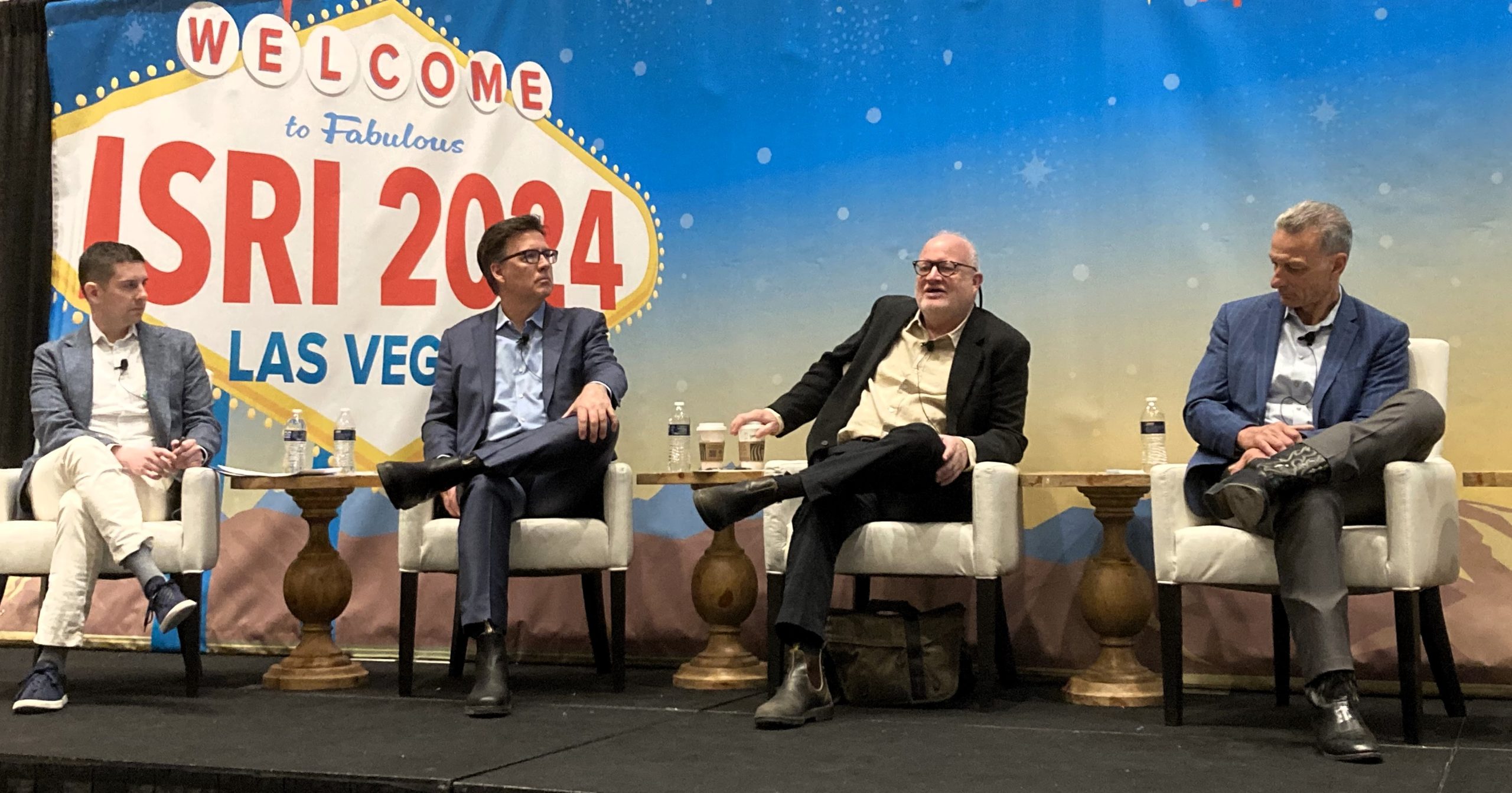
“It really has become the de facto agreement for the circular economy,” said Paul Hagen, an attorney with Beveridge & Diamond and a longtime Basel expert, speaking during a panel at the ISRI2024 conference in Las Vegas last month.
Next January, another significant change along those same lines will come into effect: A wide range of end-of-life electronics will be covered by Basel regulations, largely prohibiting U.S. companies from shipping these materials overseas. The changes were approved by Basel party nations in 2022.
Hagen discussed the changes alongside Jim Puckett, executive director of the Basel Action Network, and Craig Boswell, president of HOBI International. The session was organized by the electronics division of ISRI, which rebranded during the conference and unveiled its new name, ReMA, the Recycled Materials Association. Adam Shaffer, ReMA’s assistant vice president of international trade and global affairs, moderated the session.
What will change
The amendment covering e-scrap was proposed in 2020 by the governments of Ghana and Switzerland. Although the Basel rules have long covered certain e-scrap components deemed hazardous – devices with batteries containing mercury or lead, for example – the amendment brings most e-scrap that’s not considered hazardous into its purview.
Puckett explained that means a much wider range of e-scrap exports – essentially, anything that used electricity to function, whether in the form of whole devices, components or shredded materials – will be subject to the Basel controls, with a few key exceptions.
For e-scrap companies operating in Basel-party countries, the effect is more paperwork and coordination with relevant environmental authorities in destination countries. Companies will have to go through a prior-informed consent process, earning approval to ship material into the receiving country. This brings its own hurdles, as industry stakeholders say the prior-informed consent process suffers from a lack of standardization across countries and is a slow-moving system.
But for U.S. stakeholders, the impact goes beyond paperwork, because Basel-party countries are technically prohibited from receiving shipments of Basel-regulated materials from non-party countries.
“Every time things are brought into Basel, there’s 191 countries that cannot trade those materials with the U.S.,” Hagen said.
Staying informed is the biggest challenge
That means under a strict reading of Basel rules, come Jan. 1, U.S. e-scrap companies will no longer be able to export their output to virtually any overseas buyers. It’s a huge change, and one that ITAD companies aware of the regulations are figuring out how to handle.
“If panic is a strategy, that’s our strategy,” quipped Boswell, president of U.S. ITAD firm HOBI International, during the panel. He said HOBI is “very, very concerned” about how to meet the new regulations, especially because industry players have little foresight into how the regulations will actually play out when they’re implemented.
Boswell said HOBI is looking at its inputs and outputs and trying to determine which materials will fall into the updated Basel category that will now require export controls.
“It’s difficult right now, because we don’t know how this is going to be implemented,” Boswell said.
He advised companies to look at the Basel technical guidelines as the best resource. In particular, Boswell said these documents provide guidance on how companies can properly prepare a load of material that is legitimately destined for reuse. Paragraph 33 of the e-waste guidelines lays out which documents should be included, such as proof of functionality, and how the devices should be packaged to prevent damage.
HOBI is also communicating with its downstream outlets, who will be the ones dealing with these changes on a day-to-day basis, Boswell said.
“What we don’t want to hear is that prices have gone down by 80% because we can’t move this material,” he said.
That ties into HOBI’s third preparation tactic, staying informed, which Boswell described as perhaps the most difficult part of preparing. Governments don’t always reach out to companies to let them know about upcoming rule changes, so it’s on the industry to keep abreast of what’s coming down the line. Boswell said ReMA’s e-scrap committee is an important way for the industry to work together and stay informed.
HOBI may have some advantage by simply knowing to be prepared for the upcoming changes. In the past few months, a handful of ITAD firms have expressed concern to E-Scrap News about a lack of awareness of the pending rule changes.
Patti Whiting, global government affairs manager for Sims Limited, put it bluntly: “A lot of companies just don’t see what’s coming,” she said in a recent interview.
Drilling into the details
Industry stakeholder groups including the Basel Action Network have worked to increase education about the upcoming changes. BAN administers the e-Stewards certification standard.
Puckett, the group’s executive director, noted during the ISRI2024 panel that BAN put together a webinar early after the changes were approved in mid-2022, laying out the rules and what will be covered. He noted BAN pushed for the amendment in the first place – the organization has long called for more Basel regulation of e-scrap exports – but that it’s particularly important that companies understand what types of material will be exempt from the new regulations.
For e-Stewards, these distinctions are important, Puckett added, because the organization wants the processors who are willing to take the effort to dismantle and process electronics down into their commodity streams, or to test and prepare devices for repair and reuse, to get credit for that work and not have the resulting materials covered by these export controls.
Under the expanded Basel regulations, if a company processes e-scrap down to purely metal fractions, even if they’re mixed metals, that material stream would be exempt from the regulations, Puckett said. This exemption is laid out under paragraph 49 of the e-waste technical guidelines.
Another key exemption is for material that’s destined for reuse and repair, although Puckett advised companies to “be very careful” about being in compliance with the reuse and repair rules. It’s not as simple as pointing to the guidelines, he said. U.S. companies will need to actively communicate with the importing country to make sure that country’s regulators agree on the interpretation of the Basel language surrounding the reuse and repair exemption.
Because of the reuse and repair gray area, Boswell said it’s important to look at the optics of each load destined for export. A bunch of assorted equipment thrown in a gaylord likely won’t make the same impression as carefully packed and organized loads of devices.
“You’re talking about people that are going to be looking at your paperwork and visually inspecting this,” Boswell said. “You know what legitimate reuse looks like in this business, you know what legitimate repair looks like if you’re in this business. It isn’t thrown in a gaylord, it isn’t packaged in such a way that it can’t survive a shipment. Apply that general rule of thumb, and I think it’s at least a starting point.”