


Resource Recycling
  • The Latest
  • Analysis
    • All
    • Certification Scorecard
    • Industry Announcements
    • Opinion
    HP receives ocean plastics certification

    HP Inc. earnings point to memory inflation challenge

    Certification scorecard for the week of Feb. 23, 2026

    Umicore highlights strength in recycling, catalysis

    Apto, Tusaar partner on rare earths recovery

    Apto, Tusaar partner on rare earths recovery

    Certification scorecard for the week of Feb. 16, 2026

    Sims Lifecycle leverages hyperscale decommissioning

    Sims Lifecycle leverages hyperscale decommissioning

    The electronics recycling industry is undergoing a transformation from labor-intensive manual operations to highly automated, AI-driven facilities that use advanced robotics, cleaner chemistry and digital tracking systems to extract critical materials.

    The cyber-physical MRF: AI and robotics reshape e-waste recovery

    Certification scorecard for the week of Feb. 9, 2026

    Meta-Corning deal signals IT hardware retirement wave

    Meta-Corning deal signals IT hardware retirement wave

  • Conferences
  • Publications

    Other Topics

    Textiles
    Organics
    Packaging
    Glass
    Brand Owners

    Metals
    Technology
    Research
    Markets
    Grant Watch

    All Topics

Subscribe
No Result
View All Result
Resource Recycling
  • The Latest
  • Analysis
    • All
    • Certification Scorecard
    • Industry Announcements
    • Opinion
    HP receives ocean plastics certification

    HP Inc. earnings point to memory inflation challenge

    Certification scorecard for the week of Feb. 23, 2026

    Umicore highlights strength in recycling, catalysis

    Apto, Tusaar partner on rare earths recovery

    Apto, Tusaar partner on rare earths recovery

    Certification scorecard for the week of Feb. 16, 2026

    Sims Lifecycle leverages hyperscale decommissioning

    Sims Lifecycle leverages hyperscale decommissioning

    The electronics recycling industry is undergoing a transformation from labor-intensive manual operations to highly automated, AI-driven facilities that use advanced robotics, cleaner chemistry and digital tracking systems to extract critical materials.

    The cyber-physical MRF: AI and robotics reshape e-waste recovery

    Certification scorecard for the week of Feb. 9, 2026

    Meta-Corning deal signals IT hardware retirement wave

    Meta-Corning deal signals IT hardware retirement wave

  • Conferences
  • Publications

    Other Topics

    Textiles
    Organics
    Packaging
    Glass
    Brand Owners

    Metals
    Technology
    Research
    Markets
    Grant Watch

    All Topics

Subscribe
No Result
View All Result
Resource Recycling
No Result
View All Result
Home E-Scrap

The factors behind one state’s collection site closures

byJared Paben
February 24, 2022
in E-Scrap
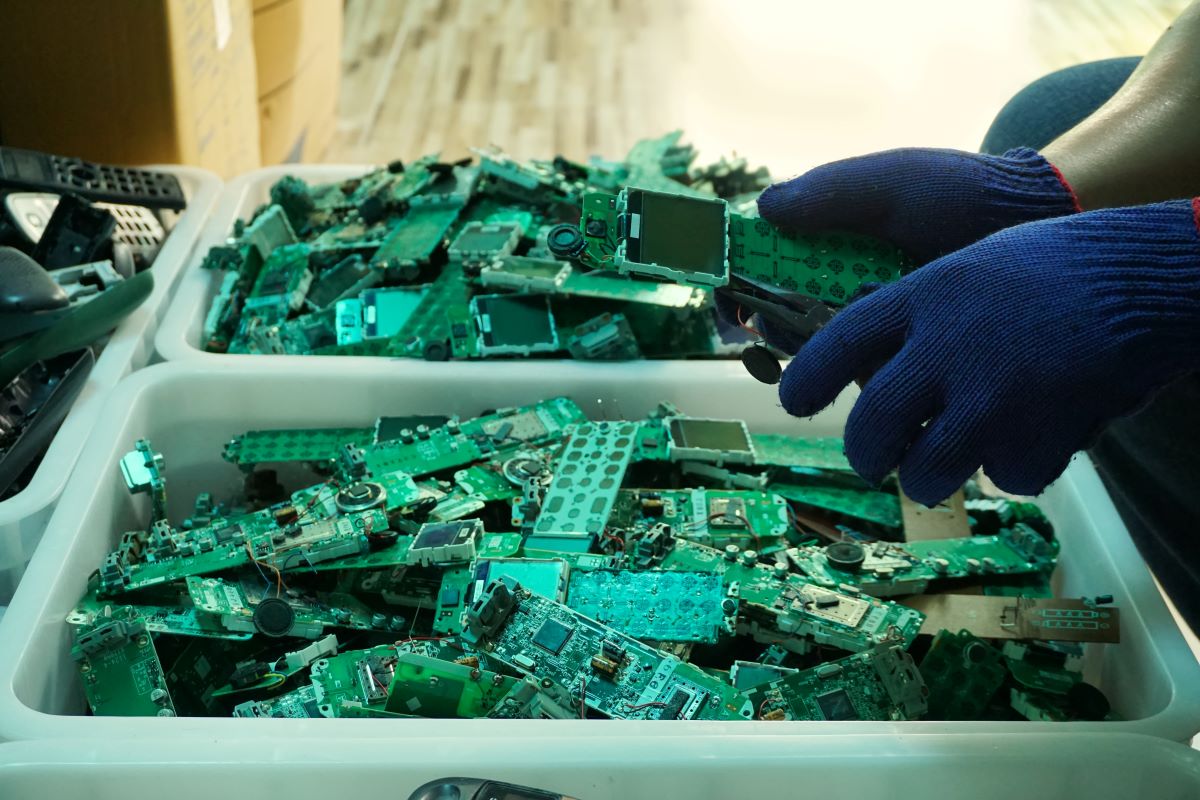
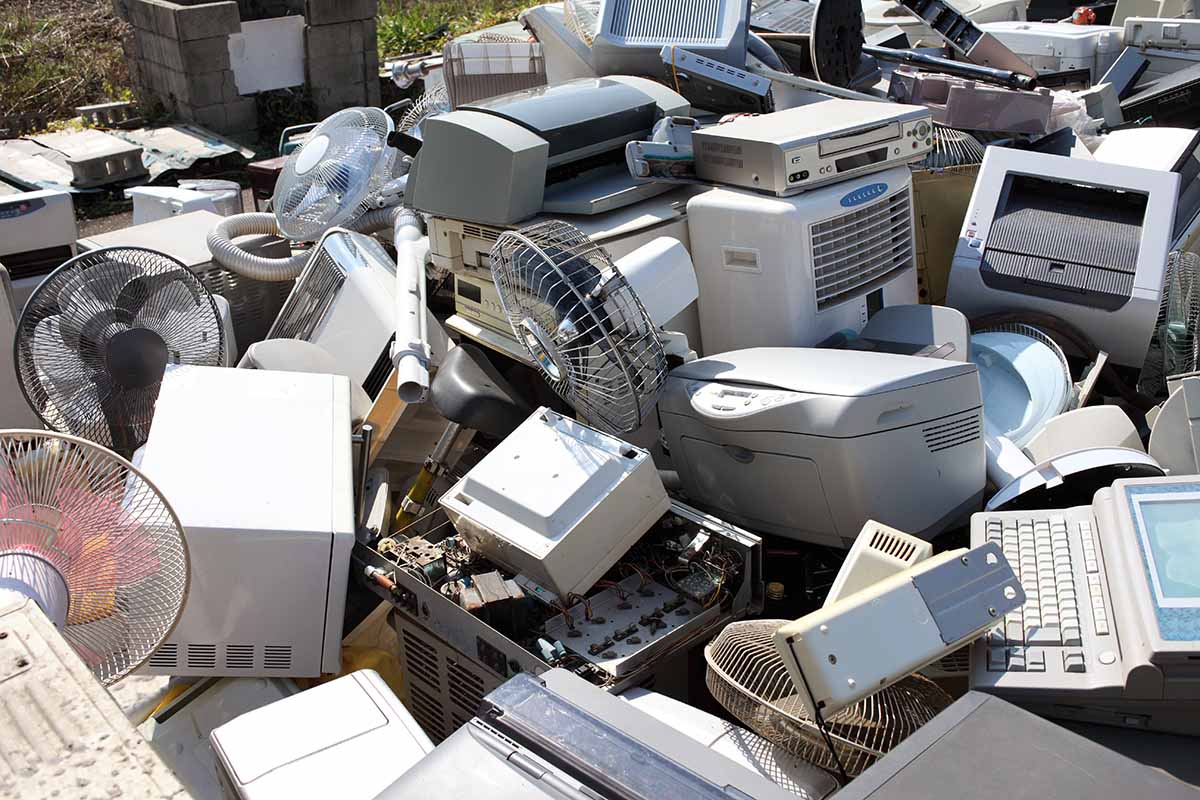
Electronics collected for recycling.
The executive director of the National Center for Electronics Recycling explains why Oregonians will lose several e-scrap collection sites. | akiyoko/Shutterstock

The loss of several e-scrap collection sites in Oregon is causing consternation in some communities, and now the legislature is mulling a bill meant to temporarily address the situation.

Oregon’s 13-year-old extended producer responsibility (EPR) law includes computers, monitors, TVs, printers and computer peripherals such as keyboards and mice. Under the law, OEMs can join either the State Contractor Program (SCP) or an industry-managed stewardship group charged with fulfilling manufacturers’ collection and recycling obligations.

Currently, the SCP is run by the National Center for Electronics Recycling (NCER), a nonprofit organization that is under contract with the state government. A second collection and recycling program is managed by Electronic Manufacturers Recycling Management Company (MRM), a stewardship group that operates in several states with EPR laws.

The SCP serves as a default group for OEMs that do not elect to join another approved group, such as MRM (Reverse Logistics Group Americas used to also run an Oregon program).

Recently, the SCP has decided to stop funding some collection sites, drawing critical local news headlines, including from News-Times on the central Oregon Coast and KOBI-TV 5 in Southern Oregon. Jason Linnell, executive director of NCER, explained to E-Scrap News the factors that went into the decision to stop paying for seven collection sites.

Targets (and budgets) fall faster than collections

The statewide collection targets that OEMs must achieve have been falling since 2015, when they hit a high of 30.5 million pounds. Last year, the target was 12.8 million pounds, and for 2022 the number fell to 11.5 million pounds, according to the Oregon Department of Environmental Quality (DEQ).

The decreases have been the product of mathematical calculations that take into consideration historical collection weights, product lightweighting, consumer purchasing and ownership behaviors, public awareness and COVID-19, according to the DEQ.

Even as the overall targets have decreased year after year, producer-funded collections have exceeded the targets, resulting in higher costs for manufacturers. In 2020, the statewide target was 13.75 million pounds, but the Oregon E-Cycles programs collected 14.33 million pounds. In 2021, the statewide target was 12.80 million pounds, but the program collected 14.07 million pounds.

Linnell explained that the over-collection was driven by the SCP, which collected 120% of its target in 2020 and 135% in 2021.

Meanwhile, the SCP’s budget is determined by multiplying the annual statewide pound target by the collective percentage of market share of OEMs represented by the SCP. That number has fallen. In 2021, the SCP was responsible for 38% of the total statewide target, or it was responsible for collecting 4.9 million pounds. This year, that dropped to 31% and about 3.5 million pounds.

The reason SCP’s collective percentage of market share dropped was because the SCP lost a couple of manufacturers in 2020 and 2021, and the biggest one had its individual market share percentage decrease, Linnell said.

As a result of the lower target – and the associated SCP budget – for 2022, the SCP needed to trim the collection network, Linnell said.

“If we didn’t make any changes to the collection network, SCP would collect well over half of the statewide target despite having less than one-third of the responsibility,” he said.

The manufacturers covered by the SCP were billed for the 3.5 million pounds last July. But they could be on the hook to pay additional sums next year if the budget is exceeded this year, Linnell said.

Going far over budget could make the SCP less appealing to some manufacturers than approved alternative programs, such as MRM’s.

Targeting sites for closure

Starting March 1, two collection sites in Southern Oregon, two in the Portland metropolitan area and three on the coast will no longer have SCP funding. The contracts were originally set to expire at the end of 2021, but SCP extended them until Feb. 28 to give MRM time to begin funding any of them, if it chooses, he said (Linnell said his understanding is MRM is looking at signing contracts to pick up a few of them).

The SCP had considered eliminating a third Southern Oregon site but reached a deal with the DEQ to keep funding it. “DEQ was able to apply funds previously paid by manufacturers into the Oregon E-Cycles program,” according to the DEQ. “This will enable the state contractor program to continue service uninterrupted in that rural community.”

The selection of the specific collection sites was chosen based partly on the need to maintain compliance with Oregon’s convenience standard, which mandates one collection site in each county and one in each city of at least 10,000 residents, he said. The SCP retains over 80 collection sites and supports over a dozen collection events across the Beaver State, Linnell said, exceeding the convenience requirements.

Regardless, state lawmakers are considering a bill, introduced by a Southern Oregon representative, that would boost the statewide collection target for this year, the YachatsNews.com reported.

The bill, House Bill 4158, increases the statewide collection target for April 1-Dec. 31, 2022 to 10.5 million pounds. The idea is that it better matches the target with how much e-scrap would likely be collected if no collection sites were jettisoned. At a hearing on Feb. 21, representatives of local governments and recycling companies weighed in in favor of the bill. A representative of the Consumer Technology Association urged lawmakers to work toward ensuring a stable collection system but argued against the approach used by HB 4158.

If the bill fails to advance during the 2022 short legislative session, DEQ officials said the situation has kickstarted conversations on how the state could update its program in the future, YachatsNews.com reported.

E-Scrap Conference and Trade Show - Sept. 19-21, New Orleans

Tags: EPR
TweetShare
Jared Paben

Jared Paben

Related Posts

California selects Landbell USA as PRO for textile EPR

byStefanie Valentic
March 2, 2026

CalRecycle has tapped European recycling veteran Landbell USA to lead the nation's first textile EPR program.

K-Cup recycling comes to Ontario Blue Boxes

K-Cup recycling comes to Ontario Blue Boxes

byKeith Loria
March 2, 2026

Keurig Dr Pepper Canada and recyclers across the country worked together for nearly a decade on redesign, material conversion and...

Minnesota publishes prelim EPR assessment

Minnesota publishes prelim EPR assessment

byAntoinette Smith
February 20, 2026

The report will inform recommendations featured in the next report to develop the state's EPR program for packaging.

Vermont’s battery stewardship law targets fire risk

byStefanie Valentic
February 20, 2026

The state's new law gives residents more options to safely dispose of everything from single-use alkaline batteries to medium-format e-bike...

Wisconsin proposes E-Cycle target revisions

Wisconsin proposes E-Cycle target revisions

byScott Snowden
February 17, 2026

The state proposed updates clarifying target calculations, waiver standards and adding select battery devices to eligible collections, with public comment...

Textile clothing bins

Report details how to make CA textile recycling work

byPaul Lane
February 16, 2026

A new report confirms the sentiment that led to a new textile recovery law in California, detailing just how much...

Load More
Next Post

Data Corner: A fuller picture of food loss and waste in America

More Posts

PET bales stacked for recycling.

Evergreen closing RPET plants in Ohio, New York

February 24, 2026
WM opens new $90m MRF in south Florida 

WM opens new $90m MRF in south Florida 

February 23, 2026

Rising containerboard demand comes as OCC prices taper

November 5, 2024

Paper giants foresee continuing rise in OCC prices

August 28, 2023
Battery fire risk isn’t going away. Insurance is responding

Battery fire risk isn’t going away. Insurance is responding

February 24, 2026

North American paper mills discuss demand, OCC pricing

May 15, 2023
Chinese processing group details goals for US visit

AMP lays out vision of next-generation, AI-driven MRFs

July 24, 2024
How will 2026 unfold for plastics recycling?

How will 2026 unfold for plastics recycling?

February 19, 2026
Recycled plastic lumber firms report diverging results

Trex CEO to retire after 23-year run

February 25, 2026
Study links tagging tactics to lower contamination rates

Arizona, Reynolds reach settlement on Hefty bag lawsuit

February 23, 2026
Load More

About & Publications

About Us

Staff

Archive

Magazine

Work With Us

Advertise
Jobs
Contact
Terms and Privacy

Newsletter

Get the latest recycling news and analysis delivered to your inbox every week. Stay ahead on industry trends, policy updates, and insights from programs, processors, and innovators.

Subscribe

Welcome Back!

Login to your account below

Forgotten Password?

Retrieve your password

Please enter your username or email address to reset your password.

Log In

Add New Playlist

No Result
View All Result
  • The Latest
  • Analysis
  • Recycling
  • E-Scrap
  • Plastics
  • Policy Now
  • Conferences
    • E-Scrap Conference
    • Plastics Recycling Conference
    • Resource Recycling Conference
    • Textiles Recovery Summit
  • Magazine
  • About Us
  • Advertise
  • Archive
  • Jobs
  • Staff
Subscribe
This website uses cookies. By continuing to use this website you are giving consent to cookies being used. Visit our Privacy and Cookie Policy.