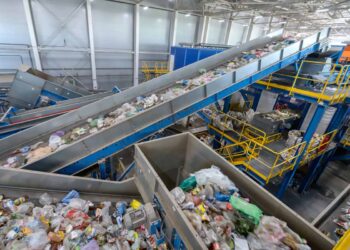




The material mix in the US recycling stream is becoming lighter, more varied and more operationally complex to manage, according to the second installment of the 2026 State of Recycling report from The Recycling Partnership.
With lighter-weight packaging substrates becoming more prevalent – due to lightweighting efforts as well as shifting consumer patterns – the US system must evolve, the report authors said.
The Recycling Partnership created the 2026 State of Recycling Report using data from more than 9,000 recycling programs serving 97% of the US population. For the first time, the group is releasing the report in installments, each focusing on a specific aspect of the system.
In June, the first installment examined the pathway to maximizing the US recycling system.
The group first published the State of Recycling Report in 2024, to quantify the packaging and printed paper that US households discard.
E-commerce has driven a shift in cardboard generation, which grew by 32% per household. At the same time, PP generation rose by 47%, non-bottle PET by 48% and non-bottle HDPE by 38%.
In other materials, film and flexible packaging increased by 15%, aluminum foil/trays grew by 44% and aluminum cans by 18%, and cartons increased by 61%.
However, heavier materials such as glass and mixed paper fell, by 28% and 34%, respectively. This drove a decrease of 3.7 million tons, or 8%, in volumes from 2020 levels, despite an increase in US households.
In addition to documenting the shifting materials mix, the report reinforced that packaging choices affect the entire recycling supply chain. Of the 51.5 million tons of packaging and printed paper US households will generate this year, 78% falls within traditionally collected material categories, the report said.
“What is designed and produced upstream ultimately shapes what residents discard, and what collection programs, materials recovery facilities, processors, and end markets must manage,” the report said. “As the packaging and printed paper stream evolves, the recycling system responsible for recovering it needs comparable investment and innovation to keep pace.”
The group noted that the results support the need for infrastructure investment.
“What comes out of American homes shapes what our recycling system must be ready to handle next,” said Cody Marshall, chief programs officer at The Recycling Partnership. “This new data shows not only the scale of the opportunity, with households generating roughly 705 pounds of traditionally collected recyclable materials plus film and flexibles each year, but how quickly that material mix is changing.
“Understanding those shifts gives producers, policymakers, communities, and recyclers the information they need to make smarter investments in collection, processing, and end markets, keeping more valuable material in the US economy as feedstock for domestic manufacturing, strengthening supply chains, and supporting job-creating economic development.”
The report noted that the connection between states with extended producer responsibility (EPR) programs for packaging and those without is critical to forging a strong national system.
“EPR can accelerate improvements in states with enacted policies, but recycling supply chains do not stop at state lines,” the group said. “Strengthening the US recycling system will also require sustained investment in non-EPR states to manage the evolving stream, helping communities that rely largely on local funding to expand collection, processing, and recovery while maintaining quality.”
The group will host a live webinar on Oct. 1 to explore the findings.