



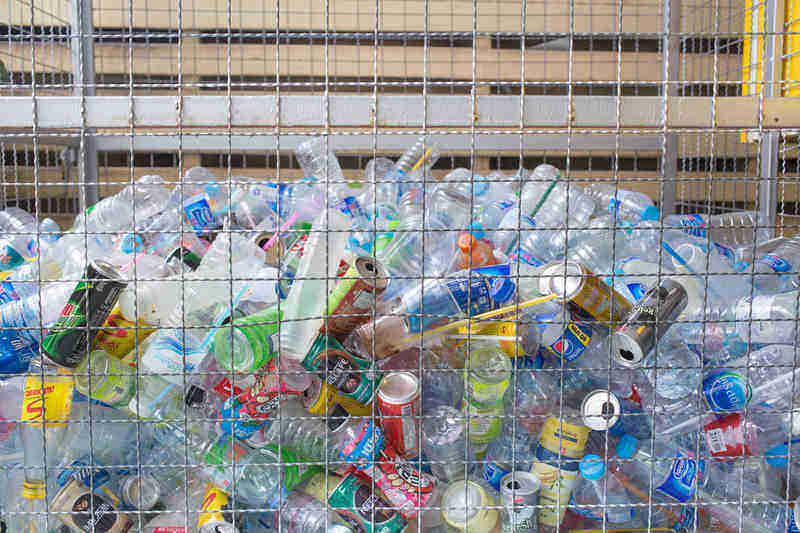
Connecticut’s beverage container redemption rate climbed from 65% to 92% between 2024 and 2025, a 27-percentage-point jump that stands out against a year of stagnant performance across the country’s other deposit-return system (DRS) states, according to data released Aug. 3 by the Container Recycling Institute (CRI).
“DRS programs represent the ‘gold standard’ for increasing beverage container recycling rates,” CRI President Susan Collins said in a statement. She noted that containers on deposit are recycled at a 64% rate nationally, compared with 26% for containers not on deposit.
Of the nine DRS states with available 2025 data, only Connecticut and Maine saw redemption rates move by more than 2 percentage points in either direction. Maine’s rate fell 5 points, from 74% to 69%. California dipped 1 point to 59%, Hawaii dropped 2 points to 52%, Massachusetts fell 2 points to 33%, Michigan and New York each slid 1 point, and Vermont dropped 2 points to 68%. Oregon posted the only other gain, rising 1 point to 88%.
Iowa was excluded for lack of current figures. A 2022 CRI study put the state’s recovery rate at 49%. The figure is part of the state’s broader measure that counts containers recycled through curbside and drop-off programs in addition to those redeemed through the deposit system.
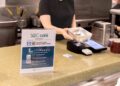
Collins attributed Connecticut’s turnaround to legislative and infrastructure upgrades under SB 1037, which was signed in 2021. The changes rolled out in phases. Handling fees for retailers and redemption centers went up starting in October 2021, when larger chain stores were required to install at least two reverse vending machines. This added roughly 300 redemption sites.
Deposits were extended to non-carbonated beverages and hard seltzer in January 2023. The deposit itself rose from 5 cents to 10 cents in January 2024.
The combined measures pushed the state’s rate from 44% in 2023 to 92% in 2025. More than 925 million additional containers were redeemed over that span.
Collins said the results were evidence that modernization, not just program existence, drives redemption gains. Massachusetts’ 33% rate is the lowest among reporting states, and it and Michigan have posted the steepest declines since 2019 at 17 and 20 percentage points, respectively.
“This provides a clear indication of the importance of legislative and regulatory action to stabilize and ultimately increase redemption rates,” Collins said.
Redemption fraud rises
Connecticut’s gains have come with complications. CRI noted ongoing concerns about over-redemption, with beverage sales in the state reportedly outpacing what distributors report, along with accounts of consumers hauling empty containers across state lines to capture Connecticut’s higher deposit value, which may be inflating the reported rate, CRI said.
New York’s redeemed-container total dropped by about 2 million between 2023 and 2025, which CRI suggested could be tied to interstate activity. State lawmakers responded with SB 457, signed in May, barring refunds on containers not purchased in-state, though CRI’s own testimony flagged the law as difficult to enforce given how modern retail supply chains move product.
“Connecticut legislators are working on solutions to these issues, which could be inflating the actual beverage container redemption rate,” Collins said.
The organization said it is finishing a guidebook on curbing DRS fraud and free riding, drawing on approaches used in other jurisdictions among the more than 65 DRS programs operating globally.
Working out the details
Other states are pursuing their own structural changes.
Maine’s LD 1909 shifts unredeemed deposits to a new “commingling cooperative” of brand owners as of July 15, and requires redemption centers to move from brand-level to material-type sorting by Oct. 1. CRI expects the change to lower costs and speed processing.
Vermont’s H.915, signed June 17 and effective July 1, raised the redemption center handling fee by a penny and sets a timeline for a producer responsibility organization, including a stewardship plan due in 2028 and implementation by March 2029, with a requirement of at least three redemption points per county.
California is expanding redemption access through roughly a dozen new grant programs funded under 2022’s SB 1013 and AB 179, covering redemption centers, reverse vending machines, mobile recycling and bag-drop options.
The state’s DRS system recycled 28.6 billion containers in 2025, or 71% of those sold, according to CalRecycle’s most recent report.
CRI noted that about half of California’s redemption centers closed between 2013 and 2022, and added that continued attention to restoring physical access, not just funding volume, will determine whether the state’s rate moves beyond its current 59-60% range.
Collins said the broader trend across statehouses of more bills introduced on new or expanded DRS programs signals growing legislative interest, even if year-over-year rate movement in most states remains stagnant without the kind of structural overhaul Connecticut accomplished.
“We know that DRS programs work,” she said. “The interest is there and progress is occurring on several fronts, though it doesn’t always get enough attention.”