





Three California bills targeting deceptive environmental labeling and marketing claims cleared a key legislative deadline, advancing to their respective chambers ahead of the state’s Aug. 31 session close.
AB 2253, the Protecting Consumers Against Greenwashing Act, passed the Assembly 42-19 and heads to the Senate.
The bill, which was authored by Assemblymember Tasha Boerner (D-Encinitas) and sponsored by Californians Against Waste, would require companies making recycled content claims to back those claims with documentation that the recycled material is physically present in the product, closing the door on mass balance accounting as a basis for those labels.
Existing law imposes that standard on plastic food containers. AB 2253 would extend it to all products.
“Consumers should be able to trust the claims that companies make about their products,” Boerner said. “Many businesses are sending misleading messages to Californians with false recycled content claims and profiting off consumers who are trying to make environmentally conscious choices.”
Nick Lapis, director of advocacy at Californians Against Waste, said the bill aims to solve a market integrity issue as much as a consumer protection one.
“California has a chance to lead again by making recycled-content claims mean what people think they mean,” Lapis said in a statement. “If a company wants the credit, it should put recycled materials in the product, not hide behind a bookkeeping gimmick. Otherwise, consumers are stuck with labels they cannot trust, which not only undercuts faith in the entire recycling system, but also creates an uneven playing field for manufacturers that are doing the right thing.”
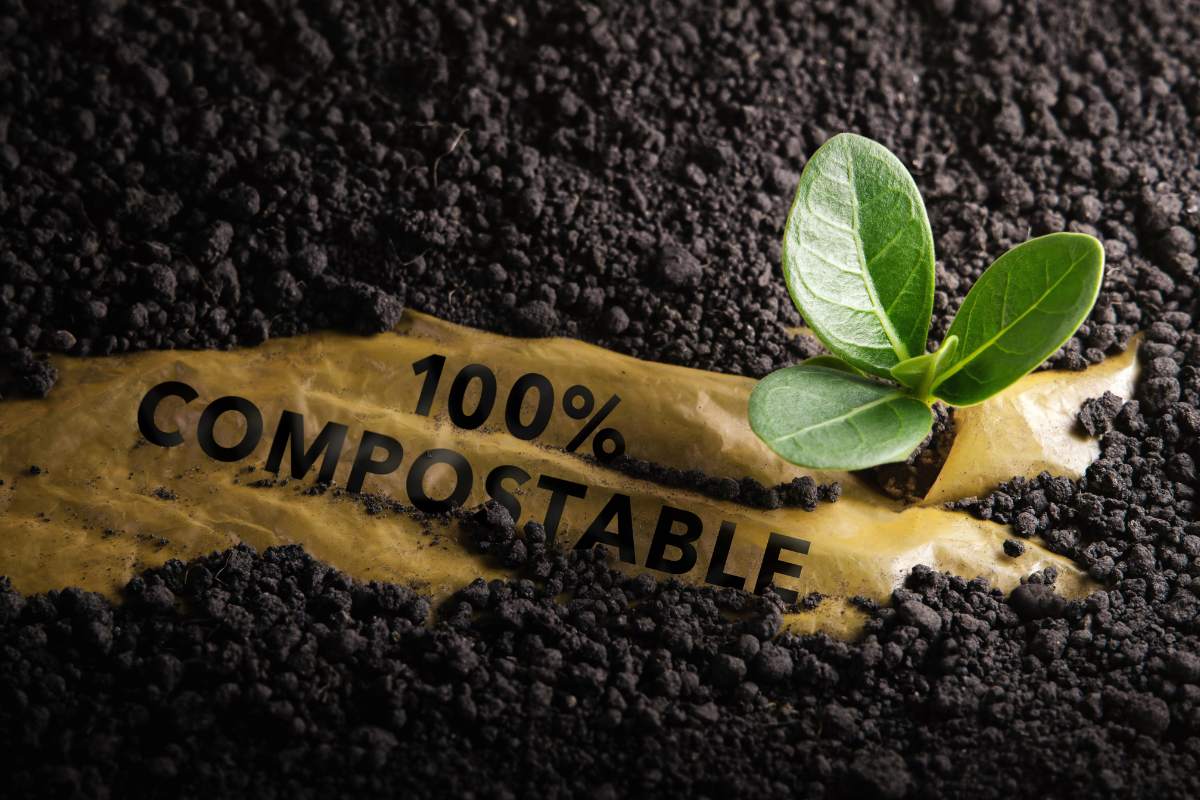
California’s compostables landscape got more complex on May 29, as two bills took separate paths toward the same goal of reducing consumer confusion in the organics stream.
SB 1031, authored by state Sen. Catherine Blakespear, passed the Senate and moves to the Assembly. The bill would require standardized labeling on compostable products so consumers and processors can distinguish them from conventional plastics at a glance, and direct the Office of Environmental Health Hazard Assessment to study the health impacts of degraded compostable plastics and their additives. A provision targeting “compostable except in California” labeling was dropped in amendments.
Blakespear called the bill a science-based approach to protecting California’s circular economy goals.
“SB 1031 will require clear and standardized labeling so consumers and composters can easily distinguish compostable plastics from conventional plastics,” she said during an April Senate Environmental Quality Committee hearing.
AB 1812, authored by Assemblymember Cecilia Aguiar-Curry, goes further. The bill passed the Assembly 64-1 and also heads to the Senate. Beginning Jan. 1, 2027, it would bar the sale of any product labeled “compostable” or “home compostable” that contains plastic, restricting those claims to products with OK compost HOME certification or a CalRecycle-adopted standard.
The line drew pushback from some of the same groups that backed SB 1031. Californians Against Waste and the California Compost Coalition supported the labeling bill but opposed the ban.
Lapis warned in a letter that AB 1812 “could eliminate critical tools California relies upon to meet its organics diversion and plastic waste reduction mandates,” adding that it “treats all compostable polymers as inherently problematic rather than distinguishing between applications that create operational challenges and those that directly advance state environmental goals.”