
Resource Recycling
  • The Latest
  • Analysis
    • All
    • Certification Scorecard
    • Industry Announcements
    • Opinion
    Re-Teck opens site in Southeast Asia

    ERI expands global footprint into Vietnam

    Michigan State Launches Center to Tackle Packaging Waste

    Inside the Circle: Put every package where it performs best

    SERI works to restore faith in certifications

    Building a defensible E-scrap evidence file

    EU flags in front of the European Commission's building.

    Europe’s electronics recovery market is moving upstream

    Maximizing the value of post-consumer PP 

    Maximizing the value of post-consumer PP 

    From claims to custody: PCR procurement grows up

    Certification Scorecard — Week of August 3, 2026

  • Conferences
    • Resource Recycling Conference
    • Plastics Recycling Conference
    • E-Scrap: The Longevity Conference
    • Textiles Recovery Summit
  • Publications
    • E-Scrap News
    • Plastics Recycling Update
    • Policy Now
    • Resource Recycling
    • Other Topics
      • All Topics
      • Brand Owners
      • Critical Minerals
      • Glass
      • Grant Watch / RFPs
      • Markets
      • Organics
      • Packaging
      • Research
      • Technology
      • Textiles
Subscribe
No Result
View All Result
Resource Recycling
  • The Latest
  • Analysis
    • All
    • Certification Scorecard
    • Industry Announcements
    • Opinion
    Re-Teck opens site in Southeast Asia

    ERI expands global footprint into Vietnam

    Michigan State Launches Center to Tackle Packaging Waste

    Inside the Circle: Put every package where it performs best

    SERI works to restore faith in certifications

    Building a defensible E-scrap evidence file

    EU flags in front of the European Commission's building.

    Europe’s electronics recovery market is moving upstream

    Maximizing the value of post-consumer PP 

    Maximizing the value of post-consumer PP 

    From claims to custody: PCR procurement grows up

    Certification Scorecard — Week of August 3, 2026

  • Conferences
    • Resource Recycling Conference
    • Plastics Recycling Conference
    • E-Scrap: The Longevity Conference
    • Textiles Recovery Summit
  • Publications
    • E-Scrap News
    • Plastics Recycling Update
    • Policy Now
    • Resource Recycling
    • Other Topics
      • All Topics
      • Brand Owners
      • Critical Minerals
      • Glass
      • Grant Watch / RFPs
      • Markets
      • Organics
      • Packaging
      • Research
      • Technology
      • Textiles
Subscribe
No Result
View All Result
Resource Recycling
No Result
View All Result
Home Plastics

Quebec PRO reflects on first year of packaging EPR

Antoinette SmithbyAntoinette Smith
March 30, 2026
in Plastics, Recycling

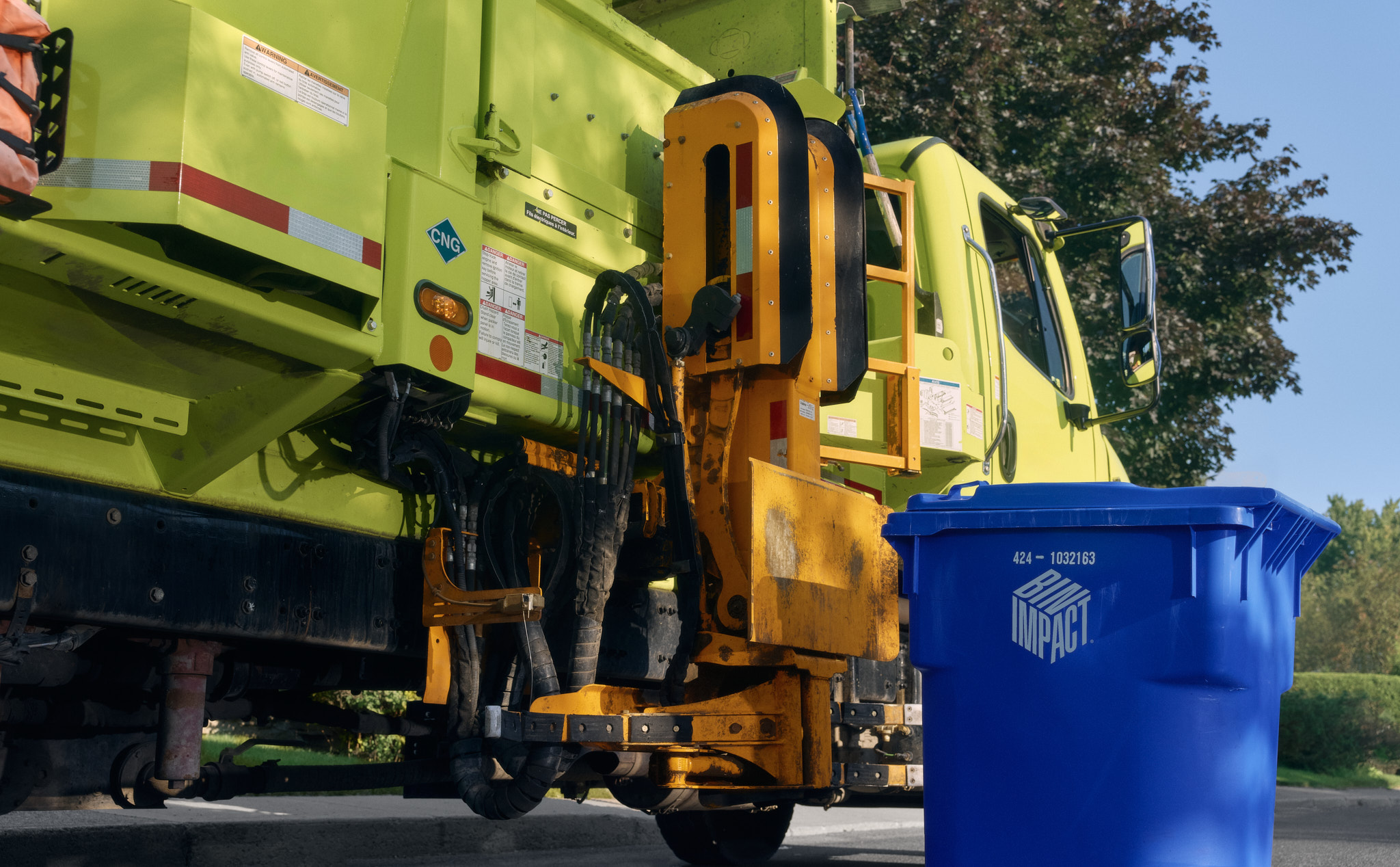
The rollout of Quebec's packaging EPR included the blue Bin Impact receptacles. | Photo courtesy of EEQ

Quebec’s producer responsibility organization (PRO) is looking back on the first year of managing the Canadian province’s EPR program for packaging, using stakeholder feedback to help adapt the program targets and provide transparency.

As PRO, Éco Entreprises Québec (EEQ) has heard many producer comments about higher costs, a common argument against EPR programs regardless of packaging substrate. Although the organization had proactively communicated that the fees would be coming, some participants were caught off-guard, said Charles David Mathieu-Poulin, public affairs and sustainability manager for EEQ. 

Most big companies in the EPR scheme expected a 50-75% increase in fees, after seeing similar programs roll out in other provinces and in Europe, he said. “So those people were a little bit more aware and maybe had budgeted better.” 

He added that smaller companies “have a million things to think about,” so may have overlooked the notifications. “And then they saw the bill come in, and it was much higher. So they reacted very strongly when we sent the bills last year,” he said.  

As a result, this month Quebec’s government announced it would provide CAD $27 million (US $19.43 million) to help producers transition to the new system. EEQ will receive the funds and then redistribute them to eligible businesses to help offset the costs.  

Maryse Vermette, president and CEO of EEQ, said, “The modernization of the curbside recycling system has placed significant financial pressure on businesses that market containers, packaging, and printed paper in Québec.” 

She added that EEQ had worked for more than a year with the government to find a solution. 

“The financial support announced today, together with the anticipated regulatory changes, will help strengthen the modernized curbside recycling system and reduce its costs over the medium and long term,” she said.  

In addition to the financial support, the government adjusted recovery and recycling goals and pushed the target date out by three years to 2030. This made the goals “more realistic,” Mathieu-Poulin said. 

Key changes for plastic packaging include: 

  • Lowering 2030 collection rate targets
    • PET: from 80% to 75%
    • HDPE: from 80% to 75%
    • Other rigid plastics: from 75% to 45%
    • Flexible plastics: from 50% to 45%
  • Lowering 2030 recycling rate targets
    • PET: from 70% to 60%
    • HDPE: from 65% to 60%
    • Other rigid plastics: from 65% to 35%
    • Flexible plastics: from 40% to 20%

Transparency is key

EEQ’s emphasis on transparency also helped make the new fees easier to swallow. Participants wanted to know the rationale for investing in sorting centers and other decisions, he said, to help understand the gap between their expectations and the fee invoice.  

Transparency is key, even for data that exposes areas in need of improvement. For example, EEQ found that 58% of residual material was recyclable material, which is high, Mathieu-Poulin said. This could be due to older equipment, or unusual packaging formats.  

Following internal discussions, the PRO ultimately decided that the statistics showed what the program was created to improve. “People are asking us why we invest in sorting centers – here’s one of the reasons,” he said. “A lot of the MRFs and the recyclers were very happy that we came out with that data too.”

Another surprise was the amount of information the system would produce. “I think we underestimated how much data was going to come in,” he said. 

On the positive side, EEQ can now show that 63% of recycled material is sold locally and 80% stays in North America, “which we’re very, very proud of.” 

Contamination rates also are decreasing, due to EEQ’s education campaigns. At its most basic level, the messaging is: “If you put your packaging and paper in the bin, 80% is going to be recycled,” he said. “It’s still not 100%. But don’t listen to the people saying everything’s going to go to landfill. The vast majority finds a home.” 

Being able to prove the destiny of post-consumer packaging materials also improves public trust of recycling systems, which in Quebec is around two-thirds of the population, he said. For 2025, EEQ could trace the entire life cycle for 98% of processed material, he said. “When it goes to a landfill, we’re telling you. When it goes to waste-to-energy, we’re telling you.”

Residents aren’t the only ones invested in seeing materials move through the system. Recyclers also find value in knowing that, for example, the discarded HDPE is being used in the drainage pipes used in local construction projects. “I think we sometimes forget about that last little part, where we’re telling people where it goes,” Mathieu-Poulin said. 

Regional program approaches vary

Canadian provinces have packaging EPR programs of various vintages, from British Columbia starting in 2014, to Nova Scotia, which launched in December 2025. This has made EPR a commonly known term, but still each program has its differences, Mathieu-Poulin said. 

The biggest difference is that British Columbia has multiple curbside streams, including the newly launched flexible packaging collection, while Quebec has only one. While both approaches have pros and cons, the single stream simplifies messaging efforts. 

In addition, “I think culturally, people just love to have the convenience of that one big blue bin at their door.”

And as the US begins implementing state-level EPR programs, Mathieu-Poulin sees differences in attitudes, after two decades of increasing modes of producer responsibility. “I think people understand why we’re doing it. So the conversation is more about ‘how’ than ‘let’s make it not happen.'”

Harmonization across geographical bounds

Amid new Canadian and US EPR schemes for packaging, the need for harmonized guidelines is clear, he said, something Canadian PROs do well. EEQ was among five Canadian PROs receiving a Recycling Leadership Award from the Association of Plastic Recyclers (APR) last month. APR owns Resource Recycling, Inc., publisher of Plastics Recycling Update.

“Through their leadership, a harmonized framework will deliver clear, consistent guidance and help build a more effective and efficient recycling system across North America,” APR said in announcing the award.

In addition, US and Canadian programs have overlapping markets and participants, pointing to the need for North American PROs to work together, Mathieu-Poulin said. 

“It makes sense for all of us to align as much as we can,” he said, acknowledging that regulations vary among localities. He added that producers typically support harmonization, as having common guidelines simplifies compliance. 

And while EEQ recognizes that work remains to be done, the PRO is pleased with the first year’s results, Mathieu-Poulin said. “We’re not expecting to go from bad to amazing in one year, but we can see that the trend is quite good.” 

Tags: CanadaEPRIndustry Groups
TweetShare
Antoinette Smith

Antoinette Smith

Antoinette Smith has covered commodity plastics and supply chains for more than a decade, with a special focus on economic impacts and consumer behavior. She brings a balanced, thoughtful view to recycling stories, and isn't afraid to ask "why?" Contact Antoinette at antoinette@resource-recycling.com.

Related Posts

Mass balance matters: Why different rules can lead to different outcomes 

SWANA CEO Amy Lestition Burke to depart organization

byStefanie Valentic
August 11, 2026

SWANA's board is beginning a national search following CEO Burke’s departure.

APR expands design training to 3 days

byAntoinette Smith
August 11, 2026

The September session in Indianapolis will include behind-the-scenes tours of Republic Services and Blue Polymers facilities, plus the former Nova...

Bags of collected agricultural twine for Cleanfarms twine recycling contest

News in Brief: August 10, 2026

byIsabella Burke
August 10, 2026

An Alberta twine recycling contest, Pellitteri expands waste and recycling services into the Milwaukee area and the Canadian government awards...

Michigan State Launches Center to Tackle Packaging Waste

Inside the Circle: Put every package where it performs best

byBill Shireman
August 10, 2026

Not every package belongs in the same recovery program; here’s a better way forward.

APR launches recyclability assessment platform

APR launches digital plastic evaluation tool

byPaul Lane
August 7, 2026

The new platform will allow companies to have their plastics assessed for recyclability and compliance with EPR-related regulations.

The most important decision in tire recycling happens before the shredder

Oregon wash hub looks to slash single-use plastic

byPaul Lane
August 4, 2026

Planners hope to remove 250,000 single-use serviceware items from the waste stream within the first year of operation.

Load More
Next Post
URT builds alliance to remake electronics plastics at scale

Less premium smartphone inventory is reaching recyclers

2026 Buyers’ Guide

Equipment, services and technology suppliers serving the recycling industry.

Browse the Guide

More Posts

New federal rule restricts black mass, tungsten scrap exports

August 5, 2026
Ron Gonen

Bicameral Truth in Labeling Act introduced in Congress

August 10, 2026
A Republic Services truck picks up a recycling cart in Fort Collins, Colorado.

Fort Collins, CO builds a roadmap to zero waste

August 6, 2026

Two pilot programs in CA recycle commercial film

August 10, 2026

The first E-scrap franchisor finds treasure in trash

August 3, 2026
Alpek closing Pennsylvania RPET plant

Alpek seizing on war-related opportunity 

July 27, 2026
Mineral shortage creates ITAD opportunity

Mineral shortage creates ITAD opportunity

August 5, 2026
The most important decision in tire recycling happens before the shredder

Oregon wash hub looks to slash single-use plastic

August 4, 2026
Sabic launches engineered plastic with 75% PCR

Sabic launches engineered plastic with 75% PCR

August 11, 2026
Industry announcements for January 2026

Industry announcements for August 2026

August 3, 2026
Load More

About & Publications

About Us

Staff

Archive

Magazine

Work With Us

Advertise
Jobs
Contact
Terms and Privacy

Newsletter

Get the latest recycling news and analysis delivered to your inbox every week. Stay ahead on industry trends, policy updates, and insights from programs, processors, and innovators.

Subscribe

Welcome Back!

Login to your account below

Forgotten Password?

Retrieve your password

Please enter your username or email address to reset your password.

Log In

Add New Playlist

No Result
View All Result
  • The Latest
  • Analysis
  • Recycling
  • E-Scrap
  • Plastics
  • Policy Now
  • Conferences
    • E-Scrap Conference
    • Plastics Recycling Conference
    • Resource Recycling Conference
    • Textiles Recovery Summit
  • Magazine
  • About Us
  • Advertise
  • Archive
  • Jobs
  • Staff
Subscribe
This website uses cookies. By continuing to use this website you are giving consent to cookies being used. Visit our Privacy and Cookie Policy.