Resource Recycling
  • The Latest
  • Analysis
    • All
    • Certification Scorecard
    • Industry Announcements
    • Opinion

    AI and the changing economics of retired hardware

    Certification Scorecard — Week of June 8, 2026

    ITAD is moving past its adolescent phase: beyond end-of-life

    Rainforest

    Inside the Circle: What the rainforest can teach us about EPR

    Closeup of a printed circuitboard

    Hardware demand puts new focus on parts harvesting

    Rare look inside the world’s largest plastics recycler

    Mass balance matters: Why different rules can lead to different outcomes 

  • Conferences
    • Resource Recycling Conference
    • Plastics Recycling Conference
    • E-Scrap: The Longevity Conference
    • Textiles Recovery Summit
  • Publications
    • E-Scrap News
    • Plastics Recycling Update
    • Policy Now
    • Resource Recycling
    • Other Topics
      • All Topics
      • Brand Owners
      • Critical Minerals
      • Glass
      • Grant Watch / RFPs
      • Markets
      • Organics
      • Packaging
      • Research
      • Technology
      • Textiles
Subscribe
No Result
View All Result
Resource Recycling
  • The Latest
  • Analysis
    • All
    • Certification Scorecard
    • Industry Announcements
    • Opinion

    AI and the changing economics of retired hardware

    Certification Scorecard — Week of June 8, 2026

    ITAD is moving past its adolescent phase: beyond end-of-life

    Rainforest

    Inside the Circle: What the rainforest can teach us about EPR

    Closeup of a printed circuitboard

    Hardware demand puts new focus on parts harvesting

    Rare look inside the world’s largest plastics recycler

    Mass balance matters: Why different rules can lead to different outcomes 

  • Conferences
    • Resource Recycling Conference
    • Plastics Recycling Conference
    • E-Scrap: The Longevity Conference
    • Textiles Recovery Summit
  • Publications
    • E-Scrap News
    • Plastics Recycling Update
    • Policy Now
    • Resource Recycling
    • Other Topics
      • All Topics
      • Brand Owners
      • Critical Minerals
      • Glass
      • Grant Watch / RFPs
      • Markets
      • Organics
      • Packaging
      • Research
      • Technology
      • Textiles
Subscribe
No Result
View All Result
Resource Recycling
No Result
View All Result
Home E-Scrap

Glasgow researchers develop compostable circuit boards

byScott Snowden
February 3, 2026
in E-Scrap

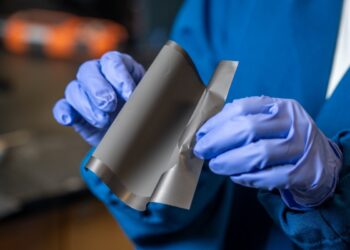
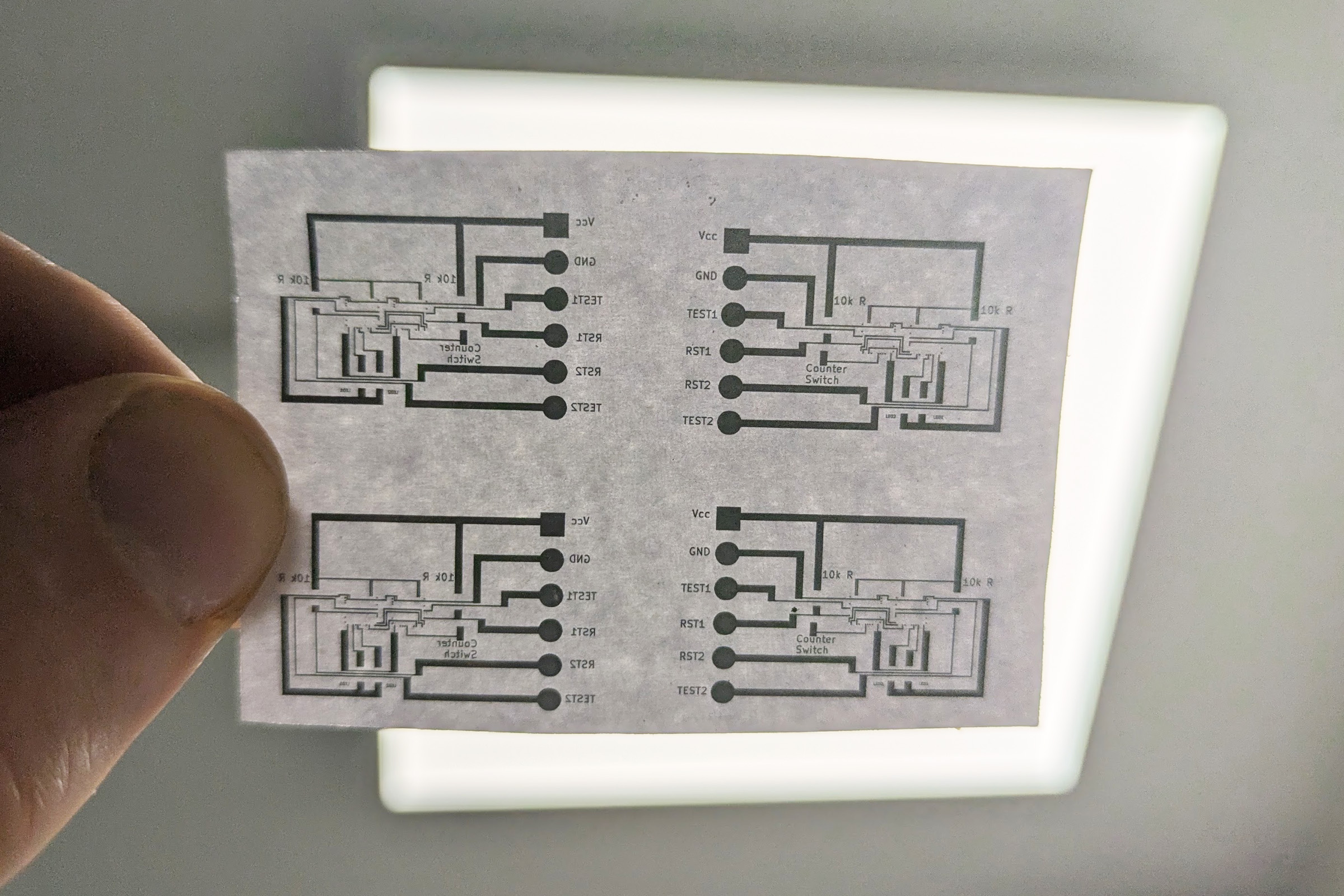
An example of a printed circuit board built using biodegradable materials and zinc conductors, designed to function like a PCB before breaking down naturally without leaving hazardous elements behind so | Courtesy of Jon Harwell

Researchers at the University of Glasgow have developed a printed circuit board (PCB) designed to do something most electronics never do: break down safely after doing its job.

The PCBs are not aimed at the phones, laptops and other long-life devices people may picture when they think about electronic waste. Instead, the technology targets a fast-growing category of devices built to be used briefly and discarded, often without any realistic path to recycling.

“People sometimes ask why you would want a biodegradable phone,” said Jonathon Harwell, lead author of a study. “The answer is that you do not. For high-end devices, extending the lifetime and recycling components is far better. This is about the things that are never reused or realistically recycled in the first place.”

Those products include disposable test kits, smart packaging and short-term sensors, Harwell said. He pointed to digital pregnancy tests as a clear example. The electronics inside can be simple, but the product is used once and thrown away, and is ill-suited for recycling systems.

“It’s things where recycling is not practical,” he said of potential applications for the technology.

Conventional PCBs are typically built on fiberglass-resin materials known as FR4, with copper used as the main conductor. The researchers’ paper notes that circuit board assemblies are hard to recycle because they combine many different metallic and nonmetallic materials and because the substrate itself makes up much of the weight while being difficult to process.

The research team’s approach replaces both major elements of a traditional board. The substrate can be made from biodegradable materials including paper, cellulose-based films or biodegradable plastics. The conductor is zinc rather than copper, chosen because it can provide high performance while offering a more biocompatible profile than many other metals.

Harwell said the team initially considered carbon-based materials often used in PCBs, but their conductivity was far below what would be needed to compete with conventional circuit boards. Zinc, he said, was one of the few options that could plausibly deliver the kind of electrical performance modern electronics require.

The key challenge was manufacturing. Many biodegradable materials are fragile and typical circuit fabrication processes can be harsh. The Glasgow method starts by electroplating zinc onto a temporary aluminum carrier, patterning it into a circuit layout, then transferring it into a biodegradable substrate while the substrate is processed as a liquid film. The result is metal circuitry embedded in the finished material.

The paper reports the technique can achieve conductive tracks as narrow as 5 micrometers (0.005 millimeters) and a shelf life of more than one year under normal storage conditions. The researchers demonstrated the circuits in several working devices including tactile sensors, LED counters and temperature sensors, and the study describes performance that approaches conventional circuit boards.

The boards are meant to last while they are kept dry, Harwell said, and degrade once exposed to conditions that encourage breakdown.

“If you keep them dry, as far as we can tell, they last for as long as you want,” he said. “But the more you protect them from water, the less biodegradable you make it. That tradeoff is why we’re only aiming for disposable-type products.”

The paper frames the work against the scale of electronic waste, citing global e-waste generation of more than 68.3 million tons in 2024 and noting the difficulty of keeping recycling systems ahead of growing volumes. It also cites European Union estimates that less than 17% of end-of-life printed circuit board assemblies are recycled.

A life cycle assessment included in the paper compared a zinc-based board made with the new method to a conventional fiberglass-copper board of the same size and track layout. The researchers reported a 79% reduction in global warming potential for the zinc-based option, driven by differences in materials and manufacturing as well as end-of-life treatment assumptions.

Harwell noted that biodegradability should not be mistaken for a universal answer to e-waste. For devices meant to last, he said the priority should remain repair, reuse and conventional recycling.

But for items that are effectively destined for the trash, he said, making the circuit board itself safely degradable could reduce the harm caused by disposal, while still keeping performance within what manufacturers expect.


TweetShare
Scott Snowden

Scott Snowden

Scott has been a reporter for over 25 years, covering a diverse range of subjects from sub-atomic cold fusion physics to scuba diving off the Great Barrier Reef. He's now deeply invested in the world of recycling, green tech and environmental preservation.

Related Posts

Rare look inside the world’s largest plastics recycler

TRP launches fund to boost recycling

byIsabella Burke
June 12, 2026

The Recycling Partnership announced the Recycling Participation Fund.

Australia battery recycling sector could reach A$6.9bn by 2050

Colorado and California bills take aim at battery recycling gaps

byStefanie Valentic
June 12, 2026

Colorado's EV battery EPR law and California's SB 501 together represent a push to bring the full battery supply chain...

AI and the changing economics of retired hardware

byDavid Daoud
June 12, 2026

The technology offers challenges and opportunities for the ITAD space.

Scrap copper for recycling

Seed funding bolsters build of new copper facility

byPaul Lane
June 11, 2026

A funding injection will help Red Metals Inc. get its streamlined refining and manufacturing operation open in South Carolina.

Goodwill, WM partner for textile recycling pilot

CiCLO co-creator helps forge path to sustainability

byPaul Lane
June 11, 2026

Andrea Ferris says her additives, which can make synthetic fabrics biodegradable, can help companies improve their environmental footprints while meeting...

Northeast recycled commodity values hit 5-year lows

‘Recycling Demand Champions’ honored by APR

byPaul Lane
June 10, 2026

APR is honoring companies committed to using recycled plastic, and it’s looking for more businesses to join the cause.

Load More
Next Post

UT Austin spinout Supra launches to recover rare earths

More Posts

House resolution aims to make recyclability central to product design

NY EPR bill fails to advance after third try

June 8, 2026
Various PET thermoform containers.

Thermoform recovery soars, PCR content falls

June 10, 2026
CalRecycle withdraws proposed regs for SB 54

Oceana, NRDC, CAW sue CalRecycle over SB 54 regs

June 5, 2026

Three-bill package aims to revamp Michigan’s bottle return system

June 9, 2026

Battery fires still a major risk to recyclers: report

June 9, 2026
Rare look inside the world’s largest plastics recycler

Mass balance matters: Why different rules can lead to different outcomes 

June 5, 2026
Recycling industry addresses Beyond Plastics report

Recycling industry addresses Beyond Plastics report

May 26, 2026

ITAD is moving past its adolescent phase: beyond end-of-life

June 10, 2026
GP Recycling offers on-ramp for smaller recyclers

GP Recycling offers on-ramp for smaller recyclers

June 9, 2026
Circular Materials to supply PlasCred chem recycling plant

Circular Materials to supply PlasCred chem recycling plant

June 4, 2026
Load More

About & Publications

About Us

Staff

Archive

Magazine

Work With Us

Advertise
Jobs
Contact
Terms and Privacy

Newsletter

Get the latest recycling news and analysis delivered to your inbox every week. Stay ahead on industry trends, policy updates, and insights from programs, processors, and innovators.

Subscribe

Welcome Back!

Login to your account below

Forgotten Password?

Retrieve your password

Please enter your username or email address to reset your password.

Log In

Add New Playlist

No Result
View All Result
  • The Latest
  • Analysis
  • Recycling
  • E-Scrap
  • Plastics
  • Policy Now
  • Conferences
    • E-Scrap Conference
    • Plastics Recycling Conference
    • Resource Recycling Conference
    • Textiles Recovery Summit
  • Magazine
  • About Us
  • Advertise
  • Archive
  • Jobs
  • Staff
Subscribe
This website uses cookies. By continuing to use this website you are giving consent to cookies being used. Visit our Privacy and Cookie Policy.